ALP vs Zyn: Strength, Flavor, and Price Compared
ALP vs Zyn: Strength, Flavor, Price (and Why Some Users Want Neither)
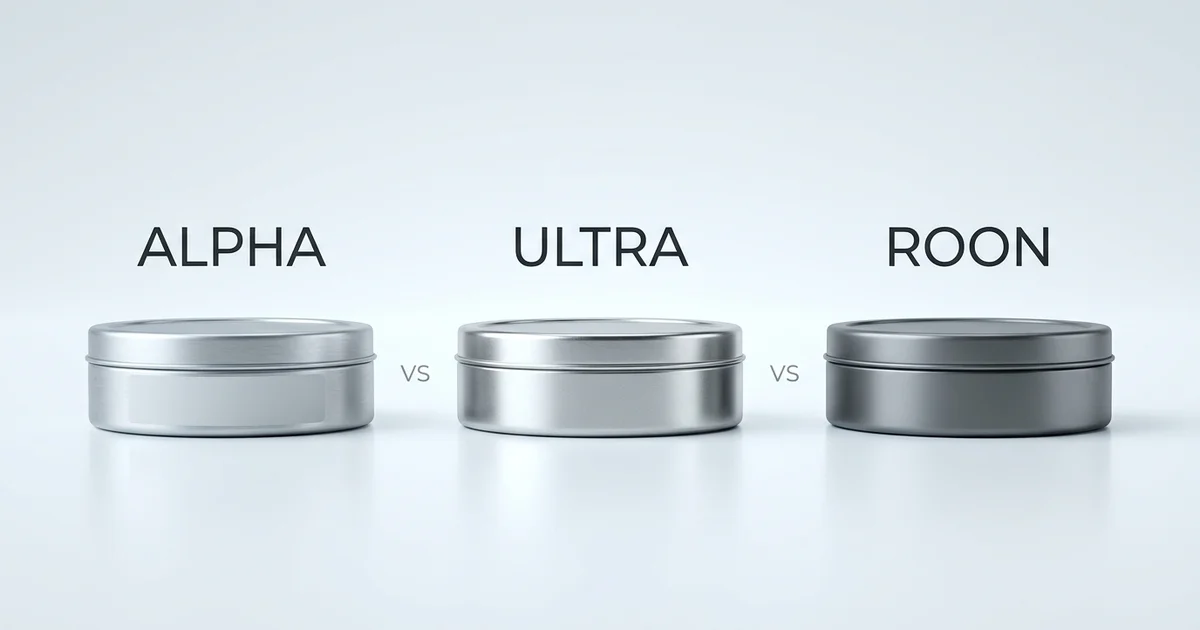
If you are deciding between alp vs zyn, here is the short version: ALP runs cheaper per pouch and edges out Zyn at the top of the strength range, offering 3, 6, 9, and 12 mg, while Zyn's standard US line runs 1.5, 3, and 6 mg and its separate ZYN Ultra line reaches 9 mg and 11 mg. ALP costs roughly $0.24 to $0.26 per pouch on alppouch.com; Zyn lands closer to $0.33 to $0.47. Both are tobacco-free nicotine products, meaning no tobacco leaf, but both still deliver addictive nicotine. If your actual goal is the lip-pouch ritual without the dependence, neither brand fits, and that is its own separate category worth knowing about.
This article is for informational purposes only and is not medical advice. If you have health concerns, are pregnant or breastfeeding, or are trying to cut down on caffeine or quit nicotine, talk to a healthcare provider.
Key Takeaways
- Price: ALP is the cheaper option per pouch (about $0.24 to $0.26 on alppouch.com vs Zyn's $0.33 to $0.47).
- Strength: ALP offers 3, 6, 9, and 12 mg. Zyn's standard US line runs 1.5, 3, and 6 mg, and ZYN Ultra reaches 9 mg and 11 mg. Higher milligrams mean a stronger hit and a higher dependence risk.
- Both are nicotine. "Tobacco-free" is not "nicotine-free." Both are addictive.
- Neither delivers focus without nicotine. A nicotine-free functional pouch like Roon is a different product entirely, built for sustained attention, not a buzz.
ALP vs Zyn at a Glance
ALP wins on price and strength ceiling; Zyn wins on flavor range and retail availability. The two products do the same job through nearly identical formats, so the decision usually comes down to cost per pouch, how strong you want the hit, and which flavor you actually reach for.
| Brand | Nicotine strengths (mg) | Tobacco-free? | Flavors | Pouch format | Price per pouch | Onset & duration | Best for | Zero-nicotine option? |
|---|---|---|---|---|---|---|---|---|
| ALP | 3, 6, 9, 12 | Yes (synthetic nicotine) | Chilled Mint, Mountain Wintergreen, Refreshing Chill, Tropical Fruit, Sweet Nectar, Spearmint, Classic | Moist, slim, 20 per tin | ~$0.24 to $0.26 | ~5-10 min onset; up to ~30-60 min wear | Cost-conscious users wanting a stronger hit | No |
| Zyn | 1.5, 3, 6 (US standard); 9, 11 (ZYN Ultra) | Yes (tobacco-derived nicotine) | Cool Mint, Wintergreen, Citrus, Coffee, Spearmint, Menthol, and others | Dry, slim, 15 per can | ~$0.33, $0.47 | ~5-10 min onset; up to ~30-60 min wear | Flavor variety and wide retail access | No |
| Roon | 0 (zero nicotine) | Yes (no tobacco, no nicotine) | Cool Mint | Sublingual, 15 per tin | Varies | ~5-10 min onset; 6-8 hr focus window | The pouch ritual and focus, without nicotine | Yes (it is the zero-nicotine option) |
Roon sits in the table for one reason: it answers the question some readers are really asking, which is whether you can get the under-the-lip format without the addictive ingredient. It contains 80 mg caffeine, 60 mg L-theanine, 25 mg methylliberine (Dynamine), and 5 mg theacrine (TeaCrine), and zero nicotine. It is not a nicotine product and not a stop-smoking aid.
ALP vs Zyn on Strength: ALP's Ceiling Is One Milligram Higher
ALP sells pouches in 3, 6, 9, and 12 mg. Zyn's standard US product pages list 1.5, 3, and 6 mg, and its separate ZYN Ultra line reaches 9 mg and 11 mg, so the gap at the top is a single milligram rather than the wide gulf the two brands' standard lines suggest. A higher milligram count delivers a more intense hit, which heavy users and former smokers tend to want.
Here is the honest tradeoff. More nicotine per pouch means more nicotine reaching your bloodstream, and nicotine is the addictive part. According to the Cleveland Clinic, nicotine pouches may not carry the same risks as smoking, but they are not harmless, they are addictive, and they can cause gastrointestinal and oral health issues. Choosing a 9 or 12 mg pouch is not a free upgrade. It raises your dependence risk.
ALP also uses synthetic nicotine, while Zyn uses nicotine derived from tobacco. The practical health difference between the two sources is negligible, since both deliver the same molecule. The distinction matters mostly to buyers who want to avoid any tobacco-industry supply chain.
ALP vs Zyn on Flavor: Zyn Has the Wider Menu, ALP Bets on Moisture
Zyn offers more flavor variety, but ALP counters with a moister pouch that many users say carries flavor better. ALP's lineup includes Chilled Mint, Mountain Wintergreen, Refreshing Chill, Tropical Fruit, Sweet Nectar, Spearmint, and Classic. The mint and wintergreen options are the consistent bestsellers, which tracks with the broader pouch market.
Zyn's catalog is broader, spanning Cool Mint, Wintergreen, Citrus, Coffee, Spearmint, Menthol, and several others, with the added advantage of sitting on more gas-station and convenience-store shelves. If you want to grab a tin on a road trip without planning ahead, Zyn is the safer bet.
The texture difference is real. ALP markets a moist pouch, and moist pouches typically release nicotine faster than dry ones, which can make an ALP feel stronger at the start than a dry pouch of the same milligram rating. Zyn runs drier and more discreet. Neither is objectively better. It is a preference.
ALP vs Zyn on Price: ALP Is the Cheaper Pouch
ALP costs less per pouch than Zyn, and the math is straightforward. ALP packs 20 pouches per tin, while a US Zyn can holds 15. On ALP's own store the full range is $4.76 to $5.29 per can, which works out to roughly $0.24 to $0.26 per pouch, and Zyn lands around $0.33 to $0.47 per pouch.
State taxes have widened that gap. Nicotine pouches now face new excise taxes in several states, and in one case a US Zyn can jumped to nearly $10 after a state tax change took effect in mid-2025, up from the mid-$5 range. Where you live can move your real cost more than the brand you pick.
For a daily user going through four to five pouches a day, the per-pouch difference compounds fast. Over a month, choosing ALP over Zyn can save you real money, assuming you are comfortable with ALP's narrower retail footprint and its strength options.
How Nicotine Pouches Actually Absorb
Both ALP and Zyn deliver nicotine slowly through the lining of your mouth, not in the sharp spike a cigarette produces. You place the pouch between your gum and upper lip, and nicotine releases gradually over 20 to 60 minutes. Onset is typically noticeable within 5 to 10 minutes.
The pharmacokinetics back this up. In a randomized cross-over study published in PMC, plasma nicotine peaked lower and slower for pouches than for cigarettes: a cigarette reached peak concentration in about 8.6 minutes, while pouches took roughly 22 to 26 minutes. A 2025 systematic review and meta-analysis reached the same conclusion, finding that time-to-peak was consistently longer for pouches, which points to a slower rate of nicotine absorption.
That slower curve is part of why pouches feel less like a cigarette and more like a steady drip. It does not make them non-addictive. It changes the shape of the dose, not the fact of it.
Why Some Users Want Neither
A growing group of pouch users does not want nicotine at all, and that is the part most ALP-vs-Zyn comparisons skip. As Truth Initiative explains, oral nicotine pouches like Zyn deliver nicotine without tobacco leaf, but the nicotine itself is what drives dependence. "Tobacco-free" markets well. It does not mean risk-free.
For many people, the appeal of a pouch is the ritual, the under-the-lip sensation, the discreet format, the something-to-reach-for during a deadline. That habit can be satisfied without the addictive ingredient. Functional pouches now exist that use the same format to deliver caffeine and focus compounds instead of nicotine.
This is a real fork in the road. If you genuinely use pouches for the nicotine, ALP vs Zyn is your decision. If you use them to stay sharp during a long work block and the nicotine is just along for the ride, you may be in the wrong category entirely.
The Verdict, in One Line
ALP and Zyn do the same job with minor differences: ALP is cheaper per pouch and its ceiling is one milligram above ZYN Ultra's, Zyn has more flavors and broader availability, and both deliver addictive nicotine through a slow oral release. Pick ALP for cost and strength, Zyn for flavor and convenience, and recognize that the higher you climb the milligram ladder, the higher your dependence risk climbs with it. If nicotine is not actually what you are after, your answer is in a different aisle.
Frequently Asked Questions
Is ALP stronger than Zyn?
Only just, and only at the top end. ALP sells pouches up to 12 mg. Zyn's standard US line now caps at 8 mg, but its ZYN Ultra line reaches 9 mg and 11 mg, so the ceiling difference between the brands is one milligram. ALP's moist format can also make a given milligram count feel stronger, since moist pouches tend to release nicotine faster than dry ones. A stronger hit is not automatically better, though. Higher nicotine doses raise your risk of dependence. If you don't use nicotine, don't start.
Which is cheaper, ALP or Zyn?
ALP is cheaper per pouch. ALP packs 20 pouches per tin and runs about $0.24 to $0.26 each on alppouch.com, while a US Zyn can holds 15 pouches and works out to roughly $0.33 to $0.47 each. State nicotine taxes can shift the real cost, and in some states a Zyn can has climbed close to $10. For daily users, ALP's lower per-pouch cost adds up over a month.
Are ALP and Zyn tobacco-free?
Both are tobacco-free in the sense that neither contains tobacco leaf. ALP uses synthetic nicotine, and Zyn uses nicotine derived from tobacco. The practical health difference between the two nicotine sources is negligible, because both deliver the same addictive molecule. "Tobacco-free" is a labeling claim about the leaf, not a statement that the product is free of nicotine or free of risk.
Are nicotine pouches safe?
They are not harmless. The Cleveland Clinic notes that nicotine pouches may avoid some of the risks of smoking, since there is no combustion, but they remain addictive and can cause gastrointestinal and oral health problems. Nicotine also raises heart rate and blood pressure. They are not recommended for non-users, anyone under 21, or people who are pregnant. No nicotine product is risk-free.
How fast do nicotine pouches work?
You will usually feel an effect within 5 to 10 minutes, with nicotine releasing gradually over 20 to 60 minutes. Pouches absorb more slowly than cigarettes. In one randomized study, pouches reached peak blood nicotine in about 22 to 26 minutes versus roughly 8.6 minutes for a cigarette. That slower curve produces a gentler, more sustained effect, but it does not reduce the addictive nature of the nicotine.
Is there a nicotine-free pouch for focus instead?
Yes. A separate category of functional pouches uses the same oral format to deliver focus ingredients rather than nicotine. Roon is one example, a sublingual pouch with caffeine, L-theanine, methylliberine, and theacrine and zero nicotine. These are built for sustained attention, not a nicotine buzz. They are not stop-smoking aids and are not a nicotine replacement therapy, so treat them as a different product, not a swap.
Should I switch from a higher milligram pouch to a lower one?
If dependence is a concern, stepping down in strength is a reasonable approach, and many users move from 9 or 6 mg down to 3 mg over time. Lower milligram pouches deliver less nicotine per use, which can help reduce intake. If your goal is to stop nicotine entirely, talk to a healthcare provider about evidence-based methods rather than relying on a pouch alone.
If the Nicotine Was Never the Point
This whole comparison assumes you want nicotine. Plenty of pouch users do not. They want the format, the discretion, and the focus they feel during a hard block of work, and the nicotine is just the thing that happened to be inside the pouch. If that describes you, the ALP-versus-Zyn debate is solving the wrong problem.
Roon is a zero-nicotine sublingual pouch built for that exact gap: the under-the-lip ritual and sustained focus, minus the addictive ingredient. Each pouch carries 80 mg caffeine, 60 mg L-theanine, 25 mg methylliberine (Dynamine), and 5 mg theacrine (TeaCrine), tuned for roughly 6 to 8 hours of steady attention without the jitters or the crash. It is the nicotine-free pouch built for focus, not a buzz.
To be clear about what it is not: Roon is not a nicotine product, not a nicotine replacement therapy, and not a tool to quit smoking. If you are trying to stop nicotine, talk to a clinician. But if nicotine was never really the point, you may have been shopping in the wrong category all along.
By Roon Team