When to Use a Nootropic Pouch: 5 Moments It Wins
Roon Team
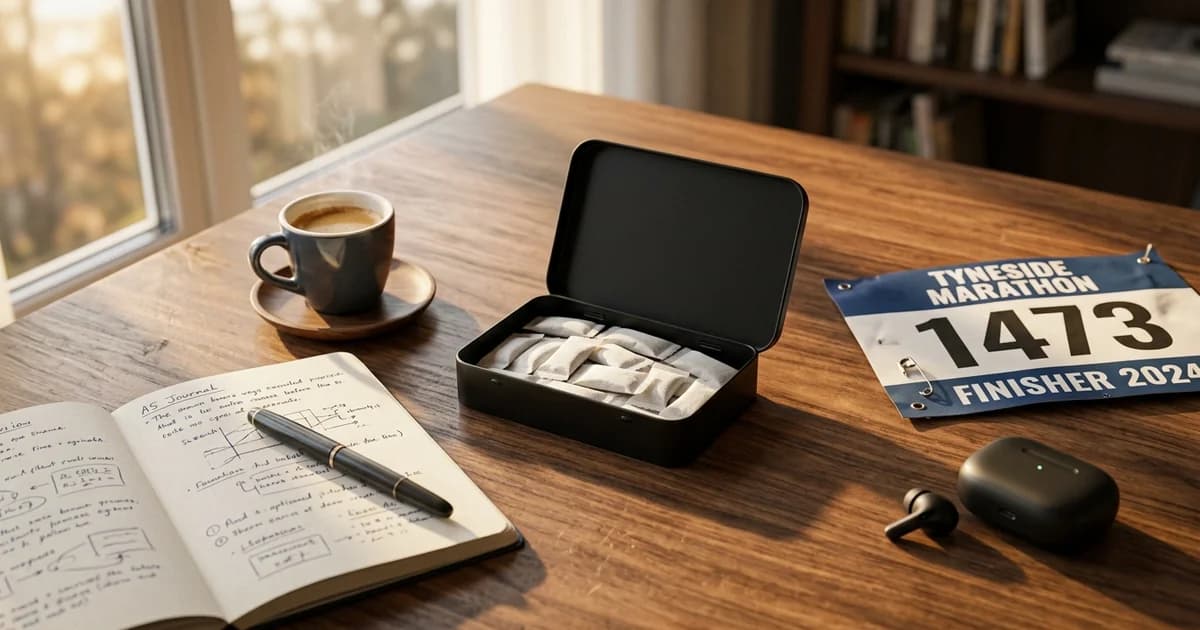
5 Moments When a Nootropic Pouch Outperforms Everything Else
You already have a coffee maker, a cabinet of supplements, and maybe a pre-workout tub collecting dust on the counter. So why would you reach for a nootropic pouch instead? Because knowing when to use a nootropic pouch matters more than the pouch itself. Timing, format, and context determine whether a cognitive tool actually delivers, or just adds noise.
The right compound in the wrong moment is a waste. A double espresso at 3 PM wrecks your sleep. A pre-workout pill that takes 45 minutes to kick in doesn't help when you're already warming up. The format has to match the situation. These five moments are where a sublingual nootropic pouch, specifically one built around a caffeine-plus-nootropic stack, has a clear structural advantage over every other option.
Key Takeaways:
- A nootropic pouch delivers active compounds through the oral mucosa, producing faster onset than capsules or drinks.
- The best time to take a nootropic pouch is when you need fast-acting, sustained focus without disrupting what you're already doing.
- Situations that demand discretion, portability, and a long duration window (6-8 hours) are where pouches pull ahead of coffee, pills, and energy drinks.
- A multi-compound stack combining caffeine, L-theanine, theacrine, and methylliberine outperforms single-ingredient options in both speed and staying power.
1. The 6 AM Deep-Work Block (When Coffee Is Still Brewing)
Most people's peak cognitive window opens within the first few hours after waking. As Rise Science explains, your circadian rhythm drives peaks and dips in energy throughout the day, directly affecting attention, working memory, and the ability to learn new skills. For many, that early-morning window is the most valuable block on the calendar.
The problem? Coffee takes time. Grinding, brewing, waiting for it to cool. Then the caffeine itself needs 30-45 minutes to reach peak plasma levels through digestion. A sublingual pouch bypasses the GI tract entirely, and the sublingual delivery bioavailability advantage explains why onset is so much faster than capsules. Compounds absorb through the oral mucosa, which is why sublingual delivery is often more bioavailable than oral ingestion, reaching the bloodstream faster by skipping the digestive tract and first-pass liver metabolism.
That means you can place a pouch before your feet hit the floor and be locked in by the time you sit down at your desk. No kettle. No cleanup. No 40-minute lag. When your best cognitive hours are finite, shaving 20 minutes off onset time is not trivial.
Best for: Writers, programmers, founders, anyone protecting a pre-meeting deep-work window.
2. Back-to-Back Meetings (When You Can't Sip Anything)
Here's a scenario most professionals know too well: three consecutive meetings, no break longer than two minutes, and your focus is fading by meeting two. You can't brew coffee between calls. You can't chug an energy drink on camera without looking like you're barely surviving. You need something discreet that's already working before the next agenda loads.
A nootropic pouch sits under your lip. Nobody sees it, nobody knows it's there, and it doesn't require a single hand. That discretion matters in high-stakes environments. But the real advantage is duration. A single-ingredient caffeine hit from coffee or an energy drink peaks and fades within 1-3 hours. A multi-compound stack extends that window. Roon's product page reports peak effects within 30-60 minutes, with sustained focus lasting 6-8 hours. That's enough to cover an entire afternoon of calls from a single pouch placed before the first one starts.
Best for: Consultants, salespeople, remote workers stacking video calls, anyone in open-plan offices.
3. Exam Season (When Nootropic Pouch Timing Decides Your Grade)
College students are the world's most enthusiastic caffeine consumers, and also the most likely to use it wrong. A study published in Frontiers in Psychology found that caffeine produced a striking improvement in explicit memory performance for young adults during early-morning hours, their non-optimal time of day. The catch: you need the caffeine working during the exam, not peaking on the walk over and crashing by question fifteen.
This is where nootropic pouch use cases get specific. A pouch placed 15-20 minutes before a test begins delivers active compounds through the oral mucosa right as you need them. No bathroom break from a large coffee. No jittery hands from an energy drink slammed too fast. And the combination of caffeine with L-theanine matters here. A 2021 systematic review in PMC found that the caffeine and L-theanine combination improved attention function during stress loading. L-theanine has also been shown to increase alpha brain wave power under stress conditions, which is associated with relaxed alertness, exactly the state you want during a high-pressure exam.
The sustained 6-8 hour duration means a single pouch covers even the longest finals. No re-dosing. No mid-exam crash.
Best for: Students during finals, anyone taking certification exams, bar exam candidates, standardized test takers.
4. Pre-Workout (When Your Pre-Workout Is Too Much)
Traditional pre-workout supplements are designed for one thing: maximum acute stimulation. They load 200-400 mg of caffeine, pile on beta-alanine (hello, face tingles), and add ingredients you can't pronounce. For a heavy squat session, maybe that's fine. For a 6 AM run, a lunchtime gym session, or a sport that demands coordination and reaction time, it's overkill.
The International Society of Sports Nutrition's position stand on caffeine confirms that caffeine consistently improves exercise performance at doses of 3-6 mg/kg body mass. For a 75 kg person, that's 225-450 mg. But the same review notes that alternative caffeine sources like caffeinated gum and mouth rinses improve performance, primarily in aerobic exercise, partly because of faster absorption. A sublingual pouch operates on the same principle.
A nootropic pouch with 80 mg of caffeine paired with L-theanine, methylliberine, and theacrine won't give you the skin-crawling buzz of a 350 mg pre-workout scoop. That's the point, and it illustrates why the format question of pouches versus pills drinks and gummies matters as much as the ingredient list. A randomized crossover study on e-gamers found that the combination of caffeine, TeaCrine, and Dynamine improved cognitive performance and reaction time without negatively affecting mood. For training that requires focus and coordination (martial arts, climbing, tennis, CrossFit), that profile is more useful than raw stimulation.
Best for: Lunchtime lifters, endurance athletes, anyone training after work who still needs to sleep later. Typical dose: 80 mg caffeine via pouch, placed 15-20 minutes before training.
5. The Night Shift (When Do Nootropic Pouches Work Best? Right Here.)
About 16% of US wage and salary workers have non-standard schedules outside a regular 9-to-5. For overnight nurses, security personnel, warehouse workers, and emergency responders, the cognitive challenge isn't just staying awake. It's maintaining accuracy and decision-making quality when your circadian rhythm is screaming at you to sleep.
A Cochrane review on caffeine for shift workers found that caffeine reduced errors compared to placebo, with one trial showing the caffeine group made fewer errors than even a nap group. But standard coffee creates a logistical problem on night shifts. It requires a break to prepare, a clean mug, access to a kitchen. And the timing is tricky: too much caffeine too late, and your post-shift sleep is destroyed.
A pouch solves the logistics. Place it at the start of your shift, and the multi-compound stack keeps you sharp for 6-8 hours without a liquid. No coffee breath during patient interactions. No energy drink cans piling up at your workstation. And because theacrine does not appear to produce tolerance with repeated daily use, the pouch you use on night fourteen works the same as the one you used on night one.
Best for: Nurses, doctors on call, security staff, warehouse workers, long-haul drivers (during rest-stop planning, not while driving).
Quick Comparison: Nootropic Pouch vs. the Alternatives
| Factor | Nootropic Pouch | Coffee | Energy Drink | Pre-Workout Powder | Nootropic Capsule |
|---|---|---|---|---|---|
| Onset time | 5-15 min (sublingual) | 30-45 min | 20-30 min | 30-45 min | 45-60 min |
| Duration | 6-8 hours (multi-compound) | 1-3 hours | 1-3 hours | 1-2 hours | Varies |
| Hands-free | Yes | No | No | No | Yes (after swallowing) |
| Discreet | Yes | No | No | No | Yes |
| Caffeine per serving | 50-80 mg (typical) | 95 mg (avg cup) | 80-300 mg | 150-400 mg | 50-200 mg |
| Nootropic stack | Often yes | No | Rarely | Rarely | Often yes |
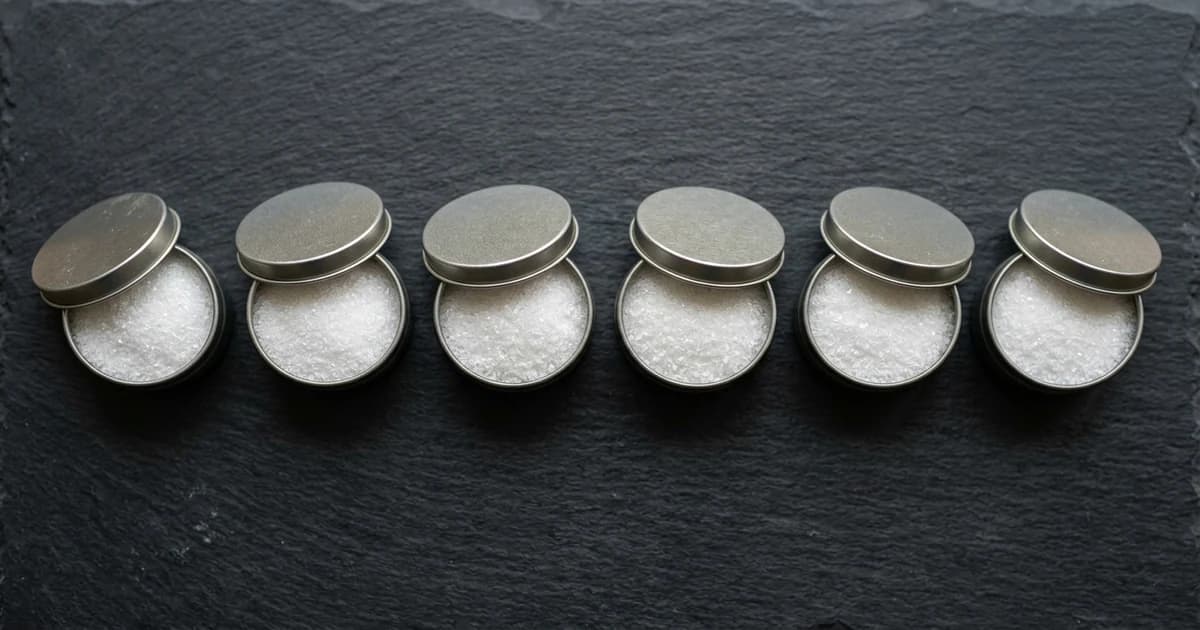
| Portability | Pocket-sized tin | Needs prep/cup | Can/bottle | Requires water + shaker | Bottle of pills |
| Crash likelihood | Low (with L-theanine) | Moderate | High | High | Low-Moderate |
How to Get the Most Out of a Nootropic Pouch
Timing is everything, but so is technique. A few principles to maximize what you get from each pouch:
Place it right. Sublingual or upper-lip placement against the gum gives the best mucosal contact. Don't chew it. Let the compounds absorb.
Time it to your task, not your clock. The best time to take a nootropic pouch isn't "8 AM" or "before lunch." It's 15-20 minutes before your highest-priority cognitive task begins. That could be 6 AM or 10 PM.
Don't stack blindly. If your pouch contains 80 mg of caffeine, factor that into your daily total. Roon's product page recommends a maximum of 3 pouches in 24 hours with at least 2 hours between them, provided you have no other caffeine intake. Respect the ceiling.
Stop 8 hours before bed. Caffeine's half-life is roughly 5-6 hours, but full clearance takes longer. If you sleep at 11 PM, your last pouch should be no later than 3 PM.
The Pouch That Was Built for These Moments
Most nootropic pouches on the market are caffeine-only or rely on proprietary blends that hide individual doses, a key distinction when weighing pouches versus nootropic pills. Roon takes a different approach: four compounds at published doses. Each pouch contains 80 mg caffeine, 60 mg L-theanine, 25 mg methylliberine (Dynamine), and 5 mg theacrine (TeaCrine). The formula is designed so that caffeine provides the initial lift, L-theanine smooths the curve, methylliberine accelerates onset, and theacrine extends the duration to 6-8 hours without tolerance buildup.
That's the stack behind each of the five moments above. Fast enough for the 6 AM block. Sustained enough for back-to-back meetings. Discreet enough for exam halls and night shifts. Controlled enough for training.
If any of these scenarios sound like your Tuesday, give it a try.
Roon Team