Are Nicotine Pouches Bad for Your Teeth? What the Dental Evidence Actually Says
Roon Team
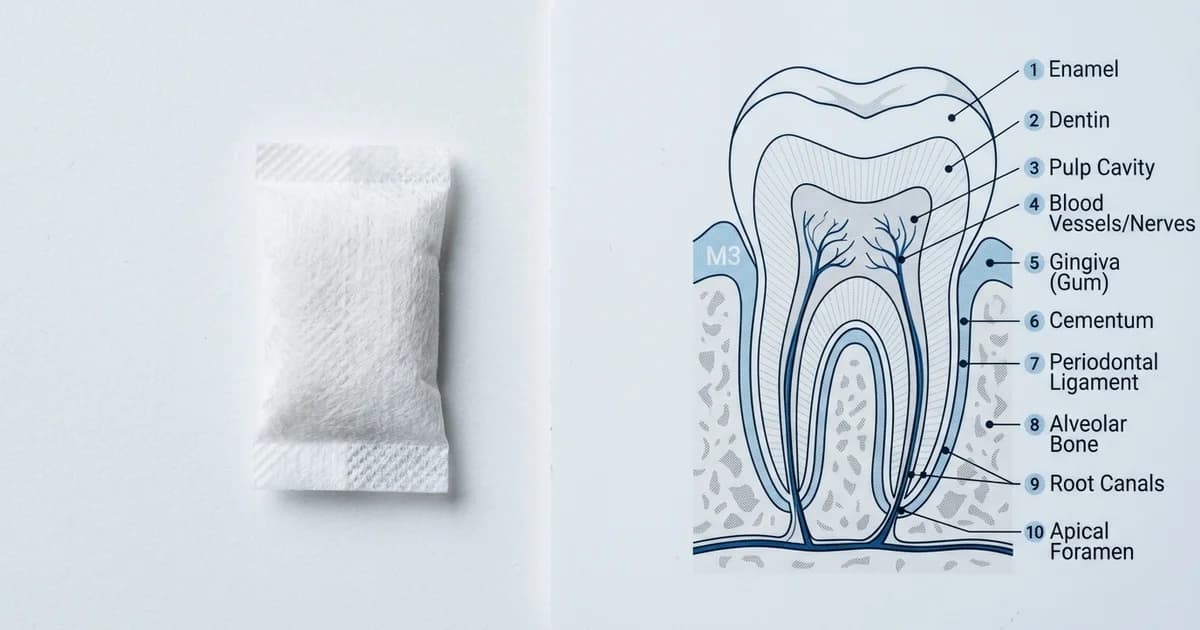
Are Nicotine Pouches Bad for Your Teeth? What the Dental Evidence Actually Says
Short answer: yes, nicotine pouches can affect your teeth and gums, and the damage tends to show up right where you park the pouch. Are nicotine pouches bad for your teeth is one of the most common questions dentists field from patients who switched off cigarettes and assumed they were in the clear. The honest reply is more nuanced than a yes or a no.
The tobacco is gone, which matters a great deal. The nicotine is not, and neither is the mechanical habit of pressing a chemical-loaded pouch against the same patch of gum every day.
Here is what the clinical literature shows about nicotine pouches, teeth, gums, and enamel, minus the marketing spin from either side.
Key Takeaways
- Nicotine pouches most often cause gum irritation, recession, and white oral lesions at the exact site where the pouch sits, not broad tooth decay.
- Nicotine is a vasoconstrictor. It cuts blood flow to your gums, which can hide the early bleeding that normally warns you about gum disease.
- Direct enamel erosion from pouches has weak evidence so far, but dry mouth and acidic flavorings raise cavity risk indirectly.
- Pouches are widely considered less harmful to the mouth than smoking or traditional tobacco snus, but "less harmful" is not the same as "harmless."
- Any product you hold in your mouth for hours carries local irritation risk, including nicotine-free options.
Are Nicotine Pouches Bad for Your Teeth and Gums? The Direct Answer
Current dental research points to real, localized effects on your gums and oral tissue, with weaker evidence for direct damage to the enamel itself. The gums take the hit before the teeth do.
A 2024 systematic review in BMC Oral Health, which followed PRISMA methodology, looked at the available studies on nicotine pouch use. Although studies on the impact of nicotine pouches on oral health status are scarce, available evidence showed that nicotine pouches could affect oral mucosa and gingival status, and the malignant potential of the oral lesions is still of concern.
The review was blunt about the state of the science. We do not have decades of long-term data because these products are new. What we do have consistently flags the soft tissue in your mouth as the first thing to react.
The pattern in the studies is specific. Oral mucosal changes at the site of placement were common among nicotine pouch users, with lesions ranging from slight wrinkling to various white lesions, seemingly related to the units consumed per day and the duration of usage. In one dataset, the most frequent oral adverse effects reported by participants were mouth lesions, sore mouth, and a strange jaw sensation.
Notice the theme. Placement site. Frequency. Duration. This is a dose-and-location problem, not a mystery.
How Nicotine Pouches Affect Your Gums
Gum recession at the placement site
Where you put the pouch, your gum recedes. That is the clearest signal in the case literature.
Dentists have documented young, otherwise healthy users developing localized recession and white patches exactly where they habitually park their pouch. In two published cases, a young adult male using nicotine pouches daily at a single site for under a year showed isolated gingival recession at the placement site plus leukoplakia, a white-patch lesion corresponding to the placement region, with imaging and biopsy consistent with mechanical and chemical irritation from chronic pouch exposure.
Recession matters because it exposes the root of the tooth. Root surfaces are not protected by enamel, so once the gum pulls back, that part of the tooth becomes more vulnerable to decay and sensitivity.
Nicotine restricts blood flow to your gums
Nicotine is a vasoconstrictor. It narrows the small blood vessels feeding your gum tissue, and that has a sneaky downstream effect.
Reduced blood flow starves gum tissue of oxygen and nutrients, which slows healing and can quietly advance gum disease. It also suppresses the one symptom most people rely on to catch a problem early. According to Essex Dental Professionals, nicotine reduces blood flow to the gums, which can limit bleeding and swelling in the early stages, meaning periodontal disease may continue to advance without obvious symptoms and delaying diagnosis and treatment.
Think about what that means at the sink. Non-users see pink in the spit and book a dentist visit. Nicotine users often see nothing, so the problem grows in silence.
Irritation, blisters, and white lesions
The mechanical and chemical contact irritates the tissue directly. A histopathology case series found this goes deeper than surface redness. It concluded that nicotine pouches impacted oral mucosa with white lesions that revealed important changes at the cellular level.
Most irritation is reversible if you stop or rotate placement. Persistent lesions are a different story. A white patch or sore that lasts more than two weeks is a reason to see a dentist, not to wait it out.
Do Nicotine Pouches Damage Teeth Enamel Directly?
The evidence for direct enamel erosion from nicotine pouches is currently weak. The bigger enamel risk is indirect, and it runs through saliva and acidity.
Here is the reassuring part. Most nicotine pouches are sugar-free, which removes the single biggest driver of cavities. The concern is what the pouch does to your mouth's chemistry, not sugar.
Dry mouth is the real enamel threat. Nicotine can reduce saliva flow, and saliva is your enamel's main defense system. Saliva neutralizes acid and delivers minerals back to the tooth surface. When it dries up, that protection fades. Research on dry mouth notes that decreased saliva leads to longer acid exposure on enamel, greater retention of fermentable carbohydrates, and altered oral microbiota that favor cavity-causing species, all of which accelerate demineralization.
Acidic flavorings are a smaller, theoretical risk. Some pouch formulations use flavorings that lower the pH in your mouth, and repeated acid exposure can soften enamel. One dental guide puts it plainly: PouchDaddy's review notes that if a pouch is highly acidic, repeated exposure could theoretically affect enamel over time, but modern nicotine pouches are generally designed to be oral friendly and there is currently no strong clinical evidence showing significant enamel erosion directly caused by nicotine pouches.
So the story on nicotine pouches and enamel is this. Direct erosion, unproven. Cavity risk from dry mouth, plausible and worth managing.
Nicotine Pouches vs. Other Nicotine Products: An Oral Health Comparison
Nicotine pouches sit lower on the oral-harm scale than smoking or tobacco-based snus, mostly because they skip combustion and tobacco leaf. That ranking is where most of the "safer" messaging comes from, and it is broadly fair.
Combustion is the difference-maker. Smoking exposes your mouth to heat and thousands of chemicals; pouches do not. Tobacco snus contains actual tobacco and its associated nitrosamines, while modern pouches are tobacco-free.
| Product | Tobacco? | Combustion? | Main oral risks |
|---|---|---|---|
| Cigarettes | Yes | Yes | Gum disease, tooth loss, oral cancer, staining |
| Tobacco snus | Yes | No | Gum recession, lesions, nitrosamine exposure |
| Nicotine pouches | No | No | Localized gum recession, white lesions, dry mouth |
| Nicotine gum (NRT) | No | No | Jaw/gum soreness, dry mouth |
An analysis comparing pouch chemistry to smokeless tobacco and nicotine replacement products found the gap is measurable. Researchers reported that in ZYN and nicotine replacement products, no nitrosamines or PAHs were quantified, and the number of quantified harmful constituents was similar between the two and found at low levels.
Still, "cleaner than tobacco" leaves plenty of room for local damage. As one 2026 comparison summarized it, nicotine pouches sit lower on the risk spectrum than snus because they contain no tobacco at all, but neither product is without risk, and nicotine dependence and oral health effects remain a concern.
How to Reduce Oral Damage If You Use Nicotine Pouches
You cannot make a nicotine pouch harmless, but you can cut the concentrated, single-site pressure that drives most of the visible damage.
- Rotate placement. Do not park every pouch in the same spot. Moving it around your mouth spreads out the mechanical and chemical exposure instead of hammering one patch of gum.
- Drink water. Counter the dry mouth that raises your cavity risk. Hydration keeps saliva working on your enamel.
- Choose lower-strength pouches. Higher nicotine means stronger vasoconstriction and more concentrated exposure at the site. Less nicotine, less local stress.
- Keep your dentist informed. Because nicotine can mask bleeding, your dentist needs to know you use pouches so they probe for the silent signs of gum disease.
- Watch the two-week rule. Any white patch, sore, or lesion that lingers beyond two weeks deserves a professional look.
The Bottom Line on Pouches and Your Mouth
Nicotine pouches are not neutral for your oral health. The strongest evidence points to localized gum recession and white lesions at the placement site, driven by nicotine's effect on blood flow and by direct chemical and mechanical contact. Enamel erosion is more of an indirect worry, running mostly through dry mouth and cavity risk rather than proven direct damage.
They are almost certainly gentler on your mouth than cigarettes or tobacco snus, because they drop the combustion and the tobacco leaf. That is a genuine step down in risk, not a clean bill of health.
The practical takeaway is simple. Nicotine is the ingredient doing most of the harm in your gums, and the habit of concentrating it in one spot makes it worse. If your goal is focus or a nicotine-free routine, the smartest move is to separate what you actually want from the nicotine you may not need.
Frequently Asked Questions
Do nicotine pouches damage teeth or just gums?
The evidence points mostly at your gums and soft tissue, not your teeth directly. Studies consistently find gum recession and white lesions at the pouch placement site. Direct enamel damage has weak evidence. The main risk to your actual teeth is indirect, through dry mouth reducing saliva's protective, acid-neutralizing role, which raises your long-term cavity risk. Sugar-free formulas help, but they do not remove the gum concern.
Can nicotine pouches cause gum recession?
Yes, and the recession usually appears exactly where you place the pouch. Case reports document young, healthy users developing localized gum recession after less than a year of daily single-site use. Two things drive it: nicotine narrows the blood vessels feeding your gums, and the pouch presses chemically and mechanically on the same tissue every day. Rotating placement and using lower-strength pouches reduces, but does not eliminate, this risk.
Are nicotine pouches worse than smoking for your teeth?
No, most dental evidence rates them as less harmful to your mouth than smoking. Cigarettes add combustion, heat, and thousands of chemicals that drive gum disease, tooth loss, and oral cancer. Pouches skip all of that and are tobacco-free. That said, "less harmful than smoking" is a low bar. Pouches still carry real risks of gum recession, lesions, and dry mouth that you should not ignore.
Do nicotine pouches erode enamel?
There is currently no strong clinical evidence that nicotine pouches directly erode enamel. Most are sugar-free, which removes the main cavity driver. The theoretical risk comes from acidic flavorings lowering your mouth's pH, plus dry mouth reducing the saliva that normally remineralizes enamel. If you use pouches, staying hydrated and keeping up regular dental cleanings addresses most of this indirect enamel risk.
Why don't my gums bleed even though I use nicotine pouches?
That is precisely the concern dentists raise. Nicotine is a vasoconstrictor, so it reduces blood flow to your gums and suppresses bleeding. Bleeding gums are one of the earliest warning signs of gum disease, so when nicotine hides that signal, periodontal problems can advance quietly. The absence of bleeding is not proof of healthy gums when you use nicotine. Tell your dentist so they can check properly.
How long do nicotine pouch mouth lesions last?
Mild irritation often fades within days once you stop or move the placement site. Persistent lesions are different. A white patch, sore, or leathery texture that lasts more than two weeks warrants a dental evaluation to rule out anything more serious. Because some tissue changes are painless, they are easy to miss without a professional exam, which is why regular checkups matter for pouch users.
Are there nicotine-free alternatives if I only want focus?
Yes. If nicotine is the part of your gums' problem, and you were mainly using pouches for alertness or focus, nicotine-free and tobacco-free oral products exist. These use ingredients like caffeine and L-theanine instead of nicotine. Keep in mind that any product held in your mouth for extended periods carries some local irritation consideration, so placement rotation and good oral hygiene still apply.
If You Wanted Focus, Not Nicotine
Read the dental research and one theme repeats: nicotine is the ingredient doing the damage to your gums. If you first reached for pouches to stay sharp through a long day, the nicotine was never the point. It was the delivery vehicle you tolerated.
That is the gap Roon is built to fill. Roon is a zero-nicotine, tobacco-free sublingual pouch that uses a four-ingredient stack for focus: 80 mg caffeine, 60 mg L-theanine, 25 mg methylliberine (Dynamine), and 5 mg theacrine (TeaCrine). It is designed to kick in within 5 to 10 minutes and hold a steady 6 to 8 hours of focus with no jitters, no crash, and no tolerance buildup.
To be clear about what Roon is not: it is not a nicotine cessation treatment, and it makes no dental health claims. Any product you hold in your mouth, nicotine-free ones included, carries local irritation considerations, so rotate placement and keep up your oral hygiene. If focus was the goal all along, try Roon and leave the nicotine out of the equation.
Written by Roon Team