What Are Caffeine Pouches Made Of? Five Labels, No Tobacco
What Are Caffeine Pouches Made Of? Five Labels, No Tobacco
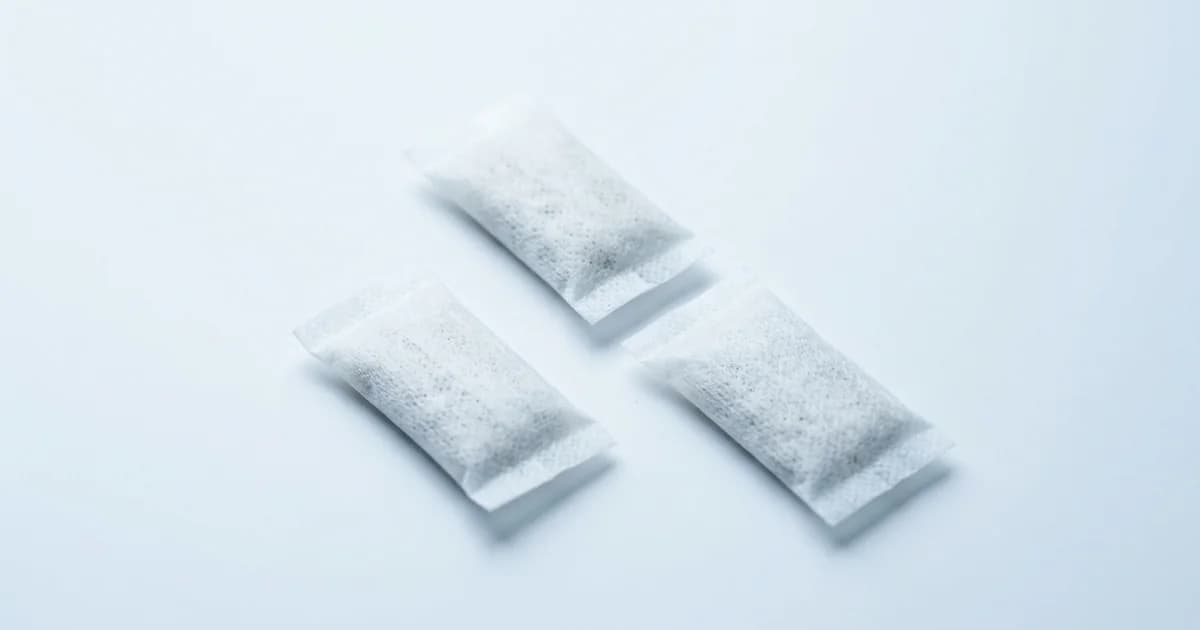
Caffeine pouches are made of a plant-fiber filler holding 50 to 200 mg of caffeine per pouch (on the labels below), plus a sugar-free sweetener, flavor, a salt or pH adjuster and a moisture agent, all inside a porous fiber pouch with no tobacco leaf and no nicotine. Roon, for example, prints 80 mg of caffeine and 60 mg of L-theanine alongside Dynamine and TeaCrine, plus 13 other ingredients from microcrystalline cellulose to silicon dioxide, sucralose among them.
Caffeine pouch ingredients, role by role
Every brand's label reads a little differently, but the ingredient roles are the same. The table below maps each role to what you will actually see printed on a tin.
| Ingredient role | Typical examples | What it does | Any caution |
|---|---|---|---|
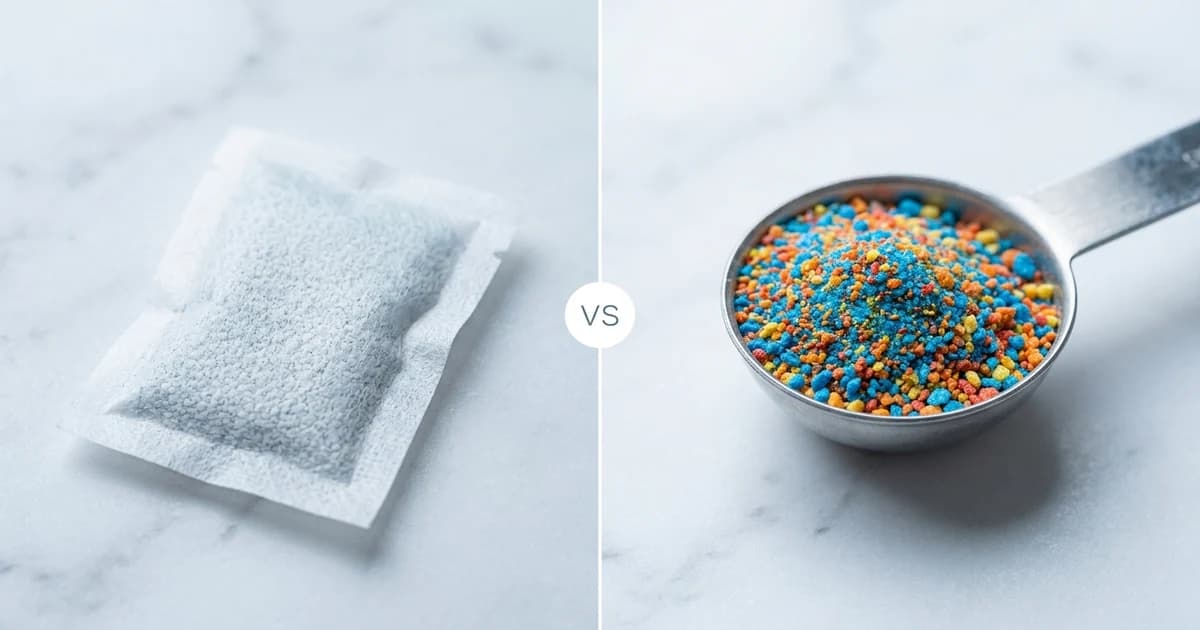
| Pouch material | Non-woven plant-cellulose fiber fleece | Holds the powder; lets saliva in and caffeine out | Do not swallow the pouch (Roon label: "Choking hazard. Do not swallow pouch.") |
| Filler / base | Microcrystalline cellulose (MCC), plant fibers | Bulk and structure; Grinds: MCC "is a plant-based powder that works well as the base...because it helps deliver flavor and caffeine" | Inert plant fiber; makes up most of the pouch weight |
| Active | Caffeine anhydrous ("pharmaceutical-grade" on Nectr), caffeine from green coffee beans (Wip), coffee (Grinds coffee line) | The stimulant; mg per pouch is the number to check | Count it toward FDA's 400 mg/day guideline for most healthy adults |
| Other actives (some brands) | L-theanine, taurine, B vitamins, alpha-GPC, L-tyrosine, methylliberine, theacrine | Brand-specific add-ons for focus or energy | Often undosed on brand PDPs (NZE, Grinds Energy Blend); check mg when they are listed |
| Sweeteners | Sucralose, acesulfame potassium, xylitol, stevia (steviol glycosides) | Cover caffeine's bitterness without sugar | Sucralose and ace-K are FDA-approved food additives; high-purity stevia is GRAS-notified; xylitol is a permitted sugar alcohol |
| Bitterness masker | Listed as such on Roon's label | Further offsets caffeine's bitter taste | Composition not itemized on labels |
| Flavor | "Natural and artificial flavoring," mint, menthol | Taste | "N&A" means at least part of the flavoring is synthetic |
| Cooling agent | WS-3, stabilised menthol (Grinds) | Cool sensation without strong mint odor; WS-3 activates the TRPM8 cold receptor in cell studies | Intensity varies; can feel strong to new users |
| Humectant | Vegetable glycerin (VG), glycerin | Keeps the powder moist and soft | GRAS (21 CFR 182.1320) |
| pH adjuster / buffer | Sodium bicarbonate (sodium carbonate in many nicotine pouches) | Sets the pouch's pH for taste and stability | The evidence that pH drives absorption is from nicotine products, not caffeine; brands do not publish caffeine-pouch pH values |
| Salt and minerals | Sodium chloride, sodium gluconate, zinc gluconate | Flavor and trace mineral content | Small amounts |
| Flow / anticaking, oil, preservative | Silicon dioxide and MCT oil (Roon), sodium benzoate (Grinds) | Keep powder free-flowing, carry flavor, extend shelf life | Silicon dioxide is an FDA-approved anticaking food additive (21 CFR 172.480) |
Source: brand labels and product pages (checked Oct 2026); FDA and eCFR listings in Sources.
Do caffeine pouches have tobacco or nicotine?
No. A caffeine pouch has no tobacco leaf and no nicotine, and brands say so on the label. Nectr prints "Nicotine: 0mg Tobacco: 0mg." Grinds says it is "100% tobacco-free and nicotine-free." NZE states on its product page: "Tobacco-free and nicotine-free."
One important distinction: nicotine pouches also contain no tobacco leaf. In its ZYN authorization, the FDA describes nicotine pouches as "small synthetic fiber pouches containing nicotine." So "tobacco-free" on its own does not guarantee "nicotine-free." Always look for "0 mg nicotine" on the label. Since April 14, 2022, FDA regulates nicotine from any source as a tobacco product; caffeine-only pouches are not in that regulatory category. For more on how caffeine pouches differ from nicotine pouches, see the Roon comparison guide, and for a broader look at tobacco- and nicotine-free pouches, the category guide covers every type.
What five brands actually print on the label
We compared the published labels of five caffeine pouch brands. We did not lab-test any product. Every entry below is copied from the brand's own page so you can verify it yourself. Roon makes one of these products and this page links to it.
| Brand (product) | Caffeine per pouch | Filler / base | Sweeteners | pH adjuster | Other listed ingredients | Source |
|---|---|---|---|---|---|---|
| Grinds (Energy, Wintergreen) | 80 mg | MCC | Sucralose, acesulfame potassium | None listed | N&A flavoring; Energy Blend (caffeine, taurine, niacin, glucuronolactone, pantothenic acid, pyridoxine HCl, cyanocobalamin); glycerin; salt; stabilised menthol; sodium benzoate preservative | getgrinds.com PDP |
| Nectr (Energy, Fresh Mint) | 50 mg | Cellulose fiber | Acesulfame potassium, sucralose | Sodium bicarbonate | Pharmaceutical-grade caffeine, N&A flavoring | nectr.energy PDP |
| Wip (Energy) | 100 mg or 200 mg | Not published | Not published | Not published | Caffeine from non-GMO green coffee beans, B vitamins (niacin, B6, B12), chromium; full ingredient list not in page text | wip.com FAQ |
| NZE (Energy) | 50 mg | Not published | Stevia, xylitol ("No artificial sweeteners") | Not published | L-theanine, alpha-GPC, L-tyrosine (undosed on PDP) | nzepouches.com PDP |
| Roon (our product, not ranked) | 80 mg (plus 60 mg L-theanine, Dynamine, TeaCrine) | MCC | Sucralose | Sodium bicarbonate | Bitterness masker, sodium gluconate, N&A flavoring, MCT oil, VG, zinc gluconate, water, WS-3, sodium chloride, silicon dioxide | takeroon.com/supplement-facts |
Source: each brand's own product page, checked Oct 2026. "Not published" means the information was not shown in the page text on that date.
Roon's full printed "Other Ingredients" order is: MCC, Bitterness Masker, Sodium Gluconate, N&A Flavoring, MCT Oil, Sucralose, VG, Sodium Bicarbonate, Zinc Gluconate, Water, WS-3, Sodium Chloride, Silicon Dioxide (13 items).
Why is there baking soda in a caffeine pouch?
Sodium bicarbonate is baking soda, classified as GRAS (21 CFR 184.1736). Both Nectr and Roon list it on their caffeine pouch labels, and many nicotine pouch brands use it too.
In nicotine pouches, raising pH converts more nicotine into its un-ionized (free-base) form, which crosses the oral mucosa more easily. A study modified a single smokeless tobacco product to pH 8.3 with sodium carbonate versus pH 5.4 with citric acid and found that pH is a primary determinant of buccal nicotine absorption (Pickworth et al. 2014). But caffeine is a different molecule, and no caffeine pouch brand publishes its pouch pH or claims a caffeine-absorption benefit from the buffer. In caffeine pouches, sodium bicarbonate serves taste and stability. For a closer look at whether caffeine pouches irritate gums, see that guide.
Are caffeine pouches natural?
Mostly plant-derived base, but rarely "all natural." The FDA has no formal definition of "natural" from rulemaking; its longstanding policy means nothing artificial or synthetic has been added to a food that would not normally be expected in it.
Sucralose and acesulfame potassium are FDA-approved synthetic sweeteners. WS-3 is a synthetic cooling compound. "N&A flavoring" includes an artificial component by definition. Grinds, Nectr and Roon all use sucralose. NZE avoids artificial sweeteners by using stevia and xylitol instead. For a deeper dive on the sweetener split, see sucralose vs stevia. None of the brands here that publish a full ingredient list (Grinds, Nectr, Roon) would qualify as "natural" under that FDA policy.
Safety notes on the ingredients
Caffeine is the ingredient that matters most for safety. The FDA cites 400 mg a day as a guideline for most healthy adults, and warns that roughly 1,200 mg consumed rapidly can cause toxic effects including seizures. Caffeine pouches are not recommended for children, pregnant or breastfeeding people, or anyone sensitive to caffeine. Do not swallow the pouch itself. Count every pouch toward your total caffeine from coffee, tea and energy drinks, and talk to your doctor before using caffeine products if you take prescription medication or have a heart rhythm condition, high blood pressure or anxiety. Sugar alcohols like xylitol are permitted sugar substitutes that, per FDA, "do not promote tooth decay." For guidance on daily limits, see how many caffeine pouches a day.
Related from Roon
- What caffeine anhydrous is and how it works
- Sucralose vs stevia in pouches and drinks
- How caffeine pouches differ from nicotine pouches
Frequently Asked Questions
Are caffeine pouches vegan?
Grinds states that its pouches contain "no animal products or animal-derived ingredients, including our glycerin," though the brand is not yet officially certified vegan. Other brands on this list do not publish a vegan claim or certification. If a vegan label matters to you, contact the brand directly and ask about the glycerin source and any shared-equipment disclosures.
What is MCC in a pouch?
MCC stands for microcrystalline cellulose. It is a fine powder made from plant fiber (typically wood pulp) and it forms the bulk of the material inside most caffeine pouches. MCC does not dissolve in saliva, which is why it holds its shape in your mouth. Grinds lists it first on its label, and calls it "the base of our energy pouches."
Do caffeine pouches have sugar?
None of the five brands above list sugar as an ingredient, and Wip's FAQ says "no sugar." The four that publish their sweeteners use sugar-free ones: sucralose, acesulfame potassium, stevia or xylitol. Roon, for instance, has zero calories and zero grams of sugar per pouch, sweetened with sucralose.
Do you swallow the pouch or the juice?
You do not swallow the pouch. Place it between your gum and cheek, let it sit, and discard it after use; Nectr says "Do not chew or swallow the pouch." Swallowing your saliva during use is normal, and Wip's directions say so ("Swallow your saliva"). The pouch itself is a choking hazard.
A Label You Can Read Line by Line
Most caffeine pouches share the same short list of materials: plant fiber, caffeine, sweetener, flavor, a salt or buffer, and a moisture agent. The difference is whether the brand prints all of it.
Roon prints its full ingredient list on its supplement-facts panel: 13 other ingredients from MCC to silicon dioxide, plus four actives (80 mg caffeine, 60 mg L-theanine, methylliberine as Dynamine and theacrine as TeaCrine). It is sweetened with sucralose, not stevia, and it contains natural-and-artificial flavoring. Zero tobacco, zero nicotine, zero sugar.
The reason it is built around 80 mg of caffeine, about a small coffee, instead of 200 mg is duration. Methylliberine slows caffeine clearance: a randomized PK study (n=12) using 100 mg methylliberine with 150 mg caffeine found caffeine's half-life extended from 7.2 ± 5.6 to 15 ± 5.8 hours (study). Roon uses a lower dose of methylliberine with less caffeine, so the study dosed 4x the methylliberine and roughly 1.9x the caffeine. The direction of the effect applies; the exact numbers do not. The felt window is 6 to 8 hours, and for that reason you should keep your last pouch at least 8 hours before you plan to sleep. If you are leaving nicotine pouches and want the same ritual with caffeine and zero nicotine, Roon fits. It is a caffeine product, not a nicotine-replacement therapy. Tins start from $9.16 a tin, with a 30-day money-back guarantee on a first order.
Sources
- FDA: Spilling the Beans (caffeine safety)
- FDA: High-Intensity Sweeteners
- FDA: Use of the Term "Natural" on Food Labeling
- FDA: Regulation of Non-Tobacco Nicotine Products
- eCFR 21 CFR 172.831 (sucralose)
- eCFR 21 CFR 172.480 (silicon dioxide)
- eCFR 21 CFR 184.1736 (sodium bicarbonate)
- Behrendt et al. 2004, Br J Pharmacol 141:737 (WS-3 / TRPM8)
- Pickworth et al. 2014, J Addict Res Ther 5(3) (pH and nicotine absorption)
- FDA: ZYN PMTA Authorization (Jan 2025)
Written by Roon Team