Sucralose vs Stevia: Taste, Blood Sugar, Gut Health, and Which One Is in Your Drink
Sucralose vs Stevia: Taste, Blood Sugar, Gut Health, and Which One Is in Your Drink
If you are weighing sucralose vs stevia, here is what the evidence actually says. Sucralose is a synthetic, chlorinated sugar molecule about 600 times sweeter than table sugar. Stevia (specifically, purified steviol glycosides) is plant-derived and 200 to 400 times sweeter. Both deliver zero calories and zero sugar. Neither is a clear universal winner. Sucralose tastes more like sugar. Stevia has a cleaner record on blood glucose and gut bacteria. Where you land depends on which tradeoff matters more to you.
Key Takeaways
- Taste: Sucralose is closer to sugar's flavor profile. Stevia triggers bitter receptors and often carries a licorice-like aftertaste, though newer Reb M blends reduce it.
- Blood sugar: Human trials show stevia with a cleaner acute glycemic profile. Sucralose, especially paired with carbohydrates, has shown impaired insulin sensitivity in multiple RCTs.
- Gut health: Sucralose has more evidence of microbiome disruption. A 2022 Cell trial found sucralose impaired glycemic response in a microbiome-dependent way; stevia did not in that trial.
- Regulatory path: Sucralose is an FDA-approved food additive. High-purity steviol glycosides hold GRAS status. Whole-leaf stevia is not approved as a sweetener.
Sucralose vs Stevia: Side-by-Side Comparison
| Criterion | Sucralose | Stevia (Steviol Glycosides) |
|---|---|---|
| Origin | Synthesized from sucrose via selective chlorination | Extracted and purified from Stevia rebaudiana leaves |
| Sweetness vs sugar | ~600x (FDA) | ~200-400x, varies by glycoside blend (FDA High-Intensity Sweeteners) |
| FDA status | Approved food additive (21 CFR 172.831) | GRAS (high-purity ≥95% steviol glycosides only) |
| ADI | 5 mg/kg/day (FDA); 15 mg/kg/day (JECFA/EFSA) | 4 mg/kg/day steviol equivalents (JECFA/EFSA) |
| Calories | 0 per serving | 0 per serving |
| Heat stable | Yes | Mostly, flavor can shift at high heat |
| Aftertaste | Minimal | Bitter/licorice note, especially with Reb A |
| Glycemic evidence | Multiple RCTs show impaired glucose metabolism | Neutral or mildly positive in human trials |
| Gut microbiome | Dysbiosis shown in RCTs at moderate doses | Some composition changes, less glycemic disruption |
Where They Come From
Sucralose starts as table sugar. Manufacturers replace three hydroxyl groups with chlorine atoms, creating a molecule your body barely absorbs. Fully synthetic, approved by the FDA under 21 CFR 172.831.
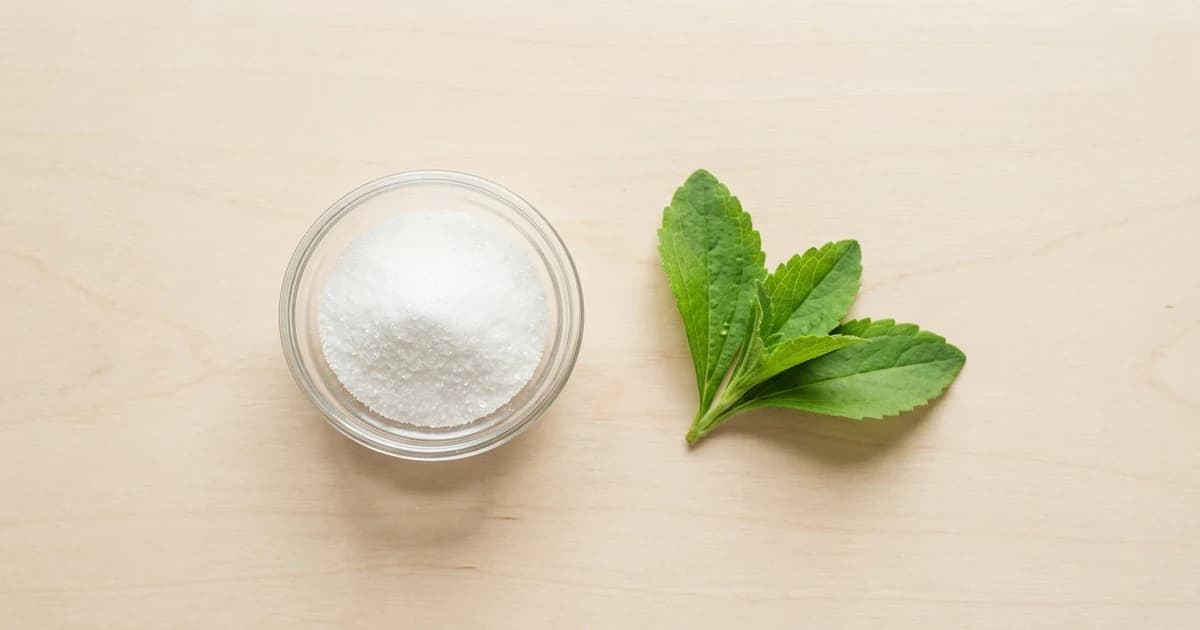
Stevia comes from Stevia rebaudiana, a plant native to South America. But the FDA has not approved whole-leaf stevia or crude extracts as sweeteners. Only high-purity steviol glycosides (≥95% Reb A and related compounds) carry GRAS status. Plant-derived, yes. Unprocessed, no.
Sucralose vs Stevia Taste: Why Stevia Has That Aftertaste
Sucralose wins the taste test for most people. It was designed to mimic sugar, and it does. No metallic tang, no lingering bitterness.
Stevia's problem is biological. Steviol glycosides activate two human bitter taste receptors, hTAS2R4 and hTAS2R14, per Roland et al. (2012) in the Journal of Agricultural and Food Chemistry. That activation produces the characteristic bitter, licorice-like finish.
The industry is shifting from Reb A (cheapest, most bitter glycoside) toward Reb M and Reb D, which deliver a rounder sweetness with less bitterness. If you tried stevia five years ago and hated it, a Reb M product might change your mind. But even the best stevia blends carry a slight aftertaste that sucralose does not.
Blood Sugar: Stevia Looks Cleaner in Human Trials
This is where stevia pulls ahead.
A crossover trial by Anton et al. (2010) in Appetite (n = 19 lean, 12 obese adults) found that a stevia preload before a meal did not raise postprandial blood glucose or insulin compared to sucrose. Gregersen et al. (2004) in Metabolism showed a modest blunting of the postprandial glycemic response after 1 g stevioside in type 2 diabetic subjects.
Sucralose tells a different story. A 14-day RCT by Romo-Romo et al. (2018) in The American Journal of Clinical Nutrition (n = 66) found decreased insulin sensitivity at just 15% of the acceptable daily intake. Dalenberg et al. (2020) in Cell Metabolism showed that sucralose consumed with carbohydrate (not alone) impaired glucose metabolism over two weeks. The Suez et al. (2022) Cell trial (n = 120) found sucralose and saccharin impaired glycemic response in a microbiome-dependent way, while stevia did not. You can read the full sucralose blood sugar trial breakdown for a deeper look.
The caveat: most of these trials are small and short-term. The evidence is directional, not settled. But for the question "is stevia better than sucralose for glucose swings and mental focus?", the human data favors stevia.
Gut Microbiome: Sucralose Has More Flags
A 10-week RCT by Méndez-García et al. (2022) in Microorganisms (n = 40, 48 mg sucralose/day) found gut dysbiosis in the sucralose group, including a 3-fold increase in Blautia coccoides and a 0.66-fold decrease in Lactobacillus acidophilus. Glucose AUC rose 8% and peak insulin 32% in numerical terms, but these glycemic differences did not reach statistical significance.
The Suez et al. (2022) trial adds context. While both sucralose and stevia altered gut microbial composition, only sucralose (and saccharin) produced measurable glycemic impairment tied to those microbial changes. Stevia shifted some markers but did not worsen glycemic control.
That is not a clean bill of health for stevia's gut effects. It means the functional consequences documented so far are less concerning.
The Sucralose-6-Acetate Question
A 2023 in vitro study by Schiffman et al. in the Journal of Toxicology and Environmental Health, Part B found that sucralose-6-acetate, a trace byproduct in commercial sucralose, caused DNA damage in human blood cells and increased gut permeability in cultured intestinal tissue. The paper argued trace amounts could exceed EFSA's threshold of toxicological concern of 0.15 micrograms per kilogram of body weight per day.
Important context: these are in vitro findings, not human outcomes. The FDA has not changed its safety position on sucralose. Worth watching, not worth panicking over.
Which Sweetener Is in Your Drink?
| Product | Sweetener(s) |
|---|---|
| Splenda packets | Sucralose + dextrose + maltodextrin (~3.3 kcal/packet, rounds to 0 by FDA rules) |
| Celsius Original | Sucralose (a sucralose-sweetened energy drink) |
| Monster Zero Ultra | Sucralose + acesulfame potassium + erythritol |
| Zevia | Stevia leaf extract only, no erythritol (Zevia SEC filing, 2025) |
| Roon | Sucralose + natural-and-artificial flavor |
Roon uses sucralose for taste stability in a sublingual format, where aftertaste is amplified by direct gum contact. Stevia's bitter-receptor activation would be more noticeable there, not less. For another zero-sugar drink breakdown or everyday sugar substitute options, those guides cover more products.
Sucralose or Stevia for Diabetics?
Talk to your prescriber or registered dietitian. Both are zero-calorie, zero-sugar, and FDA-permitted, but the trial data is not identical.
Stevia's acute glycemic profile in human trials is cleaner. Sucralose has shown insulin sensitivity decreases in controlled settings, particularly alongside carbohydrates. Those differences may matter for someone actively managing blood sugar, but no sweetener study replaces individualized medical guidance.
Pick This If...
Pick sucralose if you want the closest taste to sugar with zero aftertaste, you need heat stability for baking, and flavor compliance (actually using the sweetener consistently) is your priority.
Pick stevia if you prefer a plant-derived option, you are trying to minimize glycemic or gut microbiome disruption, or you want fewer metabolic flags in the current RCT literature.
Neither is "safe" and the other "dangerous." Both are FDA-permitted at their respective ADIs. Most people consuming either in normal amounts are well within regulatory limits.
Conclusion: The Tradeoff Nobody Wants to Hear
There is no zero-risk sweetener. Sucralose tastes better and works in more applications, but it carries more concerning signals in blood sugar and gut microbiome trials. Stevia has a cleaner metabolic track record in the human evidence published through 2025, but it tastes worse for most people and the long-term data is still limited. The "which sweetener is healthier" question does not have a single answer. It has a set of tradeoffs that depend on what you are optimizing for.
Frequently Asked Questions
Is Splenda the same as sucralose?
Splenda is a brand name. Its active ingredient is sucralose, but the packets also contain dextrose and maltodextrin as bulking agents, adding roughly 3.3 calories per packet (rounds to zero under FDA labeling rules). Pure liquid sucralose does not include those fillers.
Does stevia raise blood sugar?
In human trials published to date, stevia has not raised blood glucose. Anton et al. (2010) found stevia preloads did not increase postprandial glucose or insulin compared to sucrose. Gregersen et al. (2004) found a modest blunting of postprandial glycemia in type 2 diabetic subjects.
Does sucralose raise blood sugar?
Sucralose alone may not spike glucose acutely, but several RCTs show it impairs insulin sensitivity and glucose metabolism over days to weeks, especially with carbohydrates. See the full sucralose blood sugar trial breakdown for the complete evidence.
Is stevia really natural?
The stevia plant is natural. The purified steviol glycosides in your drink went through multi-step extraction and purification. The FDA only grants GRAS status to high-purity (≥95%) steviol glycosides, not whole-leaf stevia or crude extracts. "Plant-derived" is accurate. "Natural" depends on your definition.
Can you bake with stevia?
Yes, but results vary. Stevia is heat-stable, but it does not caramelize or provide bulk the way sugar does. Sucralose handles high heat more predictably, which is one reason it dominates baking-oriented sweetener products.
Which sweetener is better for keto?
Both are zero-calorie and zero-sugar, making either keto-compatible. Stevia has the edge if you are also trying to minimize any potential insulin response. Sucralose has the edge if taste compliance keeps you from reaching for actual sugar.
How much sucralose is too much?
The FDA's acceptable daily intake is 5 mg/kg/day. For a 70 kg (154 lb) person, that is 350 mg per day. A typical diet soda contains about 40 to 70 mg of sucralose. JECFA and EFSA set a higher ADI of 15 mg/kg/day.
Why Roon Uses Sucralose, and Why We Say So
Roon is a zero-nicotine oral pouch built for sustained focus. It contains sucralose and natural-and-artificial flavor. Not stevia.
The reason is format-specific. A sublingual pouch sits against your gum tissue for minutes. Bitter-receptor activation from steviol glycosides is amplified in that window, not masked by carbonation or cold temperature the way it is in a canned drink. Sucralose delivers a clean mint taste with no aftertaste in that format. The tradeoff, as this article lays out, is that sucralose carries more metabolic and microbiome flags in the current trial literature than stevia does. We think that is worth stating plainly rather than pretending the choice was obvious.
Roon starts from $9.16 per tin on a subscription, with a first-order 7-day money-back guarantee (one per customer, nothing to send back). If the sucralose element matters to you, now you know exactly what is in it and why.
Related from Roon
- Is Celsius Bad for You?
- Does Sucralose Raise Blood Sugar?
- Blood Sugar and Brain Function
- Replacement for Sugar in Coffee
Written by Roon Team