Tired but Wired at Work: Why You Feel Exhausted Yet Can't Focus
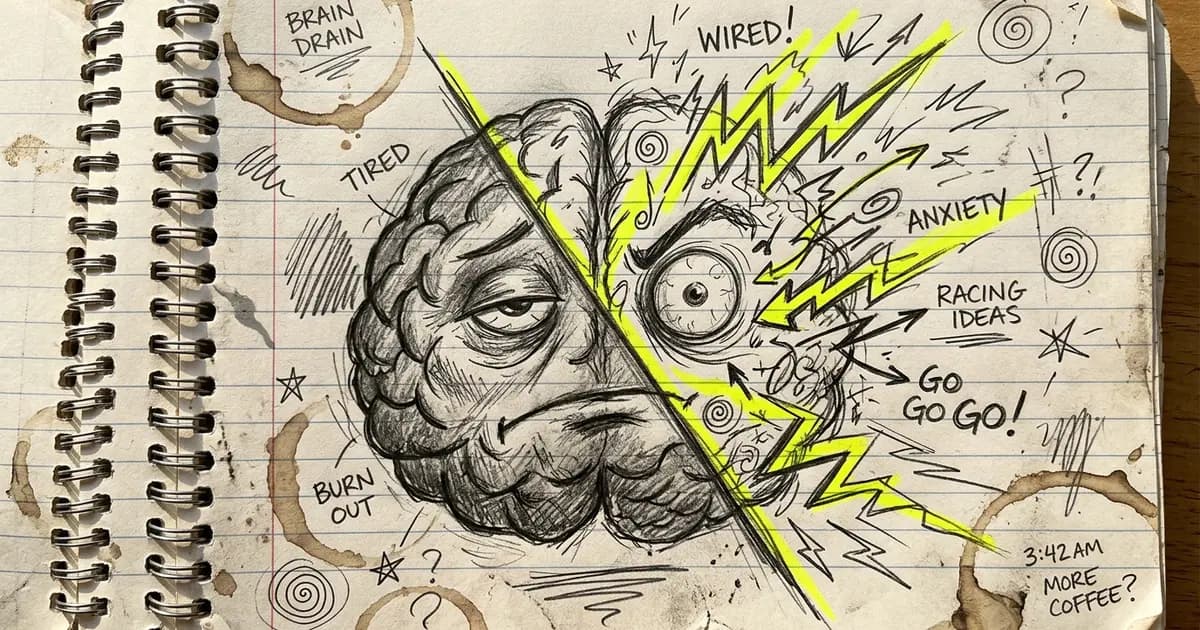
You sit down at your desk with a full cup of coffee and zero ability to use it. Your body feels heavy. Your mind is racing. This is the tired but wired state, and it is one of the most frustrating ways to spend a workday: too drained to think clearly, too keyed up to rest.
It is not laziness, and it is not a character flaw. It is a measurable mismatch between your alertness systems and your fatigue systems, and the gap is usually driven by stress hormones, broken sleep, and caffeine timing across a workday.
Here is what is actually happening in your brain, and how to fix the tired but wired loop without white-knuckling your way through the afternoon.
Key Takeaways
- "Tired but wired" usually reflects a dysregulated stress-hormone rhythm, not "adrenal fatigue," which is not a recognized medical diagnosis.
- The feeling of being wired but tired happens when high cortisol and adrenaline keep your nervous system switched on while sleep debt keeps your body exhausted.
- Caffeine masks fatigue by blocking adenosine, but poor timing and high doses can deepen the crash and the anxious edge.
- The most reliable fixes target sleep, light exposure, caffeine timing, and a calmer form of focus, not more stimulation.
What "Tired but Wired" Actually Means
Tired but wired describes a state where you feel physically exhausted yet mentally overstimulated at the same time. Your brain's alertness signal is stuck on high while your energy reserves run on empty.
Most people blame "adrenal fatigue." The science does not support that label. According to UCLA Health, the feeling has more to do with your hypothalamic-pituitary-adrenal (HPA) axis than with worn-out adrenal glands, and adrenal fatigue itself is not a medically recognized diagnosis. Don't assume that feeling tired but wired indicates adrenal fatigue. It likely has more to do with your hypothalamus-pituitary-adrenal (HPA) axis.
That distinction matters. The problem is not that your glands are broken. The problem is timing: the right hormones are showing up at the wrong hours.
The Cortisol Rhythm Behind Being Wired but Tired
Your cortisol is supposed to follow a daily curve. It peaks in the morning to wake you up and tapers through the evening so you can fall asleep.
When chronic stress scrambles that curve, the wave flattens or shifts. Cortisol levels rise during stress to assist fight or flight functions, and the adrenal glands respond to stress by releasing hormones like cortisol and adrenaline that increase your blood pressure and heart rate. When those hormones surge at the wrong time of day, your nervous system stays activated even when you are exhausted.
This is the engine behind the classic pattern. People who feel this way often report waking up exhausted and depending on caffeine to stay awake, then crashing in the afternoon, only to get a "second wind" before bed and find they can't wind down or sleep soundly, perpetuating the cycle.
That last part is the trap. The night you most need sleep is the night your wired nervous system refuses to give it. So you wake up tired, lean harder on caffeine, and the loop tightens.
Why You Feel Anxious and Tired at the Same Time
Feeling anxious and tired at the same time is not a contradiction. It is what happens when an over-activated stress response collides with sleep debt.
Adrenaline and cortisol are designed to sharpen threat detection. When they linger, your brain treats an inbox like a predator. Your heart rate climbs, your thoughts loop, and your focus shatters into a dozen open tabs. Meanwhile, the underlying fatigue never lifts, because the hormones masking it are also the ones keeping you up at night.
Poor sleep makes this worse on both ends. Lost sleep raises emotional reactivity, which feeds anxiety, and anxiety then steals more sleep. If you want to understand the broader pattern, our guide on what causes brain fog and how to clear it covers how fatigue and stress blur into the foggy, can't-think-straight feeling.
How Caffeine Quietly Makes It Worse
Caffeine does not give you energy. It hides your fatigue. It works by blocking adenosine, the molecule that builds up through the day and tells your brain it is tired.
This is well established. Caffeine's primary mechanism is the blockade of adenosine A1 and A2 receptors, as described in this meta-analysis on the PMC research archive. When you block those receptors, the tiredness signal goes quiet for a few hours.
The catch is what happens next. Adenosine keeps accumulating behind the blockade. When the caffeine wears off, all of it lands at once, which is the afternoon crash you feel around 3 p.m. Stack a second or third large coffee on top, and you get more jitter, more anxious edge, and a deeper trough later.
High doses without anything to balance them tend to amplify the wired half of "tired but wired." That is the exact problem the next section solves.
How to Fix Tired but Wired: A Practical Order of Operations
If you want to fix tired but wired, work in this order. Foundation first, stimulants last.
- Anchor your light and wake time. Get bright light within an hour of waking and keep a consistent wake time. This is the strongest lever for resetting a shifted cortisol curve.
- Cap caffeine and time it early. Keep total caffeine moderate and stop by early afternoon so adenosine can clear before bed. Late caffeine is a direct cause of the night-time "second wind."
- Protect a wind-down window. Dim lights and step away from screens for 30 to 60 minutes before bed so your nervous system can downshift.
- Move during the slump. A 10-minute walk during the afternoon dip clears more fog than another espresso.
- Pair your stimulant with something calming. This is where ingredient choice matters more than dose.
That last point is the difference between focus and frazzle.
The L-Theanine and Caffeine Pairing
The most studied fix for the "wired" feeling is pairing caffeine with L-theanine, an amino acid found in tea. Together they sharpen attention while smoothing out the jittery edge.
In a randomized, placebo-controlled study indexed on ScienceDirect, researchers tested L-theanine and caffeine on attention tasks. The combination of l-theanine and caffeine markedly improved attention on a switch task as compared to the placebo.
A broader review backs this up. A combination of L-theanine and caffeine was reported to improve alertness and attentional switching accuracy in a meta-analysis of 10 acute randomized controlled trials in healthy adults. The theanine takes the harsh edge off the caffeine so you get clear-headed alertness instead of a racing pulse.
Comparing Common Fixes for the Tired but Wired Loop
Not every "energy" solution treats the same problem. Some mask fatigue, some address the root, and some make the wired feeling worse. Here is an honest comparison.
| Approach | What it targets | Onset | Crash / jitter risk |
|---|---|---|---|
| Extra black coffee | Masks fatigue via adenosine block | 20-45 min | High, especially late in the day |
| Energy drinks | High caffeine plus sugar | 15-30 min | High, sugar adds a second crash |
| L-theanine + caffeine pairing | Calm, focused alertness | 30-60 min | Low |
| Roon sublingual pouch | Clear-headed focus, no spike | 5-10 min | Low, built for a 6-8 hr no-crash window |
| Sleep and light fixes | The root cortisol rhythm | Days to weeks | None |
The stimulant options buy you hours. The sleep and light fixes buy you the actual problem. The smart play is to use a calmer stimulant while you repair the foundation underneath it.
Frequently Asked Questions
Is "tired but wired" a real medical condition?
The feeling is real, but "adrenal fatigue" is not a recognized diagnosis. UCLA Health attributes the tired but wired state to your HPA axis and stress-hormone timing rather than burned-out adrenal glands. If exhaustion is severe, persistent, or paired with other symptoms, see a doctor to rule out thyroid, sleep, or mood disorders. This article is educational and not medical advice.
Why do I feel anxious and tired at the same time?
Because the same stress hormones that keep you alert also keep you anxious. When cortisol and adrenaline stay elevated at the wrong time of day, your nervous system reads ordinary tasks as threats, which produces an anxious, racing feeling on top of underlying fatigue. Sleep debt amplifies both, since poor sleep raises emotional reactivity and reduces your capacity to focus.
Does caffeine fix or cause the wired but tired feeling?
Both, depending on dose and timing. Caffeine temporarily blocks the adenosine that signals tiredness, so it masks fatigue without removing it. Taken late or in large amounts, it deepens the eventual crash and adds an anxious edge, which feeds the wired but tired loop. Moderate, early, and paired with L-theanine is the version that helps rather than hurts.
How do I fix tired but wired without quitting coffee entirely?
Anchor a consistent wake time, get morning light, cap caffeine to a moderate dose taken before early afternoon, and protect a screen-free wind-down before bed. You do not have to quit caffeine. You have to time it and pair it with something calming like L-theanine so you get focus instead of jitter.
How long does it take to reset my cortisol rhythm?
Most people notice a difference in days once they fix wake time, light exposure, and caffeine timing, with the full benefit building over a few weeks of consistency. The rhythm responds to repetition, so the most important variable is doing the same things at the same times daily.
What is the afternoon crash and how do I avoid it?
The crash is the adenosine you suppressed all morning arriving at once when caffeine wears off, often around 3 p.m. Avoid it by keeping caffeine moderate, eating a balanced lunch with protein, taking a short walk during the dip, and skipping the second large coffee that only delays a bigger crash.
The Calm-Clarity Fix for a Brain Stuck in Overdrive
The tired but wired loop is rarely solved by adding more stimulation. It is solved by giving your brain clear-headed focus without the spike that tips you back into anxious and jittery.
That is the gap Roon was built for. Each sublingual pouch pairs 80 mg of caffeine with 60 mg of L-theanine, plus 25 mg of methylliberine (Dynamine) and 5 mg of theacrine (TeaCrine), the same caffeine-and-theanine logic the research above supports. It absorbs in 5 to 10 minutes and is designed for 6 to 8 hours of steady focus with no jitters, no crash, and no tolerance buildup.
To be clear about what it is not: Roon supports focus and clear-headed energy, but it is not a sleep aid and not a replacement for fixing your light, your wake time, or your rest. Repair the foundation, then use a calmer stimulant on top. If your afternoons keep slipping into foggy and frazzled, try Roon as the calm-clarity layer while you rebuild the rest.
Written by Roon Team