Roon Pouches Review: 5 Things That Happened When I Tried Them
Roon Team
5 Things That Happened When I Tried Roon's Cognitive Battery Tested Pouches
I'd been circling the nootropic pouch category for months, reading ingredient labels, comparing dosages, watching every UGC ad that crossed my feed. Then I ordered a tin of Roon. This is my honest roon pouches review experience after 30 days of daily use, covering what actually changed in my work, my habits, and my wallet.
I'm not a supplement influencer. I'm a 31-year-old content strategist who drinks too much coffee, used to vape at my desk, and has spent years trying to string together more than 90 minutes of real focus before my brain starts looking for exits. Consider this my roon nootropic review from someone who's tried most of the alternatives. Here's what happened.
Key Takeaways:
- Sublingual delivery meant I felt the effect within minutes, not the 30-60 minute wait I was used to with capsules and drinks.
- The pouch format replaced the hand-to-mouth ritual that kept pulling me back to nicotine.
- My deep work sessions went from roughly 90 minutes to a consistent 3+ hours.
- Switching from a daily coffee-plus-energy-drink habit saved me real money each month.
1. Brain Fog Cleared in Under 10 Minutes
The first thing I noticed, the very first time I tucked a Roon pouch under my lip, was speed. Not a caffeine jolt. More like someone adjusted the contrast on a slightly blurry screen. Within about five minutes, the low-grade mental haze I'd been carrying since lunch just... wasn't there anymore.
This tracks with the science. Sublingual absorption bypasses your digestive system entirely, delivering compounds directly into the bloodstream. According to National Addiction Specialists, sublingual delivery typically works within 2-5 minutes, avoiding the 30-60 minute delay common with oral pills. That's a real difference when you need to be sharp for a 2 PM call, not a 3 PM one.
Each Roon pouch contains 80 mg of caffeine paired with 60 mg of L-theanine. A 2025 double-blind crossover study published in the British Journal of Nutrition found that an L-theanine-caffeine combination improved selective attention and reaction time in sleep-deprived adults. That caffeine-plus-L-theanine pairing is doing real work here, and the sublingual format gets it into your system fast.
Best for: Afternoon slumps, post-lunch fog, or any moment you need to go from scattered to locked in.
2. My Nicotine Cravings Got Quieter
I didn't buy Roon to quit vaping, but weighing a nootropic pouch versus nicotine pouch options had been on my mind. Something unexpected happened around day five: I stopped reaching for my vape during work hours. Not because I was white-knuckling it. Because the ritual was already satisfied.
Here's what I mean. A huge part of nicotine dependence isn't just the chemical. It's the behavior. The hand-to-mouth motion. The act of putting something in your mouth when stress hits. Nicorette's own resource page acknowledges that oral fixation is a core component of tobacco and nicotine habits, and recommends substituting with gum, mints, or similar oral alternatives. A sublingual pouch checks that same behavioral box.
Roon's formula also includes 25 mg of methylliberine (Dynamine) and 5 mg of theacrine (TeaCrine). A randomized crossover study in Cureus found that a caffeine-Dynamine-TeaCrine combination improved cognitive performance and reaction time in young male esports players without interfering with mood. That mood stability matters. When you're trying to step away from nicotine, the last thing you need is something that makes you irritable or anxious.
Typical timeline: I noticed the behavioral shift by the end of my first week. The chemical cravings took longer, maybe two to three weeks to quiet down meaningfully.
3. My Deep Work Sessions Doubled
Before Roon, my focused work blocks looked like this: 60-90 minutes of real output, then a slow unraveling. Tab switching. Phone checking. A coffee run that turned into a 20-minute break. By hour two, I was mostly pretending to work.
After about two weeks of daily use, something shifted. I started consistently hitting three-hour deep work blocks. Sometimes longer. The difference wasn't that I felt wired. It was that I didn't feel the pull to stop.
This lines up with what Worklytics found in their 2025 research: knowledge workers who get at least 3.5 hours of daily focus time report being more productive than those with less. Most people don't hit that number. I wasn't hitting it. Now I do, regularly.
The sustained duration likely comes from how Roon's four ingredients interact. Caffeine and methylliberine provide the initial onset. L-theanine smooths out the jitter potential. And theacrine extends the tail. Roon's own Roon study tested their formula (Roon) against five other nootropic stacks using a cognitive battery, and it was the only intervention to show statistically significant improvements across response speed, processing speed, and working memory (N-back d-prime improved by 19.3%, p<0.01).
Best for: Writing, coding, studying, or any work that requires you to hold a complex problem in your head for hours.
4. My Meeting Recall Got Noticeably Sharper
This one surprised me. I sit through three to five video calls a day. Before Roon, I'd finish a meeting and immediately struggle to reconstruct what was actually decided. I'd rely on notes, transcripts, AI summaries. The information went in, but it didn't stick.
About three weeks into daily use, I started noticing I could recall specific details from meetings hours later without checking my notes. Not perfect photographic memory. Just a clear, reliable improvement in how much I retained.
A systematic review published in Cureus analyzed the cognitive effects of caffeine and L-theanine together and found that the combination produced faster working memory reaction times and better sentence verification accuracy compared to placebo. A separate meta-analysis in Nutrition Reviews covering 50 randomized controlled trials found small-to-moderate improvements in choice reaction time and attention switching accuracy within the first two hours of L-theanine plus caffeine intake.
Working memory is the mental scratchpad you use to hold information while you're processing it. Meetings are basically a working memory stress test. Better working memory means you're not just hearing what's said; you're encoding it.
Best for: Back-to-back meetings, lectures, or any situation where you need to absorb and retain information in real time.
5. I Saved Money (and That Wasn't Even the Goal)
Let's do the math on my old routine. I was buying one specialty coffee in the morning (roughly $5) and one energy drink in the afternoon (roughly $3-4). That's $8-9 per workday, or about $180 a month on caffeine alone. Empower Personal Dashboard data shows the average coffee drinker spent $44.50 a month on coffee as of May 2025, and that's just the coffee portion. Add energy drinks and you're well above that.
Roon replaced both. One pouch in the morning, sometimes a second in the early afternoon if the day is heavy. At 15 pouches per tin, and factoring in that I use one to two per day, the monthly cost is meaningfully lower than what I was spending before.
Here's how it compares:
| Daily Habit | Estimated Monthly Cost | Duration of Effect | Crash? |
|---|---|---|---|
| Specialty coffee + energy drink | $160-200 | 1-3 hours per drink | Yes |
| Coffee only (2x/day) | $90-150 | 1-3 hours per cup | Often |
| Nootropic capsules (e.g., Alpha Brain) | $50-80 | Varies | Sometimes |
| Roon (1-2 pouches/day) | Lower than coffee habit | 6-8 hours per pouch | No |
The real savings aren't just financial. I'm not standing in line at a coffee shop. I'm not crashing at 3 PM and buying another drink to recover. The time savings compound too.
Best for: Anyone spending $5+ a day on coffee and energy drinks who wants better performance for less money.
How I Actually Use Roon Day to Day
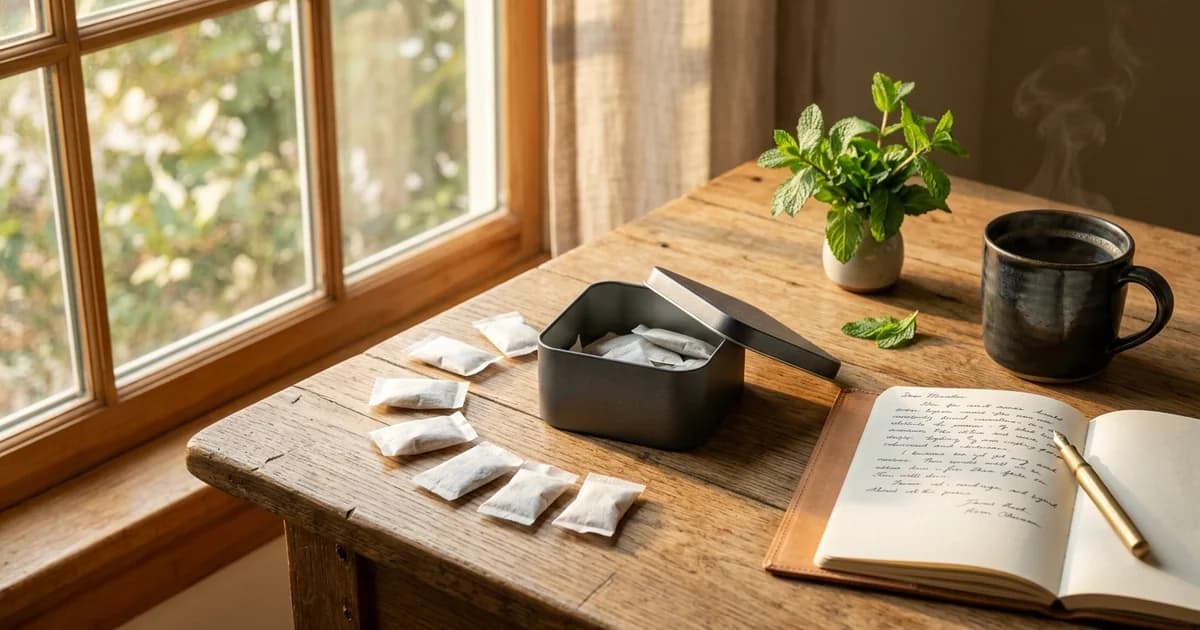
My routine is simple. One pouch around 8:30 AM, tucked under my upper lip while I start my first deep work block. The cool mint flavor is strong for the first minute or two, then settles into something more neutral. I leave it in for about 30 minutes.
If I have a heavy afternoon, meetings stacked or a writing deadline, I'll use a second pouch around 1 PM. Roon recommends a maximum of three pouches in 24 hours with at least two hours between them, and honestly, I've never needed more than two.
A few practical notes:
- Start with one. If you're caffeine-sensitive, 80 mg delivered sublingually hits differently than 80 mg in a cup of coffee. The onset is faster and the absorption is more efficient. Give yourself a day to calibrate.
- Pair it with a work ritual. Putting the pouch in has become my signal to focus. Phone goes on Do Not Disturb, browser tabs get closed. The ritual matters.
- Don't use it late. Roon suggests stopping at least 8 hours before bed, and I'd echo that. The sustained effect is real, and you don't want it running into your sleep.
The Bottom Line on Trying Roon Pouches
Thirty days in, here's my roon focus pouches review in one sentence: this is the first nootropic format that actually fits how I work. Pills take too long to kick in. Coffee is a rollercoaster. Energy drinks are sugar bombs with a two-hour shelf life. The nootropic energy pouch format gave me faster onset, longer duration, no crash, and replaced a bad habit I'd been trying to kick for years.
The formula is specific: 80 mg caffeine, 60 mg L-theanine, 25 mg methylliberine, 5 mg theacrine. Four ingredients, each with published research behind it, delivered sublingually for speed. No proprietary blend hiding the doses. No nicotine. No sugar.
If you've been cycling through coffee, energy drinks, and nicotine pouches trying to find something that supports sustained focus without the baggage, Roon is worth a serious look. I went in skeptical. I'm still using it a month later. That tells you more than any review can.
Written by Roon Team