What Are Nootropic Energy Pouches? 5 Reasons They're Replacing Energy Drinks
Roon Team
What Are Nootropic Energy Pouches? 5 Reasons They're Replacing Energy Drinks
The U.S. energy drink market hit $25 billion in 2024, and it's still growing. But a quiet shift is happening: people who want focus and energy are moving away from cans and toward something smaller, faster, and smarter. So what are nootropic energy pouches, exactly?
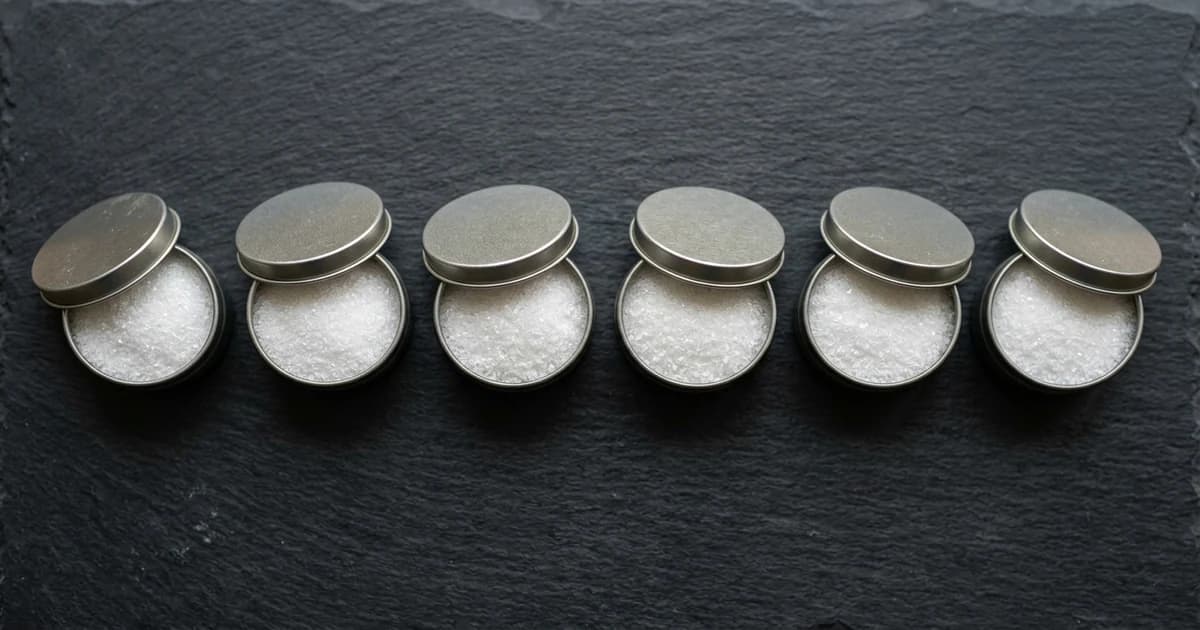
They're small, dry pouches you tuck between your lip and gum. Instead of nicotine, they contain cognitive-support compounds like caffeine, L-theanine, and other nootropics that absorb through the tissue in your mouth. No liquid, no sugar, no waiting 45 minutes for a pill to kick in. Just a pouch that delivers clean energy directly into your bloodstream.
If you've seen nicotine pouches like Zyn on the shelf and wondered whether there's a version built for focus instead of a nicotine fix, this is it. Below is a nootropic energy pouch explained in plain terms, plus five reasons the format is gaining ground so fast.
Key Takeaways:
- Nootropic energy pouches deliver cognitive-support ingredients sublingually, bypassing the digestive system for faster absorption than drinks or capsules.
- They contain zero nicotine and zero tobacco, making them a fundamentally different product from Zyn and similar oral nicotine brands.
- The best formulas pair caffeine with calming and sustaining compounds like L-theanine, theacrine, and methylliberine to smooth out the energy curve.
- They're portable, discreet, sugar-free, and cost less per serving than most canned energy drinks.
1. They're Not Nicotine Pouches (and the Difference Matters)
The energy pouches vs nicotine pouches question is the first thing to clear up, because the format looks identical. Nootropic energy pouches sit in the same spot as a Zyn, use the same pouch material, and feel similar in your mouth. But the contents are completely different.
Zyn pouches contain pharmaceutical-grade nicotine salt along with food-grade fillers, sweeteners, and flavorings. Nicotine is addictive. That's not a scare tactic; it's printed on every Zyn tin.
Nootropic pouches replace nicotine with ingredients designed to support focus and energy. A brand like Roon, for example, uses 80 mg of caffeine, 60 mg of L-theanine, 25 mg of methylliberine (Dynamine), and 5 mg of theacrine (TeaCrine) per pouch. No nicotine. No tobacco. No addiction risk from the active ingredients.
The nicotine pouch market surged 40% recently, which means the pouch format itself is mainstream. Nootropic versions simply redirect that form factor toward cognitive performance instead of nicotine delivery.
2. Sublingual Delivery Skips Your Stomach
Understanding how nootropic pouches work starts with the delivery method. You place the pouch between your lip and gum, and the active ingredients absorb through the oral mucosa, the thin tissue lining your mouth. This is called buccal or sublingual absorption, and it has real advantages over swallowing a pill or drinking a can.
A study published in the International Journal of Pharmaceutics found that caffeine delivered via buccal absorption reached peak plasma concentration faster than capsules, with time-to-peak ranging from 44 to 80 minutes for gum versus 84 to 120 minutes for swallowed capsules. The mouth's vascular tissue allows compounds to enter the bloodstream directly, bypassing first-pass metabolism in the liver, which can degrade active ingredients before they reach your brain.
When you swallow a capsule, it passes through your stomach acid and liver before reaching circulation. Each step strips away some of the active compound. Sublingual delivery sidesteps that entire process.
Typical onset: Most users report feeling effects within 10 to 15 minutes of placing a nootropic pouch, compared to 30 to 60 minutes for capsules or gummies.
3. They Deliver Cognitive Tone, Not Just a Caffeine Spike
Energy drinks give you a spike. You know the pattern: a rush of energy, maybe some jitters, then a crash two hours later. The NFHS reports that sugar crashes from energy drinks cause fatigue, irritability, difficulty concentrating, and shakiness. And a review in PMC found that higher energy drink consumption was associated with elevated anxiety levels.
The best nootropic pouches are designed around a different principle: sustained cognitive tone. That means pairing a stimulant with compounds that modulate how it hits your nervous system.
The caffeine plus L-theanine combination is the most studied example. A systematic review in Cureus found that combining caffeine and L-theanine improved attention task performance, while research in Nutritional Neuroscience showed the pair increased target discriminability and alpha-band brain activity compared to either ingredient alone.
Best for: People who want steady focus for deep work, not a short burst for a workout.
4. The Ingredient Stack Has Real Research Behind It
Not all nootropic pouches are created equal. Some are just caffeine in a pouch, which is fine if all you want is a caffeine hit. But the more interesting formulas combine multiple compounds that work through distinct neurochemical pathways.
The four ingredients to look for:
- Caffeine (stimulant): Blocks adenosine receptors, increasing alertness. The workhorse.
- L-Theanine (modulator): An amino acid from tea that promotes alpha brain wave activity, associated with calm focus. Takes the edge off caffeine without dulling it.
- Methylliberine / Dynamine (amplifier): A purine alkaloid that acts on dopamine and adenosine receptors. A 2023 study in PMC found it improved indices of well-being and affect in healthy adults.
- Theacrine / TeaCrine (sustainer): Structurally similar to caffeine but with a key difference. An eight-week study in the Journal of the International Society of Sports Nutrition found no evidence of habituation or tolerance at doses up to 300 mg per day. That's the ingredient that helps the effect last.
A randomized crossover study in Cureus tested the combination of caffeine, TeaCrine, and Dynamine in 50 young men and found that the triple stack improved cognitive performance and reaction time without negatively affecting mood, compared to caffeine alone or placebo.
Typical dose (Roon): 80 mg caffeine, 60 mg L-theanine, 25 mg methylliberine, 5 mg theacrine per pouch.
5. They're the Most Portable Energy Format That Exists
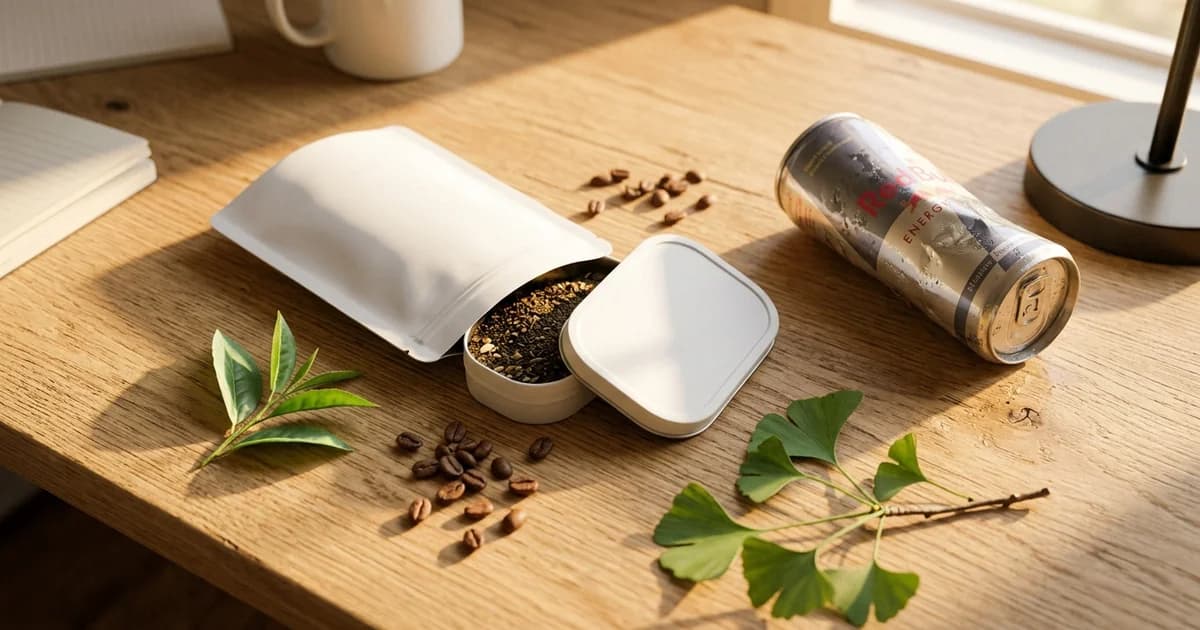
A can of Red Bull is 8.4 fluid ounces and costs around $2.99 at retail. It contains 80 mg of caffeine and 27 grams of sugar. You need a free hand, a flat surface, and ideally a recycling bin.
A nootropic pouch weighs about a gram. It fits in your pocket, your laptop bag, or your car's center console. You can use one during a meeting, on a plane, or in the middle of a focused work session without interrupting your flow. No liquid, no sugar, no calories, no cleanup.
The convenience factor is hard to overstate. For anyone who's tried to quietly crack open an energy drink during a Zoom call or a quiet office, the appeal is obvious.
| Feature | Energy Drink (Red Bull 8.4 oz) | Coffee (12 oz drip) | Nootropic Pouch (Roon) |
|---|---|---|---|
| Caffeine | 80 mg | ~135 mg | 80 mg |
| L-Theanine | 0 mg | 0 mg | 60 mg |
| Sugar | 27 g | 0 g | 0 g |
| Calories | 110 | ~5 | 0 |
| Additional Nootropics | None | None | Methylliberine, Theacrine |
| Onset Time | 20–40 min | 30–45 min | ~10–15 min |
| Portability | Low (liquid, cold) | Low (liquid, hot) | High (dry, pocketable) |
| Approximate Cost | ~$3.00 | ~$2.00–$5.00 | ~$1.00 per pouch |
Are Nootropic Pouches Safe?
This is a fair question, especially for a new category. Here's what the evidence says.
The individual ingredients in well-formulated nootropic pouches have strong safety profiles. Caffeine at 80 mg per serving is equivalent to a small cup of coffee. L-theanine is an amino acid naturally found in green tea with no known adverse effects at supplemental doses. Theacrine was studied at doses up to 300 mg per day for eight weeks with no clinically meaningful changes in safety markers.
The key is reading labels. Some brands load pouches with excessive caffeine or use proprietary blends that hide actual dosages. Look for products that list every ingredient and its exact dose. Avoid anything with nicotine if you're specifically looking for a nicotine-free option, and stick to brands that use studied, named-ingredient forms (like TeaCrine and Dynamine rather than generic "purine alkaloid blend").
If you're pregnant, nursing, or sensitive to caffeine, check with your doctor first. That applies to any caffeinated product.
Bottom Line: How to Choose the Right Nootropic Pouch
The category is young, and quality varies widely. Here's a quick filter for picking the right one:
- Check the label. Every active ingredient should be listed with its exact milligram dose. No proprietary blends. If a brand hides behind "focus blend: 200 mg," you have no idea what you're actually getting.
- Look for more than just caffeine. A pouch with only caffeine is just a caffeine pouch. A real nootropic pouch should include at least one compound that modulates or sustains the stimulant effect.
- Consider the research. Ingredients like L-theanine, theacrine, and methylliberine have published human studies behind them. That matters more than marketing copy.
- Think about your use case. If you need sustained focus for deep work, a multi-compound formula will serve you better than a single-ingredient caffeine hit that fades in 90 minutes.
Try the Pouch That Started With the Science
Roon was built around the research first, then put into a pouch. Four active nootropics, exact doses on the label, zero nicotine, zero sugar. Each pouch delivers 80 mg of caffeine paired with 60 mg of L-theanine, 25 mg of methylliberine, and 5 mg of theacrine for sustained, smooth focus.
If you've been relying on energy drinks or coffee to power through your workday and you're tired of the crash-and-repeat cycle, this is a cleaner way to stay sharp. Give it a try.