Rhodiola vs Ashwagandha for Energy and Focus
Rhodiola vs Ashwagandha for Energy and Focus: Which Adaptogen, and When
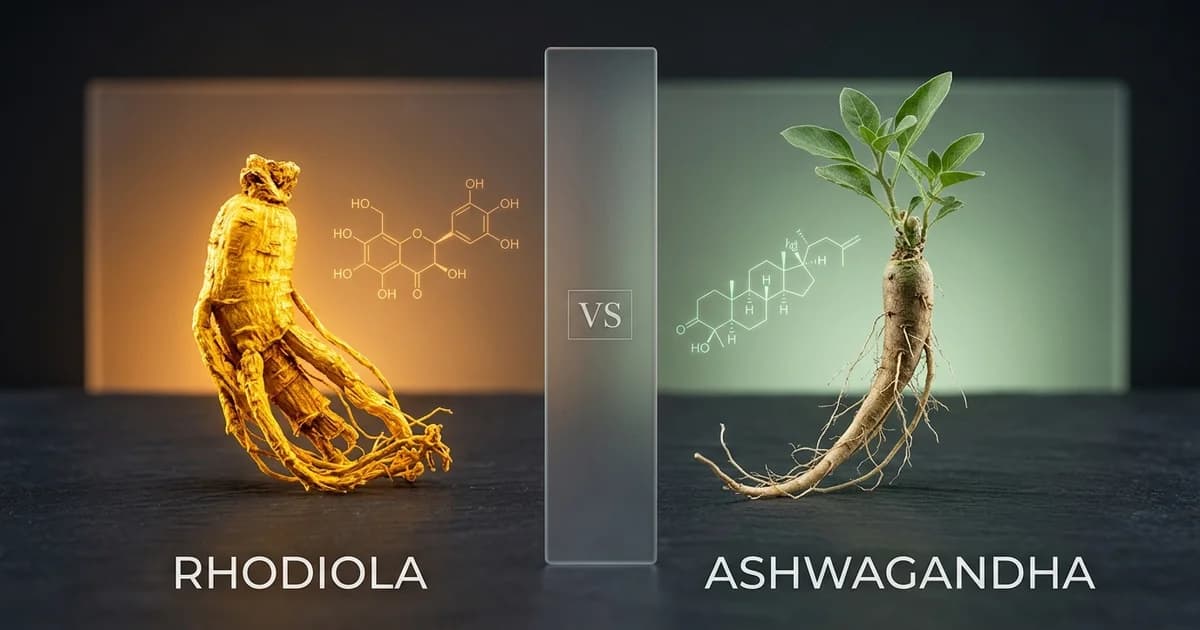
The rhodiola vs ashwagandha question has one clean answer once you separate it by timing. Rhodiola is your acute lever. It works in hours, sharpens focus, and cuts fatigue when you are under load, which makes it a daytime tool. Ashwagandha is your chronic lever. It works over weeks, lowers cortisol, and supports sleep, which makes it a nighttime or background tool. Take rhodiola in the morning and ashwagandha in the evening, and you stop forcing one herb to do a job it was never built for.
Most comparison articles treat these two as interchangeable "stress herbs." They are not. The mechanism, the onset, and the ideal time of day are different enough that picking the wrong one for your goal is the most common mistake people make.
This article is for informational purposes only and is not medical advice. If you have health concerns, are pregnant or breastfeeding, or are trying to cut down on caffeine or quit nicotine, talk to a healthcare provider.
Key Takeaways
- Rhodiola acts fast (roughly 30 minutes to 2 hours) and suits acute energy, focus, and fatigue resistance. Take it AM.
- Ashwagandha acts slowly (typically 1 to 2 weeks, with sleep and cortisol benefits building over 6 to 8 weeks). Take it PM.
- The two are complementary, not redundant: an AM/PM pairing covers both acute alertness and chronic stress load.
- Rhodiola can stack oddly with high-dose caffeine in sensitive people, so introduce it carefully if you already run a heavy coffee routine.
- A caffeine-and-L-theanine focus tool like Roon addresses acute daytime focus, a different job than either adaptogen, and is not a substitute for an adaptogen protocol.
The Fast Answer: Rhodiola for Now, Ashwagandha for the Long Game
Rhodiola is the adaptogen you reach for when you need to perform today. Its benefits show up quickly and are most visible when you are fatigued or stressed rather than well-rested. A systematic review in BMC Complementary and Alternative Medicine found that studies reporting a positive effect on mental fatigue used doses between 100 and 576 mg per day, with a wide safety margin across trials. The practical read: rhodiola is built for the day in front of you.
Ashwagandha plays a different game entirely. Its signature effects, lower cortisol and better sleep, accumulate with consistent daily use rather than appearing after a single dose. In the landmark Chandrasekhar 2012 randomized controlled trial, adults taking 300 mg of a high-concentration root extract twice daily for 60 days saw serum cortisol fall by roughly 28% versus placebo. That is a background recalibration, not a same-day jolt.
Rhodiola vs Ashwagandha: The Decision Table
The fastest way to choose is to match your goal to onset and time of day. Here is the side-by-side, with a Roon row included honestly for the acute-focus use case it actually serves.
| Adaptogen | Best for | Onset / time to effect | Key evidence | Typical dose | AM or PM |
|---|---|---|---|---|---|
| Rhodiola rosea | Acute energy, focus, fatigue resistance under stress | ~30 min to 2 hours; benefits build over 1 to 8 weeks | Mental-fatigue review: positive effects at 100 to 576 mg/day; 2022 clinical evidence review: meaningful improvement in anxiety symptoms, with Hamilton Anxiety Scale reductions comparable to psychopharmacological trials | 200 to 400 mg/day (3% rosavins, 1% salidroside) | AM |
| Ashwagandha | Chronic stress, cortisol load, sleep quality | ~1 to 2 weeks; sleep and cortisol build over 6 to 8 weeks | Chandrasekhar 2012: ~28% cortisol drop at 60 days, 300 mg twice daily | 300 to 600 mg/day (standardized root extract) | PM |
| Roon (not an adaptogen) | Acute daytime focus and alertness | ~5 to 10 minutes (sublingual) | 80 mg caffeine + 60 mg L-theanine is a studied focus-and-attention pairing | 1 pouch | AM / early PM |
Roon belongs in this table only as an honest contrast. It is a caffeine-based focus pouch, not an adaptogen, and it does not lower cortisol or build over weeks. More on that distinction below.
Why Rhodiola Works Fast: Onset in Minutes to Hours
Rhodiola's defining feature is speed. Where most herbal supplements demand weeks of loading, rhodiola can shift fatigue and mood within a single day, with the strongest effects appearing when you are already taxed.
The acute signal is real. A 2022 systematic review in Molecules found that participants treated with rhodiola showed meaningful improvement in anxiety symptoms, with reductions on the Hamilton Anxiety Rating Scale comparable to those seen in psychopharmacological trials, and consistent improvements in stress and mood across multiple clinical datasets. Other work supports same-day fatigue effects: in the WS 1375 chronic-fatigue trial using 2 x 200 mg, the largest single change appeared after just one week, then continued improving through week 8.
That is the rhodiola profile. You may feel something the first day, but the full effect compounds over a month of daily use. Morning dosing on an empty stomach is the standard protocol because rhodiola can feel stimulating, and taking it late can interfere with sleep.
Why Ashwagandha Works Slowly: The Cortisol and Sleep Curve
Ashwagandha is a cumulative herb, and judging it after one or two doses misses the point. Its mechanism centers on the HPA axis and cortisol, and those systems recalibrate over weeks, not hours.
The evidence is consistent on the timeline. The Chandrasekhar 2012 study measured its roughly 28% cortisol reduction at the 60-day mark, alongside meaningful improvements in perceived stress scores. Sleep follows a similar curve: across clinical work on standardized extracts, perceived sleep quality typically improves over a 6-to-8-week window of daily use, which is why a "try it for two days" approach almost always disappoints.
This is the case for PM dosing. Ashwagandha's calming, cortisol-lowering action pairs naturally with the evening wind-down, and the standard clinical dose lands at 300 to 600 mg per day of a standardized root extract. Patience is the active ingredient.
Stacking Them, and the Caffeine Interaction You Should Know
Taking rhodiola and ashwagandha together is common and generally well tolerated, because they work on different timelines and different problems. Rhodiola covers your acute daytime demand; ashwagandha manages your chronic background load. An AM rhodiola, PM ashwagandha split is the cleanest way to run both without them stepping on each other.
The one interaction worth flagging is caffeine. Rhodiola modulates dopamine and norepinephrine and can feel stimulating, so layering a full dose on top of an already heavy coffee routine can tip sensitive people into jitteriness or overstimulation. If you drink a lot of caffeine, introduce rhodiola at a low dose and watch how you respond before scaling up. Ashwagandha carries no such concern, since its calming direction runs opposite to caffeine and sits in the evening anyway.
There is no formal upper-limit guidance for mixing adaptogens, so the sensible move is to add one variable at a time. Start the rhodiola, hold for a week, then layer the ashwagandha, rather than launching both on the same day and guessing at what is doing what.
Where Roon Fits: Acute Focus, Not Adaptogen Work
Roon is a caffeine-based focus tool, not an adaptogen, and the honest framing matters here. It does not lower cortisol, it does not build over weeks, and it is not a replacement for rhodiola or ashwagandha. What it does is deliver acute daytime focus through a fast sublingual route, which is a different job than either herb performs.
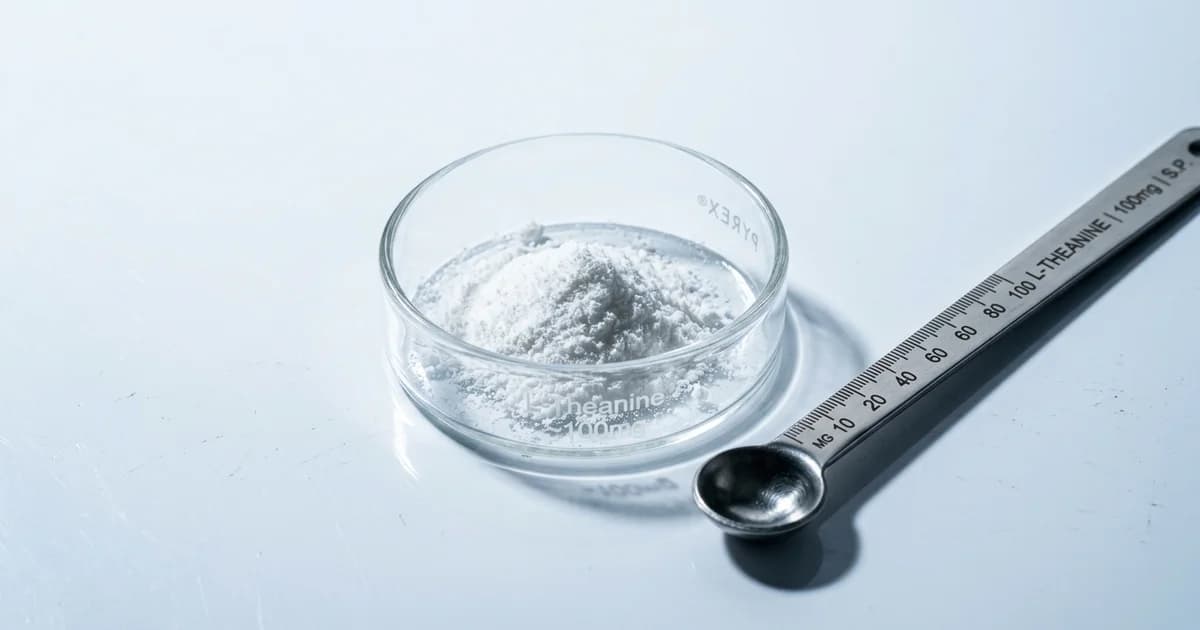
Each Roon pouch contains 80 mg caffeine, 60 mg L-theanine, 25 mg methylliberine (Dynamine), and 5 mg theacrine (TeaCrine). The caffeine-and-L-theanine pairing is one of the better-studied combinations for attention and clean alertness, and the sublingual format means onset in roughly 5 to 10 minutes rather than the 30-plus minutes of a capsule. If your problem is "I need to lock in for the next few hours," that is Roon's lane.
If your problem is "my baseline stress is high" or "my sleep is wrecked," that is adaptogen territory, and ashwagandha at night is the better fit. Use the right tool for the right timeline.
Conclusion: Match the Tool to the Timeline
The rhodiola vs ashwagandha debate dissolves once you stop asking which is better and start asking which is better for when. Rhodiola is the acute lever: fast onset, daytime use, best when fatigue or stress is actively pressing on you. Ashwagandha is the chronic lever: slow build, evening use, best for lowering cortisol load and supporting sleep over weeks.
Run them together if your life demands both, with rhodiola in the morning and ashwagandha at night. Introduce them one at a time, respect rhodiola's interaction with heavy caffeine, and give ashwagandha the 6 to 8 weeks it needs to do its work. Pick by timeline, not by hype, and both herbs become far more useful than either does alone.
Frequently Asked Questions
Can I take rhodiola and ashwagandha together?
Yes, and many people do, because they solve different problems on different timelines. Rhodiola covers acute daytime energy and focus, while ashwagandha manages chronic stress and sleep over weeks. The cleanest approach is an AM/PM split: rhodiola in the morning, ashwagandha in the evening. There is no formal guidance on mixing adaptogens, so introduce one at a time and watch how you respond before running both.
Which is better for energy, rhodiola or ashwagandha?
Rhodiola is the better choice for energy, especially acute, same-day energy under fatigue or stress. Its effects can appear within 30 minutes to 2 hours, and clinical trials report reduced mental fatigue at doses between 100 and 576 mg per day. Ashwagandha can indirectly support energy by lowering stress load, but that benefit builds slowly over weeks rather than delivering a noticeable daytime lift.
How long does ashwagandha take to work?
Ashwagandha is cumulative. Its signature benefits, lower cortisol and improved sleep, build over consistent daily use rather than a single dose. The Chandrasekhar 2012 trial measured a roughly 28% cortisol reduction at 60 days using 300 mg twice daily. Some people notice changes in stress within 1 to 2 weeks, but plan on 6 to 8 weeks of daily use before judging whether it works for you.
Should I take rhodiola in the morning or at night?
Take rhodiola in the morning. It modulates dopamine and norepinephrine and can feel stimulating, so dosing it late in the day risks interfering with sleep. The standard protocol is 200 to 400 mg on an empty stomach early in the day. If you split the dose, keep the second portion before early afternoon rather than evening.
Does rhodiola interact with caffeine?
It can. Rhodiola affects dopamine and norepinephrine and feels stimulating to some people, so layering it onto a heavy coffee routine can cause jitteriness or overstimulation in sensitive users. If you already consume a lot of caffeine, start rhodiola at a low dose and assess your response before increasing. Ashwagandha does not raise this concern, since it is calming and taken at night.
What dose of each adaptogen is standard?
For rhodiola, clinical trials commonly use 200 to 400 mg per day of an extract standardized to roughly 3% rosavins and 1% salidroside. For ashwagandha, the standard is 300 to 600 mg per day of a standardized root extract, often split into two doses. Start at the lower end of each range and adjust based on how you respond over a few weeks.
Is Roon an adaptogen substitute?
No. Roon is a caffeine-based focus pouch, not an adaptogen. It does not lower cortisol or build over weeks. Each pouch delivers 80 mg caffeine, 60 mg L-theanine, 25 mg methylliberine, and 5 mg theacrine for acute daytime focus, with sublingual onset in about 5 to 10 minutes. Use it for in-the-moment alertness, and use rhodiola or ashwagandha for the jobs those herbs are actually built to do.
Acute Focus Is a Different Job Than Adaptogen Work
This article draws one line clearly: rhodiola and ashwagandha operate on timelines, fast for one and slow for the other, and neither is built for the specific problem of locking in focus in the next ten minutes. That gap is where a different kind of tool belongs.
Roon is a zero-nicotine sublingual pouch built for acute daytime focus, with 80 mg caffeine, 60 mg L-theanine, 25 mg methylliberine, and 5 mg theacrine. The caffeine-and-L-theanine pairing supports clean alertness without the jittery edge of caffeine alone, and the sublingual format means it takes hold in minutes, not the half hour a capsule needs. It is designed for sustained focus across a work block, not a single spike followed by a crash.
To be clear about what it is not: Roon is not an adaptogen, does not lower cortisol, and does not replace a rhodiola or ashwagandha protocol. If your goal is acute focus during the day, it is worth a try alongside, not instead of, the adaptogen that fits your timeline.
By Roon Team