Caloric Restriction Mimetics: The Supplements That Imitate Fasting in the Brain
Skipping meals is hard. Doing it for years to protect your aging brain is harder. So scientists asked a reasonable question: what if a molecule could trigger the same cellular cleanup that fasting does, without the hunger?
That question gave us caloric restriction mimetics, a class of compounds that switch on the body's fasting machinery while you keep eating normally. The most studied ones, spermidine, resveratrol, and metformin, all aim at the same target inside your neurons. They want to restart autophagy, the brain's internal recycling system.
The science is genuinely interesting. It is also younger and messier than the supplement marketing suggests. Here is what holds up.
Key Takeaways
- Caloric restriction mimetics are compounds that copy the cellular effects of fasting, mainly by triggering autophagy, without requiring you to actually cut calories.
- The leading candidates are spermidine, resveratrol, and metformin, with spermidine having the most human brain data so far.
- The evidence is promising but early. A small 2018 trial hinted at memory benefits in older adults, while a larger 2022 trial found no clear cognitive edge over placebo.
- These are long-horizon cellular bets aimed at aging, not acute focus tools you feel in an afternoon.
What Are Caloric Restriction Mimetics?
Caloric restriction mimetics, often shortened to CR mimetics, are molecules that reproduce the biochemical signals of eating less, without the food restriction. They flip the same metabolic switches that fasting flips.
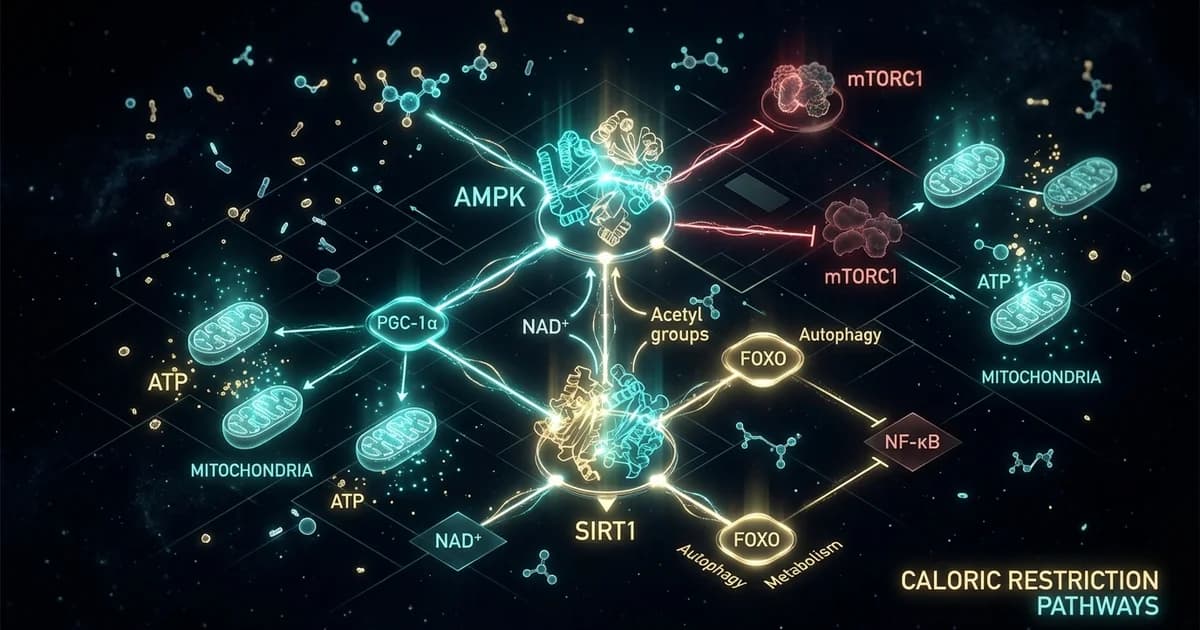
When you fast, your cells sense low energy. Two master sensors respond: AMPK ramps up, and mTOR powers down. That combination tells your cells to stop building and start cleaning house.
CR mimetics chase that exact signal. The goal is to get the cellular benefits of caloric restriction, which has extended lifespan in species from yeast to mice, while you still eat dinner. Research on the mTOR and AMPK pathways in the brain shows these sensors govern cell metabolism, protein quality control, and neuron survival, which is why they became the obvious drug target for brain aging.
Autophagy: The Cleanup Crew Behind Fasting
Autophagy is the reason fasting fascinates neuroscientists. The word means "self-eating," and it describes how cells break down damaged parts and recycle the raw material.
Neurons cannot easily replace themselves. You keep most of yours for life. That makes internal maintenance non-negotiable, because broken proteins and worn-out mitochondria pile up over decades and clog the cell.
Fasting accelerates this cleanup. So do autophagy supplements built around CR mimetics, at least in theory, by lowering mTOR activity and freeing cells to digest their own junk. Reviews of fasting and cognition connect this housekeeping to better neuronal resilience, though the human cognitive payoff is still being mapped.
The pitch for fasting mimetic supplements rests entirely on this idea. Trigger autophagy with a pill, get fasting-like brain protection, skip the 16-hour hunger window.
The Three Main CR Mimetics for the Brain
Three compounds dominate the CR mimetics brain conversation. Each works through a slightly different door, and each has a different evidence base.
| Compound | How it mimics fasting | Brain evidence in humans | Maturity |
|---|---|---|---|
| Spermidine | Directly induces autophagy, lowers inflammation | Mixed: one small positive trial, one larger null trial | Most human data |
| Resveratrol | Activates sirtuins, nudges AMPK | Some signals on cerebral blood flow, inconsistent cognition results | Moderate |
| Metformin | Activates AMPK, suppresses mTOR | Prescription drug; cognition data observational and conflicting | Drug, not a supplement |
Spermidine
Spermidine is the most studied caloric restriction mimetic for the brain, and it is the one you can get from food. It is a natural polyamine your body makes and absorbs from the diet.
It induces autophagy directly, which is why spermidine fasting has become its own niche topic among longevity readers. You do not have to fast to raise spermidine. You can eat for it.
Resveratrol
Resveratrol, the polyphenol famous from red wine, activates sirtuins and lightly engages AMPK. Its brain results in humans have been inconsistent, with some studies reporting improved cerebral blood flow and others showing little cognitive change. Treat it as plausible, not proven.
Metformin
Metformin is a diabetes drug, not a supplement, and that distinction matters. It activates AMPK strongly, which is why longevity researchers study it. The brain data in humans is observational and contradictory, and you cannot buy it off a shelf, so it sits outside the consumer supplements that mimic fasting category even though it belongs in the science.
What the Human Evidence Actually Shows
Here is the honest version. The strongest brain claims for CR mimetics come from cell and animal studies, and the human trials are smaller and less consistent.
For spermidine, a 2018 randomized trial in older adults at risk for dementia reported a modest improvement in memory performance after three months of supplementation. It was small, but it was a real signal, and it set off the wave of interest you see today.
Then came the bigger test. The larger SmartAge randomized clinical trial, published in 2022, gave spermidine to older adults with subjective cognitive decline for a full year. It did not find a clear cognitive benefit over placebo on its primary memory measure.
That is not a failure of the idea. It is how science is supposed to work. A promising pilot gets a rigorous follow-up, and the follow-up tells you the effect is smaller or slower than you hoped.
The takeaway: spermidine is safe and biologically interesting, but the case that it sharpens human cognition is not yet settled.
Can You Get CR Mimetics From Food?
Yes, and spermidine is the clearest example. You do not need a capsule to raise your intake.
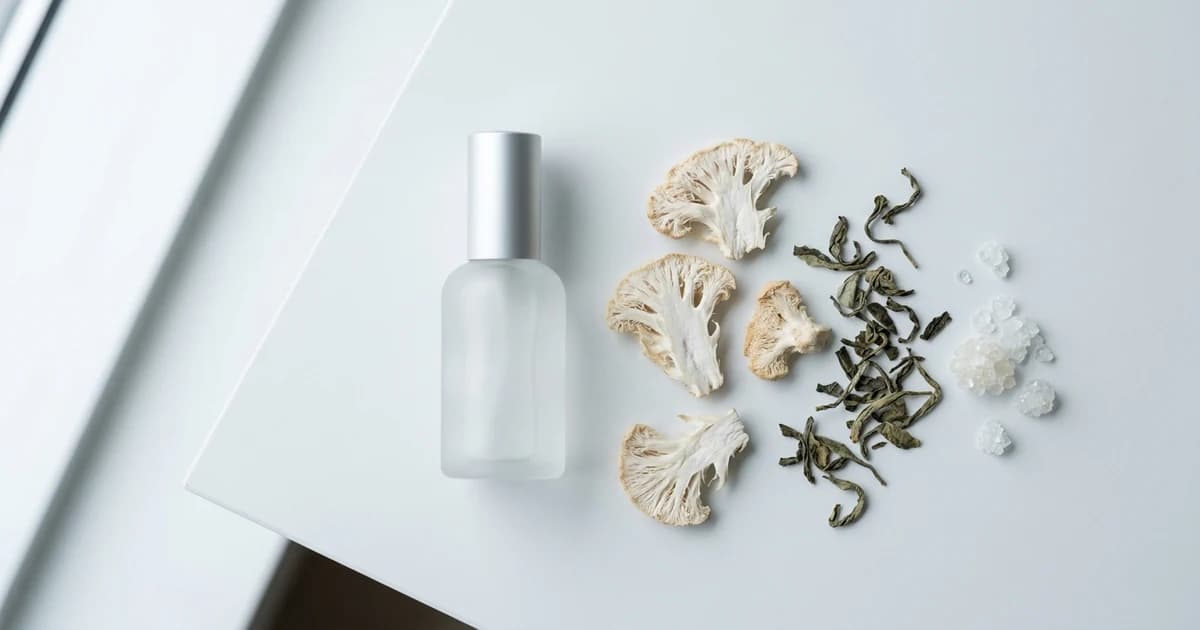
Spermidine is concentrated in a handful of everyday foods. According to nutrition reviews of dietary sources, the richest are wheat germ, aged cheese, mushrooms, soy products like natto, and legumes.
This matters for two reasons. First, food gives you spermidine alongside fiber and other nutrients, not in isolation. Second, much of the population-level data linking spermidine to better outcomes comes from people eating spermidine-rich diets, not swallowing high-dose pills.
If you want to experiment with spermidine fasting ideas, the lowest-risk move is the plate, not the supplement aisle.
How CR Mimetics Differ From Acute Nootropics
This is the distinction most articles blur, so let me be direct. Caloric restriction mimetics and acute focus compounds operate on completely different timelines and goals.
CR mimetics are a cellular maintenance bet. You take them for months or years, you feel nothing in the moment, and the hoped-for payoff is slower brain aging measured over a long horizon.
Acute nootropics do the opposite. Caffeine, L-theanine, and similar compounds change how you feel and perform within minutes, and the effect fades the same day. One is preventive cell biology. The other is performance on demand.
Confusing the two leads to disappointment. Nobody should expect a spermidine capsule to power a deadline sprint, and nobody should expect a focus tool to clean up decades of cellular wear.
Conclusion
Caloric restriction mimetics are one of the more grounded ideas in longevity science. The biology is real: fasting triggers autophagy, autophagy protects neurons, and certain molecules can switch on that process without a single skipped meal.
The honest status report is more modest than the marketing. Spermidine, resveratrol, and metformin all show mechanistic promise, but the human brain evidence ranges from one small positive trial to a larger null one. These are slow, cellular bets on aging, and they should be judged on long-term outcomes, not next-week clarity.
If you are curious, start with food. Wheat germ, aged cheese, mushrooms, and legumes raise spermidine with almost no downside. The supplement decision can wait until the trials catch up to the hype.
Frequently Asked Questions
What are caloric restriction mimetics in simple terms?
They are compounds that trick your cells into acting like you are fasting, without making you eat less. They turn on the same energy sensors that fasting activates, mainly by raising AMPK and lowering mTOR. The intended result is autophagy, the cellular cleanup process linked to slower aging. Spermidine, resveratrol, and metformin are the best known examples.
Does spermidine actually improve memory?
The evidence is mixed. A small 2018 trial in older adults at risk for dementia found a modest memory improvement, but the larger 2022 SmartAge trial did not show a clear benefit over placebo after a year. Spermidine appears safe and biologically active, yet the claim that it reliably boosts human cognition is not yet proven.
Are fasting mimetic supplements the same as actually fasting?
No. Fasting mimetic supplements aim to copy one effect of fasting, autophagy, through a molecule. Real fasting changes many systems at once, including insulin, glucose, and ketone production. A supplement targets a narrower slice of that biology, so it should be seen as a partial stand-in, not a full replacement for caloric restriction.
Which foods are highest in spermidine?
Wheat germ is the standout, followed by aged cheese, mushrooms, soybean products like natto, and legumes. Eating these gives you spermidine in its natural context alongside fiber and other nutrients. For most people, a spermidine-rich diet is a lower-risk starting point than high-dose capsules.
Do autophagy supplements work as fast as caffeine?
No, and they are not meant to. Autophagy supplements built on CR mimetics work on a timeline of months to years and produce no noticeable in-the-moment effect. Acute compounds like caffeine and L-theanine change how you feel within minutes. The two serve different purposes and should not be compared on speed.
Is metformin a good CR mimetic for the brain?
Metformin activates AMPK strongly and interests longevity researchers, but it is a prescription diabetes drug, not a supplement. Its effects on human cognition come from observational studies with conflicting results. You cannot responsibly use it as a brain supplement, and any use should be a medical decision, not a self-experiment.
Are caloric restriction mimetics safe?
Spermidine from food is well tolerated, and supplement trials have reported few side effects at studied doses. Resveratrol is generally safe but can interact with some medications. Metformin requires a prescription and medical oversight. As with any supplement, the maturity of the safety data varies by compound, so check with a clinician before starting.
CR Mimetics Play the Long Game. Your Afternoon Doesn't Wait.
Everything above is a bet on cell biology measured in years. Autophagy, polyamines, slow brain aging. That research deserves patience, and it deserves honesty about how early it still is.
Roon lives on the other end of that timeline. It is not a caloric restriction mimetic, and it will not touch autophagy. It is the acute-focus layer for the hours in front of you. Each sublingual pouch pairs 80 mg caffeine and 60 mg L-theanine with 25 mg methylliberine (Dynamine) and 5 mg theacrine (TeaCrine), built for a 5 to 10 minute onset and 6 to 8 hours of steady focus with no jitters, no crash, and no tolerance buildup.
Think of them as complementary, not competing. Eat for spermidine, stay curious about the longevity science, and reach for Roon when you need to be sharp right now. Different timelines, different jobs.
Written by Roon Team