The Nrf2 Pathway: Your Brain's Master Antioxidant Switch
Roon Team
The Nrf2 Pathway: Your Brain's Master Antioxidant Switch
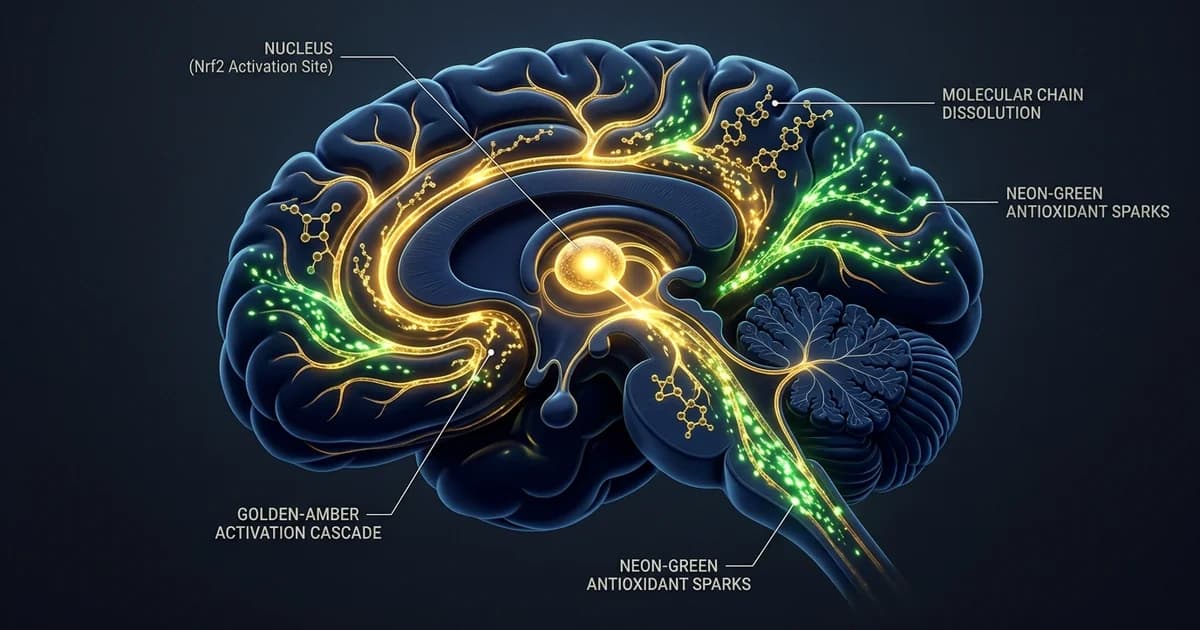
Your brain burns through fuel at a rate that should worry you. It makes up about 2% of your body weight but consumes roughly 20% of your oxygen, and every bit of that metabolism throws off reactive molecules that damage neurons. The nrf2 pathway brain defense system is how your cells fight back. Think of Nrf2 as a master switch that turns on hundreds of protective genes at once, rather than a single antioxidant doing one job.
Most people are sold antioxidants the wrong way. They are told to eat more vitamin C or swallow a pill of something purple. The real story is more interesting, and it starts with a single protein that lives quietly in your cells until things go wrong.
Key Takeaways
- Nrf2 is a transcription factor that switches on your body's built-in antioxidant defenses, controlling hundreds of protective genes at once.
- A protein called Keap1 keeps Nrf2 locked down until oxidative stress releases it to enter the nucleus.
- The pathway protects neurons, which are unusually vulnerable to oxidative damage because of their high oxygen use and fat content.
- The best Nrf2 activators are plant compounds like sulforaphane, curcumin, and resveratrol, not direct antioxidant pills.
What the Nrf2 Pathway Brain Defense Actually Does
Nrf2 is a transcription factor, which means its job is to turn genes on. When activated, it travels into the cell nucleus and switches on a large set of cytoprotective genes. Estimates of how many vary by method, with some reviews citing around 250 genes and others more than 600.
This matters because a single antioxidant molecule neutralizes one free radical and then it is spent. Nrf2 instead tells your cells to manufacture their own defenses on demand. It is the difference between handing someone a fish and teaching the whole town to fish.
The genes Nrf2 controls read like a list of your most important defenses. They include heme oxygenase-1 (HO-1), NAD(P)H quinone oxidoreductase 1 (NQO1), glutathione S-transferases, and the enzymes that build glutathione, your body's main internal antioxidant. It also drives production of superoxide dismutase, catalase, and glutathione peroxidase.
So when you read "Nrf2 activation antioxidant," picture a command center, not a bottle of pills.
Keap1 and Nrf2: The Sensor and the Switch
Here is the elegant part. Under normal conditions, Nrf2 does almost nothing, because a partner protein called Keap1 holds it captive.
The keap1 nrf2 relationship works like a tripwire. Keap1 binds Nrf2 in the cytoplasm and constantly tags it for destruction, so Nrf2 levels stay low when your cells are calm. Keap1 represses Nrf2 by binding its Neh2 domain and keeping it out of the nucleus.
Keap1 is studded with reactive cysteine residues that act as chemical sensors. When oxidative stress or certain plant compounds modify those cysteines, Keap1 loses its grip. Nrf2 stops being degraded, builds up, and slips into the nucleus.
Once inside, Nrf2 pairs with small Maf proteins and binds a specific stretch of DNA called the antioxidant response element, the promoter sequence sitting in front of all those protective genes. Nrf2 binding to the ARE switches on the transcription of antioxidant and phase II detox enzymes. The switch flips, the defenses go up, and the cell rides out the stress.
Why Your Brain Cares More Than Any Other Organ
Neurons are uniquely exposed to oxidative damage. They run on enormous amounts of oxygen, they are packed with polyunsaturated fats that oxidize easily, and they cannot simply be replaced when they die.
That combination makes a healthy oxidative stress brain response more than a nice-to-have. Researchers have placed Nrf2 at the center of neurodegenerative disease, pointing to it as a target for new therapeutic strategies precisely because the brain has so much to lose.
When Nrf2 signaling weakens with age, neurons lose some of their ability to clear the daily wear of metabolism. The damage accumulates slowly, the way rust spreads on a bridge nobody maintains.
The Nrf2-ARE pathway has drawn serious attention as a way to defend the nervous system. One review framed the Nrf2-ARE signaling pathway as a promising drug target to combat oxidative stress in neurodegenerative disorders. The science here is still maturing, but the logic is sound.
How to Activate Nrf2: The Honest Version
You cannot meaningfully boost your brain's antioxidant defenses by eating more antioxidants. You activate them by gently stressing the system with the right plant compounds, a concept called hormesis.
This is where most "nrf2 supplements" marketing gets it backwards. The compounds that work best are not antioxidants you absorb. They are mild irritants that trip the Keap1 sensor and make your own cells produce defenses.
A systematic review of human intervention trials found that curcumin and resveratrol were the most studied polyphenols for Nrf2 activation in people, though it cautioned that the human evidence so far is limited and mixed. Sulforaphane, from broccoli sprouts, is one of the most potent natural activators, with animal work showing it protects the brain through the Nrf2/HO-1 pathway.
A Quick Comparison of Common Nrf2 Activators
| Compound | Dietary Source | How It Activates Nrf2 | Evidence Level |
|---|---|---|---|
| Sulforaphane | Broccoli sprouts, cruciferous veg | Modifies Keap1 cysteines directly | Strong preclinical, growing human |
| Curcumin | Turmeric | Modifies Keap1, raises Nrf2 | Most-studied polyphenol in humans |
| Resveratrol | Grape skins, red wine, berries | Promotes Nrf2 nuclear translocation | Well-studied in humans |
| Grape seed extract | Grape seeds | Polyphenol-driven ARE activation | Moderate preclinical |
| Blueberry anthocyanins | Blueberries | Polyphenol-driven ARE activation | Moderate preclinical |
The pattern is clear. Color and bitterness in plants often signal the exact compounds that train your antioxidant response.
Frequently Asked Questions
What is the Nrf2 pathway in simple terms?
Nrf2 is a protein that acts as a master switch for your body's antioxidant defenses. When it is activated, it enters the cell nucleus and turns on hundreds of protective genes at once, including those that make glutathione and detox enzymes. Instead of neutralizing one free radical like a single antioxidant, it tells your cells to build their own defense system.
How does Keap1 control Nrf2?
Keap1 is a sensor protein that holds Nrf2 in the cytoplasm and constantly marks it for destruction, keeping levels low when cells are calm. Keap1 carries reactive cysteine residues that detect oxidative stress and certain plant compounds. When those sensors are triggered, Keap1 releases Nrf2, which then moves into the nucleus and activates protective genes.
What is the antioxidant response element?
The antioxidant response element, or ARE, is a specific DNA sequence located in front of Nrf2's target genes. After Nrf2 enters the nucleus, it pairs with small Maf proteins and binds to the ARE. This binding switches on transcription of antioxidant and detoxification genes, which is the final step that raises your cellular defenses.
Why is the brain so vulnerable to oxidative stress?
The brain uses a large share of the body's oxygen and is rich in fats that oxidize easily, which generates a steady stream of reactive molecules. Neurons also cannot be easily replaced. That combination means a strong Nrf2 response matters more for the brain than for most other tissues, especially as the pathway weakens with age.
What are the best Nrf2 supplements or foods?
The most studied Nrf2 activators are plant compounds rather than direct antioxidant pills. Sulforaphane from broccoli sprouts is one of the most potent, and human trials point to curcumin and resveratrol as well-studied options. Grape seed extract and blueberry polyphenols add further support. They work by gently triggering the Keap1 sensor, not by being absorbed as antioxidants.
Does taking antioxidant vitamins activate Nrf2?
Not really. Vitamins like C and E act as direct antioxidants, neutralizing free radicals one at a time, but they do not switch on the Nrf2 pathway. Nrf2 activators are mild plant stressors that trip the Keap1 sensor, prompting your own cells to produce defenses. This is why a varied diet of colorful, bitter plants tends to beat a high-dose vitamin pill.
Can you overactivate Nrf2?
In theory, yes, which is why more is not always better. Constant, excessive Nrf2 activation has been studied in the context of cancer cell survival, so the goal is a healthy, responsive switch rather than one stuck in the on position. For most people, getting Nrf2 activators through food and sensible supplementation keeps the response in a useful range.
The Takeaway: Defense Is Something You Build, Not Buy
The most useful idea here is also the simplest. Your brain's best antioxidant protection does not come from swallowing antioxidants. It comes from a switch that, when flipped correctly, makes your own cells produce defenses far more powerful than anything in a capsule.
Nrf2 is that switch, Keap1 is the sensor that guards it, and the antioxidant response element is where the action lands. The plant compounds worth caring about are the ones that nudge this system into action, training your cells to protect themselves.
That reframes the whole conversation about antioxidants. Stop asking which antioxidant to take. Start asking what trains your own defenses.
How Roon Thinks About the Antioxidant Story
At Roon, we spend most of our time on a different mechanism: clean, sustained focus from caffeine, L-theanine, methylliberine, and theacrine. But the Nrf2 story matters to us because it is the clearest example of how the smartest "antioxidant" advice has almost nothing to do with antioxidant pills.
The compounds that activate this pathway are the same ones we keep returning to in our deeper explainers. If you want to see the mechanism in action, our breakdowns of curcumin, resveratrol, blueberry polyphenols, and grape seed extract each follow a single Nrf2 activator from the plant to the cell nucleus.
Roon is a focus tool, not a brain-protection product, and we would rather tell you that plainly. If you care about long-term brain health, the food on your plate and the science above will do more than any pouch. Read the rest of our neuroscience explainers to follow the thread.
Written by Roon Team