Broccoli Sprouts vs Sulforaphane Supplements
Roon Team
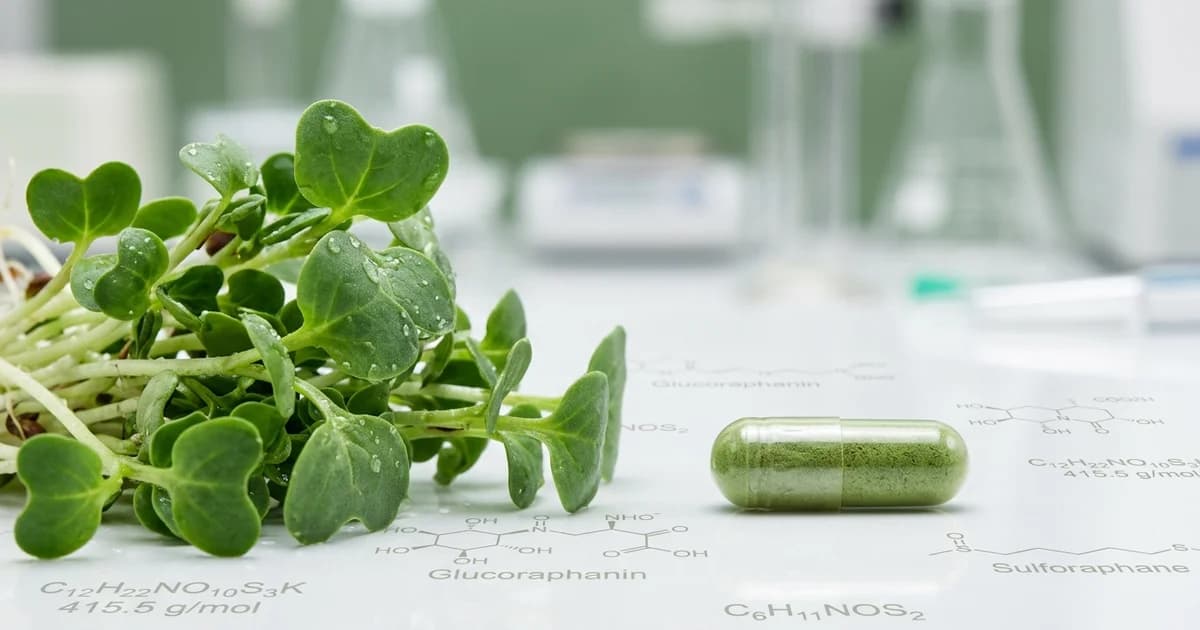
Broccoli Sprouts vs Sulforaphane Supplements: Getting the Real Compound
Most "sulforaphane" supplements do not actually contain sulforaphane. That single fact reframes the entire broccoli sprouts vs sulforaphane supplement debate, and it explains why two products with near-identical labels can deliver wildly different results in your body.
Here is the problem in one sentence. The compound your cells respond to is sulforaphane, but the compound sitting in most capsules is glucoraphanin, a stable precursor that only becomes sulforaphane after an enzyme called myrosinase acts on it.
If that enzyme is missing or dead, you are paying for raw material your body has to finish converting on its own. Sometimes it does. Often it barely does.
Key Takeaways
- Sulforaphane is the active compound. Glucoraphanin is the precursor. Your label probably lists the second one.
- Myrosinase is the enzyme that converts one into the other. Heat destroys it, and many supplements lack it entirely.
- Without active myrosinase, average sulforaphane bioavailability drops to roughly 10% of the dose. With it, that figure climbs toward 40%.
- Fresh broccoli sprouts contain both the precursor and the enzyme, which is why they remain a reliable source.
- The smart question is not "how much glucoraphanin," but "how much actual sulforaphane will I absorb."
Glucoraphanin vs Sulforaphane: The Precursor Problem
Glucoraphanin and sulforaphane are not the same molecule, and treating them as interchangeable is the most common mistake in this category.
Glucoraphanin is a glucosinolate. It is water soluble, chemically stable, and biologically quiet on its own. Glucoraphanin from broccoli and its sprouts and seeds is a water soluble and relatively inert precursor of sulforaphane, the reactive isothiocyanate.
Sulforaphane is the reactive form. It is the molecule studied for its effects on cellular defense pathways, and it is the thing you actually want crossing into your bloodstream.
The bridge between them is an enzyme. Without that enzyme, glucoraphanin mostly passes through as inert cargo.
Myrosinase: The Enzyme That Makes or Breaks Your Dose
Myrosinase is the conversion key, and its presence is the single biggest variable in how much sulforaphane you actually get.
In a whole plant, glucoraphanin and myrosinase sit in separate compartments. When you chew a sprout or crush a floret, the two meet and the reaction begins. In raw broccoli, the sulforaphane precursor, called glucoraphanin, mixes with the enzyme myrosinase when you chew or chop it, and given enough time sulforaphane is formed.
Heat is the enemy here. Myrosinase is a protein, and cooking denatures it. Microwaving or boiling broccoli too much can destroy its myrosinase, and once that is destroyed, sulforaphane cannot form.
This is also why processing matters for supplements. Many extracts are made under conditions that inactivate the enzyme, leaving you with precursor and no spark plug. A key factor in sulforaphane absorption is the release of sulforaphane from its precursor glucoraphanin by myrosinase, yet myrosinase is often inactivated in available supplements.
Sulforaphane Bioavailability: The Numbers That Matter
When active myrosinase is missing, your average sulforaphane bioavailability is roughly 10%. When it is present, that number jumps closer to 40%.
That is not a rounding error. It is the difference between a useful dose and an expensive maybe. In a PLOS One bioavailability study, mean bioavailability of glucoraphanin-rich preparations lacking active myrosinase was roughly 10% of dose, whereas when active myrosinase was included, bioavailability increased to almost 40%.
When the plant enzyme is gone, your body has a backup plan: bacteria in your colon can perform the same conversion. The catch is that this route is unreliable and varies enormously from person to person. This conversion ranges from 1 to 40%, with a mean of about 10%, and the range depends primarily on the specifics of the microbiome of the person ingesting it.
So with a precursor-only supplement, your results depend on your gut flora. Two people can swallow the identical capsule and absorb three or four times different amounts of the active compound.
A 2026 randomized study in Scientific Reports put real figures on the fix. Glucoraphanin plus myrosinase, on average, doubled the bioavailability of sulforaphane (39.8%) compared to glucoraphanin alone (18.6%), and increased the early conversion rate in the first 8 hours.
How to Get Sulforaphane: The Real Options Compared
There is no single best source. There is the source that best fits how much you will absorb, how consistent you need it to be, and how much effort you will tolerate.
The big advantage of sprouts is concentration. In Johns Hopkins research (Fahey et al., 1997), three-day-old broccoli sprouts contained 20 to 50 times more glucoraphanin per gram than mature broccoli florets. They also carry their own active enzyme, so the conversion machinery comes built in.
Here is how the main routes to sulforaphane stack up.
| Source | What it contains | Myrosinase status | Sulforaphane yield | Best for |
|---|---|---|---|---|
| Fresh broccoli sprouts | Glucoraphanin + active myrosinase | Active (if eaten raw) | High and built in | People who will grow or buy raw sprouts |
| Mature cooked broccoli | Some glucoraphanin | Often destroyed by heat | Low to moderate | Everyday diet, not a targeted dose |
| Precursor-only extract | Glucoraphanin | Inactive or absent | ~10% on average, gut-dependent | Budget capsules, results vary by person |
| Myrosinase-active extract | Glucoraphanin + active enzyme | Active | Up to ~40% | Consistent dosing without growing sprouts |
| Stabilized sulforaphane | Sulforaphane directly | Not needed | Highest, no conversion step | People who want the finished compound |
A few practical notes on choosing a broccoli sprout extract. Check whether the label states a sulforaphane yield or only a glucoraphanin amount. The first is the honest number. The second is potential, not delivery.
You can also help conversion at home. Eating raw sprouts, chewing thoroughly, and pairing cooked broccoli with a raw source of myrosinase, such as mustard powder, all push more glucoraphanin across the finish line.
Conclusion
The broccoli sprouts vs sulforaphane supplement question has a cleaner answer once you stop reading labels at face value. Glucoraphanin is the raw material. Sulforaphane is the result. Myrosinase decides how much of the first ever becomes the second.
Fresh sprouts win on built-in conversion because they keep the enzyme intact. Cooked broccoli loses much of its potential to heat. Among supplements, the ones worth your money either preserve active myrosinase or deliver stabilized sulforaphane directly, and they tell you the actual yield rather than hiding behind precursor numbers.
The lesson is simple and it generalizes. Know whether you are buying the active compound or just its precursor, because in this category that distinction is the whole game.
Frequently Asked Questions
Is glucoraphanin the same as sulforaphane?
No. Glucoraphanin is the stable, inactive precursor, and sulforaphane is the reactive compound your body actually uses. The enzyme myrosinase converts glucoraphanin into sulforaphane. Many supplements list glucoraphanin on the label and call themselves sulforaphane products, which is technically a precursor, not the finished active molecule. Always check which one you are paying for.
Why do supplements list glucoraphanin instead of sulforaphane?
Glucoraphanin is far more stable and easier to standardize, so it survives manufacturing and shelf life better than sulforaphane. The trade-off is that your body still has to convert it. If the product lacks active myrosinase, conversion falls to your gut bacteria, which is inconsistent. A label that lists only glucoraphanin is telling you potential, not the dose you will absorb.
Does cooking broccoli destroy sulforaphane?
Cooking does not destroy sulforaphane so much as prevent it from forming. Heat denatures myrosinase, the enzyme needed to convert glucoraphanin into sulforaphane. Research has found that quick high-heat methods can destroy a large share of a vegetable's sulforaphane potential. Light steaming for a few minutes preserves more of the enzyme than boiling or heavy microwaving.
How do I get the most sulforaphane from broccoli sprouts?
Eat them raw and chew thoroughly, since chewing ruptures the plant cells and lets glucoraphanin meet myrosinase. Three-day-old sprouts carry far more precursor per gram than mature broccoli. If you cook cruciferous vegetables, add a raw source of myrosinase like mustard powder afterward to restart conversion that heat shut down.
Are broccoli sprout extract supplements worth it?
It depends on the formulation. A broccoli sprout extract with active myrosinase or one that delivers stabilized sulforaphane can give you a consistent dose without growing sprouts. A precursor-only extract leans entirely on your gut microbiome, so results vary widely between people. Read the label for a stated sulforaphane yield, not just a glucoraphanin figure.
What affects sulforaphane bioavailability the most?
The presence of active myrosinase is the single biggest factor. Without it, average bioavailability sits near 10% of the dose and depends heavily on your gut bacteria. With active myrosinase, absorption can approach 40%. Chewing, food preparation, and individual microbiome composition all move the number, but the enzyme is what separates a strong source from a weak one.
Read the Label, Not the Marketing
This whole article rests on one habit: knowing whether you are buying the active compound or just its precursor. That is label literacy, and it is the same discipline we apply at Roon to our own ingredients.
Roon is not a sulforaphane product, and it will not replace eating your vegetables. It is a sublingual cognitive performance pouch built around four actives you can verify by name and dose: 80 mg caffeine, 60 mg L-theanine, 25 mg methylliberine (Dynamine), and 5 mg theacrine (TeaCrine). No precursors hiding behind a proprietary blend, and no guessing what your body has to finish converting.
The format is the point. Sublingual delivery means the actives go to work in 5 to 10 minutes, tuned for 6 to 8 hours of steady focus with no jitters and no crash. If you have started reading supplement labels for what they actually deliver, try Roon and judge it by the same standard.
Written by Roon Team