AMPA Receptor Nootropics: AMPA Receptors and Memory
Roon Team
AMPA Receptors and Memory: The Science Behind "Ampakine" Nootropics
Every memory you've ever formed runs through a single molecular gate. It's called the AMPA receptor, and it's the busiest protein in your thinking brain.
So when a class of compounds promised to turn that gate up and sharpen learning on command, neuroscientists paid attention. AMPA receptor nootropics, often sold under the name "ampakines," became one of the most studied and most overhyped ideas in cognitive enhancement. This article explains what AMPA receptors actually do, what ampakines were built to change, and why the everyday focus product you can buy today works through a completely different and far better-understood mechanism.
The short version: the biology is real, the drugs are still experimental, and the gap between the two matters.
Key Takeaways
- AMPA receptors are the main switches for fast excitatory signaling in your brain, and they sit at the center of learning and memory.
- Strengthening these connections is the cellular basis of long term potentiation, the leading model for how memories physically form.
- Ampakines are positive allosteric modulators that boost AMPA receptor activity without forcing the channel open on their own.
- Decades of trials produced interesting biology but no approved cognitive ampakine drug for healthy people.
- Common nootropics like caffeine and L-theanine work by tuning adenosine and glutamate signaling, a route with far more human data behind it.
What an AMPA Receptor Actually Does
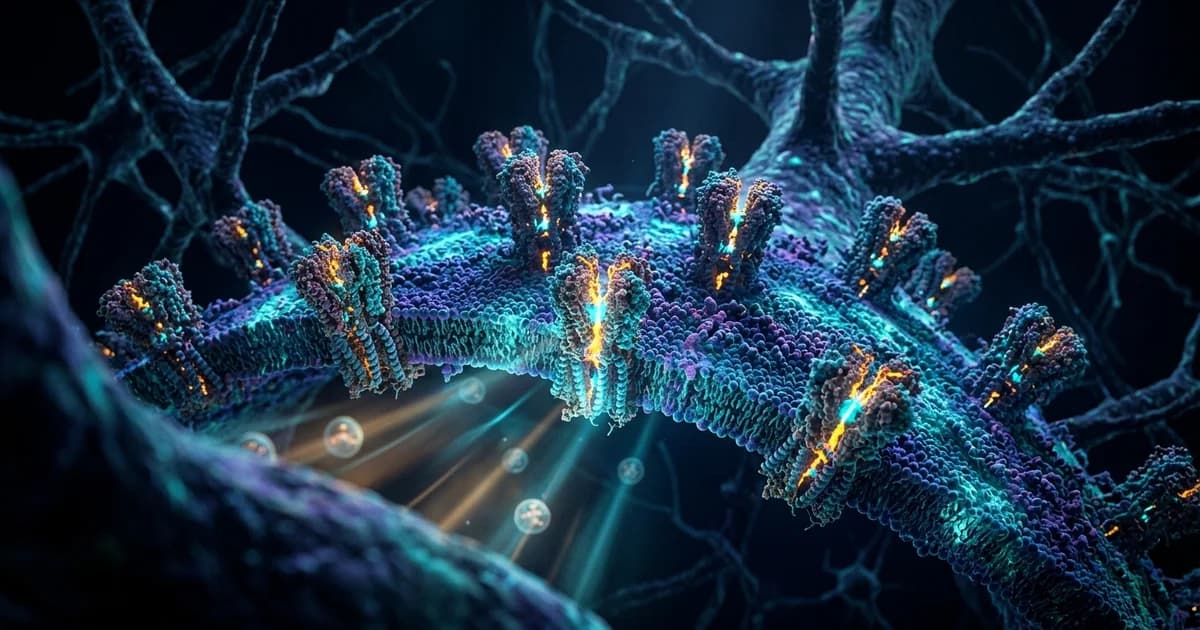
An AMPA receptor is a protein channel that lets sodium ions rush into a neuron when the neurotransmitter glutamate binds to it. That ion flow is the fast "on" signal of the brain.
Glutamate is the primary excitatory messenger in your nervous system, and AMPA receptors are its first responders. According to the MRC Laboratory of Molecular Biology, AMPA receptors are glutamate-gated cation channels built from four core subunits, GluA1 through GluA4, and they carry most of the excitatory traffic across the brain. They are central to learning and memory.
Each receptor is a tetramer, meaning four subunits assemble into one channel. The ScienceDirect topic overview notes that most AMPA receptors are heterotetrameric, combining different subunits into a single working unit. The exact mix changes how the channel behaves, including whether it lets calcium through.
Think of glutamate as the key and the AMPA receptor as the lock. When the key fits, the door opens and the signal moves forward. That is glutamate cognition at its most basic level.
How AMPA Receptors Build Memories
Memory is not stored in a single cell. It lives in the strength of connections between cells, and AMPA receptors set that strength.
When two neurons fire together repeatedly, the receiving neuron physically adds more AMPA receptors to its surface. More receptors mean a stronger response to the same glutamate signal. That strengthening is long term potentiation, usually shortened to LTP, and it's the most widely accepted model of how learning gets encoded.
The traffic of these receptors is the key event. A review in PMC explains that two decades of evidence place AMPA receptor trafficking as a major mechanism controlling synaptic plasticity, learning, and memory. Where the receptors go, the memory follows.
Another PMC analysis puts the logic plainly: increasing the number of synaptic AMPA receptors strengthens a connection during LTP, while removing them weakens it. Add receptors and you reinforce the circuit. Pull them back and the link fades.
This is the AMPA receptor memory loop in one sentence. Your brain learns by moving these channels in and out of synapses, dialing each connection up or down based on use.
What Ampakines Were Supposed to Do
An ampakine is a drug designed to make AMPA receptors respond more strongly to the glutamate your brain is already releasing. It does not flood the system with new signals. It amplifies the ones already there.
The technical term is positive allosteric modulator. "Allosteric" means the drug binds to a spot other than the main glutamate site. Instead of pressing the gas pedal itself, it loosens the spring so each press goes further.
In practice, ampakines slow the rate at which the AMPA channel closes after glutamate binds. The channel stays open a little longer, the signal lands a little harder, and in theory plasticity gets easier to trigger. Early animal work was encouraging, which is why the field generated so much interest.
The name ampakine comes from this targeting: AMPA plus kinetics. It describes exactly what these compounds adjust.
Why AMPA Receptor Nootropics Stayed Experimental
Here is the honest part. Despite strong theory and decades of effort, no ampakine has become an approved cognitive enhancer for healthy people.
The most cited example is CX516, one of the first ampakines tested in humans. In a controlled trial reported by the National Institutes of Health, CX516 was generally tolerated but caused fatigue, insomnia, and stomach discomfort, and it was not effective for cognition or symptoms when added to standard antipsychotics. The biology looked promising in rodents and did not translate to a clinical win.
Later compounds shifted focus. The ampakine CX717 drew attention not for memory but for breathing. Research summarized on PubMed tested CX717 against fentanyl-induced respiratory depression, since glutamate signaling drives the brainstem circuits that control breathing. That is a serious medical target, not a study aid.
The pattern is consistent. Ampakines do real things to glutamate signaling, but turning that into safe, reliable, everyday cognitive gains has not happened. Pushing a system as fundamental as glutamate carries genuine risk, including overexcitation, which is one reason these drugs remain in research rather than on shelves.
So when a supplement label claims to "activate your AMPA receptors," treat it with skepticism. The compounds with actual ampakine pharmacology are prescription-grade research molecules, not over-the-counter pouches or powders.
Ampakines vs. Everyday Cognitive Enhancers
The useful question isn't whether glutamate matters. It's whether you should target it directly. For now, the better-characterized route works one layer away from the glutamate channel itself.
| Approach | Mechanism | Human evidence | Status for healthy users |
|---|---|---|---|
| Ampakines (CX516, CX717) | Positive allosteric modulation of AMPA receptors | Limited, mostly negative or non-cognitive endpoints | Experimental, not approved |
| Racetams (aniracetam, etc.) | Proposed AMPA modulation, mechanism debated | Sparse, weak in healthy adults | Unregulated, inconsistent |
| Caffeine | Blocks adenosine receptors, raises alertness | Extensive | Widely used, well understood |
| L-theanine | Tempers glutamate-driven excitation, shifts GABA and dopamine tone | Solid for calm focus | Widely used, well understood |
| Caffeine + L-theanine stack | Alertness plus smoother focus | Strong combined data | Widely used, well understood |
L-theanine is the interesting case here because it does touch glutamate, just gently. The team at Qualia describes L-theanine as tempering glutamate-driven excitation at AMPA and NMDA receptors while indirectly shifting GABA and dopamine tone, which reduces background noise while keeping you alert.
That is the opposite philosophy of an ampakine. An ampakine pushes the glutamate signal harder. L-theanine smooths it. And the smoothing approach has a much deeper safety record in ordinary people.
If you want to go further on the supporting chemistry, our explainers on how caffeine and L-theanine work together and the science of sustained focus without a crash cover the everyday route in more detail.
Conclusion
AMPA receptors are the real engine of learning. They open in response to glutamate, they get added to synapses during long term potentiation, and their constant trafficking is the closest thing neuroscience has to a physical fingerprint of memory.
Ampakines tried to ride that biology directly by acting as positive allosteric modulators. The science behind them is legitimate, but the human results have been thin and the safety questions remain open. No ampakine has earned a place as a daily cognitive enhancer for healthy brains.
The compounds most people actually rely on work one step removed from the glutamate channel, tuning adenosine and excitatory tone rather than forcing receptors to fire harder. That is less dramatic on paper. It's also far better understood, which counts for a lot when you put something in your body every day.
Frequently Asked Questions
What are AMPA receptor nootropics?
They are compounds intended to improve cognition by increasing AMPA receptor activity, the channels that carry fast excitatory signals in the brain. The clearest examples are ampakines such as CX516 and CX717, which act as positive allosteric modulators. Despite real biology behind the idea, none has been approved as a cognitive enhancer for healthy people, and most marketed "AMPA boosting" supplements lack credible human evidence.
What is an ampakine?
An ampakine is a drug that makes AMPA receptors respond more strongly to glutamate the brain already releases. The name combines AMPA and kinetics, since these compounds slow how fast the channel closes. They were studied for memory, schizophrenia, ADHD, and even opioid-induced breathing problems, but they remain experimental research molecules rather than consumer products.
How do AMPA receptors affect memory?
Memory lives in the strength of connections between neurons, and AMPA receptors set that strength. When neurons fire together repeatedly, the receiving cell adds more AMPA receptors, making the connection respond more strongly. This strengthening is long term potentiation, the leading cellular model of learning. Removing receptors weakens the link, so memory depends on the constant trafficking of these channels in and out of synapses.
What is long term potentiation?
Long term potentiation, or LTP, is the lasting strengthening of a synapse after repeated activity. It happens largely by adding AMPA receptors to the receiving neuron, which amplifies its response to the same glutamate signal. Researchers consider LTP the best-supported physical basis for how the brain encodes new information, which is why so much memory science centers on AMPA receptor behavior.
Is glutamate good or bad for cognition?
Both, depending on balance. Glutamate is the brain's main excitatory messenger and is required for normal thinking and memory. Too much of it, though, can overexcite and damage neurons. That balance is one reason directly amplifying glutamate signaling with ampakines is risky, while approaches that gently temper excitation, like L-theanine, have a stronger safety record in everyday use.
Do racetams like aniracetam work as AMPA modulators?
Some racetams are proposed to modulate AMPA receptors, but the mechanism is debated and human evidence in healthy adults is weak and inconsistent. They are also unregulated, with variable quality across products. If your goal is reliable everyday focus, well-studied tools such as caffeine and L-theanine have far more supporting data than racetams marketed on AMPA claims.
Can I buy a safe AMPA receptor nootropic today?
Not in the way the marketing suggests. The compounds with true ampakine pharmacology are research-grade molecules, not retail supplements. Products claiming to "activate AMPA receptors" rarely have the human evidence to back it. For dependable focus, look to ingredients with deep safety records, such as caffeine and L-theanine, rather than experimental glutamate enhancers.
Why the Modulatory Route Wins for Daily Use
This article makes one argument worth repeating: directly amplifying glutamate is fascinating science and a poor everyday bet. The molecules with real ampakine activity are still locked in research, and the safety questions around pushing your brain's most powerful excitatory system are not minor.
Roon is built on the opposite logic. Instead of forcing receptors to fire harder, its sublingual pouch pairs 80 mg caffeine with 60 mg L-theanine, plus 25 mg methylliberine (Dynamine) and 5 mg theacrine (TeaCrine), to support clean focus by tuning adenosine signaling and tempering excitation rather than overdriving it. You get a 5 to 10 minute onset and a 6 to 8 hour window with no jitters, no crash, and no tolerance buildup.
To be clear about what it isn't: Roon is not an ampakine, not a memory drug, and not a replacement for sleep or skill-building. It's a well-characterized daily focus tool that works through mechanisms with decades of human data. If you'd rather rely on understood chemistry than experimental glutamate enhancers, try Roon as your everyday focus layer.
Written by Roon Team