Nicotine Half-Life: How Fast It Clears and Builds Up
Nicotine Half-Life: How Fast It Clears and Builds Up
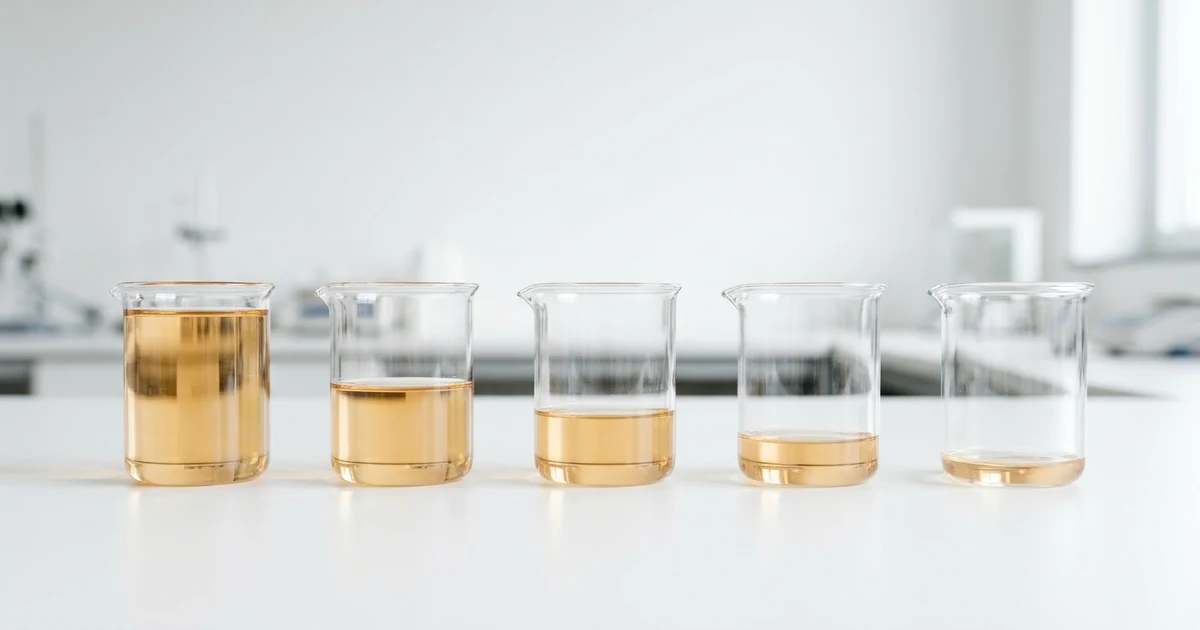
Nicotine's elimination half-life in the blood averages about 2 hours, meaning half of a single dose disappears in that time and roughly 94% is gone within 8 hours. Its primary metabolite, cotinine, sticks around much longer, with a half-life of about 16 hours. That gap explains why nicotine's kick fades within hours while its chemical footprint lingers for days.
A single pouch or cigarette produces a clean rise-and-fall curve. A full day of nicotine use produces accumulation, overnight carryover, and cotinine levels that take days to wash out.
Key Takeaways
- Nicotine's plasma half-life averages about 2 hours; its terminal half-life (slow release from body tissues) averages about 11 hours.
- Cotinine's half-life averages about 16 hours. The liver enzyme CYP2A6 converts 70 to 80% of nicotine into cotinine.
- With regular use, nicotine accumulates over 6 to 8 hours (3 to 4 half-lives). If use continues to bedtime, measurable levels persist overnight.
- Clearance varies by person: pregnancy, sex, oral contraceptive use, age over 65, and kidney function all shift how fast nicotine leaves the body.
What a 2-Hour Half-Life Looks Like, Hour by Hour
Every 2 hours, whatever nicotine remains in the blood drops by half. After 8 hours, a single dose is down to about 6% of its peak.
| Hours after the peak | Nicotine left (2 h half-life) |
|---|---|
| 0 | 100% |
| 2 | 50% |
| 4 | 25% |
| 6 | 12.5% |
| 8 | 6.3% |
| 10 | 3.1% |
| 12 | 1.6% |
Formula: 100 × 0.5^(hours / 2). Averages; individual clearance can differ by twofold or more (Benowitz et al., 2009).
That 2-hour figure describes the fast, dominant elimination phase. Benowitz also reports a terminal half-life averaging 11 hours, a slower tail as nicotine leaves deeper body tissues. The 2-hour number governs how quickly a dose wears off; the 11-hour number explains why traces linger longer than the table predicts.
Cotinine: The 16-Hour Clock
About 70 to 80% of nicotine is converted to cotinine, primarily by CYP2A6 (Benowitz et al., 2009). Cotinine's half-life averages roughly 16 hours (the same review's Table 2 lists 16 to 18 hours), about eight times nicotine's own.
| Hours after last use | Cotinine left (16 h half-life) |
|---|---|
| 16 | 50% |
| 32 | 25% |
| 48 | 12.5% |
| 64 | 6.3% |
| 80 | 3.1% |
| 96 | 1.6% |
Formula: 100 × 0.5^(hours / 16).
That slow clearance is why cotinine, not nicotine, is the marker that matters for testing. Cutoffs and detection windows are covered in our cotinine test and nicotine pouches guide.
How Much Nicotine Does One Pouch Actually Release?
The label milligrams are not the absorbed dose. A single-dose, randomized crossover study by Lunell et al. (2020) measured extracted nicotine from several oral products:
- ZYN 3 mg released 1.5 mg
- ZYN 6 mg released 3.5 mg
- ZYN 8 mg released 3.8 mg (50%)
- General snus 8 mg released 2.4 mg
- Longhorn moist snuff 18 mg released 3.0 mg (19%)
ZYN 8 mg and Longhorn 18 mg produced nearly identical plasma nicotine curves despite a 10 mg gap on the label. (Disclosure: co-author Pendrill is affiliated with Swedish Match, ZYN's maker.)
Benowitz describes blood nicotine from smokeless tobacco rising gradually, plateauing at about 30 minutes, then declining over 2 hours or more.
Why Nicotine Builds Up Over a Day of Pouches
A 2-hour half-life does not mean the drug vanishes after 2 hours if you keep dosing. Benowitz describes regular smoking as "a multiple dosing situation with considerable accumulation" (Benowitz et al., 2009). With a 2-hour half-life, he predicts accumulation over 6 to 8 hours (3 to 4 half-lives) of regular use, and the same arithmetic applies to any steady schedule of doses.
- After 3 half-lives of regular use, blood levels reach 87.5% of their eventual plateau.
- After 4 half-lives: 93.8%.
- After 5 half-lives: 96.9%.
(Formula: fraction of plateau = 1 − 0.5^n, where n = number of half-lives elapsed.)
For cotinine (16-hour half-life), the same build-up takes 48 to 80 hours, about 2 to 3.3 days. Benowitz's practical summary for smokers: if a smoker keeps going until bedtime, "significant levels should persist all night."
Who Clears Nicotine Faster or Slower
Not everyone runs the same 2-hour clock. The table below is drawn from Benowitz et al. (2009).
| Group | What changes | Size of the change |
|---|---|---|
| Pregnancy (vs postpartum) | Clearance rises | Nicotine +60%, cotinine +140% |
| Women (no oral contraceptives) vs men | Clearance higher | Nicotine +13%, cotinine +24% |
| Women on oral contraceptives | Clearance rises further | Nicotine +28%, cotinine +30% |
| Adults over 65 | Clearance lower | Total −23%, renal −49% |
| Severe kidney impairment | Metabolic clearance lower | About −50% |
| Black vs white smokers | Cotinine clearance lower | 0.57 vs 0.76 mL/min/kg (nicotine difference not significant) |
Higher clearance = shorter effective half-life; lower clearance = longer one.
CYP2A6 activity is partly genetic and varies across populations; Benowitz reports that Chinese Americans had the lowest clearance of the groups studied, without giving a figure. Menthol cigarette smoking inhibits nicotine oxidation and glucuronidation, slowing metabolism; whether that applies at the same magnitude to menthol-flavored pouches has not been measured.
Nicotine's Half-Life Compared to Caffeine's
Nicotine's roughly 2-hour half-life is short. Caffeine varies widely between individuals (the factors are covered in caffeine half-life factors). A short half-life is one reason nicotine gets used again and again through the day, the repeated-dosing pattern Benowitz describes for smoking.
What the Half-Life Does Not Tell You
Plasma half-life measures blood concentration, not detection windows (those depend on test type and sensitivity; see how long nicotine stays in your system). It is also not when effects stop: how long the effect is felt runs on its own schedule. Withdrawal follows a different curve entirely (see nicotine withdrawal timeline and how long to stop craving nicotine). Every number here is a population average; individual variation runs twofold or more.
When to Talk to a Clinician
Pregnancy changes nicotine clearance sharply (+60% for nicotine, +140% for cotinine). If you are pregnant or planning pregnancy and use nicotine, talk to your provider. The same applies for heart disease, kidney or liver disease, or medications metabolized by the liver while using nicotine daily.
Nicotine is addictive. Nicotine products are for adults only. If you want help stopping, call 1-800-QUIT-NOW or speak with your clinician.
Related from Roon
- How Long Does Nicotine Stay in Your System?
- Cotinine Test and Nicotine Pouches
- Is Nicotine a Stimulant?
Frequently Asked Questions
Is the half-life of nicotine the same for pouches, vapes, and cigarettes?
The elimination half-life is a property of the body's metabolism, averaging about 2 hours regardless of source. What changes is absorption: how quickly nicotine enters the blood and how much reaches circulation. Lunell et al. (2020) showed ZYN 8 mg delivered 50% of its label dose while Longhorn 18 mg delivered 19%, yet both produced nearly identical blood curves. The route shapes the rise; the liver shapes the fall.
How many half-lives until nicotine is gone?
About 5 half-lives leaves roughly 3% of the original dose. For nicotine that is approximately 10 hours; for cotinine, about 80 hours (3.3 days). These are single-dose estimates. With repeated use, the starting concentration is higher, so total clearance takes longer.
Does nicotine's half-life change in pregnancy?
Yes. Benowitz reports clearance 60% higher for nicotine and 140% higher for cotinine in pregnancy than after delivery, so both leave the body faster. Anyone pregnant who uses nicotine should talk to a provider.
Is nicotine's half-life the same as how long the buzz lasts?
No. The half-life describes blood levels, not how the effect feels. With smokeless tobacco, Benowitz describes blood nicotine plateauing at about 30 minutes and then declining over 2 hours or more.
A Pouch Habit Without the Nicotine Clock
Everything above tracks one molecule's 2-hour clearance loop, the cycle that pulls users back to the next dose. Roon steps outside that loop entirely: a zero-nicotine oral pouch (placed under the lip, Cool Mint) built on 80 mg caffeine, 60 mg L-theanine, 25 mg methylliberine (Dynamine), and 5 mg theacrine (TeaCrine). No nicotine means no cotinine accumulation and no overnight carryover.
Methylliberine slows caffeine's clearance. In a randomized, double-blind crossover study (n=12), co-administration cut caffeine's oral clearance from 41.9 to 17.1 L/hr and extended its half-life from 7.2 to 15 hours, with no higher peak (study). That study dosed 100 mg methylliberine + 150 mg caffeine, about 4× the methylliberine and 1.9× the caffeine in a Roon pouch; the mechanism points the same direction, but the exact magnitude may differ. Roon's experienced window runs 6 to 8 hours, so wrap up your last pouch at least 8 hours before sleep.
If you want to keep a pouch ritual after stepping away from nicotine, Roon starts at $9.16 per tin. Cap use at 4 pouches a day and stay under 400 mg total caffeine from all sources. Roon is not a nicotine replacement therapy and does not treat withdrawal.
Sources
- Benowitz NL, Hukkanen J, Jacob P 3rd. "Nicotine Chemistry, Metabolism, Kinetics and Biomarkers." Handb Exp Pharmacol. 2009;(192):29-60. PMC2953858
- Lunell E, Fagerström K, Hughes J, Pendrill R. "Pharmacokinetic Comparison of a Novel Non-tobacco-Based Nicotine Pouch (ZYN) With Conventional, Tobacco-Based Swedish Snus and American Moist Snuff." Nicotine Tob Res. 2020;22(10):1757-1763. Nicotine & Tobacco Research
- Caffeine and Methylliberine: A Human Pharmacokinetic Interaction Study, Journal of Exercise and Nutrition
Written by Roon Team