Methylene Blue and Serotonin Syndrome: The Interaction Nobody Talks About
Methylene blue looks harmless. It is the bright blue dye that surgeons use to map lymph nodes, the antidote for methemoglobinemia, and lately the supplement that biohackers drip under their tongue for "mitochondrial energy." Almost nobody mentions that it is also a potent monoamine oxidase inhibitor. That is the missing piece behind methylene blue serotonin syndrome, a reaction that has killed patients who were taking nothing more exotic than a common antidepressant.
The danger is not the dye itself. It is the dye plus a serotonergic drug. Combine the two and you can trigger a cascade of excess serotonin in the brainstem and spinal cord that ranges from uncomfortable to fatal.
This is a science explainer, not medical advice. If you take an antidepressant and you are about to encounter methylene blue in any form, the details below are worth understanding.
Key Takeaways
- Methylene blue is a strong, reversible inhibitor of monoamine oxidase A (MAO-A), the enzyme that breaks down serotonin.
- Taken alongside SSRIs, SNRIs, MAOIs, or other serotonergic drugs, it can cause serotonin toxicity.
- The U.S. FDA issued a formal warning in 2011 after reviewing reported cases, many tied to surgical use.
- Risk scales with dose. The IV doses used in surgery are far higher than typical oral microdoses, but the mechanism does not switch off at low doses.
- Products built without MAO inhibitors or serotonergic actives, including caffeine-and-L-theanine focus formulas, do not carry this specific interaction risk.
What Serotonin Syndrome Actually Is
Serotonin syndrome is a toxic state caused by too much serotonin activity at nerve receptors. It is not an allergy or an infection. It is a pharmacological overload.
Doctors describe a classic triad: altered mental status, autonomic instability, and neuromuscular problems. In practice that means agitation or confusion, a racing heart, high blood pressure, fever, sweating, tremor, and muscle rigidity or clonus. Severe cases progress to seizures, dangerously high body temperature, and death.
The condition usually appears fast, often within hours of the triggering dose. It is also one of the more under-recognized drug reactions in medicine, partly because the symptoms mimic other emergencies.
How Methylene Blue Triggers It: The MAO-A Mechanism
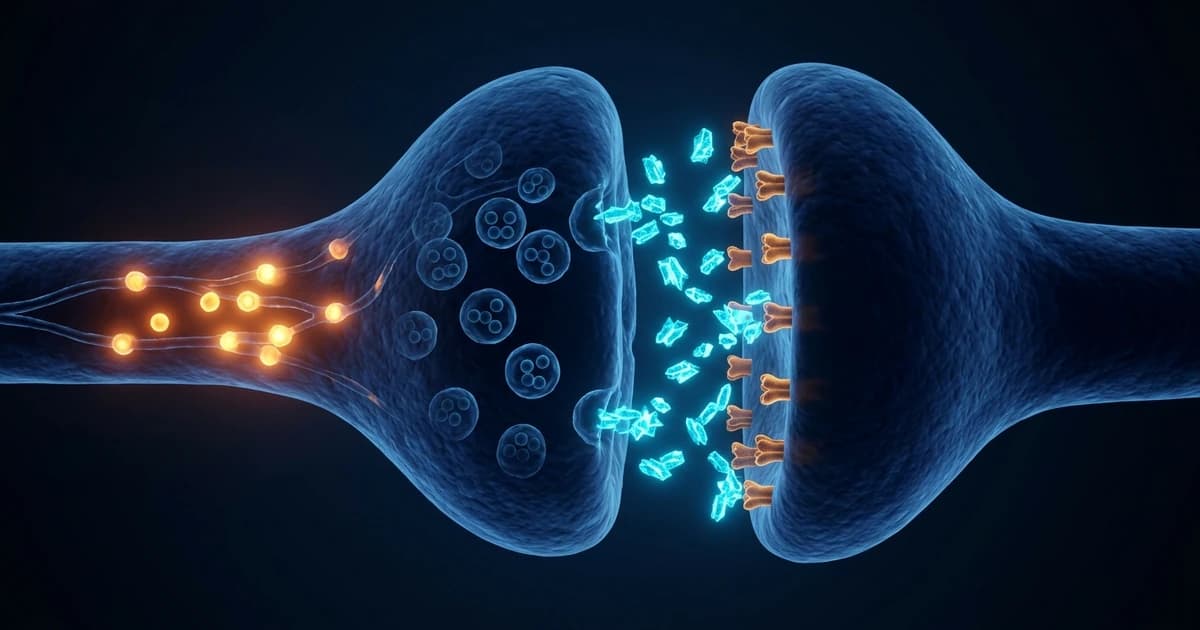
The short version: methylene blue blocks the enzyme that clears serotonin, so serotonin piles up.
Monoamine oxidase A is the workhorse enzyme that degrades serotonin in the brain. Research published on ScienceDirect shows that methylene blue and its primary metabolite, Azure B, are high-potency reversible inhibitors of monoamine oxidase. Azure B is the more powerful of the two, which means the body actively converts methylene blue into something that suppresses serotonin breakdown even harder.
When you add an SSRI, you create a double hit. The SSRI keeps serotonin in the synapse by blocking its reuptake, and the methylene blue stops the enzyme that would normally destroy the excess. Serotonin has nowhere to go. That is the textbook setup for a methylene blue SSRI interaction turning toxic.
This is why methylene blue belongs in the same conversation as any methylene blue MAOI risk. Pharmacologically, it behaves like an MAOI, even though most people file it under "dye" or "supplement."
The FDA Warning Most People Never Saw
The FDA flagged this years ago. In 2011 the agency issued a drug safety communication warning that methylene blue and the antibiotic linezolid can cause serious central nervous system reactions, including serotonin syndrome, when given to patients taking serotonergic psychiatric medications. The alert was covered at the time by outlets including Managed Healthcare Executive and Medscape.
The warning grew out of real cases, many of them in surgery. Methylene blue is used intravenously during parathyroid and other procedures to stain tissue. Patients who happened to be on antidepressants developed serotonin toxicity on the operating table.
The Anesthesia Patient Safety Foundation has written about this exact scenario, because anesthesiologists are often the ones who discover the interaction in real time. This is the core of the methylene blue antidepressant warning: the drug interaction can show up in a setting where no one expected a psychiatric reaction.
Does Dose Matter? Yes, But the Mechanism Doesn't Disappear
Higher doses carry more risk. The serotonin toxicity cases tied to surgery generally involved intravenous methylene blue, where doses run far above what someone swallows in a few drops of an oral solution.
That is the honest nuance the supplement crowd often skips. A tiny oral microdose is not the same exposure as a surgical IV bolus. But "lower risk" is not "no risk," and the MAO-A inhibition is a property of the molecule, not a switch that flips only above a certain milligram count.
Several factors raise the stakes:
- What else you take. SSRIs, SNRIs, MAOIs, tricyclics, triptans, tramadol, and St. John's Wort all add serotonergic load.
- Your dose and route. IV and high oral doses concentrate the effect.
- Stacking. Combining methylene blue with other serotonergic supplements compounds the problem.
The clinicians at PsychoTropical Research, who specialize in serotonin toxicity, treat methylene blue as a genuine MAOI and advise caution accordingly. If you want a single rule of thumb for methylene blue safety, it is this: assume the MAOI behavior is always present and plan around your other medications.
Methylene Blue Drug Interactions at a Glance
Here is how the most relevant methylene blue drug interactions stack up by serotonergic risk. This is a general reference, not a substitute for your pharmacist.
| Substance combined with methylene blue | Serotonergic risk | Why |
|---|---|---|
| SSRIs (sertraline, fluoxetine, escitalopram) | High | Reuptake blocked + MAO-A inhibited = serotonin overload |
| SNRIs (venlafaxine, duloxetine) | High | Same dual mechanism as SSRIs |
| MAOIs (phenelzine, selegiline) | Very high | Two MAO inhibitors stacked |
| Tricyclic antidepressants | Moderate to high | Serotonergic activity plus MAO inhibition |
| Triptans, tramadol, St. John's Wort | Moderate | Added serotonergic load |
| Caffeine + L-theanine focus products | None of this class | No MAO inhibition, no serotonergic actives |
The bottom row matters for anyone who reached this article while researching whether their everyday focus product carries the same danger. Most do not, because most do not touch the serotonin system at all.
Conclusion
Methylene blue is a useful molecule with a quiet second identity: it is a potent MAO-A inhibitor, and that property is what links it to serotonin syndrome. The risk is real, it is dose-influenced, and it is most dangerous in people taking SSRIs, SNRIs, MAOIs, or other serotonergic drugs.
The fix is not fear. It is information. Know what methylene blue does to the enzyme that clears serotonin, know what else is in your system, and talk to a clinician before mixing it with any antidepressant or before any surgery where the dye might be used. The interaction only stays hidden if no one names it.
Frequently Asked Questions
Is methylene blue really an MAO inhibitor?
Yes. Methylene blue is a reversible inhibitor of monoamine oxidase A, the enzyme that breaks down serotonin. Research on ScienceDirect shows its metabolite Azure B is an even more potent inhibitor. This is why it is treated pharmacologically like an MAOI, even though it is best known as a dye and an antidote, not a psychiatric drug.
Can a small oral dose of methylene blue cause serotonin syndrome?
The highest-risk cases involved intravenous doses used in surgery, which are far larger than typical oral microdoses. Lower doses carry lower risk, but the MAO-A inhibition is a property of the molecule and does not vanish at small amounts. The real danger appears when methylene blue is combined with a serotonergic drug, regardless of route.
What antidepressants are dangerous with methylene blue?
SSRIs, SNRIs, MAOIs, and tricyclic antidepressants all raise serotonergic load and can combine badly with methylene blue. The FDA warning specifically named serotonergic psychiatric medications. Other serotonergic drugs like triptans, tramadol, and St. John's Wort also add risk. Always check with a pharmacist before combining any of these.
Why did the FDA warn about methylene blue?
In 2011 the FDA issued a drug safety communication after reviewing cases of serious central nervous system reactions, including serotonin syndrome, in patients given methylene blue or linezolid while taking serotonergic psychiatric medications. Many cases occurred during surgery. The agency advised caution when these drugs overlap, as reported by Managed Healthcare Executive.
How fast does serotonin syndrome appear?
It usually develops quickly, often within hours of the triggering dose. Early signs include agitation, rapid heart rate, high blood pressure, sweating, tremor, and muscle twitching or rigidity. Severe cases can progress to high fever and seizures. Because it moves fast and mimics other emergencies, it is frequently under-recognized, which is one reason the methylene blue interaction is so underappreciated.
Do caffeine and L-theanine carry the same risk?
No. Caffeine and L-theanine do not inhibit monoamine oxidase and are not serotonergic actives, so they do not carry this class of interaction risk. The methylene blue serotonin syndrome problem is specific to drugs that inhibit serotonin breakdown or block its reuptake. A standard focus product built on caffeine and L-theanine operates through entirely different pathways.
What should I do before surgery if I take an antidepressant?
Tell your surgical team and your prescriber well in advance. Methylene blue is sometimes used intravenously during certain operations, and your clinicians may need to plan around your medication. Never stop an antidepressant on your own. The safe move is a conversation with the people managing both your prescription and your procedure.
A Note on Focus Products Without the Serotonin Risk
If you arrived here while auditing what is actually in the supplements and focus aids you use, that instinct is the right one. Methylene blue is a case study in why the mechanism matters more than the marketing. A molecule can be sold as a wellness aid and still behave like an MAO inhibitor.
This is also why Roon was built the way it was. Roon is a sublingual focus pouch with four ingredients: 80 mg caffeine, 60 mg L-theanine, 25 mg methylliberine (Dynamine), and 5 mg theacrine (TeaCrine). None of those are MAO inhibitors, and none act on the serotonin system, so Roon does not carry this class of interaction risk. It is designed for 5 to 10 minute onset and 6 to 8 hours of steady focus without the jitters or crash.
To be clear about what it is not: Roon is not a treatment for any condition, and it is not a stand-in for medical advice about your prescriptions. If you take a serotonergic medication, your pharmacist is still the right person to clear anything new. Try Roon when you want clean, well-characterized focus rather than a molecule with a hidden second job.
Written by Roon Team