Light Roast vs Dark Roast Caffeine: Which Has More?
Light Roast vs Dark Roast Caffeine: Which Has More?
Light roast vs dark roast caffeine is closer than you think: neither roast reliably wins. Brewed the same way with the same weight of coffee, dark roasts generally came out lower in a 2024 Scientific Reports study, with 134 to 165 mg per 8 oz cup across roast levels. Per gram of roasted bean, studies disagree. And Starbucks lists the same 315 mg for a grande Blonde, Pike Place or Dark Roast on its current menu.
Light vs Dark Roast Caffeine, by How You Measure
| How you measure | What the study found | Which roast comes out ahead | Source |
|---|---|---|---|
| Per brewed cup, same coffee weight and brew (AeroPress, 15:1, 10 min) | 134 to 165 mg per 8 oz cup across roast levels; generally lower for dark roasts | Light to medium (peak at ~14 to 16% roasting mass loss) | Lindsey et al. 2024, Scientific Reports |
| Per cup at equal extraction yield | Dark roasts generally had higher caffeine concentrations | Dark | Lindsey et al. 2024 |
| Per gram of roasted bean (Arabica) | 1.13% light, 1.17% medium, 1.08% dark; not significantly different | None | Alamri et al. 2022 |
| Per gram of roasted bean (4 coffees, 2 species) | Caffeine decreased with more intense roasting; light-roasted robusta highest | Light | Hečimović et al. 2011 |
| Per scoop (volume) | Darker beans are more porous and lose mass, so a scoop holds less coffee; no mg figure published | Light (direction only) | Lindsey et al. 2024 (porosity) |
| Starbucks brewed coffee, grande 16 fl oz | 315 mg (range to 390) for Blonde, Pike Place and Dark Roast alike | Tie | Starbucks menu, checked Oct 2026 |
Source: Lindsey et al. 2024, Alamri et al. 2022, Hečimović et al. 2011, Starbucks menu data checked Oct 31, 2026.
Where These Numbers Come From
Three peer-reviewed studies read at their primary sources inform this page: Lindsey et al. 2024 (Scientific Reports), Alamri et al. 2022 (Saudi Journal of Biological Sciences), and Hečimović et al. 2011 (Food Chemistry). Starbucks caffeine figures come from the brand's own product pages, checked October 31, 2026. No coffee was brewed or lab-tested for this page. Disclosure: Roon sells a caffeine pouch, and one link to that product appears near the end. Every number here comes from the cited studies or the brand's menu so you can verify it yourself.
Does Dark Roast Have More Caffeine?
Not per cup in the largest recent study. Under identical brewing conditions (same water-to-coffee ratio by weight, same brew time), dark roasts generally produced less caffeine than light and medium roasts (Lindsey et al. 2024).
The twist: when the researchers controlled for extraction yield instead, dark roasts came out higher in caffeine concentration. The authors' explanation is two competing effects: roasting volatilizes or breaks down soluble compounds, and it also makes the bean more porous. They suggest caffeine losses at dark roasts as one reason the per-cup figure falls, so treat "roasting burns off caffeine" as their interpretation, not a settled fact.
Peak caffeine per cup appeared in batches with roughly 14 to 16% roasting mass loss, which the authors describe as generally light to medium roast levels.
Does Light Roast Have More Caffeine per Gram of Bean?
Studies disagree, and the differences are small.
Alamri et al. 2022 measured Arabica beans (Saudi Kholani cultivar) at three roast levels: 1.13% caffeine for light, 1.17% for medium, 1.08% for dark. The authors reported no statistically significant difference between the three.
Hečimović et al. 2011 looked at four coffees across two species and found that caffeine "exhibited a decrease with intensified roasting," with light-roasted Cherry (a Coffea canephora/robusta variety) holding the highest caffeine of all samples. Species mattered more than roast in that sample set: caffeine ranged from 0.06% to 2.55% across the coffees by HPLC, with the robusta Cherry at the top.
The takeaway from that study: which species the bean came from moved caffeine more than how long the roaster ran.
Scoop vs Scale: Why the Measuring Method Flips the Answer
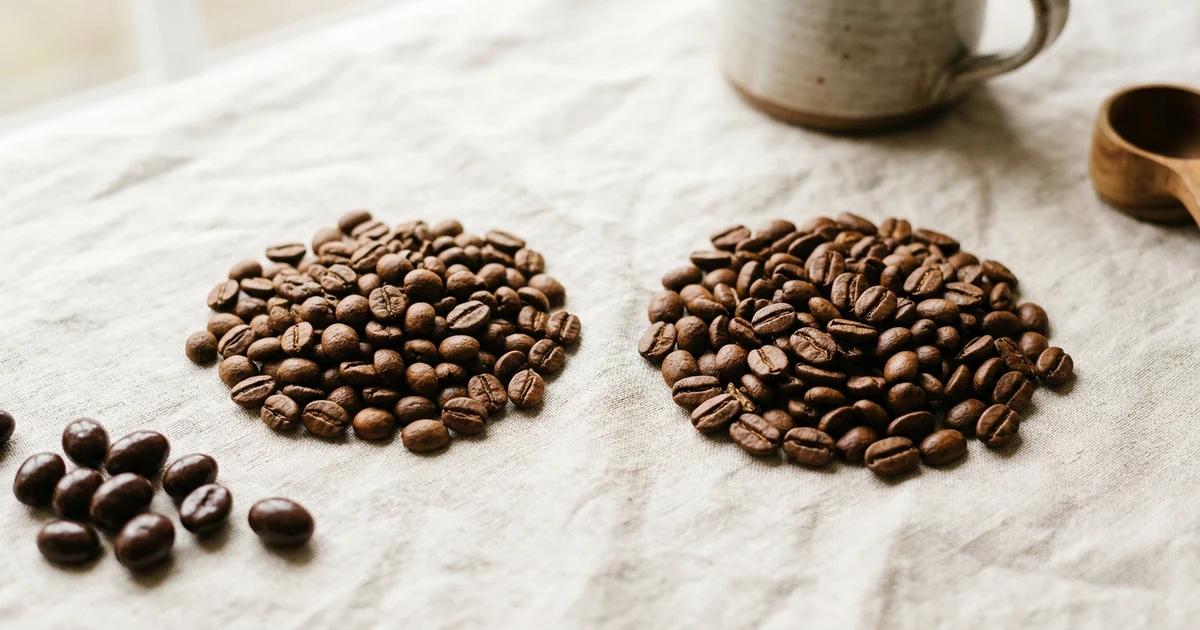
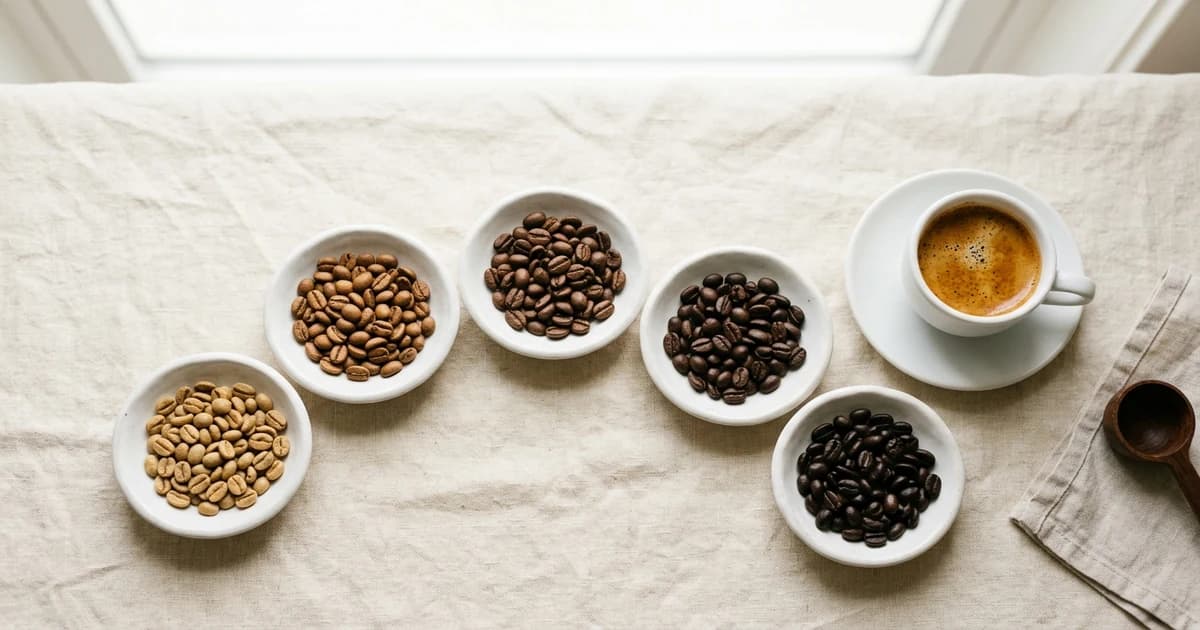
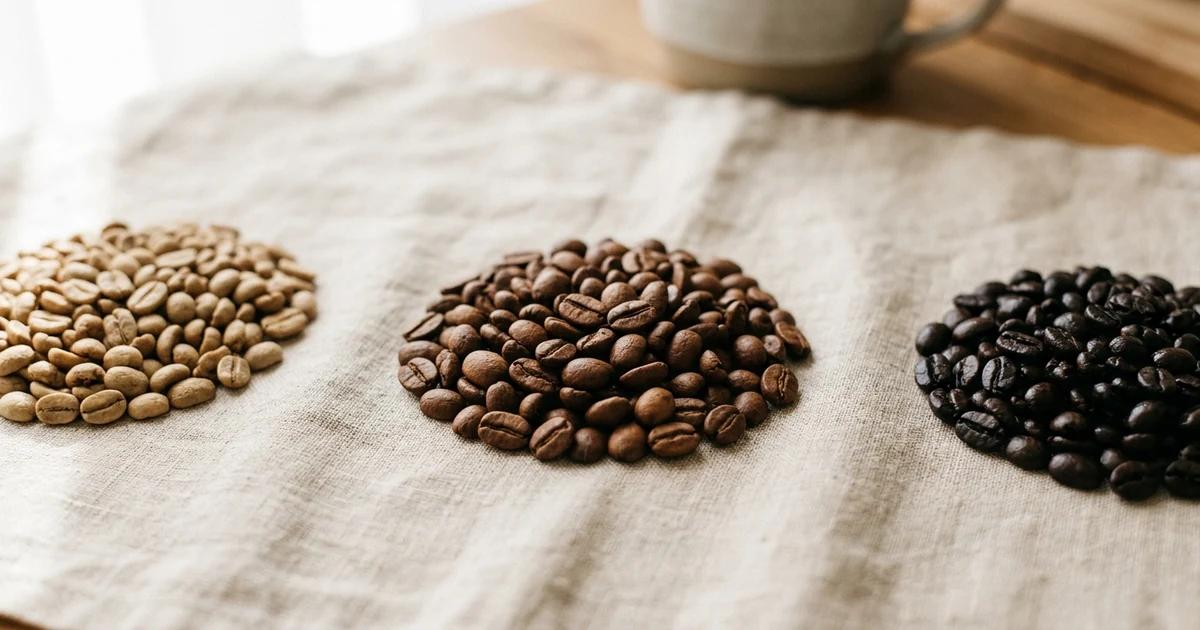
Roasting drives off mass and leaves each bean lighter and more porous. Lindsey et al. saw porosity increase with degree of roast under electron microscopy.
Measured by volume (a scoop), dark-roast beans are less dense, so a scoop holds less coffee by mass, which means less caffeine in the cup. Measured by weight, that scoop effect goes away. But "weigh it and the difference disappears" is not quite right either: the Lindsey brews were made by weight (15:1 water to coffee), and dark roasts still came out generally lower per cup.
Starbucks Blonde vs Pike Place vs Dark Roast Caffeine
Starbucks currently lists identical caffeine ranges for its Blonde Roast (Sunsera), Pike Place Roast (medium), and the featured Dark Roast (1971 Roast).
| Size | Volume | Caffeine (all three roasts) |
|---|---|---|
| Short | 8 fl oz | 155 to 195 mg |
| Tall | 12 fl oz | 235 to 290 mg |
| Grande | 16 fl oz | 315 to 390 mg |
| Venti | 20 fl oz | 390 to 490 mg |
Figures from Starbucks' own product pages, read October 31, 2026.
Older charts list a grande Blonde at 360 mg, higher than the other roasts. That does not match the current menu. Starbucks now publishes the same range for every brewed roast at every size.
Cup Size Beats Roast
In the Lindsey study, the spread across roast levels was 134 to 165 mg per 8 oz cup, a range of about 23% ((165 − 134) / 134). Compare that to Starbucks' cup-size spread: a Short starts at 155 mg and a Venti reaches 390 mg, a factor of 2.5x.
Roast-level variation: about 23%. Cup-size variation: about 2.5x. If you want more caffeine, order a bigger cup. If you want less, order a smaller one. The roast you pick is a flavor decision.
For reference, USDA FoodData Central puts generic brewed coffee at about 96 mg per 8 fl oz cup (40 mg per 100 g). Starbucks runs well above that, regardless of roast, at roughly 19.5 mg per fl oz across all sizes.
Which Roast Should You Pick?
- Want more caffeine? Order a larger cup or use more grounds by weight. The whole spread across roast levels in the Lindsey data was 31 mg per 8 oz cup. Upgrading from a Tall to a Venti adds 155 mg or more.
- Want less caffeine? Order a smaller size, try half-caff, or switch to decaf.
- Want a specific flavor? Pick the roast you enjoy. The caffeine gap between roasts is smaller than most coffee myths suggest.
The FDA cites 400 mg per day as a level not generally associated with negative effects for most healthy adults.
Related from Roon
- How Much Caffeine in a Cup of Coffee
- Starbucks Caffeine Content
- How Much Caffeine in Coffee Beans
- Cold Brew Caffeine Content
Frequently Asked Questions
Is blonde roast stronger than dark roast?
In flavor, dark roast tastes bolder. In caffeine, Starbucks lists the same range for both: 315 to 390 mg in a grande. The Lindsey study found light-to-medium roasts slightly higher per cup under controlled conditions, but the gap is modest. "Stronger" usually describes taste, not caffeine.
Does espresso roast have more caffeine?
Espresso roast is a roast style (typically medium-dark), not a brewing method. Caffeine in your espresso depends on the dose of ground coffee and the shot volume, not the label on the bag. For more, see how much caffeine is in a shot of espresso.
Does medium roast have the most caffeine?
Under identical brewing by weight, the Lindsey study's caffeine peak appeared at batches with about 14 to 16% roasting mass loss, which they describe as light to medium roast levels. So medium roast sat near the top, but not clearly above light roast.
Does robusta have more caffeine than arabica?
In that study, yes: in the Hečimović et al. 2011 data, light-roasted Cherry, a robusta, had the highest caffeine of all samples, and species moved caffeine more than roast did. The study's samples ranged from 0.06% to 2.55% caffeine by HPLC, and exact differences vary by cultivar.
How much caffeine is too much?
The FDA cites 400 mg per day as not generally associated with negative effects for most healthy adults. Toxic effects like seizures can occur with rapid consumption of around 1,200 mg. If you are pregnant or breastfeeding, the FDA recommends talking to your healthcare provider about caffeine intake.
Roast for Taste, Pouch for Hours
The main lesson from these studies: roast is a flavor choice, and your cup size determines your caffeine dose more than bean color does. Roon won't replicate the flavor or ritual of a fresh cup of coffee. But if you want a predictable dose that doesn't depend on brew ratios, grind size, or which roast the barista pulled, Roon delivers a fixed 80 mg of caffeine per pouch, paired with 60 mg L-theanine, placed under the lip.
Each pouch also carries 25 mg of methylliberine (Dynamine) and 5 mg of theacrine. In a randomized, double-blind crossover PK study of 12 adults, methylliberine slowed caffeine clearance (half-life 7.2 to 15 h) without a higher peak, though that study used 100 mg methylliberine with 150 mg caffeine, roughly 4x and 1.9x a Roon pouch, so Roon shares the mechanism directionally, not the result. A 15-hour half-life is not 15 hours of felt energy: one pouch tends to carry you through 6 to 8 hours of a workday. Leave at least 8 hours before bedtime and stay at or under 4 pouches a day (320 mg, within the FDA's 400 mg figure). Pricing runs from $9.16 per tin on the 12-tin subscription, about $0.61 per pouch. Try Roon if you want your caffeine dose in a format that does not vary by roast, barista, or cup size.
Sources
- Lindsey ZR, Williams JR, Burgess JS, Moore NT, Splichal PM. "Caffeine content in filter coffee brews as a function of degree of roast and extraction yield." Scientific Reports 2024;14:29126. PubMed / PMC full text
- Alamri E, Rozan M, Bayomy H. "A study of chemical composition, antioxidants, and volatile compounds in roasted Arabic coffee." Saudi Journal of Biological Sciences 2022;29(5):3133-3139. PMC
- Hečimović I, Belščak-Cvitanović A, Horžić D, Komes D. "Comparative study of polyphenols and caffeine in different coffee varieties affected by the degree of roasting." Food Chemistry 2011;129(3):991-1000. PubMed
- Starbucks: Pike Place Roast, Blonde Roast Sunsera, Featured Dark Roast 1971
- USDA FoodData Central: Coffee, brewed
- FDA: Spilling the Beans: How Much Caffeine is Too Much?
Written by Roon Team