How Much Caffeine Is in Instant Coffee, by the Teaspoon
How Much Caffeine Is in Instant Coffee, by the Teaspoon
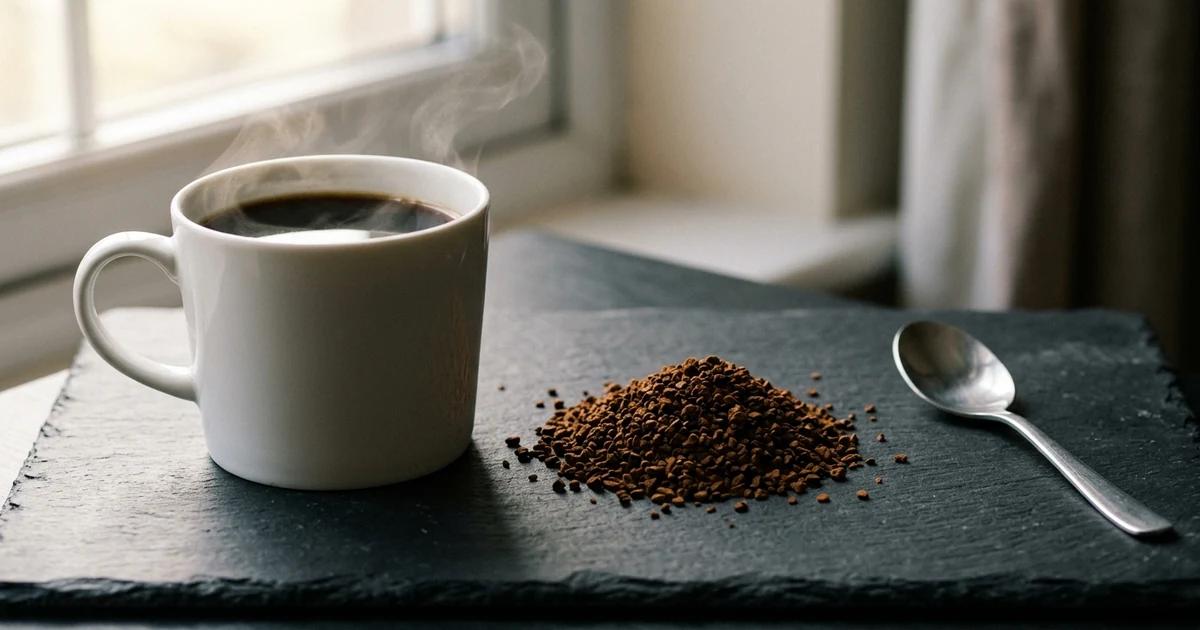
A level teaspoon of regular instant coffee powder (about 1 gram) holds roughly 31 mg of caffeine, according to USDA FoodData Central (FDC 171893). Dissolve it in 8 fl oz of water and you get about 62 mg per cup, versus about 95 mg for brewed drip. The dose depends on how much powder goes into the mug, so per-teaspoon is the number that matters.
Key Takeaways
- About 31 mg per level teaspoon (1 g) of regular instant powder, from USDA data (3,140 mg per 100 g).
- About 62 mg in an 8 fl oz cup of prepared instant, versus about 95 mg for brewed coffee (USDA FDC 174130, FDC 171890).
- Nescafe's FAQ puts a 12 fl oz serving at about 113 mg; Folgers instant and Starbucks VIA: no caffeine figure on the brand pages we fetched.
- Half-caf instant is about 16 mg per teaspoon; decaf instant brews to about 2 mg per 6 fl oz (USDA FDC 174126, FDC 171894).
Instant coffee caffeine chart
| Instant coffee | Amount | Caffeine | Per fl oz | Source |
|---|---|---|---|---|
| Regular instant, powder | 1 tsp (1 g) | about 31 mg | n/a | USDA FDC 171893 |
| Regular instant, powder | 1 packet (2 g) | about 63 mg | n/a | USDA FDC 171893 |
| Regular instant, prepared | 6 fl oz (179 g) | about 47 mg | 7.7 mg | USDA FDC 174130 |
| Regular instant, prepared | 8 fl oz (computed) | about 62 mg | 7.7 mg | USDA FDC 174130 |
| Regular instant, prepared | 12 fl oz (computed) | about 93 mg | 7.7 mg | USDA FDC 174130 |
| Nescafe instant (brand FAQ) | 12 fl oz | about 113 mg | 9.4 mg | Nescafe US FAQ |
| Half-caf instant, powder | 1 tsp (1 g) | about 16 mg | n/a | USDA FDC 174126 |
| Instant with chicory, powder | 1 rounded tsp (1.8 g) | about 37 mg | n/a | USDA FDC 171897 |
| Decaf instant, prepared | 6 fl oz (179 g) | about 2 mg | 0.3 mg | USDA FDC 171894 |
| Folgers Classic Roast instant | per serving | not published | not published | Folgers brand pages |
| Starbucks VIA Instant | per packet | not published | not published | Starbucks pages |
| Brewed coffee, for scale | 8 fl oz (237 g) | about 95 mg | 11.8 mg | USDA FDC 171890 |
Sources: USDA FoodData Central entries listed, Nescafe US FAQ; checked Oct 31, 2026. Computed rows use mg per 100 g × grams / 100.
How much caffeine is in a teaspoon of instant coffee?
About 31 mg in a level 1 g teaspoon of regular instant powder, by USDA data. The concentration is 3,140 mg per 100 g, so the formula is: grams of powder × 31.4 = milligrams of caffeine.
A single-serve packet (2 g) works out to about 63 mg. If you heap the spoon, you land somewhere between the 1 g teaspoon and the 2 g packet. USDA does not publish a gram weight for a "heaped" teaspoon; the reliable move is to weigh yours once and multiply.
Instant vs brewed: which has more caffeine?
Brewed drip wins per cup at standard ratios. USDA's prepared-instant entry comes to 7.7 mg per fl oz; brewed coffee hits 11.8 mg per fl oz. In an 8 fl oz cup: about 62 mg instant versus about 95 mg brewed. Two spoons close the gap. See the full caffeine in a cup of coffee breakdown, or espresso per shot (about 63 mg per 1 fl oz).
Caffeine in Nescafe, Folgers and Starbucks VIA
Nescafe's US FAQ cites about 113 mg in a 12 fl oz serving of instant coffee, "according to coffee industry data," or 9.4 mg per fl oz. The FAQ gives no product-specific figure for Clasico or Taster's Choice and notes that caffeine varies by bean and preparation.
We found no caffeine figure for Folgers instant on any Folgers page we could fetch, and none for Starbucks VIA on a Starbucks page. Third-party estimates circulate, but none comes from the brands themselves. Check your jar or contact the manufacturer.
Half-caf, chicory and decaf instant
- Half-the-caffeine instant (FDC 174126): about 16 mg per level teaspoon, from 1,570 mg/100 g.
- Instant with chicory (FDC 171897): about 37 mg per rounded teaspoon (1.8 g), from 2,060 mg/100 g.
- Decaf instant, prepared (FDC 171894): about 2 mg per 6 fl oz. Not zero, but close. More in our caffeine in decaf coffee guide.
How many cups of instant coffee reach 400 mg?
The FDA cites 400 mg per day as the amount not generally linked to negative effects in healthy adults. From USDA numbers: 400 ÷ 31.4 = about 12.7 level teaspoons of powder, or about 6.5 eight-ounce cups at standard strength. Count every other caffeine source in your day too.
The FDA also notes that toxic effects like seizures can follow rapid intake of around 1,200 mg. People who are pregnant, have heart rhythm conditions or anxiety, take stimulant medications, or are under 18 should consult a clinician about a lower limit. For scale, see is 200 mg of caffeine a lot.
Related from Roon
- How Much Caffeine Is in a Cup of Coffee
- How Much Caffeine Is in Coffee Beans
- How Much Caffeine Is in Decaf Coffee
Frequently Asked Questions
Does instant coffee have less caffeine than regular coffee?
Per cup at standard preparation, yes. An 8 fl oz cup of USDA-reference instant contains about 62 mg versus about 95 mg for brewed drip. That gap reflects the powder-to-water ratio behind USDA's prepared entry; add more powder and the numbers converge.
How much caffeine is in a cup of Nescafe?
Nescafe's US FAQ cites about 113 mg per 12 fl oz, from coffee industry data. No product-specific number for Clasico or Taster's Choice is listed. The jar or packet label is the place to check for your exact product.
Is instant coffee bad for you?
This article covers caffeine content only. From a caffeine standpoint, instant coffee counts the same toward the FDA's 400 mg guideline as any other source. For health concerns beyond caffeine, talk to your doctor.
How much instant coffee is too much?
At 31 mg per level teaspoon, about 12.7 teaspoons of regular instant powder reach the FDA's 400 mg figure for healthy adults from instant coffee alone. Other caffeine sources in your day lower that ceiling.
A Measured Dose Without the Kettle
Instant coffee's caffeine shifts with every scoop, and most people never weigh the spoon. A pouch removes that variable.
Each Roon pouch contains exactly 80 mg of caffeine (about 2.5 level teaspoons of instant powder, by USDA math), plus 60 mg L-theanine, 25 mg methylliberine (Dynamine) and 5 mg theacrine (TeaCrine). Methylliberine slows caffeine clearance: a randomized, double-blind crossover PK study (n = 12) found it extended caffeine's half-life from 7.2 to 15 hours and cut oral clearance from 41.9 to 17.1 L/hr, with no higher peak (study). That trial dosed 100 mg methylliberine with 150 mg caffeine, roughly 4× and 1.9× what one Roon pouch delivers, so the direction of the effect applies but the exact magnitudes do not. A doubled half-life on paper does not mean a 15-hour buzz: what you notice from one pouch spans roughly 6 to 8 hours. Because the tail lingers, keep your last pouch at least 8 hours ahead of bedtime, use no more than 4 pouches a day, and count them toward the FDA's 400 mg daily figure along with any coffee.
Zero nicotine, zero sugar, placed under the lip. From $9.16 per tin on the 12-tin subscription, as little as $0.61 per pouch. See the full lineup.
Sources
- USDA FoodData Central: Coffee, instant, regular, powder (FDC 171893)
- USDA FoodData Central: Coffee, instant, regular, prepared with water (FDC 174130)
- USDA FoodData Central: Coffee, instant, half the caffeine (FDC 174126)
- USDA FoodData Central: Coffee, instant, with chicory (FDC 171897)
- USDA FoodData Central: Coffee, instant, decaffeinated, prepared (FDC 171894)
- USDA FoodData Central: Coffee, brewed, prepared with tap water (FDC 171890)
- USDA FoodData Central: Coffee, brewed, espresso (FDC 171891)
- Nescafe US FAQ
- FDA: Spilling the Beans: How Much Caffeine is Too Much?
Written by Roon Team