How Is Decaf Coffee Made? Four Methods, Step by Step
How Is Decaf Coffee Made? Four Methods, Step by Step
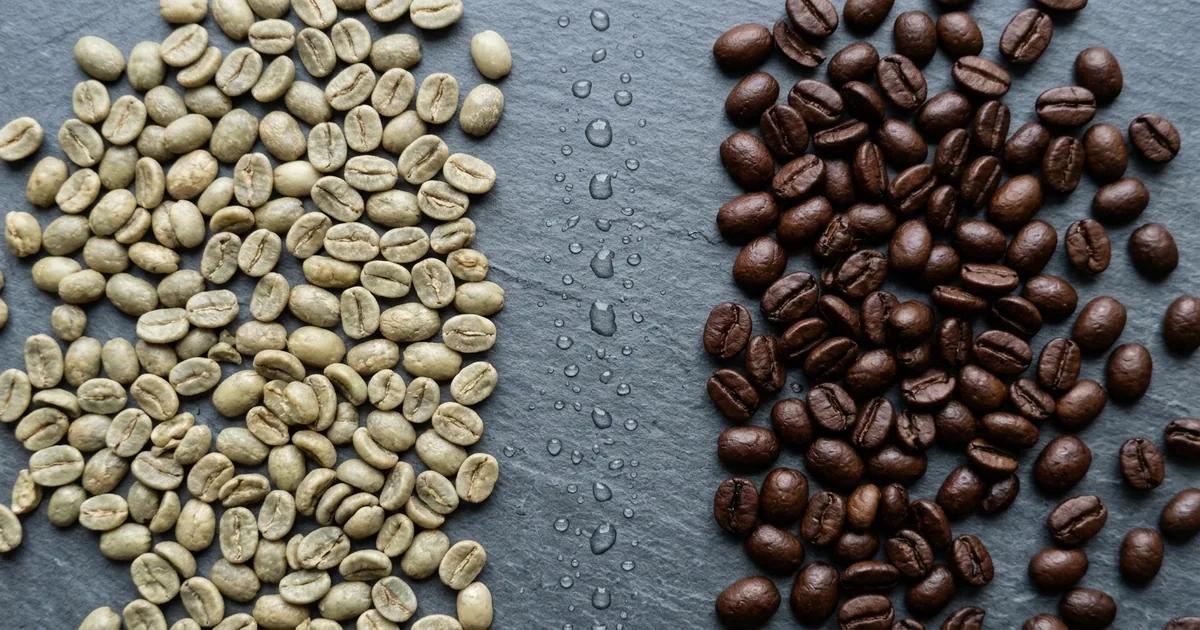
Every commercial decaffeination method starts the same way: green, unroasted coffee beans are steamed or soaked so their pores open, then a solvent, water, or pressurized gas pulls caffeine out before the beans ever reach a roaster. Caffeine dissolves in water, which is why every method works on the raw bean, and roasting only comes after. The four commercial methods are methylene chloride, ethyl acetate, water with carbon filters (the Swiss Water Process), and supercritical CO2.
Key Takeaways
- All decaffeination happens before roasting. Green beans are steamed or hydrated to make caffeine accessible, then treated with one of four extraction methods.
- Two methods use chemical solvents. Methylene chloride and ethyl acetate each bond with caffeine and are steamed off afterward. FDA regulation 21 CFR 173.255 caps methylene chloride residue in roasted decaf at 10 ppm (0.001%), unchanged as of Nov 14, 2026, while a 2023 petition to remove the solvent is still undecided.
- Two methods use no chemical solvent. The Swiss Water Process uses water, temperature, time, and carbon filters. The CO2 method, per Kurt Zosel's patent, uses moist supercritical carbon dioxide at 120 to 180 atmospheres.
- Decaf is not caffeine-free. A 2006 analysis (McCusker et al., J Anal Toxicol) found 0 to 13.9 mg of caffeine per 16 oz serving across 10 decaf coffees from different outlets.
- The bag often names the method. Phrases like "Swiss Water Process", "sugarcane E.A." or "CO2 decaf" point to a process; when nothing is printed, ask the roaster.
Step 1 for Every Method: Open Up the Green Bean
Caffeine is water-soluble and locked inside the cellular structure of a raw coffee seed. Before any extraction begins, the beans need moisture.
Cafe Imports' diagram states that "Coffee is steamed for 30 minutes prior to decaffeination." Swiss Water says its beans are "gently cleaned" and then hydrated with water. Zosel's CO2 patent works with moist carbon dioxide. Different language, same starting point: the beans take on water before the caffeine is drawn out.
The Solvent Methods: Methylene Chloride and Ethyl Acetate
Both follow the same arc: steamed beans are bathed in a solvent that bonds with caffeine, the solvent is drained, and the cycle repeats. A final steaming drives off residual solvent before drying and roasting.
Methylene chloride decaf is often called the "European method" in the trade. FDA rules allow it as a solvent to extract caffeine from green beans, with residue capped at 10 ppm in roasted decaf and in instant decaf (21 CFR 173.255).
Ethyl acetate in the Cafe Imports process is derived through the fermentation of sugarcane. The importer describes the cycle as about 8 hours of draining and refilling the tank, then a final low-pressure steaming to remove remaining traces. By the importer's own statements, its process removes a minimum of 97% of the caffeine, residual ethyl acetate equates to a maximum of 10 ppm, and ethyl acetate evaporates at 70°C. FDA permits ethyl acetate in food under 21 CFR 173.228 if it meets Food Chemicals Codex specifications.
"Naturally decaffeinated" on a bag usually means ethyl acetate. Cafe Imports calls it "a naturally occurring compound," but the label does not mean the process used no chemical solvent.
The Water Method: Swiss Water and Its Carbon Filters
Swiss Water Decaffeinated Coffee Inc. (Delta, BC) states that its process "uses only water, temperature, and time" with no esters or solvents. It relies on a solution called Green Coffee Extract (GCE): water carrying coffee's soluble compounds, which the company describes as free of caffeine and chemicals.
Hydrated beans sit in GCE, and caffeine migrates out along the concentration gradient. The caffeine-laden GCE then passes through what Swiss Water calls "100% chemical-free carbon filters that selectively trap caffeine molecules." Refreshed GCE is recirculated in a closed loop. Swiss Water says the process preserves organic certification on green coffee (OCIA-certified, applicable to non-roasted beans).
The CO2 Method: Supercritical Carbon Dioxide
Kurt Zosel's US Patent 4,260,639 (priority 1970, granted 1981, assigned to Studiengesellschaft Kohle) describes the core idea: contact the coffee with moist carbon dioxide in the supercritical state. Its preferred conditions are 40 to 80°C, 120 to 180 atmospheres, and 5 to 30 hours of contact. The patent text is the source here; how individual decaffeinators run the process today is not public on the pages we read.
How to Tell Which Method Your Decaf Used
Most roasters do not print the method on the front of the bag. The table below maps common label language to the likely process.
| Label wording | Method it points to | What to verify |
|---|---|---|
| "Swiss Water Process" | Water + carbon filters | Look for the Swiss Water certification mark |
| "Sugarcane process," "E.A.," or "naturally decaffeinated" | Ethyl acetate | Ask the roaster whether the EA is sugarcane-derived |
| "CO2 decaf" or "CO2 process" | Supercritical carbon dioxide | Roaster's product page or spec sheet |
| "European method," "KVW," or no method named | Often a solvent method, possibly methylene chloride | Ask the roaster directly |
| No method stated at all | Unknown | Contact the roaster |
These phrases are common roaster wording, not regulated terms, so treat the table as a starting point and confirm with the roaster.
Is Methylene Chloride in Decaf Still Legal in the US?
Yes, as of Nov 14, 2026, FDA regulation 21 CFR 173.255 still permits up to 10 ppm of methylene chloride residue in decaffeinated roasted and instant coffee.
A coalition including the Environmental Defense Fund filed a petition in December 2023 asking FDA to remove four solvents, including methylene chloride, from food-additive rules. FDA announced the filing in the Federal Register on January 11, 2024. FDA reopened the comment period from May 28 to June 29, 2026 "to allow for the submission of any updated data and other information over the last two years." As of Nov 14, 2026, the Federal Register shows no final action on the coffee side, and Daily Coffee News reported that FDA had asked for "practical considerations" for "phasing out impacted uses" without announcing a decision.
On Nov 10, 2026, FDA partially granted a separate color additive petition, removing methylene chloride as a diluent in inks for marking fruit and vegetables because the petitioners' data showed it "induces cancer in laboratory animals." The same rule denied removing it as an extraction solvent for annatto extract, paprika oleoresin and turmeric oleoresin, and takes effect Jan 11, 2027. It does not apply to coffee decaffeination, and the animal finding is not a measurement of risk from decaf.
The National Coffee Association opposes a ban. Its president, Bill Murray, said in March 2024, as quoted by Daily Coffee News: "Banning European Method decaf would defy science and harm Americans' health."
Does Decaf Still Have Caffeine?
Yes. Decaf is low-caffeine, not caffeine-free. The FDA states that decaf coffee "typically has 2 to 15 milligrams in an 8-fluid-ounce cup."
McCusker et al. (2006) measured 10 decaf samples from different outlets and found 0 to 13.9 mg per 16 oz serving. In the same study, six Starbucks brewed decaf samples ranged from 12.0 to 13.4 mg per 16 oz. For a deeper look, see our guide to caffeine in decaf coffee.
What the Methods Do Not Tell You
None of the sources above publishes per-brand residue or caffeine data, so the method on a bag does not tell you the exact caffeine left in your cup. Flavor claims are marketing too: when Swiss Water says its process preserves a coffee's origin characteristics, that is the company's own description, not a measured comparison.
Related from Roon
- How Much Caffeine Is in Decaf Coffee?
- Decaf Espresso: What to Know
- Decaf Cold Brew: What to Know
- Which Coffee Benefits Come from Caffeine?
Frequently Asked Questions
Is decaf coffee chemically processed?
Two of the four methods use chemical solvents (methylene chloride and ethyl acetate), and both end with steaming to drive off residual solvent. FDA caps methylene chloride residue at 10 ppm, and ethyl acetate must meet food-grade specifications. Swiss Water and supercritical CO2 use no chemical solvent. Look for "Swiss Water" or "CO2 decaf" on the label if that matters to you.
What does "naturally decaffeinated" mean on a bag?
In most cases it means the coffee was decaffeinated with ethyl acetate, which some roasters call "natural" because it can be made by fermenting sugarcane; Cafe Imports calls it "a naturally occurring compound." The phrase does not tell you the source of the ethyl acetate, so ask the roaster what process was used.
Is Swiss Water decaf automatically organic?
Not exactly. Swiss Water says its process keeps certifications, including Organic, and notes that its OCIA certification applies only to non-roasted green coffee. Organic status depends on whether the green beans were certified organic before decaffeination. The process does not make a non-organic bean organic.
Is decaf made from different beans?
No. Decaf starts as the same green beans used for regular coffee. Caffeine is removed from the green beans before roasting, not bred out of the plant.
How does decaf compare with a caffeine pouch?
They serve opposite purposes. Decaf is for people who want coffee flavor with minimal caffeine. A caffeine pouch is for people who want caffeine without coffee. One Roon pouch, for example, lists 80 mg of caffeine, about a small coffee, far above the FDA's typical 2 to 15 mg for a cup of decaf.
When You Do Want the Caffeine
If you want to manage caffeine rather than eliminate it, coffee's problem is a dose that shifts with every brew.
Roon is a zero-nicotine oral pouch with a fixed 80 mg of caffeine, 60 mg of L-theanine, plus methylliberine (Dynamine) and theacrine (TeaCrine). Methylliberine slows how the body clears caffeine: a randomized, double-blind, crossover PK study (n=12) found caffeine's half-life extended from 7.2 to 15 hours with no higher peak concentration. That study used 100 mg methylliberine and 150 mg caffeine, about 4 times the methylliberine and 1.9 times the caffeine in one Roon pouch, so the mechanism applies directionally, not as a one-to-one prediction. The practical outcome: a 6 to 8 hour felt window from 80 mg of caffeine, no jitters, no crash. Allow at least 8 hours between your last pouch and bedtime.
Roon is zero sugar (contains sucralose), from $9.16 per tin on a 12-tin subscription. A first order carries a 30-day money-back guarantee (once per customer). Roon is a caffeine product, not decaf. If you are avoiding caffeine entirely, it is not for you. Stay at or below 4 pouches a day and 400 mg of caffeine total from all sources. See what is in the pouch.
Sources
- 21 CFR 173.255, Methylene chloride (eCFR, version as of Nov 10, 2026, read Nov 14, 2026)
- 21 CFR 173.228, Ethyl acetate (eCFR, version as of Nov 10, 2026, read Nov 14, 2026)
- EDF et al. food additive petition, FDA-2023-F-5684 (Federal Register, Jan 11, 2024)
- FDA reopened comment period (Federal Register, May 28, 2026)
- FDA color additive decision on methylene chloride (Federal Register, Nov 10, 2026)
- FDA Weighs Next Steps on Decaf Solvent Rules (Daily Coffee News, June 30, 2026)
- Sugarcane E.A. Decaffeination Process (Cafe Imports, PDF)
- Coffee Decaffeination Process (Swiss Water)
- US Patent 4,260,639 (Zosel, 1981)
- Caffeine content of decaffeinated coffee (McCusker et al., J Anal Toxicol 2006)
- FDA consumer update: decaffeinated does not mean caffeine-free ("Spilling the Beans") (current as of Aug 28, 2024)
Written by Roon Team