Decaf Espresso Caffeine by Drink, and How It Is Made
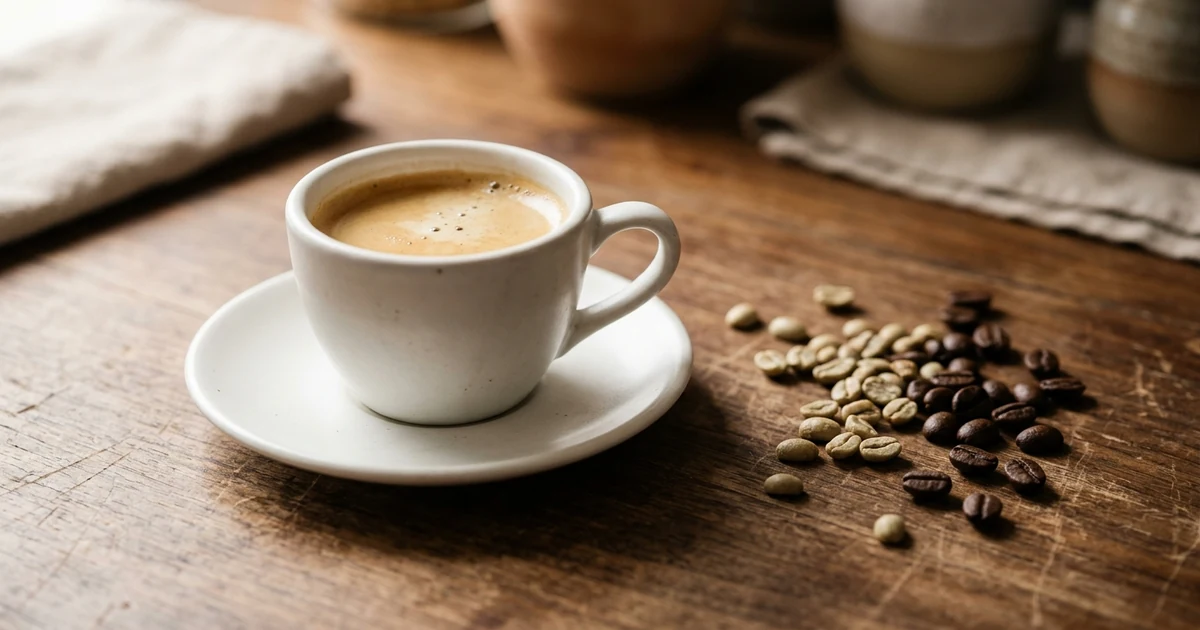
Decaf espresso still contains caffeine. McCusker et al. (2006) measured 3.0 to 15.8 mg per shot across six Starbucks decaf espresso pulls from one outlet (study). A two-shot decaf latte lands between 6 and about 32 mg; a quad can reach 63 mg. Nespresso says its decaf capsules hold 3 to 6 mg per cup, and a regular shot has about 63 mg in USDA data. For the full per-shot evidence and regular shots by chain, see the espresso caffeine guide.
Caffeine in Decaf Espresso Drinks
| Drink | Shots / serving | Caffeine | Source |
|---|---|---|---|
| Decaf espresso, single | 1 | 3.0 to 15.8 mg | McCusker et al. 2006 (measured, 6 shots) |
| Decaf double / most small decaf lattes | 2 | 6.0 to 31.6 mg | Computed from McCusker range |
| Decaf triple | 3 | 9.0 to 47.4 mg | Computed from McCusker range |
| Decaf quad | 4 | 12.0 to 63.2 mg | Computed from McCusker range |
| Nespresso decaf capsule | 1 cup | 3 to 6 mg | Nespresso US FAQ |
| USDA decaf espresso, 1 fl oz | 1 fl oz | About 0.3 mg (1 mg per 100 g, calculated not measured) | USDA FDC 174125 |
| Regular espresso, 1 fl oz (for scale) | 1 fl oz | About 63 mg (212 mg per 100 g) | USDA FDC 171891 |
Sources: McCusker et al. 2006 (6 Starbucks decaf shots, one outlet); Nespresso US FAQ; USDA FoodData Central 174125 and 171891. Multi-shot rows multiply the measured per-shot range.
The range is wide because extraction varies shot to shot. McCusker's six pulls from one location showed a five-fold spread. The USDA's 0.3 mg figure is a calculated imputation, not a lab measurement, which is why it sits far below the study data. For decaf caffeine across brew methods, see the decaf coffee caffeine guide.
Is Decaf Espresso Caffeine-Free?
No: decaf means most of the caffeine was removed, not all of it. The FDA notes that an 8 oz cup of brewed decaf typically contains 2 to 15 mg. Nespresso puts the residual caffeine in its decaf blends below 0.1%. Several decaf drinks a day can add up. If a clinician told you to avoid caffeine entirely, ask whether decaf is within what they consider safe.
How Is Decaf Espresso Made?
Caffeine is removed from the green (unroasted) beans, not from the finished roast. Three broad methods are used:
- Water process. Swiss Water, which uses a water process, states it never uses chlorinated solvents or esters. Nespresso describes a similar method: green beans soaked in hot water to dissolve caffeine.
- Carbon dioxide (CO₂). Nespresso describes its second method this way: green beans are soaked in water, then carbon dioxide extracts the caffeine.
- Solvent. Methylene chloride and ethyl acetate are both used as solvents to pull caffeine from green beans. The FDA limits methylene chloride residue in decaf roasted coffee to no more than 10 parts per million (21 CFR 173.255).
"Espresso roast" on a decaf bag describes the roast and blend, not a caffeine level.
Does Decaf Espresso Taste Different?
Decaffeination changes the green bean before it is ever roasted, so decaf can behave differently in the grinder and in the machine than the regular beans you are used to.
Swiss Water's brew guide (general, not espresso-specific) recommends "a little bit more coffee than when brewing regular, or a slightly finer grind, and sometimes both". Applied to espresso, that means if a decaf shot pulled at your usual dose and grind runs fast and tastes thin or sour, a finer grind or a little more coffee is the first thing to try.
How to Pull a Decaf Shot
- Start from your regular recipe. Same dose, grind, and target output as a regular espresso.
- Watch the shot. If it runs fast and tastes sour, grind finer or add a little more coffee to the basket, as Swiss Water's general guidance suggests.
- Change one variable at a time. Grind or dose, not both, so you know what fixed it.
- Buy recently roasted beans. Look for a bag with the decaf method printed on it (water process, CO₂, or solvent).
- Dial in again with each new bag. Beans, roasts and decaf methods differ, so a grind setting from one bag may not suit the next.
Related from Roon
- How Much Caffeine Is in Decaf Coffee?
- How Much Caffeine Is in a Shot of Espresso?
- Nespresso Pod Caffeine Chart
- How Much Caffeine Is in an Americano?
Frequently Asked Questions
How much caffeine is in a decaf latte?
Count the shots. A standard two-shot decaf latte contains roughly 6 to 31.6 mg of caffeine, based on the McCusker et al. (2006) measured range of 3.0 to 15.8 mg per decaf shot. Milk adds zero caffeine. If the menu does not specify how many shots go into your size, ask the barista.
Can I drink decaf espresso at night?
A single decaf shot carries at most about 16 mg, a fraction of a regular shot's ~63 mg. How that sits at night depends on your own sensitivity, and several decaf drinks add up. If you notice your sleep is off, try moving decaf earlier in the evening.
Is decaf espresso safe during pregnancy?
The FDA advises anyone who is pregnant, trying to become pregnant, or breastfeeding to talk to their health care provider about caffeine. Decaf is low but not zero. Your clinician can say where it fits within your total caffeine budget.
Does Swiss Water decaf have less caffeine than solvent decaf?
No published peer-reviewed data compares residual caffeine per shot between Swiss Water and solvent-decaffeinated beans under identical conditions, so neither can be said to leave less. The choice is about processing method, not a guaranteed caffeine difference.
When You Want the Caffeine Back
Decaf exists for a reason: you want the ritual or the warmth without a full caffeine load. But on mornings when you need caffeine and want to know exactly how much, a decaf shot is a guessing game. Three mg? Sixteen? Somewhere in between?
Roon is an 80 mg caffeine pouch with 60 mg L-theanine, 25 mg methylliberine (Dynamine), and 5 mg theacrine (TeaCrine). Methylliberine slows caffeine clearance: in a randomized, double-blind crossover PK study (n=12), caffeine's half-life extended from 7.2 to 15 hours with no increase in peak concentration (study). That study used 100 mg methylliberine with 150 mg caffeine, about 4x the methylliberine and 1.9x the caffeine in one Roon pouch, so the direction carries over but the exact magnitudes do not. A 15-hour half-life is not 15 hours of felt energy; most people notice a pouch for roughly 6 to 8 hours.
Zero nicotine, zero sugar, from $9.16 per tin. Place it under your lip and the dose is locked, no extraction variance, no five-fold spread. Because the tail runs long, keep at least 8 hours between your last pouch and bedtime. If a clinician told you to avoid caffeine, stay with decaf; otherwise, try Roon when you want the caffeine back on your terms.
Sources
- McCusker RR et al., "Caffeine Content of Decaffeinated Coffee," Journal of Analytical Toxicology 30(8):611-613, October 2006. PubMed
- USDA FoodData Central, "Beverages, coffee, brewed, espresso, restaurant-prepared, decaffeinated" (SR Legacy 174125). USDA
- USDA FoodData Central, "Beverages, coffee, brewed, espresso, restaurant-prepared" (SR Legacy 171891). USDA
- Nespresso US FAQ, caffeine and decaffeination methods. Nespresso
- FDA, "Spilling the Beans: How Much Caffeine is Too Much?" FDA
- 21 CFR 173.255, Methylene chloride residue limit in decaffeinated coffee. eCFR
- Swiss Water, "How We Make Clean Decaf" (process page). Swiss Water
- Swiss Water, Brew Guides. Swiss Water
Written by Roon Team