Flavonoids and the Brain: How Plant Polyphenols Boost Blood Flow Through Nitric Oxide
Your brain is roughly 2% of your body weight and drinks down about 20% of your blood supply. It cannot store fuel. It runs on flow. So anything that widens the vessels feeding your neurons has a direct line to how sharply you think, and the study of flavonoids and brain function keeps landing on one quiet molecule that controls that flow: nitric oxide.
Flavonoids are the plant compounds that color blueberries, cocoa, green tea, red grapes, and citrus peel. For years people assumed their value came from mopping up free radicals. The newer and more interesting story is vascular. These compounds talk to the cells lining your blood vessels and tell them to relax.
This article walks through that mechanism end to end, from the polyphenol on your plate to the blood reaching your hippocampus.
Key Takeaways
- Flavonoids are a class of plant polyphenols found in cocoa, berries, tea, grapes, and citrus, and they influence the brain mainly through blood flow, not just antioxidant action.
- The core mechanism runs through nitric oxide and the enzyme that makes it, endothelial nitric oxide synthase (eNOS), which relaxes vessel walls and raises cerebral blood flow.
- Human trials link dietary flavanols to measurable changes in brain perfusion and memory, especially in older adults and people with lower habitual intake.
- The effect is slow and cumulative. Flavonoids reshape your vascular health over weeks and months, not minutes.
What Flavonoids Actually Are
Flavonoids are a family of polyphenols, naturally occurring compounds plants build for pigment, defense, and signaling. There are several thousand of them, grouped into subclasses with names worth knowing: flavanols (cocoa, tea), flavonols (onions, kale, apples), anthocyanins (the blue-red pigments in berries), and flavanones (citrus).
The flavanols get the most research attention for cognition. Epicatechin, found heavily in cocoa and green tea, is the single most studied molecule in this group with vascular effects.
When researchers talk about polyphenols and cognition, they are usually talking about these subclasses and the dose you get from real food. A cup of blueberries, a square of dark chocolate, and a mug of green tea each deliver a meaningfully different mix.
The Nitric Oxide Link: How Flavonoids Reach the Brain
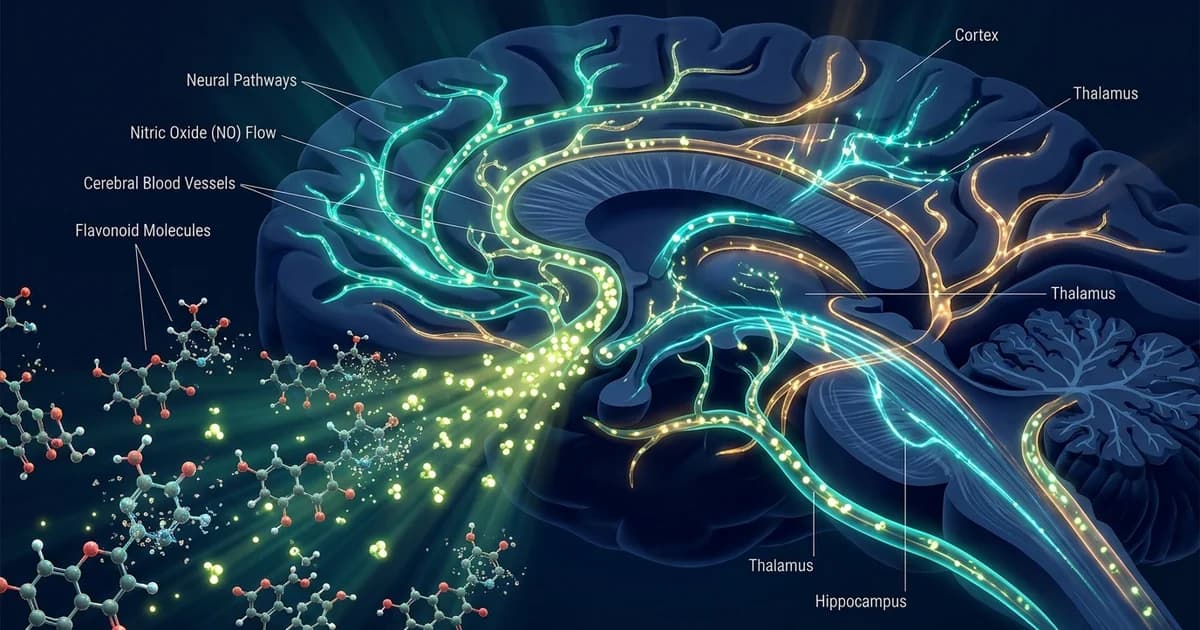
The headline mechanism is simple to state. Flavonoids raise nitric oxide in the lining of your blood vessels, which makes those vessels relax and widen, which increases blood flow, including blood flow to the brain.
Nitric oxide is a gas your body makes on demand. The endothelium, the thin layer of cells lining every artery and capillary, produces it using an enzyme called endothelial nitric oxide synthase, or eNOS. When eNOS fires, nitric oxide diffuses into the surrounding muscle of the vessel wall and tells it to loosen. The vessel dilates. Pressure drops. Flow improves.
Flavanols appear to push this system at the source. Lab work on (−)-epicatechin shows it activates endothelial eNOS and raises nitric oxide signaling in human endothelial cells, in part by shifting how the enzyme is phosphorylated. Other research found epicatechin raises nitric oxide by limiting NADPH oxidase, an enzyme that otherwise breaks nitric oxide down. More nitric oxide produced, less of it destroyed.
The same eNOS system matters specifically in the brain. A 2024 review of the role of eNOS at the neurovascular unit describes how this enzyme governs cerebral blood flow and helps couple neural activity to fresh blood delivery. That coupling is what keeps an active region of the cortex supplied while it works.
So the chain is short and physical. Flavanol in, nitric oxide up, vessels open, brain fed.
What the Human Evidence Shows on Cerebral Blood Flow
Direct imaging studies back the mechanism. In an acute trial using arterial spin labeling MRI, researchers gave healthy adults aged 50 to 65 either a low or high flavanol cocoa drink and measured regional cerebral blood flow. The drinks were matched for caffeine, theobromine, and taste, so the flavanol content was the variable being tested. This matters because it isolates the polyphenol from the stimulant.
More recent work continued the theme. A 2025 study examined whether cocoa flavanols could protect cerebral blood flow during prolonged sitting in young and older adults, a practical question for anyone who works at a desk all day.
The pattern across these trials connects flavonoids to cerebral blood flow in a way that fits the nitric oxide story. When you support the endothelium, you support perfusion, and perfusion is what an active brain region demands.
Flavanols, Memory, and Long-Term Cognition
The blood flow effect has a behavioral payoff that shows up in memory research. The clearest signal comes from a large 2023 trial published in PNAS, where Columbia and partner researchers tested whether dietary flavanols could restore hippocampal-dependent memory in older adults. The standout result: the people who started with lower diet quality and lower habitual flavanol intake saw the biggest memory gains from supplementation.
That is a meaningful detail. It suggests flavanols are correcting a deficit rather than super-charging an already well-fed brain.
Population data points the same direction. A long-running cohort study published in Neurology tracked flavonoid intake and reported that higher long-term flavonoid consumption was linked to lower odds of subjective cognitive decline in US men and women. Separate analyses tie diets rich in flavonols to slower cognitive decline over time.
Earlier interventional work, including the CoCoA study, found that regular cocoa flavanol intake supported cognitive function and blood pressure in elderly subjects. Blood pressure and brain perfusion are the same vascular coin, viewed from two sides.
This is why dietary flavanols and memory keep appearing together in the literature. The vessels you protect today feed the neurons you rely on later.
A Quick Guide to Flavonoid Food Sources
Different foods carry different subclasses at different doses. Here is how the common sources stack up for brain-relevant flavonoids.
| Food source | Main flavonoid subclass | Notable compound | Brain-relevant note |
|---|---|---|---|
| Cocoa / dark chocolate | Flavanols | Epicatechin | Most studied for cerebral blood flow |
| Blueberries / blackberries | Anthocyanins | Cyanidin | Linked in cohorts to slower cognitive decline |
| Green tea | Flavanols | EGCG, epicatechin | Pairs flavanols with L-theanine and caffeine |
| Red grapes / grape seed | Flavanols, anthocyanins | Procyanidins | Concentrated in seeds and skin |
| Citrus | Flavanones | Hesperidin | Vascular and endothelial support |
| Onions, kale, apples | Flavonols | Quercetin | High in everyday flavonol diets |
Variety beats megadosing one source. The subclasses behave differently, and a mixed intake covers more of the vascular machinery.
The Honest Limits of This Mechanism
Flavonoids are not a fast lever. The vascular benefits build over weeks of consistent intake, and the strongest human results show up in people who were running low to begin with. If you already eat berries, cocoa, and tea daily, the marginal gain shrinks.
There is also a dose and bioavailability problem. Many flavanols are poorly absorbed, and processing can strip them out. Most commercial cocoa loses much of its flavanol content during alkalization, which is why a chocolate bar is not a reliable supplement.
None of this is a stimulant effect. Flavonoids will not give you a sharp lift before a meeting. They are infrastructure, the slow upgrade to the pipes that carry blood to your brain.
Conclusion
The most durable thing flavonoids do for your brain happens in your blood vessels. By raising nitric oxide through the eNOS pathway, plant polyphenols help your arteries relax and deliver more blood to working neurons, and the human evidence ties that improved perfusion to better memory over time, especially in people who were short on flavanols to start.
Treat them as a long game. A diet steady in cocoa, berries, tea, grapes, and citrus is a direct investment in the vascular health your cognition rides on for decades. The payoff is measured in years, not afternoons.
Frequently Asked Questions
What is the difference between flavonoids, flavanols, and polyphenols?
Polyphenols are the broad category of plant compounds. Flavonoids are a large family within that category, and flavanols are one subclass of flavonoids. Epicatechin, the most studied compound for vascular and brain effects, is a flavanol. When research discusses cocoa or green tea benefits for blood flow, it is usually pointing to the flavanol subclass specifically.
How do flavonoids increase blood flow to the brain?
They raise nitric oxide. Flavanols stimulate the enzyme eNOS in the cells lining your blood vessels, and they also reduce the breakdown of nitric oxide once it forms. Nitric oxide tells the smooth muscle in vessel walls to relax, which widens the vessels and increases flow. In the brain, that supports the delivery of fresh blood to regions that are actively working.
How long do flavonoids take to affect cognition?
There are two timescales. Single doses of cocoa flavanols can shift cerebral blood flow within hours in imaging studies. The memory and long-term cognition benefits, however, build over weeks to months of consistent intake, and population studies measure these effects across years of dietary habit.
Which foods have the most brain-relevant flavonoids?
Cocoa and dark chocolate lead for flavanols, the subclass most tied to cerebral blood flow. Berries supply anthocyanins, green tea provides flavanols alongside L-theanine, and red grapes carry procyanidins. Citrus, onions, kale, and apples round out the flavonols and flavanones. A varied intake covers more of the vascular system than relying on any single source.
Are flavonoid supplements as good as whole foods?
Whole foods deliver flavonoids alongside fiber and other polyphenols, and most human trials use food-based or standardized cocoa extracts. Standardized flavanol supplements can help when diet quality is low, which is exactly the group that showed the largest memory gains in recent trials. Bioavailability varies widely, so concentration and standardization matter more than the label simply saying "flavonoids."
Do flavonoids give you energy or focus like caffeine?
No. Flavonoids work on the vascular system over a long horizon and produce no acute stimulant lift. Caffeine and related compounds act on adenosine receptors within minutes for alertness. The two mechanisms are separate, which is why green tea, for example, delivers both a flavanol load and a caffeine load through different pathways.
Can flavonoids prevent cognitive decline?
Flavonoids are a dietary support, not a treatment, and they cannot prevent or cure any disease. That said, large cohort studies associate higher long-term flavonoid intake with lower rates of self-reported cognitive decline, and intervention trials show memory support in older adults with low baseline intake. The honest framing is that they help maintain the vascular health your cognition depends on.
Where Flavonoids End and an Acute Pathway Begins
This site goes deep on the individual polyphenols, with dedicated breakdowns of blueberry anthocyanins, grape seed and pine bark procyanidins, resveratrol, and curcumin. If flavonoids are the slow vascular investment, those pieces are the detail on each deposit you can make. Think of this article as the hub they all connect back to.
Roon sits on the other end of that timescale. It is not a flavonoid product and it is not a substitute for a polyphenol-rich diet or the long-term vascular health that flavanols support. Roon is an acute cognitive performance pouch built around a different mechanism: a sublingual stack of 80 mg caffeine, 60 mg L-theanine, 25 mg methylliberine (Dynamine), and 5 mg theacrine (TeaCrine), designed for a 5 to 10 minute onset and 6 to 8 hours of focus with no jitters and no crash.
Use flavonoids to build the pipes over years. If you want clean, fast focus for the work in front of you right now, try Roon for the acute layer and keep the berries and cocoa for the long game.
Written by Roon Team