Does Pre-Workout Expire? Shelf Life Opened vs. Sealed (2026 Lookup Guide)
Does Pre-Workout Expire? Shelf Life Opened vs. Sealed (2026 Lookup Guide)
Yes, pre-workout expires, but not the way milk does. That printed date is a voluntary "best by" stamp, not a federally mandated safety cutoff. Most sealed tubs stay effective for 12 to 24 months from manufacture. Once opened, expect about 6 months of full potency with proper storage. After that, ingredients lose strength gradually. They rarely become dangerous unless you spot mold, a rancid smell, or a color change you can't explain.
Below is everything you need to figure out whether your old tub is still worth scooping, or whether it's time to move on.
Pre-Workout Shelf Life by Brand
Not every brand prints the same timeline, because not every brand runs the same stability testing. Here's what four popular pre-workout brands state in their own FAQs:
| Brand | Sealed Shelf Life | Opened Shelf Life | What They Call the Date | Source |
|---|---|---|---|---|
| Legion | ~2 years | ~6 months (up to 12 with good storage) | Best By / Expiration | Legion FAQ |
| Transparent Labs | 1-2 years | ~6 months | Expiration Date | TL Blog |
| 1st Phorm | 12-24 months | Not specified (storage-dependent) | Best By | 1st Phorm Blog |
| Xwerks | 12-24 months | ~6 months | Best By | Xwerks Blog |
The takeaway: sealed powder in a cool, dry pantry buys you roughly two years. Opening the tub starts a faster clock.
The FDA Doesn't Require That Date
Here's the regulatory fact most articles skip. The FDA does not require expiration dates on dietary supplements. Under the Dietary Supplement Health and Education Act of 1994 (DSHEA) and the cGMP rule in 21 CFR Part 111, if a manufacturer chooses to print a date, that date must be backed by stability data. But printing one at all is voluntary.
That's why dates vary brand to brand even for nearly identical formulas. 1st Phorm's own FAQ states this directly: the FDA doesn't require supplement companies to include expiration dates, which makes it hard to know exactly how long a formula stays at peak freshness once opened.
The printed date is a quality guarantee, not a legal safety cutoff. Xwerks frames it the same way.
What Actually Degrades (and What Doesn't)
Not every ingredient in your tub ages at the same rate.
Caffeine anhydrous is one of the most shelf-stable compounds in the supplement world. According to chemical supplier Lab Alley, pure anhydrous caffeine powder can remain potent for up to 5 years or longer when kept dry, because the absence of water molecules prevents moisture-related breakdown.
Creatine monohydrate in dry powder form is similarly resilient. A 2022 review in Nutrients reported that creatine monohydrate powder showed no measurable degradation to creatinine at temperatures up to 40 degrees C (104 degrees F) for over three years, based on earlier stability work by Jäger. Dissolve that same creatine in liquid, though, and it degrades within days depending on pH and temperature. That's why you should drink mixed pre-workout in the same session, not let it sit overnight.
Flavoring, coloring, and vitamin-based ingredients are the weak links. They're the first to break down, which is why taste and color shift before the active compounds lose meaningful potency. For a full breakdown of which ingredients degrade fastest, the active-ingredient hierarchy matters more than the printed date.
For a deeper look at how creatine behaves on its own versus inside a formula, see creatine's separate stability profile.
Why Your Pre-Workout Is Clumping
Clumping is the single most common sign that makes people think their pre-workout has gone bad. Usually, it hasn't.
Several ingredients found in standard pre-workout formulas are hygroscopic, meaning they pull moisture from the air. The main offenders include citrulline malate, glycerol (HydroMax-type compounds), betaine anhydrous, beta-alanine, and creatine monohydrate. If you leave the lid loose, live in a humid climate, or store the tub near a shower, you will get clumps.
Small, breakable clumps are a texture issue, not a potency issue. Transparent Labs notes that clumpy pre-workout powder is "essentially the same" in terms of potency as unclumped powder. Legion's FAQ draws the line at a hardened solid mass, which is a stronger warning sign that moisture exposure has been severe and sustained.
Break up minor clumps with a fork or shake with a dry utensil. If the entire tub is a single brick, that's different.
When to Actually Throw It Out
Across every brand FAQ reviewed, the discard signals are consistent:
- Mold or visible growth. Throw it out. No exceptions.
- Sour, rancid, or chemical smell that wasn't there when you bought it.
- Hardened solid mass that you can't break apart with reasonable effort.
- Major color change that doesn't match a new tub of the same product.
- More than 12 months past the printed date and already opened. Transparent Labs recommends discarding opened product that is more than a year beyond the printed date, even without obvious signs.
If it's sealed, stored properly, and a few months past the best-by date, the product is almost certainly safe. It just might not hit the way it used to.
Storage That Extends Shelf Life
These are small moves that buy you months:
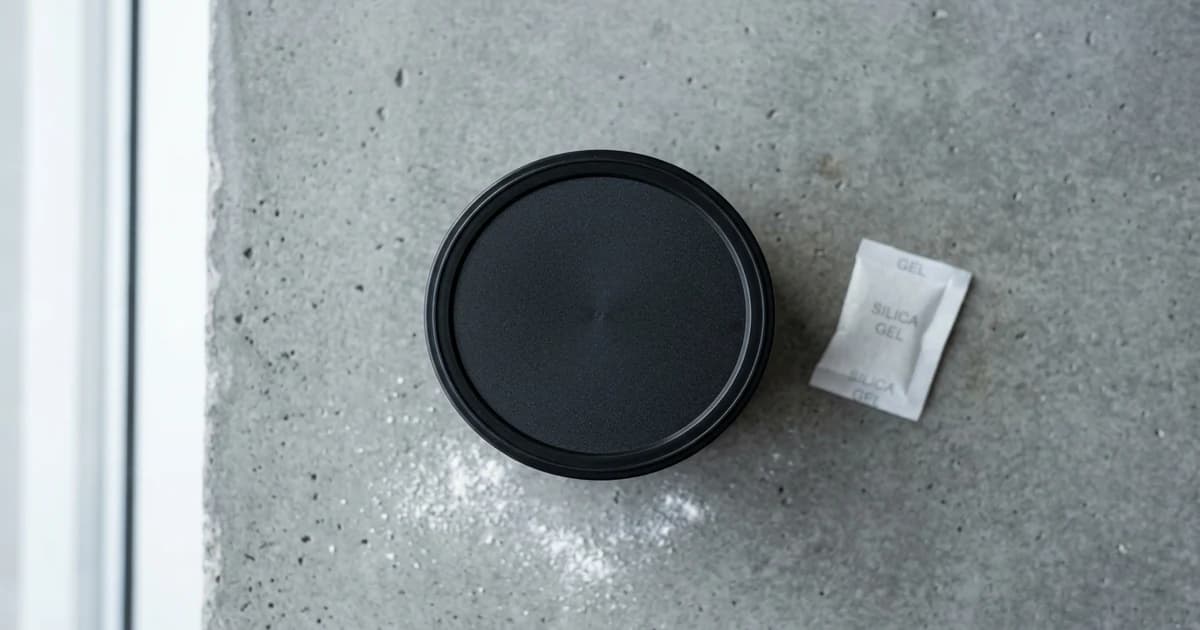
- Keep the desiccant packet. It's there to absorb moisture. Don't throw it away.
- Seal the lid tightly after every use. Air exposure is the enemy.
- Store in a cool, dry place. A pantry or closet is ideal. Bathrooms and hot cars are the worst possible options.
- Don't use a wet scoop. Introducing moisture directly into the tub accelerates clumping and potential microbial growth.
- Avoid direct sunlight. UV breaks down flavoring and some active compounds faster.
Pre-Workout Shelf Life Quick Reference
| Factor | Sealed Powder | Opened Powder | Mixed/Liquid |
|---|---|---|---|
| Typical shelf life | 12-24 months | ~6 months | Same session only |
| Main degradation risk | Heat, extreme humidity | Moisture, air, light | pH-driven breakdown |
| Caffeine stability | 5+ years dry | Years (if kept dry) | Stable short-term |
| Creatine stability | 3+ years at room temp | Months to years | Days (pH-dependent) |
| First signs of decline | Flavor/color fade | Clumping, taste change | Cloudiness, off taste |
Knowing the Expiration Date Is Just Knowing the Starting Point
The best-by date on your pre-workout is useful, but it's not the full picture. Storage, format, and ingredient composition all matter more than the number itself. A sealed tub in a cool pantry will outlast an opened tub in a humid garage by months, regardless of what's printed on the label. Trust your senses: if it looks right, smells right, and mixes clean, it's probably fine. If anything seems off, the cost of a new tub is lower than the cost of a bad training session on degraded ingredients.
Frequently Asked Questions
Does pre-workout expire after the best-by date?
Technically, the best-by date signals when the manufacturer expects full potency, not a safety cliff. Most sealed pre-workouts remain safe for months past that date if stored properly. Potency drops gradually, so your scoop may just be weaker, not harmful. Look for mold, off smells, or hardened texture before using anything well past the date.
How long does pre-workout last after opening?
Most brands recommend about 6 months of full effectiveness once opened, with some (like Legion) extending that to up to 12 months if storage conditions are ideal. The faster clock starts because air, moisture, and light now have direct access to the powder.
Can you use expired pre-workout?
Brand guidance from 1st Phorm, Transparent Labs, and others describes expired but properly stored product as "generally low risk" from a safety standpoint. Reduced effectiveness, not toxicity, is the primary concern. Use the discard checklist above if you're unsure.
Why is my pre-workout clumping?
Hygroscopic ingredients like citrulline malate, glycerol, and betaine absorb moisture from the air. Small, breakable clumps are cosmetic. A rock-hard mass suggests prolonged moisture exposure, which may also have affected potency. Keep the lid sealed and the desiccant packet inside.
Does mixed pre-workout go bad faster than powder?
Yes, dramatically. Dissolved creatine degrades within days depending on pH and temperature. Caffeine holds up better in solution, but flavor and other active compounds don't. Mix only what you plan to drink in that session.
Is pre-workout shelf life different for pouches vs. powder?
Pouches are individually sealed, dry-format servings, which removes the repeated air-and-moisture exposure cycle that open tubs face. The same heat-and-humidity storage logic applies, but pouches sidestep the "opened container" degradation window entirely. For a shelf-stable pouch alternative designed for gym use, the format itself offers a built-in storage advantage.
Does the FDA require expiration dates on supplements?
No. Under DSHEA and 21 CFR Part 111, expiration dating on dietary supplements is voluntary. If a brand prints a date, it must back it with stability data. But many smaller brands skip the date entirely, which is legal.
How should I store pre-workout to make it last longest?
Cool, dry, sealed, and out of direct sunlight. Keep the desiccant packet. Never use a wet scoop. A kitchen pantry beats a gym bag, a bathroom shelf, or a car trunk every time.
The Format That Skips the Tub Problem Entirely
The shelf-life question exists largely because of the open-tub format. Every time you unscrew the lid, you invite moisture, air, and whatever humidity your kitchen or gym bag carries. Six months of daily lid-pops in a Florida summer and your citrulline is a chalk brick.
Roon is a zero-nicotine sublingual pouch, not a powder. Each pouch is sealed inside the tin: 80 mg caffeine, 60 mg L-theanine, 25 mg methylliberine (Dynamine), and 5 mg theacrine (TeaCrine). Onset runs 5 to 10 minutes, and the felt duration is 6 to 8 hours. No shaker bottle. No wet scoop. No desiccant packet to fish out. The same cool-and-dry storage rules apply, but the format removes repeated exposure to air and moisture altogether.
Roon is not a full pre-workout replacement if your training demands creatine, citrulline, or beta-alanine. Those are separate ingredients with their own dosing needs (see how these brands compare overall and why athletes are switching formats). What Roon replaces is the caffeine-and-focus layer, in a format that doesn't degrade the moment you open the container. Tins start from $9.16 per tin on a 12-tin subscription, or $0.61 per pouch.
If your old tub is still good, use it. If you're tired of racing a six-month clock, a sealed pouch solves that particular problem.
Written by Roon Team