Does Pre-Workout Break a Fast? Ingredient by Ingredient
Does Pre-Workout Break a Fast? Ingredient by Ingredient
The answer depends on which kind of fast you mean. For a calorie fast (staying under ~50 kcal), most pre-workouts are fine: a typical scoop lands between 0 and 15 calories. For an insulin/metabolic fast, it gets murkier, because several common ingredients, especially BCAAs, provoke an insulin response out of proportion to their calorie count. And for a strict autophagy fast, a standard pre-workout blend almost certainly interferes, since amino acids and creatine activate the same mTOR signaling that fasting is supposed to suppress.
A pre-workout is not one ingredient. It is six to ten compounds blended together, and each one interacts with your fast differently.
Key Takeaways
- Calorie fast: Most pre-workout scoops contain 0 to 15 kcal, well below any reasonable fasting threshold.
- Insulin/metabolic fast: BCAAs and free amino acids trigger real insulin secretion even with negligible calories. Check the label.
- Autophagy fast: Amino acids and creatine activate mTOR, the pathway autophagy-focused fasting aims to keep quiet. A standard pre-workout breaks this fast.
- Caffeine alone does not break any tier of fast. Neither does beta-alanine.
What Is Actually in a Scoop of Pre-Workout?
The "pre-workout" category covers hundreds of products, but the core ingredient stack is consistent. Here is what you will find in most formulas, alongside each ingredient's fasting impact.
| Ingredient | Typical dose | Calories | Insulin response | mTOR activation | Breaks calorie fast? | Breaks insulin fast? | Breaks autophagy fast? |
|---|---|---|---|---|---|---|---|
| Caffeine | 150-350 mg | 0 | No | No | No | No | No |
| Creatine monohydrate | 3-5 g | ~0 | Minimal alone | Yes | No | Unlikely alone | Yes |
| Beta-alanine | 1.6-3.2 g | ~0 | No | No | No | No | No |
| L-citrulline / citrulline malate | 4-8 g | ~0 | Minimal | Minimal | No | Unlikely | Debatable |
| BCAAs / EAAs | 3-7 g | ~0 per label | Yes | Yes | No | Yes | Yes |
| Taurine | 1-2 g | 0 | No | No | No | No | No |
| Carrier carbs / flavoring | Varies | 5-15 kcal | Slight | No | Usually no | Slight | No |
Two patterns matter. First, the ingredients with zero calories on the label are not all equivalent from a fasting standpoint. Second, the carrier ingredients (maltodextrin, dextrose, flavoring) add a handful of actual calories that the label can legally round down.
Ingredient-by-Ingredient Fasting Verdict
Caffeine
Caffeine is the backbone of every pre-workout, dosed from 175 mg (Optimum Nutrition Gold Standard) to 350 mg (Legion Pulse). It contains zero calories, does not raise insulin, and does not activate mTOR. Black coffee does not break a fast, and neither does isolated caffeine. For more, see our piece on pre-workout pouches vs. caffeine.
Creatine Monohydrate
A 3 to 5 g dose has essentially zero caloric value and, on its own, produces a minimal insulin response. Steenge et al. (2000) showed that creatine's insulin-mediated uptake requires co-ingestion with substantial protein or carbohydrate (around 50 g). Creatine in water, by itself, is unlikely to disrupt a calorie or insulin fast.
The autophagy tier is different. Creatine supplementation combined with resistance exercise activates the Akt/mTOR/p70S6K pathway in skeletal muscle (Deldicque et al., 2008), the anabolic cascade that autophagy fasting aims to suppress. We covered this in detail in Does Creatine Break a Fast?
Beta-Alanine
Beta-alanine causes the skin-tingling sensation (paresthesia) many people associate with "feeling" their pre-workout work. That tingle is a harmless nerve response, not a metabolic event. Beta-alanine provides no meaningful calories, does not provoke insulin, and does not activate mTOR. It does not break any tier of fast.
BCAAs and EAAs: The Real Problem
This is where most "fasting-friendly" pre-workouts fail. Branched-chain amino acids (leucine, isoleucine, valine) are protein building blocks. Even though their calorie contribution rounds to zero on the label (thanks to FDA rules under 21 CFR 101.9, anything under 5 kcal can be listed as zero), they trigger real physiological responses.
The insulin index study by Holt et al. (1997) in the American Journal of Clinical Nutrition (PMID: 9356547) established that protein-rich foods generate insulin responses disproportionate to their calorie content. Free amino acids take this further: they enter the bloodstream fast and provoke a meaningful insulin spike without any accompanying carbohydrate.
BCAAs also directly activate mTOR. Leucine is one of the strongest known mTOR activators. Research confirms that BCAAs activate mTOR and suppress autophagy. If your pre-workout contains BCAAs or an EAA blend and you care about anything beyond calories, skip them during the fasting window.
The Hidden Calories on a "Zero-Calorie" Label
Under FDA regulations (21 CFR 101.9), any food with fewer than 5 calories per serving can be labeled as 0 calories. Most popular pre-workouts report small but real calorie counts:
| Product | Calories per scoop | Carbs | Key active doses |
|---|---|---|---|
| Cellucor C4 Original | 10 kcal | 1 g | 200 mg caffeine, 1.6 g beta-alanine |
| ON Gold Standard Pre-Workout | 10 kcal | 2 g | 175 mg caffeine, 3 g creatine, 1.6 g beta-alanine |
| Legion Pulse | 10 kcal (label) | 1 g | 350 mg caffeine, 8 g citrulline malate |
None of these break a calorie fast. But the presence of BCAAs or amino acid blends in some formulas means the calorie number alone does not tell the full story. A note on Legion Pulse: its label-stated calories have been the subject of consumer dispute, with independent testing alleging the actual calorie count is higher than advertised.
A Practical Fasted-Training Stack
If you want to train fasted and keep a strict fast, the cleanest approach is simple: caffeine plus water. Add creatine only if you are comfortable with its mTOR activation (most people fasting for body composition rather than autophagy will be fine). Skip any blend containing BCAAs, EAAs, or a protein-adjacent amino acid matrix.
- Caffeine (80-200 mg, from coffee, a pouch, or a capsule)
- Creatine monohydrate (3-5 g, if your fast is calorie- or insulin-tier only)
- Electrolytes (sodium, potassium, magnesium: zero calorie, zero insulin)
- Skip: BCAAs, EAAs, collagen peptides, whey-containing blends
For more on structuring these sessions, see Fasted Morning Workouts: How to Get Clean Pre-Workout Energy on an Empty Stomach.
What the Research Supports vs. What Is Folklore
The calorie and insulin tiers have solid science behind them. We know what raises insulin. We know how many calories are in a scoop.
The autophagy tier is murkier. Most human autophagy research involves complete fasting (water only) for 24 to 72 hours. Whether a few grams of BCAAs at hour 14 of a 16:8 fast meaningfully suppress autophagy has not been directly measured in a controlled human trial. The mTOR activation from BCAAs is well-documented in cell and animal models, but the dose-response curve in a fasted human taking a single scoop is not precisely mapped.
Be honest about which tier you care about. Most people doing 16:8 intermittent fasting are fasting for calorie control and metabolic flexibility, not for maximizing autophagy. For that group, a BCAA-free pre-workout is almost certainly fine.
The Fasting Tiers, Summarized
The question is not "does pre-workout break a fast?" It is "which fast, and which ingredients?" Caffeine and beta-alanine are clean across all three tiers. Creatine is safe for calorie and insulin fasts but activates mTOR. BCAAs break everything except the calorie count. Read your label, match it to your fasting goal, and stop worrying about the ingredients that do not matter.
Frequently Asked Questions
Is C4 OK while fasting?
For a calorie fast, yes. Cellucor C4 Original contains roughly 10 calories per scoop, well under any practical threshold. It does not contain BCAAs, and its beta-alanine and caffeine will not raise insulin or activate mTOR in a meaningful way. If you are fasting strictly for autophagy, the small amount of carrier carbohydrate is technically a stimulus, but minimal.
Does pre-workout break autophagy?
It depends on the formula. Pre-workouts containing BCAAs or EAAs activate mTOR signaling, which suppresses autophagy. Caffeine-only or caffeine-plus-beta-alanine formulas do not. Creatine also activates mTOR, though its role in autophagy suppression at typical supplemental doses has not been isolated in human fasting studies.
Can I take pre-workout on an empty stomach?
Yes, and most people tolerate it fine. Caffeine absorption is actually faster on an empty stomach, which is why fasted pre-workout often feels stronger. Beta-alanine may cause slightly more intense paresthesia without food, but this is harmless.
Do artificial sweeteners in pre-workout break a fast?
Most evidence says no for a calorie or insulin fast. Some evidence suggests sucralose and acesulfame potassium show negligible acute effects on blood glucose and insulin in healthy adults, though other small studies have reported modest insulin responses to sucralose. For more on what counts during a fast, see What Can You Drink While Fasting?
Will creatine in my pre-workout break my fast?
On its own, creatine has near-zero calories and minimal insulin response without co-ingested carbohydrate or protein (Steenge et al., 2000). It will not break a calorie or insulin fast. It does activate mTOR, which matters only if you are fasting specifically for autophagy.
How many calories will actually break a fast?
There is no universally agreed threshold, but most fasting researchers use ~50 kcal as a practical cutoff for a calorie fast. A single scoop of pre-workout (5-15 kcal) falls well below this. The more relevant question for pre-workout is not calories but insulin and mTOR, where the threshold depends on the type of molecule, not the number on the label.
The Case for a Simpler Fasted-Training Formula
Most fasting conflicts around pre-workouts come from ingredients you may not even need before a workout: BCAAs you will get from your post-workout meal, carrier carbs added for taste, amino acid matrices with unclear dosing. The actual performance ingredient that matters in a fasted session is caffeine.
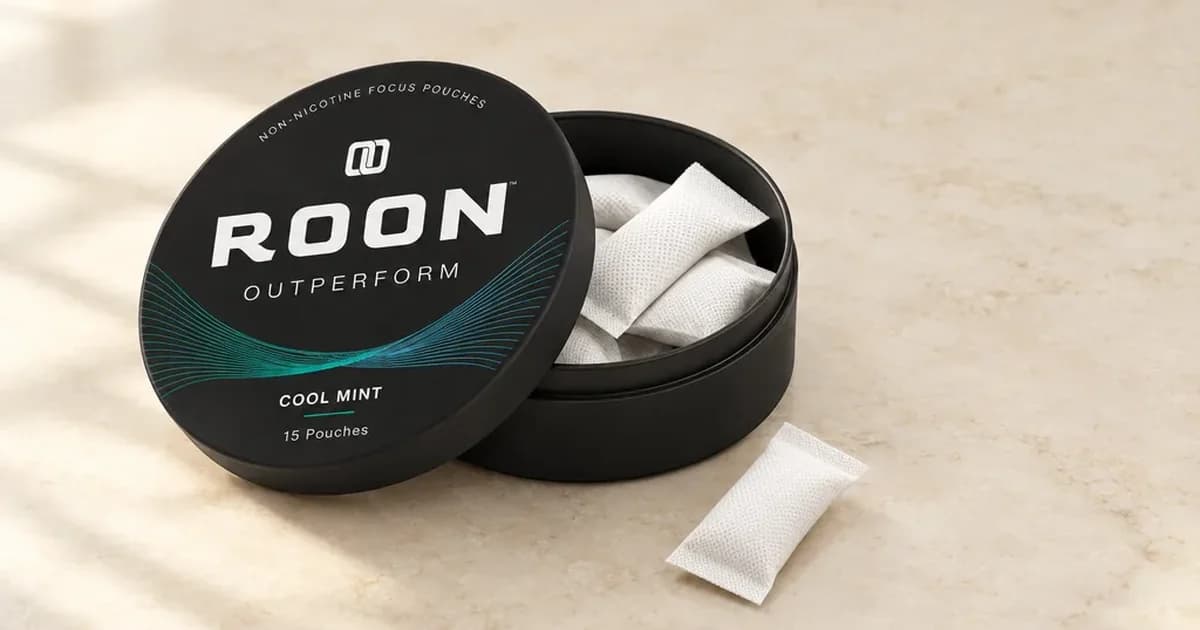
Roon is a zero-sugar, zero-calorie oral pouch built around caffeine and L-theanine, plus methylliberine (Dynamine) and theacrine (TeaCrine), designed for a 6 to 8 hour focus window. It contains no BCAAs, no creatine, no beta-alanine, and no carrier carbohydrates. It will not break any tier of fast.
That also means it is not a full pre-workout replacement. If you rely on creatine or citrulline for strength and pump, you still need those separately (see Creatine vs. Pre-Workout Nootropics Stack). What Roon replaces is the caffeine-and-stimulant layer, without dragging in the amino acids and fillers that make a standard pre-workout powder problematic for fasting. Pair it with plain creatine in water if you want both, and you have a fasted-training stack with zero fasting compromises beyond mTOR activation from the creatine itself.
Related from Roon
- Does Creatine Break a Fast?
- Does Diet Coke Break a Fast?
- Pump vs. Focus: What Your Pre-Workout Is Actually Doing
- Creatine vs. Pre-Workout Nootropics Stack
Written by Roon Team