Does Diet Soda Break a Fast? Aspartame, Caffeine, and the Cephalic Insulin Question
Does Diet Soda Break a Fast? Aspartame, Caffeine, and the Cephalic Insulin Question
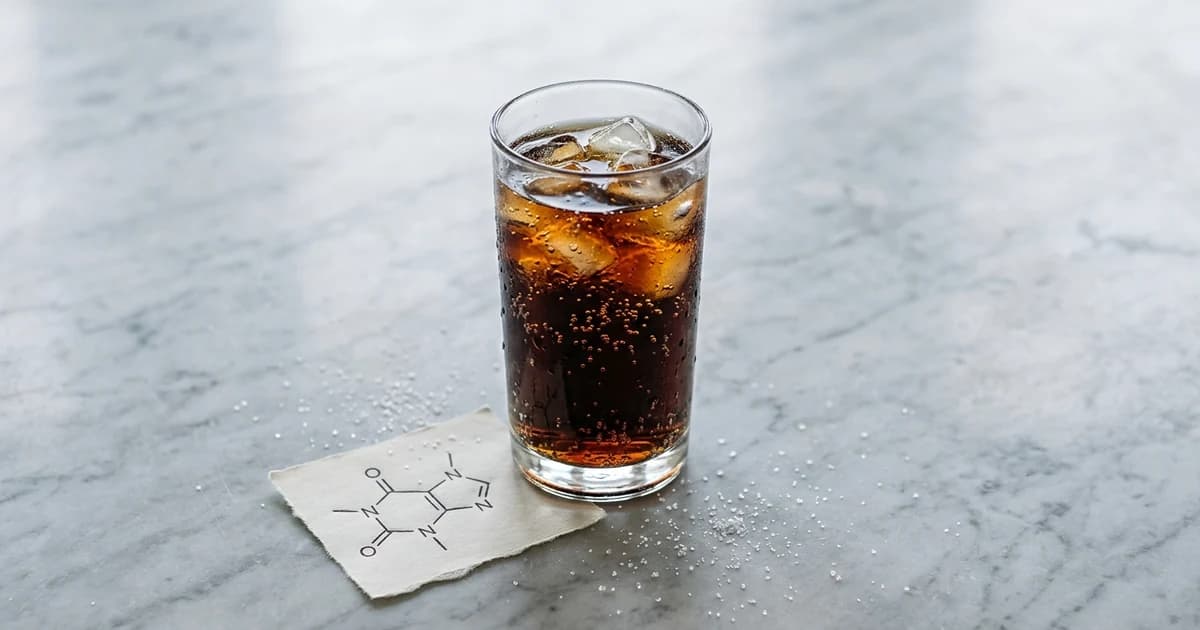
The answer depends on which kind of fast you mean. Does diet soda break a fast if you are counting calories? No. A can of Diet Coke or Coke Zero Sugar has zero calories, zero sugar, and zero carbs. Does it break a metabolic or insulin fast? Probably not in a meaningful way, but the signal is not zero. Does it break a strict autophagy-focused clean fast? Most clean-fasting protocols say yes, because any sweet taste can trigger anticipatory gut-hormone responses. That three-tier split is where the real conversation starts.
Key Takeaways
- Diet Coke and Coke Zero Sugar use different sweetener blends: aspartame only versus aspartame plus acesulfame potassium. Both are zero-calorie.
- One controlled trial found diet soda before a glucose load increased GLP-1 secretion, but the same study found no measurable change in blood glucose.
- The cephalic phase insulin response to artificial sweeteners is real in concept but inconsistent in human data.
- Both cans contain real caffeine (34 to 46 mg), which is its own variable during a fast.
Diet Coke vs. Coke Zero Sugar: Same Zero Calories, Different Formulas
People search "does Diet Coke break a fast" and "does Coke Zero break a fast" as if these are the same product. They are not. Both are zero-calorie, zero-sugar sodas, but the sweetener blend, caffeine content, and flavor profile differ.
| Attribute | Diet Coke (12 fl oz) | Coke Zero Sugar (12 fl oz) |
|---|---|---|
| Calories | 0 | 0 |
| Sugar | 0 g | 0 g |
| Caffeine | 46 mg | 34 mg |
| Primary sweetener | Aspartame | Aspartame + Acesulfame-K |
| Carbonated water | Yes | Yes |
| Phosphoric acid | Yes | Yes |
Sources: Coca-Cola US, Diet Coke; Coca-Cola US, Coke Zero Sugar. Canadian labels disclose sweetener milligrams; the US label does not.
For a calorie fast, neither can matters. Both read 0 kcal, the same rounding threshold the USDA applies to black coffee at roughly 2 kcal per 8 oz. For a metabolic or clean fast, the sweetener blend becomes the relevant question.
The Cephalic Phase Insulin Response: What It Is and What the Diet-Soda Study Actually Found
The cephalic phase insulin response (CPIR) is a small, rapid burst of insulin the pancreas releases within minutes of tasting something sweet, before any nutrients reach the bloodstream. Your brain tastes sweetness, assumes glucose is incoming, and primes the metabolic machinery via vagal signaling.
A 2023 review in Physiological Reviews called the CPIR "elusive", noting that some studies find it with nonnutritive sweeteners and others do not. Individual variation is large.
The study most relevant to the diet-soda question is Brown, Walter, and Rother (2009) in Diabetes Care (PMID 19808921). Healthy subjects aged 12 to 25 drank either diet soda or plain carbonated water 10 minutes before a 75 g oral glucose tolerance test. The diet soda group showed higher GLP-1 secretion.
Two details matter:
- That study's diet soda was sweetened with sucralose and acesulfame-K, not aspartame. Extrapolating to aspartame is reasonable (both activate T1R2/T1R3 sweet-taste receptors on gut L-cells), but it is an extrapolation, not a direct measurement.
- The same study found no change in blood glucose. GLP-1 went up. Blood sugar did not move. The gut-hormone response did not translate into a detectable metabolic consequence.
A separate study by Steinert et al. (2011) in the British Journal of Nutrition administered sucralose, aspartame, and acesulfame-K orally in solution and found no change in glucose, insulin, GLP-1, ghrelin, or PYY versus water. The gut-hormone bump may depend on oral sweet-taste signaling, and it may require a subsequent glucose challenge, which is not what happens when you sip a diet soda by itself during a fast.
Does Aspartame Spike Insulin on Its Own?
Short answer: in the doses contained in a can of diet soda, the evidence says no, or at least not at a level anyone has reliably measured.
The FDA sets the acceptable daily intake for aspartame at 50 mg/kg body weight; the JECFA/EFSA ADI is 40 mg/kg. For a 70 kg adult, the FDA limit is roughly 3,500 mg per day. A single 12 oz Diet Coke contains approximately 180 to 200 mg of aspartame: a fraction of that ceiling.
In 2023, IARC classified aspartame as Group 2B, "possibly carcinogenic to humans," based on limited evidence. JECFA simultaneously reaffirmed its 40 mg/kg ADI. Group 2B is the same category as aloe vera extract and pickled vegetables: limited evidence, not a danger finding at normal consumption.
For fasting specifically: does aspartame trigger an insulin response when consumed alone? The Steinert et al. data (aspartame delivered orally without a glucose chaser) showed no hormonal change. The bulk of controlled human data points the same direction. One can of Diet Coke, on its own, does not produce a measurable insulin spike.
The Caffeine Layer: A Separate Variable
Diet Coke delivers 46 mg of caffeine per 12 oz can. Coke Zero Sugar delivers 34 mg per 12 oz. That is real caffeine, and caffeine has its own metabolic effects independent of sweeteners.
A 2016 meta-analysis by Shi et al. found that acute caffeine ingestion reduces short-term insulin sensitivity in healthy subjects. The effect is modest and transient. But if you are trying to minimize every metabolic input during a fasting window, the caffeine in your Diet Coke is doing something, however small.
Most people reach for diet soda during a fast specifically for the caffeine, not the sweetener. Those are two separate inputs, and they get collapsed into one when you ask "does this break my fast?" For caffeine comparisons across beverages, see how much caffeine is in a cup of coffee.
The Practical Read for Fasters
Here is how this stacks up across the three common fasting definitions:
Calorie fast (16:8, 5:2, general time-restricted eating). Diet soda is fine. Zero calories, zero sugar, zero carbs. One can or two during your fasting window will not alter your caloric math.
Insulin/metabolic-focused fast. One diet soda occasionally is almost certainly inconsequential. The GLP-1 signal in Brown et al. did not move blood glucose, and the Steinert data suggests the effect may require a subsequent glucose load to even appear. Habitual daily diet soda during every fasting window is the gray zone: not enough data to condemn it, not enough to guarantee zero metabolic signal.
Clean/autophagy fast (nothing but water, salt, black coffee/tea). Avoid diet soda. Any artificially sweetened drink is off the list for the same reason gum and flavored water are: the goal is zero taste-mediated signaling.
If you are managing insulin resistance, type 2 diabetes, or any metabolic condition, talk to your prescriber about whether diet soda fits your fasting protocol. The general-population data above may not apply to you.
For more on how sucralose specifically interacts with fasting, or whether coffee breaks a fast, those sibling articles cover each variable in detail.
The Three-Tier Verdict Still Holds
Diet soda does not break a calorie fast. It introduces a small, documented, but functionally minor gut-hormone signal that is unlikely to matter for most fasters in most protocols. And it fails the strictest clean-fasting definition, not because of calories, but because of taste.
One can of Diet Coke during a 16:8 window is not sabotaging your results. Four cans a day during a protocol designed to minimize insulin signaling? That is the question worth asking your clinician, not the internet.
Frequently Asked Questions
Does Coke Zero break a fast?
Coke Zero Sugar is zero calories and zero sugar, so it does not break a calorie-based fast. Its blend of aspartame and acesulfame potassium may trigger a small gut-hormone response, but no controlled study has shown this translates to meaningful blood glucose changes when the soda is consumed alone. Most strict clean-fast protocols exclude it.
Is aspartame worse than sucralose for fasting?
The evidence does not clearly rank one above the other. The Brown et al. study used sucralose/acesulfame-K and found a GLP-1 increase that did not change blood glucose. The Steinert et al. study tested aspartame, sucralose, and acesulfame-K individually and found none altered hormones when given alone. Both sweeteners activate the same T1R2/T1R3 receptors. For more on sucralose, see does sucralose break a fast.
Does diet soda spike insulin?
In controlled studies, diet soda consumed on its own (not followed by a glucose load) has not produced a measurable insulin spike. The GLP-1 increase in Brown et al. occurred when diet soda preceded 75 g of glucose, not when consumed alone, which is the actual fasting scenario.
How much caffeine is in Diet Coke?
A 12 fl oz can of Diet Coke contains 46 mg of caffeine. Coke Zero Sugar has 34 mg per 12 oz. For reference, an 8 oz cup of brewed coffee averages 80 to 100 mg.
Is diet soda OK while fasting for blood work?
Most lab-fasting instructions say to consume only water. Caffeine and artificial sweeteners can theoretically influence certain biomarkers. If your bloodwork requires a fasted state, stick with plain water. Ask the ordering clinician if you are unsure.
Does carbonation break a fast?
Plain carbonated water (no sweeteners, no flavors) has zero calories and no sweet-taste signal. It does not break any tier of fasting. Brown et al. used plain carbonated water as the control for exactly this reason.
Caffeine Without the Sweetener Question
Most people reaching for a Diet Coke during a fast are not craving aspartame. They want the caffeine.
Roon is a zero-nicotine, zero-calorie oral pouch that delivers caffeine, L-theanine, methylliberine (Dynamine), and theacrine (TeaCrine) without liquid volume or sweetener debate. See full ingredients for specifics. You place it under your lip and the caffeine absorbs in 5 to 10 minutes. No carbonation, no liquid volume, no 12-oz sweetener delivery.
Roon does contain sucralose, so it is not completely free of the sweetener conversation. But the oral-pouch format delivers caffeine sublingually in a fraction of the volume of a diet soda, which is a meaningfully different input for your gut. Tins start at $9.16 for a 15-pouch tin on a 12-tin subscription (as little as $0.61 per pouch). The felt duration is 6 to 8 hours: one pouch per fasting window for most protocols.
Related from Roon
- Does Coke Zero Have Caffeine?
- Does Sucralose Break a Fast?
- Does Coffee Break a Fast?
- Blood Sugar and Brain Function
Written by Roon Team