Does Coffee Break a Fast? Black Coffee, Caffeine, and What Actually Matters
Roon Team
Does Coffee Break a Fast? Black Coffee, Caffeine, and What Actually Matters
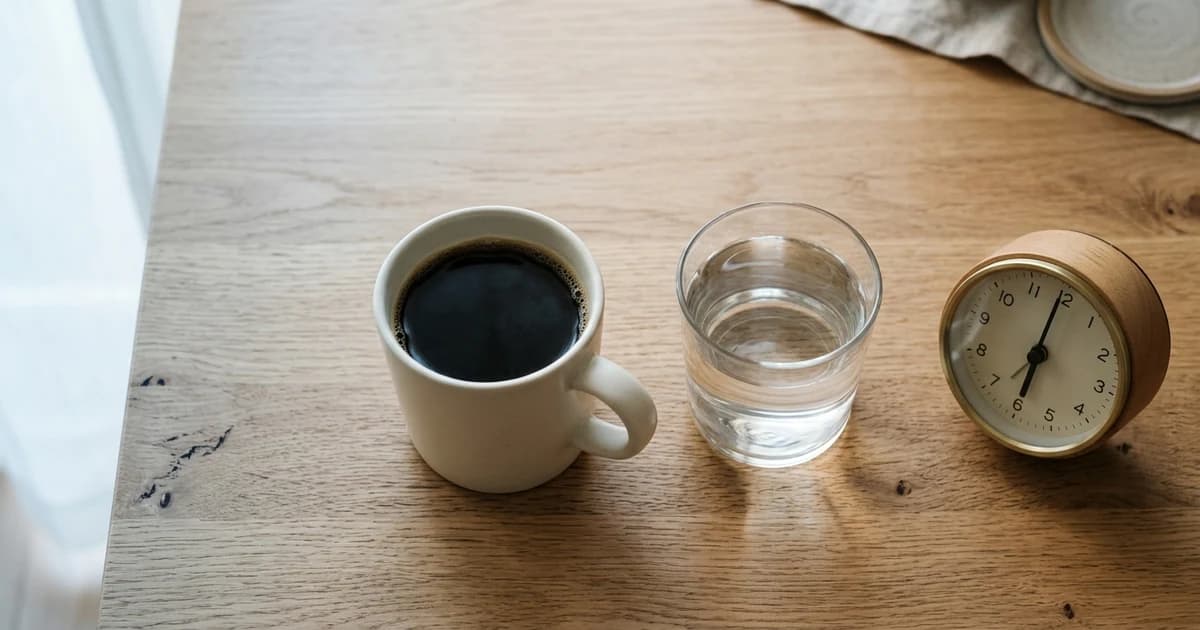
No, black coffee does not break a fast for most intermittent fasting protocols. An 8 oz cup of black coffee contains roughly 2 to 5 calories, zero sugar, and zero fat. That is well below the threshold that would trigger an insulin response or interrupt fat oxidation. The catch is everything you put in the coffee.
Once you add cream, sugar, milk, butter, or a flavored syrup, you are no longer drinking black coffee. You are drinking a meal. And meals break fasts.
This guide covers what the research actually shows about coffee and fasting, which additives matter, whether caffeine alone is the variable you should care about, and where non-coffee caffeine sources (like oral pouches) fit.
Key Takeaways
- Black coffee is fasting-compatible for caloric and insulin-based intermittent fasting. Its 2 to 5 calories do not meaningfully raise insulin or halt fat oxidation.
- Cream, sugar, and milk break a caloric fast. Even a tablespoon of heavy cream adds roughly 50 calories and triggers a metabolic response.
- Caffeine itself does not break a fast. The molecule has no caloric value. The delivery vehicle (sugary energy drink vs. plain coffee vs. zero-calorie pouch) is what matters.
- Autophagy and strict medical fasts have different rules. If your goal is a clean bloodwork panel or a water-only fast, coffee may need to go.
Does Black Coffee Break a Fast?
Black coffee does not break a caloric or insulin-oriented fast. The USDA National Nutrient Database lists brewed black coffee at approximately 2 calories per 8 fl oz, with negligible protein, zero fat, and zero sugar.
The reason this matters: insulin is the primary hormonal signal that shifts your body from a fasted to a fed state. A 2 to 5 calorie beverage with no macronutrients to speak of does not produce a meaningful insulin spike. A 2020 study published in the British Journal of Nutrition examined the interaction between sleep disruption and pre-breakfast coffee on glucose tolerance. In the normal-sleep condition, black coffee before breakfast did not significantly impair glucose metabolism; the study's primary finding was that coffee after fragmented sleep did impair glucose response. Separate research has shown coffee may actually improve insulin sensitivity over time.
So if you are fasting for metabolic health, fat loss support, or general intermittent fasting, black coffee is on the table. Or rather, in the cup.
| Beverage / Addition | Approx. Calories | Breaks Caloric Fast? | Insulin Impact |
|---|---|---|---|
| Black coffee (8 oz) | 2 to 5 | No | Negligible |
| Coffee + 1 tbsp heavy cream | ~52 | Yes | Mild |
| Coffee + 1 tbsp sugar | ~49 | Yes | Moderate |
| Coffee + flavored creamer (1 tbsp) | 25 to 35 | Yes | Mild to moderate |
| Bulletproof coffee (butter + MCT) | 200 to 450 | Yes | Moderate |
| Zero-calorie caffeine pouch | 0 | No | Negligible |
| Diet soda (12 oz) | 0 to 5 | No | Negligible to none |
| Black tea (8 oz) | 2 | No | Negligible |
Can You Drink Coffee While Intermittent Fasting?
Yes, you can drink coffee while intermittent fasting, as long as the coffee is black or nearly black. The 16:8, 18:6, 5:2, and OMAD protocols all generally permit zero-calorie or near-zero-calorie beverages during the fasting window. Coffee falls squarely in that category.
The practical benefit is real. Caffeine blunts the perception of hunger. A meta-analysis in the International Journal of Food Sciences and Nutrition (2018) found that caffeine intake was associated with reduced energy intake at subsequent meals, though the effect was modest and individual. For someone white-knuckling through a 16-hour fasting window, that modest edge can be the difference between holding and breaking.
What you cannot do is treat your fasting window like a Starbucks run. A grande caramel macchiato with oat milk is roughly 250 calories. That is a snack, not a fast.
What About Coffee with Cream or Milk?
A tablespoon of heavy cream is about 50 calories, mostly from fat. A splash of whole milk adds 9 to 15 calories. Some fasting practitioners follow a "50 calorie rule," allowing small additions that stay below that threshold. But this is a community convention, not a clinical standard.
If your fasting goal is pure caloric restriction, any cream technically breaks the fast. If your goal is keeping insulin low and staying in a fat-burning state, a tablespoon of heavy cream (fat-dominant, low insulinogenic) is less disruptive than a tablespoon of sugar. But "less disruptive" is not "zero disruption."
The clean answer: if you want to know your fast is intact, drink it black.
Does Caffeine Break a Fast?
Caffeine, the molecule, has zero calories. It does not break a fast. Full stop.
The confusion comes from conflating caffeine with caffeinated beverages. A sugar-free caffeine pill does not break a fast. A Monster Energy with 54 grams of sugar absolutely does. The question is never really about caffeine. It is about what comes with the caffeine.
This is where delivery format matters more than most people realize. Coffee is already near-zero calories, but other caffeine sources vary wildly:
- Caffeine pills: 0 calories. Fasting-compatible.
- Sugar-free energy drinks: 0 to 10 calories. Generally fasting-compatible, though artificial sweeteners raise separate questions.
- Regular energy drinks: 110 to 280 calories. Fast broken.
- Pre-workout powders: 0 to 50+ calories depending on formula. Check the label.
- Zero-calorie caffeine pouches: 0 calories. Fasting-compatible.
If keeping your fast intact matters to you, pick a caffeine source with a calorie count you can verify. Caffeine pouches designed for fasting are one format that removes the guesswork entirely: no liquid, no calories, no question.
The Autophagy Question: When Coffee Might Actually Matter
Here is where the straightforward "black coffee is fine" answer gets more complicated. Autophagy, the cellular cleanup process your body upregulates during extended fasts, may operate under stricter rules than simple caloric fasting.
Some researchers have suggested that polyphenols and chlorogenic acids in coffee could influence mTOR signaling or AMPK pathways. But the evidence is mixed, and much of it comes from cell or animal models rather than human trials. A 2014 study in Cell Cycle found that both caffeinated and decaffeinated coffee actually induced autophagy in mice, which would argue for drinking coffee during a fast aimed at autophagy, not against it.
The honest answer: the science on coffee and human autophagy during fasting is still thin. If you are doing a 24 to 72 hour extended fast specifically for autophagy, some practitioners choose water only. If you are doing daily 16:8 intermittent fasting for general health, the autophagy question probably should not be your deciding factor on coffee.
Fasting for Bloodwork: A Different Standard
If you are fasting for a blood test, the rules change. Your doctor or lab may instruct you to avoid coffee entirely before a lipid panel or fasting glucose test.
Coffee can raise cortisol and may transiently affect certain biomarkers. Research in the European Journal of Clinical Nutrition has shown that caffeine could influence fasting glucose readings in some individuals. Most labs recommend water only for 8 to 12 hours before a blood draw.
This is not about whether coffee "breaks" a metabolic fast. It is about not confounding your test results. Follow your clinician's instructions, not a fasting blog.
Artificial Sweeteners and Fasting: The Gray Zone
Zero-calorie sweeteners (sucralose, stevia, aspartame, monk fruit) do not add calories. By a strict caloric definition, they do not break a fast. But some research suggests certain artificial sweeteners may trigger a cephalic phase insulin response, where your body releases a small amount of insulin in anticipation of incoming sugar that never arrives.
The clinical relevance of this response is debated. Most studies show the effect is small and short-lived. For practical intermittent fasting, a zero-calorie sweetener in your coffee is unlikely to derail your results. But if you want the cleanest possible fast, black and unsweetened is the gold standard.
How to Stay Sharp During Your Fasting Window
The real problem with fasting is not hunger. It is the cognitive dip. Blood glucose drops, and your brain notices. The first few hours of a fasting window are fine. Hours 12 through 16 are where focus tends to slide.
Caffeine helps, but the delivery curve matters. Coffee hits fast and fades within 3 to 4 hours, often dumping you into a slump right when your fast is hardest. Slower-release caffeine strategies, whether through strategic timing or formats that extend the tail, can smooth out that curve.
Two approaches worth considering:
- Delay your first coffee to 2 to 3 hours into your fasting window, so the caffeine peak aligns with your lowest-energy period.
- Use a caffeine source with a longer duration curve. Some caffeine pouches built for fasting pair caffeine with L-theanine and other compounds to extend the focus window without adding calories.
For a deeper look at fasting and cognitive performance, see our breakdown on intermittent fasting, ketones, and focus.
What You Put in the Cup Matters More Than the Cup
The question "does coffee break a fast?" has a simple answer for most people: no, not if it is black. But fasting is not one thing. The protocol you follow, the goal behind it, and the definition of "breaking" all shift the answer.
For caloric and insulin-based intermittent fasting, black coffee is safe. Caffeine alone is safe. Cream, sugar, and caloric additives are not. For autophagy-focused protocols, the picture is murkier but not alarming. For bloodwork, ask your doctor.
The common thread is that the simplest version of any caffeinated drink is almost always the fasting-compatible one. Strip out the calories, and you keep the fast.
Frequently Asked Questions
Does black coffee break a fast?
No. Black coffee contains roughly 2 to 5 calories per 8 oz cup, with zero sugar and zero fat. This is well below any threshold that would trigger a meaningful insulin response or interrupt fat oxidation. For standard intermittent fasting protocols like 16:8 or OMAD, black coffee is widely considered fasting-compatible.
Can you drink coffee with cream while fasting?
A tablespoon of heavy cream adds about 50 calories and small amounts of fat. This technically breaks a strict caloric fast. Some fasting practitioners allow small additions under 50 calories, but this is a personal convention, not a clinical guideline. For a guaranteed intact fast, drink your coffee black.
Can you drink coffee while intermittent fasting?
Yes, as long as it is black or otherwise zero-calorie. Coffee is permitted in virtually all popular intermittent fasting protocols. Avoid adding sugar, milk, creamers, or flavored syrups during your fasting window. Caffeine may also mildly and temporarily reduce appetite for some people, which can make the fasting window easier to maintain.
Does caffeine alone break a fast?
No. Caffeine has zero calories and does not trigger an insulin response. The molecule itself is completely fasting-compatible. What matters is the delivery vehicle. A zero-calorie caffeine pill or caffeine pouch will not break your fast. A sugary energy drink will.
Should I avoid coffee before a blood test?
Generally, yes. Most labs recommend consuming only water for 8 to 12 hours before a fasting blood draw. Coffee can affect cortisol levels and may influence fasting glucose or lipid panel readings. Always follow the specific instructions from your healthcare provider. This is not about fasting philosophy; it is about accurate test results.
Does decaf coffee break a fast?
No. Decaf coffee has a similar calorie profile to regular coffee (2 to 5 calories per 8 oz cup) and does not meaningfully affect insulin. If you are avoiding caffeine but still want the ritual of coffee during your fast, decaf black coffee is a fine choice.
Do artificial sweeteners in coffee break a fast?
By a strict caloric definition, no. Zero-calorie sweeteners like sucralose, stevia, and aspartame do not add calories. Some research suggests they may trigger a small, transient insulin response, but the clinical significance for intermittent fasting outcomes appears minimal. If you want the cleanest fast possible, skip them.
Can zero-calorie caffeine pouches be used while fasting?
Yes. A zero-calorie, zero-sugar caffeine pouch contains no macronutrients and will not break a caloric or insulin-based fast. This format also avoids the question of what you might add to a drink. For more detail, see do caffeine pouches break a fast.
Zero Calories, Six to Eight Hours: Focus That Fits a Fasting Window
The biggest fasting problem is not the coffee question. It is the 3pm wall. Your fast is technically intact, but your brain checked out two hours ago because your morning coffee wore off.
Roon is a zero-calorie, zero-sugar, zero-nicotine oral pouch built for exactly this scenario. Each pouch delivers 80mg caffeine, 60mg L-theanine, 25mg methylliberine (Dynamine), and 5mg theacrine (TeaCrine) in a sublingual format that absorbs without a drink and without breaking your fast.
The 6 to 8 hour felt duration comes from methylliberine's interaction with caffeine. A randomized, double-blind, crossover PK study (n=12) found that co-administration of methylliberine with caffeine cut caffeine's oral clearance from 41.9 to 17.1 L/hr and extended its half-life from 7.2 to 15 hours, with no increase in peak concentration. That study used 100mg methylliberine + 150mg caffeine, roughly 4x the methylliberine and 1.9x the caffeine in a Roon pouch. So the direction of the effect applies, but the exact magnitude may differ at Roon's lower doses. The trade-off: stop at least 8 hours before bed.
Roon is not a meal replacement, not a weight-loss product, and not a substitute for actual nutrition. It is a way to keep caffeine and focus working through your fasting window at zero caloric cost, from $9.16 per tin on a 12-tin subscription ($0.61 per pouch, 15 pouches per tin). If your fast keeps dying before your eating window opens, give it a look.
Related from Roon
- Do Caffeine Pouches Break a Fast?
- Intermittent Fasting and Focus: The Ketone Connection
- Does Coffee Suppress Appetite?
- Best Pouches for Fasting in 2026
Written by Roon Team