Roon vs Coffee: Why Professionals Are Making the Switch
Roon Team
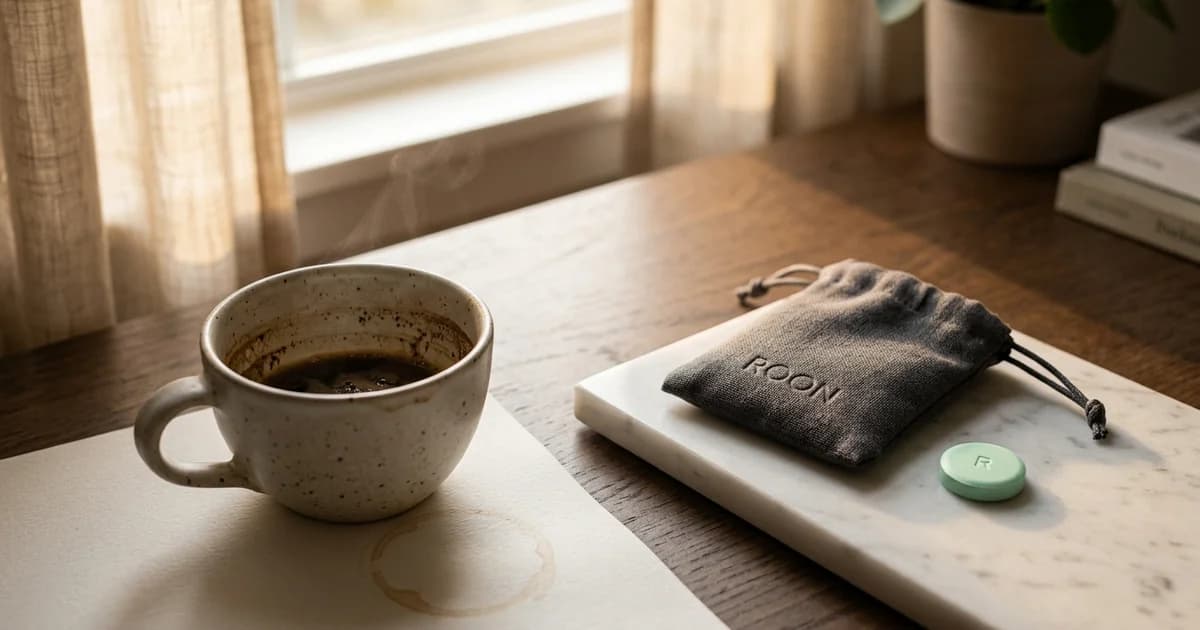
Roon vs Coffee: 5 Reasons Professionals Are Making the Switch to a Better Coffee Alternative for Focus
You drink three cups a day. Maybe four. You know the pattern: the first cup feels great, the second keeps you level, and by 2 p.m. you're staring at a screen wondering where your brain went. Coffee isn't broken, exactly. But if you're a professional who depends on sustained focus, coffee has some real structural problems that no amount of cold brew can fix. That's why a growing number of high-performers are looking for a coffee alternative for focus that actually matches the way modern work demands attention.
The issue isn't caffeine itself. Caffeine is one of the most well-studied cognitive enhancers on the planet. The issue is how coffee delivers it: a fast spike, a short window, and a crash that hits right when your afternoon calendar fills up. Pair that with stained teeth, extra calories from cream and sugar, and the jitters that come from over-caffeinating just to stay alert, and you start to see why the switch from coffee to pouch formats is picking up speed among working professionals.
Here's what professionals are finding when they compare coffee head-to-head with Roon, a sublingual nootropic pouch built around caffeine plus three supporting compounds.
Key Takeaways:
- Coffee's ~5-hour half-life means your morning dose is fading right when afternoon demands peak, creating the classic 2-3 p.m. crash.
- Combining caffeine with L-theanine smooths out the jitter-and-crash cycle that pure coffee creates.
- Theacrine, one of Roon's four active ingredients, shows no habituation over eight weeks of daily use, unlike caffeine alone.
- A sublingual pouch delivers caffeine without the teeth staining, added calories, or prep time that coffee requires.
1. The 3 p.m. Crash Isn't Willpower. It's Pharmacokinetics.
That afternoon wall you hit isn't a discipline problem. It's chemistry. Caffeine's mean plasma half-life is roughly 5 hours, with a range between 1.5 and 9.5 hours depending on individual metabolism, according to a 2024 review in the Journal of the International Society of Sports Nutrition. If you finish your last cup at 9 a.m., you're running on about half the active dose by 2 p.m. and a quarter by early evening.
Coffee delivers caffeine in a single compound with a single pharmacokinetic curve. That's the core limitation. Roon takes a different approach: its stack pairs 80 mg of caffeine with 25 mg of methylliberine (Dynamine) and 5 mg of theacrine (TeaCrine), two structurally related purine alkaloids with different onset times and longer durations. The result is a layered energy curve rather than a single spike and decline.
Best for: Professionals who need consistent output from morning through late afternoon without re-dosing three or four times.
2. Zero Jitters: The Caffeine-Plus-L-Theanine Advantage Over Pure Coffee
Coffee gives you caffeine. Just caffeine. And when you drink enough to push through a demanding workday, the side effects stack up: elevated heart rate, restlessness, that wired-but-unfocused feeling. A study published in PMC on elite wrestlers found that L-theanine's calming, nootropic effects may work with caffeine's stimulatory benefits, enhancing cognitive performance while reducing side effects like jitters and anxiety.
Each Roon pouch pairs 80 mg of caffeine with 60 mg of L-theanine. That's roughly a 4:3 ratio. L-theanine is an amino acid naturally found in tea leaves that promotes alpha brain wave activity, the neural signature associated with calm, alert focus. A randomized, placebo-controlled crossover study confirmed that a single dose of L-theanine produced measurable increases in alpha wave power and reductions in salivary cortisol compared to placebo.
You could add L-theanine capsules to your coffee. Most people won't. The advantage of a pre-dosed format is that the ratio is locked in every time.
Typical dose: 80 mg caffeine + 60 mg L-theanine per Roon pouch. Compare that to a standard 12 oz coffee at ~95 mg caffeine and zero L-theanine.
3. No Tolerance Buildup: Theacrine Changes the Long-Term Math
Here's the part most coffee drinkers don't think about until they're six cups deep. Caffeine builds tolerance. The alertness you felt from one cup three years ago now takes two or three cups to replicate. Your adenosine receptors upregulate, and the same dose produces a weaker response over time.
Theacrine operates differently. An 8-week human safety study published in PMC found that TeaCrine (pure theacrine) at doses up to 300 mg per day showed no evidence of habituation or tachyphylaxis, the tolerance response typical of caffeine and other stimulants. That's a meaningful distinction for anyone who uses a cognitive aid daily.
Roon includes 5 mg of theacrine (from material standardized to 40% TeaCrine) alongside its caffeine base. The theacrine isn't replacing caffeine; it's extending the effect and protecting against the tolerance curve that makes coffee less effective over months and years of daily use.
Best for: Daily users who want the same effect on day 200 that they got on day one.
4. White Teeth, No Stains: A Vanity Point That's Actually Backed by Science
Let's be honest. This one matters, especially if you're client-facing, on camera, or just tired of watching your teeth yellow. Coffee contains tannins and chromogens, compounds that bind to tooth enamel and cause progressive discoloration. Research published in Talanta (ScienceDirect) found that coffee staining goes beyond surface discoloration; it can affect the hydroxyapatite matrix of enamel, contributing to demineralization.
A sublingual pouch bypasses your teeth entirely. The active ingredients absorb through the oral mucosa under your lip, not across your enamel. No liquid contact with the front surfaces of your teeth means no chromogen deposits, no tannin buildup, and no gradual yellowing.
This isn't a minor cosmetic detail for professionals who spend thousands on dental care. It's a practical advantage that compounds over years of daily use.
If you've ever priced professional teeth whitening, you know it runs $300 to $800 per session. Removing the primary staining agent from your daily routine is a cheaper and more effective long-term strategy.
Best for: Anyone who's tired of choosing between cognitive performance and a clean smile.
5. Zero Calories, Zero Prep, Total Portability: The Coffee Alternative for Focus That Fits Your Schedule
A plain black coffee has roughly 2 calories. Almost nobody drinks plain black coffee. Research from the University of Illinois found that about two-thirds of coffee drinkers add sugar, cream, or other calorie-dense additives to their cups. Those additions average an extra 69 calories per day compared to black coffee drinkers, with more than 60% of those extra calories coming from sugar.
Over a year, that's roughly 25,000 hidden calories from coffee add-ins alone. For professionals tracking macros or managing body composition, that number is hard to ignore.
Roon pouches contain zero calories and zero sugar. You pull one from the tin, place it under your lip, and you're done. No brewing, no waiting in line, no washing mugs, no spilling on your shirt during a commute. The format works in a meeting, on a plane, at a standing desk, or in the middle of a workout.
| Coffee (12 oz brewed) | Roon (1 pouch) | |
|---|---|---|
| Caffeine | ~95 mg | 80 mg |
| L-Theanine | 0 mg | 60 mg |
| Methylliberine | 0 mg | 25 mg |
| Theacrine | 0 mg | 5 mg |
| Calories | 2 (black); 70+ (with cream/sugar) | 0 |
| Sugar | 0 g (black); 10-15 g (sweetened) | 0 g |
| Onset | 15-45 min (oral/GI absorption) | Minutes (sublingual absorption) |
| Teeth Staining | Yes (tannins + chromogens) | No |
| Tolerance Buildup | Yes (adenosine receptor upregulation) | Reduced (theacrine shows no habituation) |
| Portability | Low (requires brewing or purchase) | High (tin fits in a pocket) |
How to Make the Switch Without Overthinking It
You don't need to quit coffee forever, and if you want to explore other coffee replacement options before deciding, that comparison is worth making. Some people keep a morning cup for the ritual and use Roon for their working hours. Others replace coffee entirely as their go-to coffee replacement. Both approaches work.
If you are still weighing your options for the best energy source for knowledge work, start simple. Try one Roon pouch in place of your second or third cup of coffee, the one you reach for when the morning dose fades. Pay attention to how long the focus lasts, whether you feel jittery, and how you feel at hour three. That single comparison will tell you more than any article can.
If you're caffeine-sensitive, note that each pouch contains 80 mg of caffeine, roughly equivalent to a small cup of coffee. The L-theanine and supporting compounds change how that caffeine feels, but the total milligram load is moderate by design. Roon recommends a maximum of three pouches in 24 hours, with at least two hours between pouches, per their product page. Most professionals find that one or two pouches covers a full working day.
The Bottom Line: Coffee Is Fine. Your Focus Deserves Better.
Coffee got you this far. Nobody's arguing that. But the professionals switching to a smarter format aren't doing it because coffee stopped working. They're doing it because they found something that's better than coffee for focus, without the crash, the jitters, the stained teeth, or the hidden calories. It's the professional coffee alternative that actually addresses the reasons coffee falls short during a real workday.
Roon was built by Harvard and MIT-trained scientists who wanted a cognitive tool that matched the way real work actually happens: long blocks of sustained attention, not a 90-minute caffeine window followed by a trip back to the coffee machine. Four active ingredients, zero nicotine, zero sugar, and a sublingual format that gets to work in minutes.
If you're ready to test the difference yourself, give it a try.
Written by Roon Team