Can You Take Supplements While Fasting? Vitamins, Creatine, Caffeine, and Nootropics

Can You Take Supplements While Fasting? Vitamins, Creatine, Caffeine, and Nootropics
Can you take supplements while fasting? Most supplements in capsule or tablet form will not break a fast. A standard multivitamin, creatine capsule, or caffeine pill registers well under 5 kcal, the threshold below which the FDA allows a "zero calorie" label. No meaningful insulin spike. No interruption to autophagy. But "won't break your fast" and "ideal time to take it" are two different questions. Some supplements are poorly absorbed or rough on your stomach without food, which makes fasted timing wasteful even if it is technically safe.
That distinction, fasting compatibility versus absorption and tolerability, is the framework this piece is built around.
Key Takeaways
- Most pill-form supplements do not break a fast. If the label says 0 to 5 calories per serving, you are fine from a calorie and insulin standpoint.
- Fat-soluble vitamins (A, D, E, K) absorb better with fat. Taking them fasted does not break the fast, but you may waste a meaningful share of the dose.
- Iron and zinc can cause nausea on an empty stomach. This is a GI-tolerance issue, not a fasting issue.
- Gummy vitamins, protein powder, and some fish oil softgels carry real calories and can break a fast.
Fasting Compatibility vs. Absorption: Two Separate Questions
Will this supplement add enough calories or provoke enough insulin to break my fast? And will I absorb it properly without food? These are different questions with different answers.
For most capsule and tablet supplements, the fasting question is simple. A plain capsule shell (gelatin or cellulose) contributes a fraction of a calorie. For reference, black coffee runs about 2 kcal per 8 fl oz according to USDA FoodData Central, and almost no fasting protocol considers that a fast-breaker. Your vitamin capsule contains far less.
The absorption question depends on the supplement category.
| Supplement Category | Breaks a Fast? | Absorbed Well Fasted? | Best Timing |
|---|---|---|---|
| Fat-soluble vitamins (A, D, E, K) | No | Reduced without dietary fat | With first fat-containing meal |
| Water-soluble vitamins (B, C) | No | Yes | Anytime, including fasted |
| Iron | No | Yes, but GI issues common | With food if nausea occurs |
| Zinc | No | Yes | With food if nausea occurs |
| Magnesium | No | Yes, well tolerated | Anytime |
| Creatine (plain powder/capsule) | No | Yes | Anytime |
| Caffeine pill or pouch | No | Yes | Fasted window, as needed |
| Fish oil softgel | Borderline (10-15 kcal) | Better with food | With first meal |
| Gummy vitamins | Yes (15-20 kcal, added sugars) | N/A | Eating window only |
| Protein powder / BCAAs | Yes | N/A | Eating window only |
Fat-Soluble Vitamins While Intermittent Fasting
Vitamins A, D, E, and K dissolve in and are transported by dietary fat. Taking them fasted will not add calories, but it can reduce how much you absorb.
The clearest data: a study by Bess Dawson-Hughes at the USDA Human Nutrition Research Center, published in the Journal of the Academy of Nutrition and Dietetics, tested 50 healthy men taking the same vitamin D3 dose with either a fat-free meal or one where 30 % of calories came from fat. The fat group absorbed 32% more vitamin D. The same principle applies to vitamins A, E, and K, all of which require mixed micelles formed with bile salts and dietary fat for intestinal absorption.
Practical move: save fat-soluble vitamins for your first meal. If your eating window starts at noon, take your vitamin D or multivitamin with lunch. Clean fast, full absorption.
Water-Soluble Vitamins and Minerals
B-complex vitamins and vitamin C dissolve in water, not fat, so absorption does not depend on a meal. Taking them fasted is both fasting-compatible and unlikely to reduce the dose you absorb. Some people report mild nausea with certain B vitamins on a completely empty stomach, but this is uncommon.
Minerals are fasting-safe from a calorie standpoint. The issue is GI tolerance. The NIH Office of Dietary Supplements notes that iron supplements, especially on an empty stomach, can cause nausea, abdominal pain, and constipation. Zinc can cause similar gastric irritation when dissolved without food to buffer it. Magnesium is generally the best-tolerated mineral fasted.
If you take a prescribed iron supplement for a deficiency, follow your doctor's timing instructions. Clinical dosing schedules for diagnosed deficiencies take priority over fasting optimization.
Creatine, Caffeine, and Nootropics During a Fast
Plain creatine monohydrate, capsule or unflavored powder in water, contains essentially zero calories. A 2000 study by Steenge, Simpson, and Greenhaff in the Journal of Applied Physiology found that co-ingesting creatine with carbohydrate plus protein (50 g each) or with a high-carbohydrate dose (~96 g) increased whole-body creatine retention by about 25 % compared to placebo, but the creatine-alone condition still produced retention. For the full evidence, see our creatine and fasting guide.
The key distinction: plain creatine capsules are fasting-compatible. Flavored creatine gummies with added sugar are not. Read the label.
Caffeine, whether from a pill, black coffee, or a caffeine pouch, adds negligible calories and does not break a fast. Common nootropic ingredients paired with caffeine (L-theanine, methylliberine, theacrine) are similarly calorie-free. If fasting makes you tired, caffeine during your fasted window is one of the few tools that helps without compromising the fast. The same logic extends to pre-workout supplements: stimulant-based with no added sugar, fine; dextrose or maltodextrin on the label, not fine.
What Actually Breaks a Fast
Some "supplements" carry real calories. The common offenders:
- Protein powder and BCAAs/EAAs. Amino acids are established insulin secretagogues. Even a small scoop provokes insulin disproportionate to its calorie count. Research by Holt, Brand Miller, and Petocz (1997) in the American Journal of Clinical Nutrition helped establish the insulin index, showing protein-rich items generate insulin responses well beyond what their calorie content alone would predict.
- Gummy vitamins. A 2-gummy serving of Olly contains about 20 calories and 2g of added sugar. These are candy with vitamins in them.
- Fish oil softgels. A standard 1,000mg softgel contains roughly 10 to 15 calories, almost entirely from fat. Small, but not zero. For strict fasters, take fish oil with your first meal.
The Sorting Exercise, Not a Blanket Answer
The real answer to "can you take supplements while fasting" is a sorting exercise, not a yes or no. Most capsule and tablet supplements are fasting-compatible from a calorie and insulin standpoint. The ones that are not (gummy vitamins, protein powders, calorie-containing softgels) are easy to spot on a label. The separate absorption question boils down to one rule: take fat-soluble vitamins with fat. Everything else is flexible.
Frequently Asked Questions
Do vitamins break a fast?
Most vitamins in capsule or tablet form contain fewer than 5 calories per serving and do not break a fast. Gummy vitamins are the exception: they typically contain 15 to 20 calories and 2 to 4 grams of added sugar per serving. If you take gummies, move them to your eating window.
Can I take fish oil on an empty stomach while fasting?
Fish oil softgels contain roughly 10 to 15 calories per capsule, mostly from fat. For a strict calorie fast, take fish oil with your first meal. The dietary fat from that meal also improves absorption of any fat-soluble vitamins you take alongside it.
Does magnesium break intermittent fasting?
No. Magnesium supplements in capsule or tablet form contain negligible calories and do not spike insulin. Magnesium is also one of the better-tolerated minerals on an empty stomach, so fasted timing is both safe for the fast and comfortable for most people.
Should I take creatine while fasting?
Plain creatine monohydrate does not break a fast. It contains essentially zero calories and produces minimal insulin response without carbohydrates. Flavored creatine gummies or creatine-plus-carb blends are a different story. See our creatine and fasting guide for the full breakdown.
Is it bad to take iron on an empty stomach?
Iron absorption is actually higher on an empty stomach, but so is the risk of nausea, cramping, and constipation. If you tolerate it, fasted iron works. If not, taking it with a small amount of food reduces side effects without affecting your fast. Follow your doctor's instructions if supplementing for a diagnosed deficiency.
Can I take B vitamins while intermittent fasting?
Yes. B vitamins are water-soluble, contain no meaningful calories, and absorb well without food. Some people experience mild nausea with niacin on a completely empty stomach, but this is uncommon and a comfort issue rather than a fasting concern.
Do caffeine pills or caffeine pouches break a fast?
No. Caffeine in any zero-calorie format (pill, black coffee at ~2 kcal per cup, or a zero-sugar oral pouch) does not break a fast. Common nootropic ingredients paired with caffeine, like L-theanine and theacrine, are similarly calorie-free and fasting-compatible.
Where a Zero-Calorie Caffeine Pouch Fits in a Fasted Stack
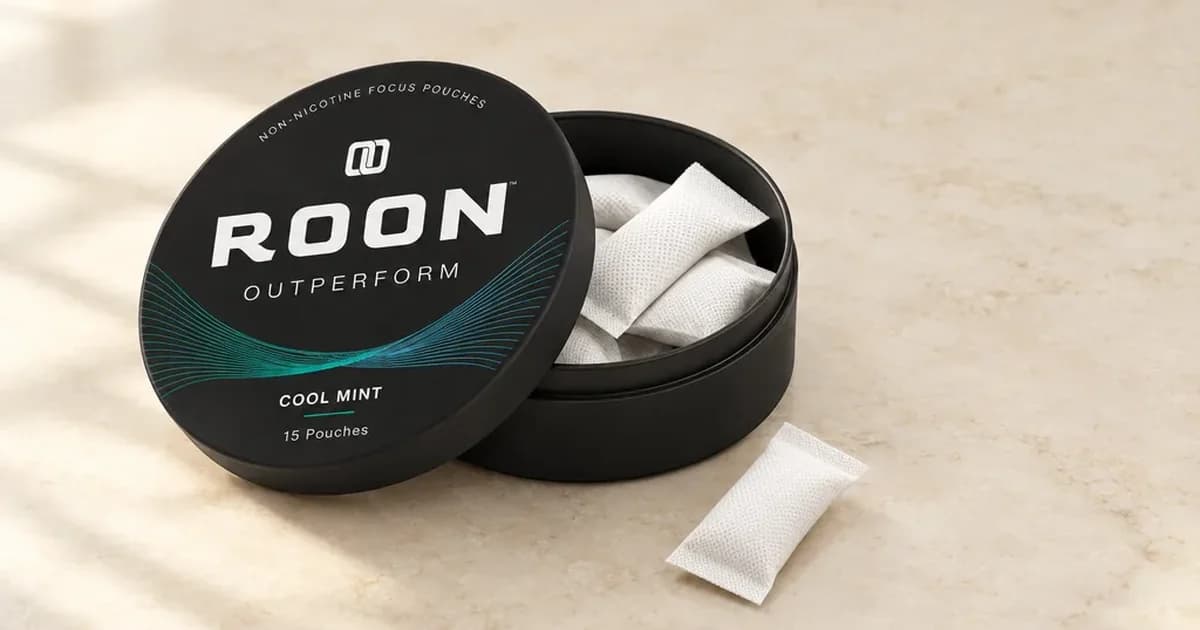
If your fasted mornings already include a handful of capsules and black coffee, the caffeine slot is part of the routine. Roon is a zero-sugar, zero-calorie oral pouch that delivers caffeine alongside L-theanine, methylliberine (Dynamine), and theacrine (TeaCrine). It is fasting-compatible for the same reason a caffeine pill or black coffee is: no calories, no insulin response.
What it is not: a vitamin, a mineral, or a replacement for any supplement discussed above. It does not contain creatine, iron, or fat-soluble vitamins. It is a caffeine-and-nootropic pouch that slots into a fasted protocol without breaking it. Tins start at as little as $0.61 per pouch on a 12-tin subscription. If you already take caffeine fasted, Roon is worth a look as a zero-calorie option that does not add anything your fast does not allow.
Related from Roon
- Does Creatine Break a Fast?
- Do Caffeine Pouches Break a Fast?
- Why Fasting Makes You Tired
- Magnesium Supplements for Brain Health
Written by Roon Team