Magnesium Supplements for Brain Health: What Actually Works
Roon Team

Magnesium Supplements for Brain Health: What Actually Works
Half the supplements on the shelf won't do a thing for your brain. That's the uncomfortable truth about magnesium supplements for brain health: the form you take matters more than whether you take it at all.
Roughly half of Americans consume less magnesium than the Estimated Average Requirement. Your body uses this mineral in over 300 biochemical reactions, from muscle contractions to DNA synthesis. But the brain is where deficiency hits hardest, and where the right magnesium supplements for brain health can make the biggest difference.
This piece breaks down what the science actually says about magnesium supplements for brain health, which forms reach your brain, and which ones are expensive urine.
Key Takeaways
- Not all magnesium is equal. Magnesium oxide, the cheapest form on shelves, has poor absorption and almost no brain-specific benefit.
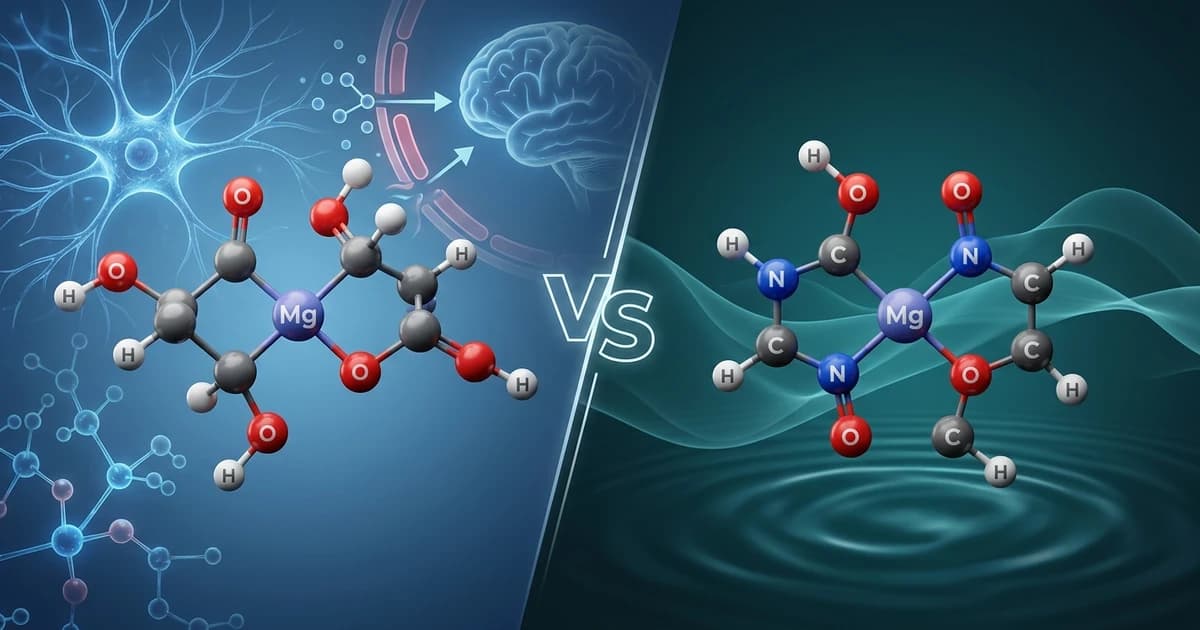
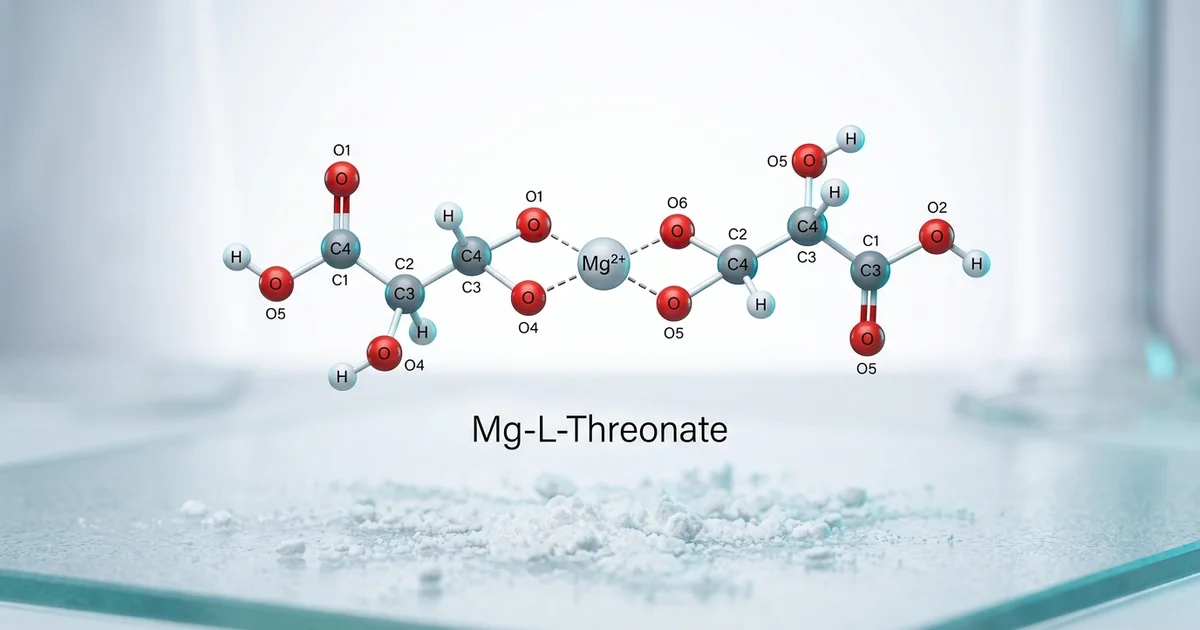
- Magnesium L-threonate is the only form shown to reliably cross the blood-brain barrier and raise brain magnesium levels in human trials.
- Sleep quality and cognitive performance are tightly linked. The best-studied brain benefits of magnesium supplements for brain health come through their effects on sleep architecture.
- Dosing matters. More is not better. The effective dose depends entirely on the form.
Why Your Brain Needs Magnesium Supplements for Brain Health (More Than Your Muscles Do)
Magnesium's role in the brain centers on one receptor: the NMDA receptor. This glutamate receptor is the primary gatekeeper for synaptic plasticity, the process that underlies learning and memory formation.
Here's the short version. Magnesium ions sit inside the NMDA receptor channel at resting potential, blocking it from firing in response to background noise. When a real signal arrives, the neuron depolarizes, the magnesium block lifts, and calcium flows in. That calcium influx is the molecular basis of memory encoding.
Too little magnesium, and the gate stays open. The receptor fires at everything. The result is neural noise: poor signal-to-noise ratio, difficulty concentrating, and eventually excitotoxicity, where neurons literally burn themselves out from overstimulation. This is exactly why magnesium supplements for brain health target receptor-level function, not just serum levels.
Too much excitatory signaling without proper magnesium regulation is also linked to neuroinflammation and accelerated cognitive decline. This isn't a fringe theory. It's basic neuropharmacology.
The Magnesium Form Problem: Why Most Supplements Miss the Brain
Walk into any pharmacy and you'll find magnesium oxide, magnesium citrate, and magnesium glycinate dominating the shelf space. They all raise serum magnesium. None of them are designed to cross the blood-brain barrier effectively.
The blood-brain barrier is selective by design. It keeps most circulating molecules out of your cerebrospinal fluid. Raising your blood magnesium level is not the same as raising your brain magnesium level. This distinction is the entire ballgame for anyone choosing magnesium supplements for brain health.
Here's how the common forms compare:
| Form | Elemental Mg | Absorption | Brain Penetration | Best For |
|---|---|---|---|---|
| Magnesium Oxide | ~60% | Low (~4%) | Minimal | Cheap general supplementation |
| Magnesium Citrate | ~16% | Moderate | Low | Digestive regularity |
| Magnesium Glycinate | ~11-14% | High | Low-Moderate | Sleep, anxiety, general calm |
| Magnesium Taurate | ~7-10% | High | Moderate | Cardiovascular support |
| Magnesium L-Threonate | ~7-8% | High | High | Cognitive function, memory |
Sources: Intelligent Labs comparison, Nebraska Medicine overview
The elemental magnesium percentage is a red herring. Magnesium oxide looks great on paper at 60% elemental magnesium, but your gut absorbs roughly 4% of it. The rest passes through. Meanwhile, magnesium L-threonate has only 7-8% elemental magnesium by weight, but the L-threonate ligand acts as a carrier molecule that crosses the blood-brain barrier and raises brain magnesium concentrations in ways other forms simply don't. That's what makes it the standout among magnesium supplements for brain health.
Magnesium L-Threonate: What the Clinical Data Shows
The strongest human evidence for magnesium supplements for brain health comes from L-threonate trials.
A 2025 randomized, double-blind, placebo-controlled trial published in Frontiers in Nutrition tested 2g daily of magnesium L-threonate (Magtein) against placebo in 100 adults aged 18 to 45. After six weeks, the supplementation group showed improvements in overall cognition composite scores, working memory, and reaction time. The Magtein group's composite cognition score increased by a mean of 8.40 points.
A separate clinical trial reported by NutraIngredients found that six weeks of Magtein supplementation reduced brain cognitive age by 7.5 years in healthy adults aged 18 to 45, compared to placebo.
An earlier trial in healthy Chinese adults found that subjects receiving a magnesium L-threonate formula showed improvements across all five subcategories of the Clinical Memory Test, with older participants benefiting most.
These aren't massive effect sizes. Nobody is claiming magnesium supplements for brain health turn you into a genius. But consistent, replicated improvements in working memory and processing speed from a mineral supplement are worth paying attention to, especially when the downside risk is essentially zero.
A 2024 systematic review and meta-analysis published in Advances in Nutrition reviewed the full body of RCTs and cohort studies on magnesium and cognitive health. The cohort data revealed a consistent U-shaped association between serum magnesium levels and dementia risk: both too little and too much circulating magnesium correlated with higher rates of cognitive impairment. The sweet spot is in the middle, which is exactly where proper magnesium supplements for brain health put you.
The Animal Data That Started It All
The interest in L-threonate traces back to MIT research. In 2010, researchers found that this specific magnesium compound could increase synaptic density in the hippocampus of rats and improve learning and memory function. A later study found that rats supplemented with magnesium L-threonate showed a 15% improvement in maze navigation tasks compared to controls, along with increased synaptic density in brain regions tied to memory.
Animal data always comes with caveats. Rats aren't people. But the human trials have largely confirmed the direction of these findings, strengthening the case for magnesium supplements for brain health.
Magnesium Supplements for Brain Health and Sleep: The Connection You're Ignoring
Sleep is where your brain does its maintenance. Glymphatic clearance, memory consolidation, synaptic pruning: these processes happen during deep sleep. Skip them, and your cognition deteriorates regardless of what supplements you take.
Magnesium's role in sleep architecture is well established and directly affects how restorative your nights are. A 2024 randomized controlled trial published in Sleep Medicine X found that magnesium L-threonate improved both subjective and objective sleep quality in adults aged 35-55 with self-reported sleep problems. The improvements were particularly strong for behavior following awakening and subjective mood upon waking.
A 2025 trial on magnesium bisglycinate also found improvements in sleep efficiency and reduced nighttime awakenings compared to placebo.
The mechanism is straightforward. Magnesium promotes GABAergic activity (GABA is your brain's primary inhibitory neurotransmitter) and helps regulate the hypothalamic-pituitary-adrenal axis, which controls your cortisol response. Lower cortisol at night means easier sleep onset. Better GABA signaling means deeper, more restorative sleep stages. This dual action is part of why magnesium supplements for brain health deliver benefits that extend well beyond waking hours.
This creates a feedback loop. Better sleep improves daytime cognition. Better cognition reduces stress. Lower stress improves sleep. Magnesium supplements for brain health sit at the base of that loop.
What "Better Sleep" Actually Means for Your Brain
It's not just about hours logged. The quality of your sleep stages determines how much cognitive benefit you extract from time in bed.
Deep slow-wave sleep is when your brain's glymphatic system clears metabolic waste, including beta-amyloid proteins associated with Alzheimer's disease. REM sleep is when emotional memories are processed and procedural learning is consolidated. Magnesium supplementation appears to improve time spent in these restorative stages specifically, not just total sleep duration.
This matters because you can sleep eight hours and still wake up foggy if your sleep architecture is fragmented. Magnesium supplements for brain health won't fix a bad mattress or a room full of blue light. But if your mineral status is the bottleneck, fixing it changes the entire downstream cascade.
How to Actually Supplement Magnesium for Your Brain
If you've read this far, here's the practical takeaway on choosing the right magnesium supplements for brain health.
For cognitive performance specifically, magnesium L-threonate is the form with the strongest evidence. The effective magnesium L-threonate daily dose used in clinical trials is around 2,000mg (which delivers roughly 144mg of elemental magnesium). Most studies split this between a morning and evening dose.
For those wondering which magnesium form suits sleep, both magnesium L-threonate and magnesium glycinate have clinical support. Glycinate is cheaper and widely available. L-threonate has the added cognitive benefit.
For general magnesium repletion, citrate or glycinate will raise your serum levels effectively and affordably.
Don't bother with magnesium oxide for brain health. It's cheap for a reason. If your goal is cognitive performance, you're wasting money on the wrong molecular vehicle.
A few things to keep in mind when using magnesium supplements for brain health:
- Don't megadose. The tolerable upper intake for supplemental magnesium is 350mg of elemental magnesium per day. Going above that risks GI distress.
- Take it consistently. The cognitive benefits in trials appeared after 3-6 weeks of daily use. This isn't a one-and-done supplement.
- Evening dosing helps sleep. If you're using magnesium partly for sleep, take your second dose 30-60 minutes before bed.
- Food sources still matter. Dark leafy greens, nuts, seeds, and dark chocolate are all high in magnesium. Supplements fill the gap; they don't replace a decent diet.
The Bigger Picture: Magnesium Supplements for Brain Health, Sleep, and Daytime Performance
Magnesium supplements for brain health are one piece of the cognitive performance puzzle. They help you sleep deeper, which helps you think sharper. But what you do with those waking hours matters just as much.
The research is clear that sleep quality and daytime cognitive output are two sides of the same coin. Fix one, and the other improves. Neglect either, and both suffer.
That's the philosophy behind Roon, a zero-nicotine sublingual pouch built for sustained daytime focus. Its stack of caffeine (80mg), L-theanine, theacrine, and methylliberine supports 6-8 hours of clean cognitive output without the jitters or crash. Pair solid sleep hygiene at night, including the right magnesium supplements for brain health before bed, with something that actually supports your focus during the day, and you stop leaving performance on the table.
Optimize your waking hours. Try Roon today.