Best Nicotine-Free Energy Pouches (2026)
Roon Team
The Best Nicotine-Free Energy Pouches in 2026, Ranked by Ingredients and Value
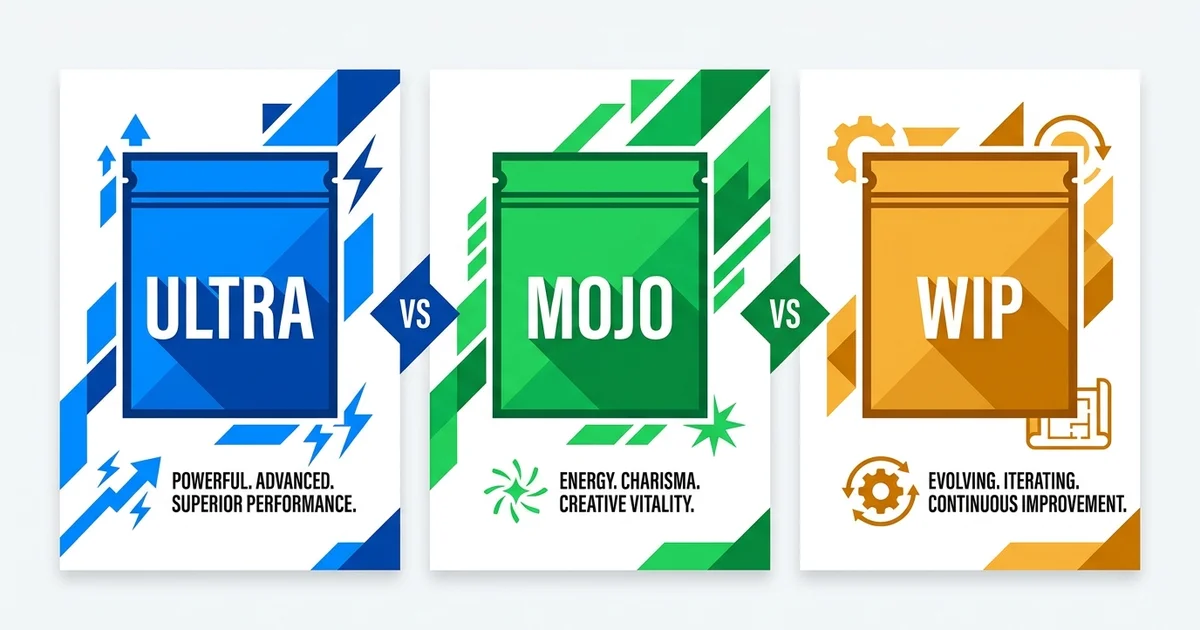
The best nicotine-free energy pouches in 2026 are Roon (best for sustained all-day focus), Ultra (best for caffeine-sensitive users), Mojo (best for low-dose adaptogen support), and Wip (best budget caffeine hit). Each uses a different stimulant strategy, different active doses, and a different price point. This ranked breakdown covers what every pouch actually contains, what it costs per serving, how long it lasts, and where each one falls short.
Nicotine-free energy pouches deliver stimulants like caffeine or paraxanthine through the oral mucosa (sublingual or buccal absorption) instead of through your digestive system. They contain zero nicotine, zero tobacco, and zero sugar. But the active ingredients, the dose per pouch, and the duration of effect vary wildly across brands. Some prioritize raw stimulation. Others lean into adaptogens. One skips caffeine entirely.
This page narrows the field to pouches with no nicotine. For the full category ranking across seven products, including the stim-free and paraxanthine options, see our best nootropic pouches buyer's guide.
Quick-Reference Comparison: Best Nicotine-Free Energy Pouches (2026)
| Rank | Brand | Best For | Primary Stimulant | Key Secondary Actives | Duration Per Pouch | Price Per Pouch | Pouches Per Tin |
|---|---|---|---|---|---|---|---|
| 1 | Roon | Sustained, jitter-free focus (6-8 hrs) | Caffeine (80 mg) | L-Theanine (60 mg), Dynamine (25 mg), TeaCrine (5 mg) | 6-8 hours | $1.00 one-time; $0.61 subscribed | 15 |
| 2 | Ultra | Caffeine-sensitive users wanting a shorter-acting alternative | Paraxanthine (enfinity, amount not published) | Alpha GPC, L-Theanine, Ginseng, B6, B12 | 1-2 hours | ~$1.07 one-time; ~$0.69 subscribed | 15 |
| 3 | Mojo | Low-dose caffeine with adaptogen support | Caffeine (50 mg green tea; a 100 mg line recently added) | L-Theanine, N-Acetyl-L-Tyrosine, Ginseng, Rhodiola, Eleuthero, Yerba Mate, B vitamins | 1-2 hours | ~$0.37 (50 mg); ~$0.60 (100 mg) | 15 |
| 4 | Wip | Budget buyers who want a strong, simple caffeine hit | Caffeine (100 mg or 200 mg, green coffee) | B vitamins (Niacin, B6, B12), Chromium | 1-2 hours (spike + decline) | ~$0.43-$0.53 | 15 |
 RoonOne pouch RoonOne pouch |  Coffee8 fl oz Coffee8 fl oz |  Energy drink8.4 fl oz can Energy drink8.4 fl oz can |  Nicotine pouchOne pouch Nicotine pouchOne pouch |  Other pouchesNon-nicotine Other pouchesNon-nicotine | |
|---|---|---|---|---|---|
| CaffeineCaffeine | 80 mg | ~95 mg | 200–300 mg | 0 mg | 100–200 mg |
| SynergistsSynergists (L-theanine, Dynamine®, TeaCrine®) | Yes | No | No | No | No |
| Fast onsetFast onset (5 to 10 min) | Yes | No | Sometimes | Yes | Yes |
| Lasts 6-8hLasts 6 to 8 hours | Yes | No | No | No | No |
| No crashNo crash or jitters | Yes | No | No | Sometimes | Sometimes |
| No nicotineNo nicotine | Yes | Yes | Yes | No | Yes |
| No sugarNo sugar | Yes | Yes | No | Yes | Yes |
Key Takeaways:
- Roon is the only pouch that stacks three methylxanthines (caffeine + methylliberine + theacrine) with L-theanine for a 6-8 hour focus window from a single pouch. It costs more per pouch than Mojo or Wip, but one pouch replaces the 2-3 re-doses those brands require.
- Ultra pouches use paraxanthine instead of caffeine, paired with nootropics like Alpha GPC and L-Theanine, but the 1-2 hour effect window means you need 3-4 pouches per day.
- Mojo pouches deliver 50 mg of green tea caffeine with adaptogens like ginseng and rhodiola, but lack any extended-release methylxanthine for sustained energy.
- Wip energy pouches pack 100-200 mg of caffeine from green coffee beans at one of the lowest per-pouch prices, but publish no amount for the L-Theanine that would smooth out the stimulant curve.
How Did We Rank These Nicotine-Free Energy Pouches?
Three criteria separate the best energy pouches without nicotine from the rest: stimulant profile, nootropic depth, and per-hour value. We weighted sustained duration and ingredient transparency above raw caffeine dose because re-dosing erases any per-pouch savings.
- The stimulant profile. What's driving the energy? How many milligrams? How long does it last per pouch?
- The nootropic stack. Are there ingredients that reduce jitters, extend the effect window, or support focus beyond the primary stimulant?
- Value per hour of focus. What are you paying per pouch, and how many pouches do you realistically need per day?
We pulled ingredient lists from each brand's official site and Amazon listings, cross-referenced with third-party reviews, and compared every nicotine-free energy pouch side by side.
#1: Roon, Best for Sustained All-Day Focus (6-8 Hours Per Pouch)
Roon delivers 6-8 hours of focus from a single sublingual pouch by stacking three methylxanthines with L-theanine. No other nicotine-free energy pouch on the market uses this layered approach. The trade-off is a higher per-pouch price, though the math shifts when one pouch replaces an afternoon of re-dosing.
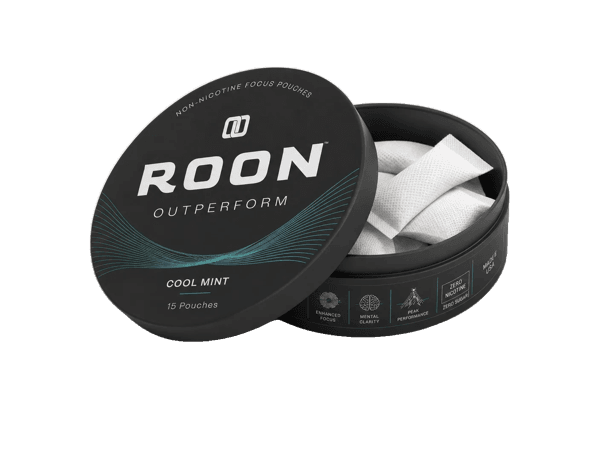
Each Roon pouch contains 80 mg of caffeine, 60 mg of L-theanine, 25 mg of methylliberine (Dynamine), and 5 mg of theacrine (TeaCrine). The format is a zero-nicotine sublingual pouch in Cool Mint, 15 pouches per tin. Onset is 5-10 minutes.
What Roon Gets Right
The four-ingredient stack is built on a specific pharmacological logic. Caffeine provides the well-researched lift. L-theanine promotes the alpha-wave activity linked to calm alertness; a 2008 study in Nutritional Neuroscience (n = 27) found the caffeine + L-theanine combination improved attention-switching speed and accuracy at 60 minutes and reduced distractibility in memory tasks. Methylliberine (Dynamine) bridges the gap between onset and sustained effect. Theacrine (TeaCrine) extends the tail end of the curve and, based on an 8-week clinical trial at doses up to 300 mg/day, showed no evidence of the tolerance (tachyphylaxis) that makes caffeine less effective over time.
A 2021 study in Cureus tested the combination of caffeine, TeaCrine, and Dynamine in adult male esports players. The triple methylxanthine stack improved performance on the Flanker Test of Inhibitory Control and improved reaction time on the Psychomotor Vigilance Task, while caffeine alone increased self-reported anxiety. The combination delivered cognitive gains without the mood penalty.
The result is a 6-8 hour focus window from a single pouch, without the crash, without the jitters, and without the need to re-dose every 90 minutes. The caffeine dose, 80 mg (roughly a small cup of coffee), is moderate by design. The performance comes from the way four compounds layer their onset and clearance times, not from brute-forcing a high stimulant dose.
Pricing: $15.00 per tin one-time ($1.00 per pouch) or as low as $9.16 per tin on subscription ($0.61 per pouch). At $0.61 per pouch subscribed, with a 6-8 hour window, Roon's effective cost per hour of focus is roughly $0.08-$0.10.
Where Roon Falls Short
Roon is still one of the pricier pouches in this comparison on a per-unit basis at $1.00 one-time (though the subscription price of $0.61 per pouch undercuts Ultra). If you only need a 30-minute pick-me-up before a meeting, you're overpaying for a 6-8 hour window you won't fully use. It also ships in a single flavor (Cool Mint), so if you want variety, other brands offer more options. And the 80 mg caffeine dose won't hit hard enough for people who want the visceral punch of a 200 mg Wip pouch. Roon is built for sustained cognitive work, not for a pre-workout spike.
#2: Ultra Pouches, Best for Caffeine-Sensitive Users
Ultra pouches are the best nicotine-free energy pouch for people who want to avoid caffeine entirely. Each pouch delivers enfinity paraxanthine, a primary metabolite of caffeine with a shorter half-life and a different side-effect profile. The limitation is a 1-2 hour focus window that requires 3-4 pouches per day.
Ultra built their entire brand around one ingredient: enfinity paraxanthine. Paraxanthine is the primary active metabolite your liver produces when it breaks down caffeine (roughly 80% of caffeine converts to paraxanthine). The idea: skip the middleman. Instead of consuming caffeine and waiting for conversion, you take paraxanthine directly.
Ultra publishes no milligram amount for paraxanthine on its own site. PricePlow reports 100 mg of enfinity paraxanthine per pouch, upgraded from 75 mg in January 2026. The pouch also contains Alpha GPC, L-Theanine, Panax ginseng extract, and B vitamins (B6 and B12), again with no amounts published. Among nicotine-free energy pouches, Ultra's formula is the most unconventional.
What Ultra Gets Right
The paraxanthine angle has real science behind it. A 2024 study published in the Journal of the International Society of Sports Nutrition found that paraxanthine provided greater improvement in cognitive function than caffeine after a 10 km run, suggesting genuine nootropic potential for this metabolite. Paraxanthine also has a shorter half-life than caffeine, which means it clears your system faster. If you've ever had a 2 PM coffee wreck your sleep at midnight, that matters.
The supporting cast of Alpha GPC (a choline donor that supports acetylcholine production) and L-Theanine is well-chosen. Both have real data behind them for cognitive support.
Ultra also raised $11 million in Series A funding in early 2026, signaling serious investment in product development and distribution.
Where Ultra Falls Short
The shorter half-life of paraxanthine is a double-edged sword. You get a cleaner exit, but you also get a shorter window. Ultra's own FAQ states the focus window lasts 1-2 hours, with a recommended intake of 3-4 pouches per day. That's a lot of re-dosing.
The research gap is real. Caffeine is backed by decades of data across thousands of human trials on cognitive performance. Paraxanthine research is growing, but the human evidence base is still thin by comparison. You're trading a massive evidence base for a newer, less-proven compound.
Pricing: $48.00 for a 3-can one-time purchase (45 pouches total, ~$1.07 per pouch). On subscription, 9 cans run $93.60, which works out to ~$0.69 per pouch at the deepest tier. At 3-4 pouches per day, that covers roughly 3-8 hours of focus in 1-2 hour increments.
#3: Mojo Pouches, Best for Low-Dose Caffeine with Adaptogens
Mojo pouches are the best nicotine-free energy pouch for people who want a mild caffeine lift with adaptogen support. Each pouch contains 50 mg of caffeine from green tea with L-theanine, rhodiola, ginseng, and eleuthero. The limitation is a short effect window and undisclosed adaptogen doses.
Instead of avoiding caffeine, Mojo leans into it at a moderate dose. Each Mojo pouch contains 50 mg of caffeine derived from green tea, paired with L-Theanine, N-Acetyl-L-Tyrosine, Panax ginseng, yerba mate extract, eleuthero root, rhodiola extract, and B vitamins.
The adaptogen-heavy formula separates Mojo from other nicotine-free energy pouches on the market. Rhodiola and eleuthero are both classified as adaptogens, compounds that help the body modulate stress responses. A systematic review in BMC Complementary and Alternative Medicine found that rhodiola doses between 100-576 mg/day showed positive effects on mental fatigue, though the amounts inside a small pouch are likely well below those clinical thresholds.
What Mojo Gets Right
The 50 mg caffeine dose is moderate and manageable. Paired with L-Theanine, it targets the dose range linked to improved attention without the anxiety spike that higher doses trigger. The 2008 Owen et al. study (n = 27) found that the caffeine + L-Theanine combination improved both speed and accuracy on an attention-switching task at 60 minutes, and reduced susceptibility to distracting information in a memory task at both 60 and 90 minutes. This pairing is one of the most replicated findings in nootropic research.
The adaptogen stack adds a layer of stress support that neither Ultra pouches nor Wip energy pouches offer. Mojo also has strong retail distribution, with products in stores and on Amazon, and 15 pouches per can.
Where Mojo Falls Short
Energy duration is the weak point. At 50 mg of caffeine with no extended-release mechanism and no secondary methylxanthines, the perceived effect window is roughly 1-2 hours. Caffeine's half-life is about 5 hours (FDA), but the felt boost from 50 mg fades well before that, especially if you have any caffeine tolerance.
The adaptogen doses are undisclosed. Mojo doesn't publish exact milligram amounts for ginseng, rhodiola, or eleuthero. Clinical rhodiola studies typically use 200-600 mg of extract per dose. The trace amounts that fit inside a small pouch alongside caffeine and filler are almost certainly lower.
There's no theacrine. No methylliberine. No mechanism to extend the stimulant curve beyond what a single, moderate caffeine dose can deliver on its own. For people searching for the best energy pouches without nicotine for long work blocks, that's a real limitation.
Pricing: Roughly $0.37 per pouch from the brand's own 5-pack ($27.50 for 75 pouches), up to ~$0.44 at third-party retail. At 2-3 pouches, daily cost runs about $0.74-$1.32.
#4: Wip Energy Pouches, Best Budget Caffeine Pouch
Wip energy pouches are among the cheapest nicotine-free energy pouches in this comparison at $0.43 to $0.53 per pouch depending on pack size. They deliver 100 mg or 200 mg of natural caffeine from green coffee beans with B vitamins. The limitation is an L-Theanine amount Wip does not disclose and a spike-and-crash energy curve. If the afternoon slump you're dealing with is mental rather than physical, it helps to understand why that dip happens in the first place: see our breakdown of why mental fatigue hits mid-afternoon.
Wip offers two strengths: 100 mg and 200 mg of natural caffeine from green coffee beans, plus B vitamins (Niacin, B6, B12) and chromium. That's the core formula. No adaptogens on the main product line. Among nicotine-free energy pouches, Wip is the most stripped-down option. Wip's own science page does list L-Theanine as a key ingredient, but on the supplement facts panel it sits under Other Ingredients with no milligram amount, so the dose is not disclosed.
Wip launched with an MSRP of $5.99 per can. Wip's own site now lists $7.99 for a single can ($0.53 per pouch), $21.99 for a 3-pack ($0.49), and $38.99 for a 6-pack ($0.43). On Amazon, 3-pack bundles bring the per-pouch cost to around $0.49-$0.53.
What Wip Gets Right
Price. Wip is the cheapest per milligram of caffeine in this comparison by a wide margin (Mojo now edges it per pouch). At $0.43-$0.53 per pouch, Wip undercuts a $5 latte by roughly 10x on a per-caffeine-dose basis. If all you want is a caffeine delivery vehicle that doesn't require a cup, a can, or a vape, Wip does that job.
The 100 mg option is a reasonable middle ground for people who find 200 mg too aggressive but want more kick than Mojo's standard 50 mg (Mojo has since added its own 100 mg line).
Wip also has broad retail availability, with products on Amazon and in Walmart.
Where Wip Falls Short
The 200 mg dose is aggressive. That's the caffeine equivalent of a large energy drink in a single pouch. The FDA cites 400 mg per day as the upper limit not generally associated with negative effects for most adults. Two 200 mg Wip pouches in a morning puts you at 400 mg before lunch. With no published amount of L-Theanine or any other calming nootropic to buffer the stimulant response, jitter potential is high, especially on an empty stomach.
There's no sustained-release component. You get a spike, and then you get a decline. The B vitamins and chromium are fine additions, but they don't shape the energy curve. An [NBC News report on caffeine pouches](https://www.nbcnews.com/health/health-news/caffeine-pouches-teens-zyn-energy-alternative-rcna217494) highlighted Wip's 200 mg dose as a point of concern for younger users.
Wip energy pouches are a blunt instrument. If you need sustained focus over a four-to-six-hour work block, a single high-caffeine pouch won't get you there without re-dosing (and stacking more caffeine on top of caffeine).
What Is the Effective Cost Per Hour of Focus?
Per-pouch price is misleading without accounting for how long each pouch actually works. A $0.53 pouch that lasts 1 hour costs $0.53 per hour. A $0.61 pouch that lasts 7 hours costs $0.09 per hour. Here's the math for each nicotine-free energy pouch, using subscription pricing where available:
| Brand | Price Per Pouch (Subscribed) | Duration Per Pouch | Effective Cost Per Hour | Pouches Needed for 8 Hrs |
|---|---|---|---|---|
| Roon | $0.61 | 6-8 hours | ~$0.08-$0.10 | 1 |
| Ultra | ~$0.69-$1.07 | 1-2 hours | ~$0.35-$1.07 | 4-8 |
| Mojo | ~$0.37 | 1-2 hours | ~$0.19-$0.37 | 4-8 |
| Wip | ~$0.43-$0.53 | 1-2 hours | ~$0.22-$0.53 | 4-8 |
Roon's higher per-pouch price becomes the lowest cost-per-hour option when you factor in the 6-8 hour duration. Mojo and Wip remain the cheapest options if you only need a quick 30-60 minute boost and don't mind re-dosing.
Detailed Ingredient-by-Ingredient Breakdown
| Feature | Roon | Ultra | Mojo | Wip |
|---|---|---|---|---|
| Primary Stimulant | Caffeine (80 mg) | Paraxanthine (amount not published) | Caffeine (50 mg) | Caffeine (100 mg or 200 mg) |
| L-Theanine | ✅ 60 mg | ✅ Yes (dose undisclosed) | ✅ Yes (dose undisclosed) | ✅ Listed under Other Ingredients (dose undisclosed) |
| Theacrine (TeaCrine) | ✅ 5 mg | ❌ No | ❌ No | ❌ No |
| Methylliberine (Dynamine) | ✅ 25 mg | ❌ No | ❌ No | ❌ No |
| Adaptogens | ❌ None | Ginseng | Ginseng, Rhodiola, Eleuthero, Yerba Mate | ❌ None |
| Other Nootropics | None beyond core 4 | Alpha GPC, B Vitamins | N-Acetyl-L-Tyrosine, B Vitamins | B Vitamins, Chromium |
| Nicotine-Free | ✅ Yes | ✅ Yes | ✅ Yes | ✅ Yes |
| Pouches Per Tin | 15 | 15 | 15 | 15 |
| Focus Duration | 6-8 hours | 1-2 hours | 1-2 hours | 1-2 hours |
| All Doses Disclosed | ✅ Yes (all 4 actives) | ❌ No (no milligram amounts published) | ❌ No (adaptogens undisclosed) | Partial (caffeine yes; B-vitamin and chromium amounts on-label only; L-Theanine amount not disclosed) |
Why Do Multiple Methylxanthines Matter for Energy Pouches?
The single biggest differentiator across nicotine-free energy pouches in 2026 is whether they stack multiple methylxanthines or rely on one stimulant alone. Caffeine, theacrine, and methylliberine are all methylxanthines. They activate overlapping but distinct pathways in the brain, and they peak at different times.
The Triple Methylxanthine Stack
Caffeine hits fast (peak plasma at 30-60 minutes). Theacrine has a slower onset and longer tail. Methylliberine sits between the two, providing rapid but smooth onset. When you stack all three, you get a layered energy curve: a quick lift from methylliberine, a sustained middle from caffeine, and a long tail from theacrine.
A 2021 study in Cureus tested this combination of caffeine, TeaCrine (theacrine), and Dynamine (methylliberine) in adult male esports players. The triple stack improved performance on the Flanker Test of Inhibitory Control and improved reaction time on the Psychomotor Vigilance Task, while caffeine alone increased self-reported anxiety. The combination delivered cognitive gains without the mood penalty.
The Tolerance Problem Caffeine-Only Pouches Can't Solve
The other reason multiple methylxanthines matter: tolerance. Daily caffeine use produces measurable tolerance within 1-3 weeks. You need more to get the same effect, or the same dose stops working. Theacrine behaves differently. An 8-week clinical trial (up to 300 mg/day) found no evidence of habituation (tachyphylaxis) over the full study period. None of the caffeine-only pouches in this comparison (Mojo, Wip) or the paraxanthine-based pouch (Ultra) include theacrine.
The L-Theanine Gap
Ultra and Mojo both include L-Theanine, which is smart. The caffeine + L-Theanine combination is one of the most replicated pairings in nootropic research. The Owen et al. 2008 study showed improved attention-switching speed and accuracy, and a 2010 replication confirmed that the pairing improves cognitive performance and subjective alertness. Wip, the product with the highest caffeine dose (up to 200 mg per pouch), lists L-Theanine only under Other Ingredients with no milligram amount, so there is no way to tell whether it reaches a useful level. That's the one product that needs it most.
Undisclosed Doses Remain an Industry Problem
Mojo's adaptogen quantities remain undisclosed. How much rhodiola is in each pouch? Without milligram amounts, you can't compare what you're getting to the doses used in clinical studies. The systematic review on rhodiola found positive effects on mental fatigue at doses of 100-576 mg/day. Trace amounts inside a small pouch are unlikely to reach that range. Ultra publishes no milligram amount for paraxanthine on its own pages, and its L-Theanine and Alpha GPC amounts are not published either. Roon is the one brand in this comparison that discloses every active dose.
The Verdict on Nicotine-Free Energy Pouches in 2026
The best nicotine-free energy pouch depends on what you're optimizing for. If you need all-day sustained focus from a single pouch and you're willing to pay more per unit, a multi-methylxanthine stack with L-theanine is the strongest approach the research supports. If you want to avoid caffeine entirely, paraxanthine is a legitimate alternative with a growing (if still small) evidence base. If you want the cheapest possible caffeine delivery, a simple caffeine pouch will do the job for short bursts.
What none of these products replaces: sleep, exercise, or a real meal. The FDA's 400 mg daily caffeine guideline applies across all formats. No pouch is a substitute for the basics.
The category is growing fast. The right pick is the one that matches your work pattern, your caffeine sensitivity, and your budget, not the one with the flashiest marketing.
Related from Roon
- Ultra Pouches Review (2026): Do They Actually Work?
- Mojo Energy Pouches Review
- Wip Energy Pouches Review: Honest 2026 Assessment
- Strongest Nicotine Pouches, Ranked
Frequently Asked Questions
What are nicotine-free energy pouches?
Nicotine-free energy pouches are small, dissolvable or semi-permeable pouches you place between your lip and gum. They deliver stimulants like caffeine or paraxanthine through the oral mucosa instead of through your digestive system. They contain zero nicotine and zero tobacco. Most brands use caffeine as the primary active ingredient, though some (like Ultra) use paraxanthine, and others (like Roon) stack caffeine with secondary methylxanthines for extended duration.
Are caffeine pouches safe?
For most healthy adults, caffeine pouches are as safe as any other caffeine source, provided you stay within the FDA's cited limit of 400 mg per day. The key variable is dose per pouch. A 50 mg pouch (Mojo) carries far less risk of overconsumption than a 200 mg pouch (Wip's strongest option). If you're sensitive to caffeine, pregnant, or under 18, consult a doctor before using any caffeine pouch.
How do nicotine-free energy pouches compare to energy drinks?
A standard 16 oz energy drink contains roughly 150-300 mg of caffeine plus sugar or artificial sweeteners. Nicotine-free energy pouches deliver caffeine without liquid, sugar, or carbonation, and sublingual absorption produces faster onset than drinking a beverage. Pouches are also more portable and discreet. The trade-off: most single-stimulant pouches lack the extended ingredient blends found in some energy drinks, though products like Mojo and Roon include nootropic co-ingredients.
Which nicotine-free energy pouch has the most caffeine?
Wip's 200 mg pouch has the highest caffeine content in this comparison. That's equivalent to roughly one large cup of brewed coffee or a 16 oz energy drink in a single pouch. The FDA considers 400 mg per day the upper threshold for most adults, so two of Wip's strongest pouches would hit that ceiling. Roon's 80 mg per pouch is moderate by comparison, roughly equivalent to a small cup of coffee.
What is the caffeine + L-Theanine stack, and why does it matter?
Caffeine and L-Theanine is one of the most replicated pairings in nootropic research. A 2008 study (n = 27) found the combination improved attention-switching speed and accuracy at 60 minutes and reduced distractibility in memory tasks. Caffeine provides alertness; L-Theanine promotes calm focus and takes the anxious edge off the stimulant. Roon, Ultra, and Mojo all include this pairing. Wip lists L-Theanine too, but only under Other Ingredients, with no amount published.
Do nicotine-free energy pouches cause tolerance?
Standard caffeine pouches produce tolerance just like coffee does. Your adenosine receptors adapt, and the same dose feels weaker over weeks of daily use. Theacrine is the exception: an 8-week clinical trial found no evidence of habituation at doses up to 300 mg/day. Products that include theacrine (like Roon's 5 mg TeaCrine per pouch) are designed to resist this tolerance curve better than caffeine-only pouches.
How long do nicotine-free energy pouches last?
Most single-stimulant pouches (Ultra, Mojo, Wip) deliver a perceived focus window of about 1-2 hours per pouch, based on brand claims and user reports. Multi-compound pouches that layer methylxanthines with different onset and clearance times, like Roon's caffeine + methylliberine + theacrine stack, target a 6-8 hour window from a single pouch. This is the widest duration gap in the nicotine-free energy pouch category.
Are nicotine-free energy pouches better than nicotine pouches for focus?
Nicotine is a genuine cognitive enhancer at low doses, but it carries well-documented addiction risk. Nicotine-free energy pouches deliver focus support through caffeine, nootropics, or paraxanthine without any addiction liability from nicotine. For daily use as a productivity tool, nicotine-free options avoid the dependency cycle entirely.
Why One Pouch Lasts a Full Work Block
Every nicotine-free pouch in this roundup delivers energy. The difference is how long that energy holds. Ultra, Mojo, and Wip each fade in one to two hours, which means re-dosing two or three times just to cover a morning.
Roon stretches a single pouch to a felt window of 6 to 8 hours, and the reason is specific: Dynamine (methylliberine, 25mg) slows caffeine's clearance. In a human pharmacokinetic study, co-administering methylliberine with caffeine cut oral clearance from 41.9 to 17.1 L/hr and extended caffeine's half-life from 7.2 to 15 hours, with no increase in peak concentration. Same peak, longer tail. L-theanine (60mg) smooths the ride. TeaCrine (5mg) adds a layer that resists tolerance buildup. The caffeine itself is only 80mg, roughly a small coffee.
The honest trade-off: a longer half-life means you should stop at least 8 hours before bed. Roon is also not the cheapest option ($9.16/tin subscribed, $0.61/pouch), contains no adaptogens, no mushroom extracts, and no paraxanthine. What it does is turn one pouch into a full work block. If duration is your bottleneck, that is exactly the problem Roon solves.
Written by Roon Team