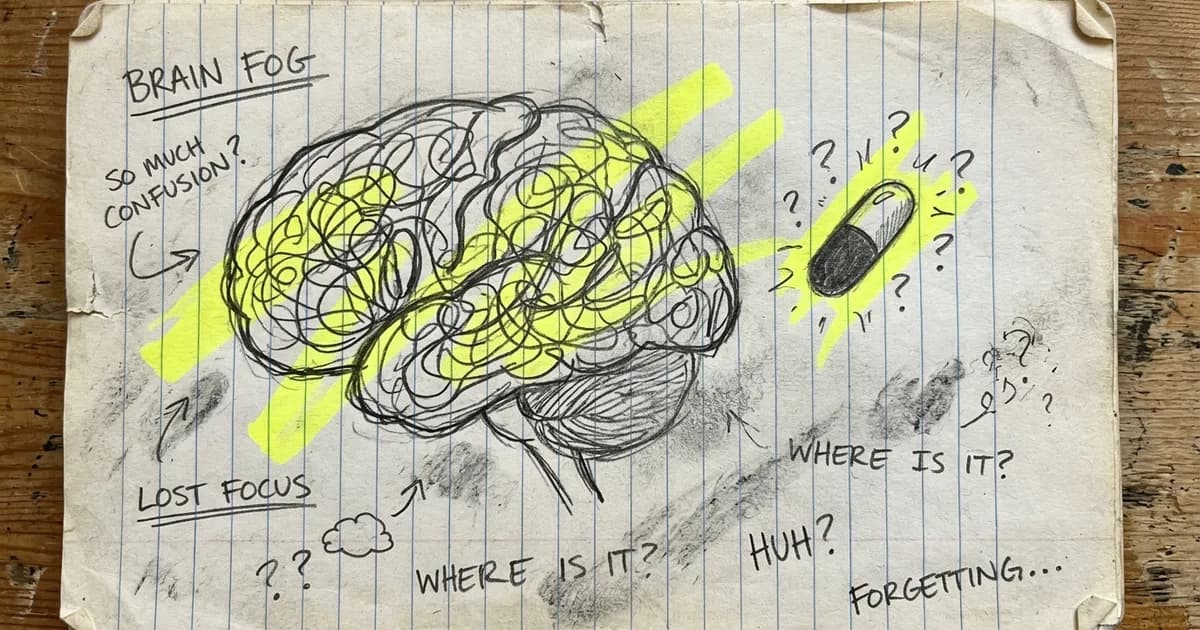
Always Tired? The Everyday Energy Drains That Have Nothing to Do With Sleep
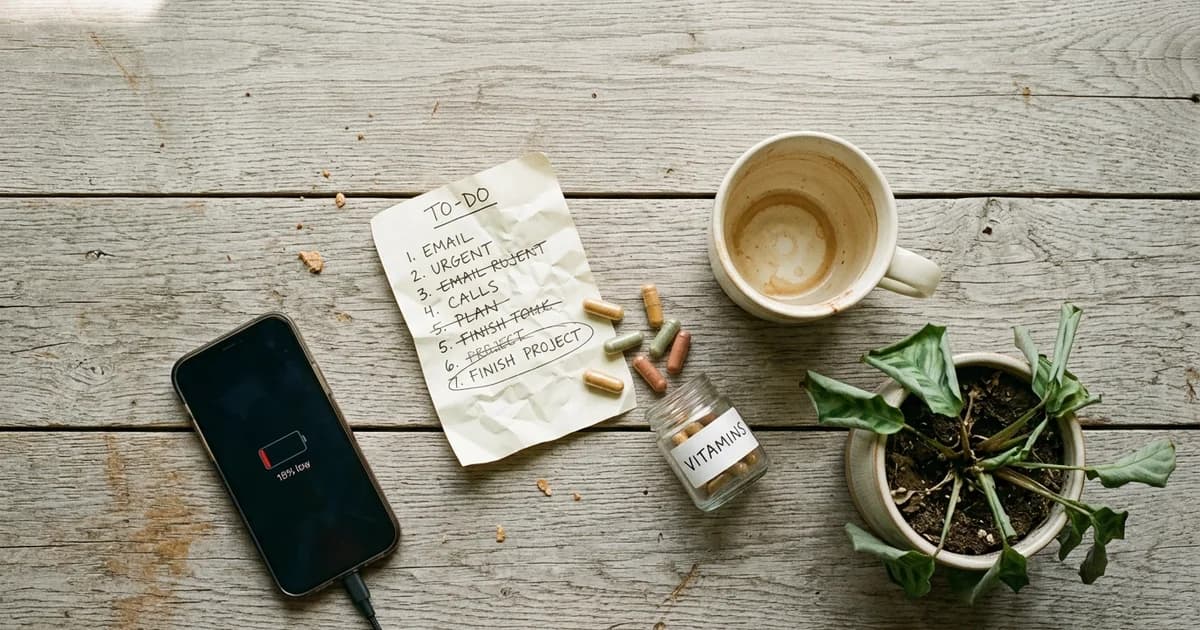
Always Tired? The Everyday Energy Drains That Have Nothing to Do With Sleep
You slept eight hours. You still feel like you're moving through wet sand by 2 p.m. So why am I so tired all the time, you keep asking, even though the sleep tracker says you did everything right?
Here is the part most people miss. Sleep is one input. It is not the only one. Plenty of the things wearing you down happen while you are wide awake, and they hide in plain sight: the water you skipped, the lunch you wolfed down, the coffee you timed badly, the eight hours you spent welded to a chair.
This is a guide to those drains. The ones that leave you feeling always tired with no energy despite a full night in bed.
Key Takeaways
- Most daytime fatigue comes from daytime habits, not just sleep debt.
- Mild dehydration, blood sugar swings, and poorly timed caffeine are three of the most common low energy causes.
- A caffeine crash is real biochemistry, not weakness, and it has a fix.
- Steady energy comes from steady inputs: water, balanced meals, movement, and a smarter approach to stimulants.
Why Am I So Tired All the Time When I'm Sleeping Fine?
The short answer: fatigue has many causes, and sleep is only one of them. You can clear your sleep debt and still feel drained if your hydration, blood sugar, movement, or caffeine timing are working against you.
You are not imagining it, and you are not alone. 45 percent of Americans sleeping 7 to 8 hours a night reported feeling tired or fatigued up to three times a week, according to data compiled by Statista. Good sleep clearly is not a guarantee of good energy.
So before you blame your mattress again, look at the hours you spend awake. That is where the real reasons you're always tired tend to live.
Drain #1: You're Mildly Dehydrated and Don't Know It
Dehydration is one of the most overlooked low energy causes, and it rarely announces itself with raging thirst.
Your body is roughly 60 percent water, and every system leans on it. When you fall behind, the effect on energy is direct. Feeling constantly tired is often due to mild dehydration, which lowers blood volume and shifts electrolytes so even a 1 to 2 percent fluid loss can drain energy, focus, and mood.
Harvard Health puts the mechanism plainly. When you are dehydrated, your tissues have less of the fluids they need to function, which can leave you feeling tired or fatigued.
The tricky part is the timing of the signal. Thirst is actually a late signal. By the time you feel very thirsty, you're already mildly dehydrated.
What to do: Drink a full glass when you wake up, then sip steadily instead of chugging once you crash. Use urine color as your gauge. Pale yellow means you are on track.
Drain #2: Your Lunch Is Spiking and Crashing Your Blood Sugar
That 2 p.m. wall is often less about willpower and more about glucose. A meal heavy on refined carbs sends your blood sugar up fast, then drops it below where it started.
Here is the chain reaction. Refined carbohydrates and simple sugars are absorbed rapidly, causing blood glucose to spike quickly. Your pancreas responds by releasing a large amount of insulin to manage this sudden influx. The insulin can overshoot, and you land in a slump.
Your brain notices immediately, because it runs on glucose. After a refined-carb meal, blood sugar tends to rise quickly and then dip below where it started a couple of hours later, which is often when the afternoon slump lands. The brain uses a large share of the body's glucose, so when that fuel drops, focus drops with it.
The food itself matters too. Research summarized by Marathon Handbook describes work finding that high-carbohydrate meals produce measurably more afternoon sleepiness than high-protein meals of equal calories, especially mid-afternoon.
What to do: Anchor meals with protein, fiber, and fat. Pair the bread with eggs. Put the rice next to chicken and vegetables. You are flattening the curve, not skipping carbs entirely.
Drain #3: You're Drinking Coffee at the Worst Possible Time
Caffeine does not create energy. It hides tiredness, and the bill comes due later. This is the source of the classic afternoon caffeine crash.
The mechanism is adenosine, the molecule that builds up across your day and makes you feel sleepy. Caffeine makes you tired because it blocks adenosine receptors without destroying the adenosine that builds up behind them. When caffeine clears your system (typically 5-6 hours after consumption), all that accumulated adenosine floods in at once. That is the crash.
There is a second layer. Caffeine also stretches out your morning cortisol peak, and per training analysis on the topic, caffeine prolongs the waking peak in cortisol levels, which can lead to an afternoon 'crash' when the caffeine wears off and cortisol levels come down.
So a giant afternoon coffee to fight the slump often just defers the problem into your evening, fragmenting the very sleep you need.
What to do: Stop stacking caffeine to outrun a crash. The fix is matching dose to need and pairing caffeine with something that smooths the curve, which we will get to.
Drain #4: You've Been Sitting Still for Hours
Stillness reads as tiredness. The less you move, the more sluggish you feel, which is a frustrating loop because feeling tired makes you want to move less.
The pattern shows up in workplace research. Per a summary from Mobile IV Medics, sitting for hours causes fatigue by deconditioning your body. Circulation slows, oxygen delivery dips, and your alertness follows.
What to do: Break the chair every 45 to 60 minutes. A two-minute walk, a flight of stairs, a few squats by your desk. You are not trying to exercise. You are trying to interrupt the slump.
Drain #5: Low-Grade Stress Is Running in the Background
Chronic stress taxes your energy even when nothing dramatic is happening, because your body stays in a low-level alert state that it was never meant to hold all day.
The toll is widespread. According to the American Psychological Association's Stress in America data reported by SingleCare, at least two-thirds of Americans say their stress manifests as physical symptoms, the most common of which are nervous or anxious feelings, fatigue, and headaches.
What to do: Short resets work. A few minutes of slow breathing, a walk outside, a hard stop on doomscrolling. The goal is to drop your nervous system out of constant alert.
The Real Low Energy Causes, Ranked by How Often They Hide
Here is how the everyday drains stack up against each other, and how fast you can act on each.
| Energy Drain | How Common | How Fast You Can Fix It | First Move |
|---|---|---|---|
| Mild dehydration | Very common, often missed | Hours | Glass of water now, sip through the day |
| Blood sugar swings | Common after refined-carb meals | Next meal | Add protein and fiber, cut the sugar spike |
| Caffeine crash | Common in heavy coffee drinkers | Same day | Fix timing and dose, pair with L-theanine |
| Sitting too long | Near-universal desk-job problem | Minutes | Move every 45 to 60 minutes |
| Background stress | Affects two-thirds of adults | Ongoing practice | Short breathing or walking resets |
Notice the pattern. None of these is a sleep problem. All of them are fixable while you are awake.
A Smarter Way to Handle the Caffeine Curve
If caffeine timing is one of your biggest drains, the answer is not more caffeine. It is better-shaped caffeine.
This is where the pairing of caffeine and L-theanine earns its reputation. L-theanine is an amino acid found in tea, and it changes how caffeine feels. As Mind Lab Pro explains, L-theanine is known for promoting a calmer, more controlled kind of focus, so when you combine the two, the goal is often smoother energy and clearer attention than caffeine alone, with fewer jitters and side effects.
The effect is not just additive, it is qualitatively different. The combination doesn't simply add L-theanine's effects to caffeine's effects; it creates a distinct experience. People consistently report feeling alert yet calm, focused without being jittery.
There is a tolerance angle too. Theacrine, a compound related to caffeine, holds up over time without the usual habituation. A safety study published in the journal of the International Society of Sports Nutrition tested daily theacrine use and reported it as non-habituating across eight weeks of continuous use. In plain terms, it does not stop working the way a daily coffee habit eventually does.
The Bottom Line on Daytime Fatigue
If you are sleeping well and still asking why you feel wrecked by mid-afternoon, stop interrogating your pillow. The answer is usually in your waking hours.
Drink before you are thirsty. Build meals that do not spike and crash you. Move before stillness sets in. Time your caffeine instead of chasing it. And give your nervous system a few real breaks.
Fix two or three of these and most people feel the difference within a day, not a month. Steady energy is built from steady inputs, and almost all of those inputs are inside your control.
Frequently Asked Questions
Why am I so tired all the time even when I sleep 8 hours?
Sleep is one input among several. Mild dehydration, blood sugar swings, poorly timed caffeine, long stretches of sitting, and chronic low-grade stress can each drain your energy independently of how long you slept. If you have ruled out an obvious sleep problem and still feel wiped out, audit your waking habits first. Many people find the real culprit is hydration or an afternoon blood sugar crash rather than sleep itself.
Can dehydration really make you that tired?
Yes. Even mild dehydration lowers blood volume and shifts electrolytes, which reduces oxygen delivery and slows brain function. Research shows a fluid loss of just 1 to 2 percent can dent energy, focus, and mood. Thirst is a late signal, so by the time you feel parched you are often already behind. Sipping water steadily through the day, rather than waiting until you crash, is one of the simplest energy fixes available.
Why do I crash in the afternoon after lunch?
A lunch heavy on refined carbs spikes your blood sugar fast, triggers a large insulin release, and then drops your glucose below baseline. Your brain runs on glucose, so when it dips, your focus and energy dip with it. High-carb meals also tend to cause more afternoon sleepiness than protein-rich meals of equal calories. Adding protein, fiber, and fat to your lunch flattens that curve.
Why does coffee sometimes make me more tired?
Caffeine blocks adenosine receptors but does not remove the adenosine, which keeps building behind the blockade. When the caffeine clears your system, usually five to six hours later, all that adenosine hits at once, producing the crash. Caffeine also prolongs your morning cortisol peak, and the comedown adds to the slump. Drinking more coffee to fix this just pushes the problem into your evening and disrupts sleep.
Does sitting all day actually cause fatigue?
It does. Long periods of sitting decondition the body, slow circulation, and reduce the alertness signals that movement normally provides. The result is a sluggishness that feels like tiredness but is really inactivity. Standing up and moving for a couple of minutes every 45 to 60 minutes interrupts the cycle. You do not need a workout, just regular interruptions to the stillness.
When should I see a doctor about always being tired?
If fatigue is persistent, severe, or unexplained by your habits, it is worth a medical check. Conditions involving thyroid, iron, blood sugar regulation, and sleep disorders can all cause ongoing tiredness. The everyday drains in this guide are common and fixable, but they are not a diagnosis. If fixing hydration, meals, movement, and caffeine timing does not move the needle within a couple of weeks, talk to a doctor.
Where Steady Beats Spiky
Most of this article comes down to one idea: your energy crashes when your inputs spike and drop. Hydration, blood sugar, and especially caffeine all punish the spike-and-crash pattern. The fix is a smoother curve.
That is the problem Roon was built to solve on the caffeine side. Each sublingual pouch pairs 80 mg caffeine with 60 mg L-theanine for calm, jitter-free focus, then adds 25 mg methylliberine (Dynamine) and 5 mg theacrine (TeaCrine), the non-habituating compound that holds its effect over weeks. The result is designed for a 6 to 8 hour window of steady focus with no jitters, no crash, and no tolerance buildup, with onset in about 5 to 10 minutes.
To be clear about what Roon is not: it will not fix dehydration, a refined-carb lunch, eight hours in a chair, or real sleep debt. Those are still on you. But if poorly timed caffeine is one of your daily energy drains, a smoother curve is a better tool than another giant coffee. Try Roon as the stimulant layer, and let the water, food, and movement do the rest.
Written by Roon Team