Mitochondria and Brain Energy: How Neurons Make ATP
Roon Team
Mitochondria and Brain Energy: How Neurons Make ATP (and Why Focus Fades)
Your brain is the most expensive organ you own. It weighs about three pounds, roughly 2% of your body mass, yet brain energy metabolism burns close to a fifth of your daily calories even when you are sitting still. That bill never stops. A neuron firing during a tough afternoon spreadsheet costs the same currency as a neuron keeping your heart rhythm steady in your sleep.
That currency is ATP. And the place it gets minted is the mitochondria.
So when focus starts to slip around 3 p.m., the instinct is to blame an energy shortage and reach for fuel. The truth is stranger and more useful. Your neurons rarely run out of ATP. What fades is something else entirely.
Key Takeaways
- The brain runs almost entirely on glucose, converted to ATP inside mitochondria through oxidative phosphorylation.
- A single neuron uses most of its energy not to fire, but to reset itself after firing.
- Mental fatigue is rarely a fuel problem. It tracks with a byproduct called adenosine building up in your brain.
- Caffeine does not add ATP. It blocks the adenosine signal that tells you to slow down.
How Neurons Make ATP
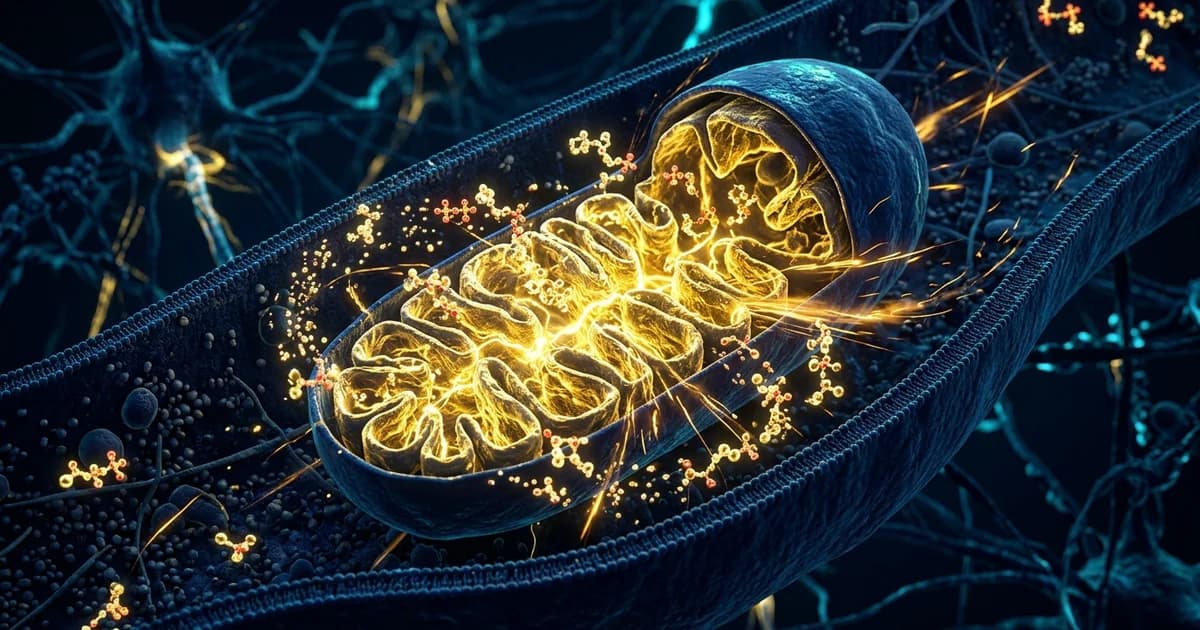
Neurons make ATP mostly by feeding glucose through their mitochondria, the small structures inside each cell that run oxidative phosphorylation. This is the same chemistry your muscles use, just tuned for a tissue that almost never gets to rest.
Here is the short version of brain glucose energy production. Glucose crosses from your blood into the neuron. It gets broken down in two stages: a quick step in the cell fluid called glycolysis, then a much larger payoff inside the mitochondria.
The mitochondrial stage is where the math gets serious. Glycolysis alone yields a small handful of ATP per glucose molecule. Run that same molecule through the mitochondria with oxygen, and the yield jumps roughly tenfold. That is why your brain demands so much oxygen and why even a brief interruption in blood flow scrambles thinking within seconds.
The brain has almost no fuel reserve. Unlike your liver or muscle, it stores very little glucose, so it depends on a steady delivery through the bloodstream. According to a review in Physiological Reviews, glucose metabolism is tightly coupled to neuronal activity, meaning the regions you are actively using pull more fuel in real time.
This is the heart of mitochondria brain function. When a region lights up on a brain scan, what the scanner often tracks is not thought itself. It is the surge in glucose and oxygen uptake that powers that thought.
Where All That Energy Actually Goes
Most of your neuronal energy goes to housekeeping, not to firing. This surprises people. We picture thinking as the expensive part, but the real cost is the cleanup afterward.
Every time a neuron fires, sodium and potassium ions rush across its membrane. To fire again, the cell has to pump those ions back to where they started, against their natural gradient. That pumping is the single biggest energy line item in the brain.
Researchers who modeled the energy budget per neuron found that signaling and the maintenance of membrane gradients dominate the cell's ATP spending. The implication is blunt. A busy brain is mostly paying to reset itself, over and over, thousands of times per second.
Work from University of Rochester Medicine has also reshaped how scientists view fuel handling in the brain, finding that neurons themselves, not their support cells, are the primary consumers of glucose, and that this uptake tracks brain activity. The picture that emerges is a tissue built for relentless throughput, not for storage.
So if neurons almost always have ATP on tap, why does your concentration collapse by mid afternoon?
Brain Fog Energy: Why Focus Fades
Focus usually fades because of a signaling molecule, not because your neurons ran out of fuel. The molecule is adenosine, and it is one of the more elegant feedback loops in your body.
Adenosine is a breakdown product of ATP. As your neurons spend ATP through a long day of thinking, adenosine accumulates in the spaces between cells. The harder and longer you work, the more it piles up.
That buildup is the point. Adenosine binds to receptors that quiet neural activity and nudge you toward rest. It is essentially a fuel-gauge molecule. The more energy you have spent, the louder it tells you to slow down.
This is the real mental fatigue mechanism behind that heavy, foggy feeling. It is not that the tank is empty. It is that the brain is reading its own exhaust and deciding you have done enough.
Sleep clears adenosine. That is part of why a full night resets your morning sharpness and why a short nap can blunt the afternoon slump. The brain fog energy dip you feel at 3 p.m. is largely an adenosine signal, layered on top of your natural circadian rhythm.
So Why Does Coffee Work? A Quick Detour Into Mechanism
Caffeine does not make ATP and it does not fuel your mitochondria. It works by blocking adenosine. Structurally, caffeine looks enough like adenosine to slip into the same receptors and sit there without activating them.
The signal to slow down gets muffled. Your existing alertness comes back to the surface. This is why caffeine feels like energy even though it adds none. You are not topping up the tank, you are taping over the fuel-gauge warning light.
That distinction matters for anyone shopping for focus products. A genuine "mitochondrial fuel" claim and an "adenosine blocker" do completely different jobs. Most of what actually shifts your alertness in the short term works through the adenosine pathway, not by manufacturing energy.
How Common Focus Inputs Actually Work
The table below sorts familiar options by their real mechanism, so you can see why "energy" is a loose word.
| Input | Primary mechanism | What it actually does | Onset |
|---|---|---|---|
| Glucose / a meal | Mitochondrial fuel | Supplies the raw material for ATP | 15–60 min |
| Caffeine | Adenosine blocker | Muffles the fatigue signal | 30–60 min (oral) |
| L-theanine | Modulates alpha brain activity | Smooths the edge off caffeine | 30–40 min |
| Sleep / nap | Clears adenosine | Resets the fatigue signal at the source | Hours |
| Roon (sublingual pouch) | Caffeine + L-theanine + Dynamine + TeaCrine | Adenosine-pathway alertness, faster onset | 5–10 min |
Notice that nothing on this list except food actually "fuels" your brain. The fast-acting options manage signaling.
The L-Theanine Angle
L-theanine is interesting because it does not block adenosine and it does not add fuel. It changes the texture of caffeine's effect. In a study published in The Journal of Nutrition, the combination of caffeine and L-theanine influenced attention performance and alpha-band brain activity, the rhythm linked to relaxed, alert focus.
In plain terms, caffeine alone can tip some people into a wired, scattered state. Pairing it with L-theanine tends to keep the alertness while trimming the jitter. The two are frequently used together for exactly this reason.
If you want a deeper look at that pairing, our breakdown of the caffeine and L-theanine ratio for clean focus covers the dosing logic in more detail.
How to Actually Support Brain Energy Metabolism
You support brain energy metabolism less by adding fuel and more by protecting the systems that make and clear it. Your neurons are rarely starved. They are managed by sleep, blood flow, and signaling.
A few things that hold up to the science:
- Sleep is the real reset. It is the main route by which adenosine clears, which is why no amount of caffeine substitutes for a bad night.
- Steady glucose beats spikes. The brain wants a stable supply, not a sugar surge followed by a crash. Balanced meals keep delivery smooth.
- Move your body. Exercise improves blood flow and oxygen delivery, the same oxygen your mitochondria need for the high-yield stage of ATP production.
- Use caffeine deliberately. Treat it as a tool that borrows against the adenosine signal, not as free energy. The bill comes due.
Manage those four, and your afternoon focus problem usually shrinks before any supplement enters the conversation.
The Bottom Line on Brain Fuel
Your brain almost never runs out of ATP. It runs on a near-constant stream of glucose converted to energy inside mitochondria, and the bulk of that energy goes to resetting neurons after they fire, not to the firing itself.
When focus fades, the cause is usually accumulating adenosine telling you that you have spent enough, not an empty fuel tank. Sleep clears that signal. Caffeine masks it. Food supplies the raw material, but raw material was rarely the bottleneck.
Understanding the difference between fueling and signaling is the single most useful thing you can know about your own afternoon slump.
Frequently Asked Questions
Does the brain really use 20% of the body's energy?
Yes. Despite making up only about 2% of your body weight, the brain accounts for roughly a fifth of your resting energy use. That demand comes from the constant work of pumping ions back across neuron membranes after each firing, plus the baseline maintenance every cell requires. Because the brain stores almost no fuel of its own, it depends on a steady supply of glucose and oxygen delivered through the bloodstream at all times.
Can my brain run out of ATP during a long work session?
Not in any normal sense. Healthy neurons keep producing ATP as long as glucose and oxygen keep arriving, which they do continuously. The tired, foggy feeling after hours of focus is not an empty tank. It reflects a buildup of adenosine, a byproduct of spent ATP that signals your brain to slow down. The fuel is there. The signaling has shifted.
What causes brain fog in the afternoon?
The afternoon dip is mostly a combination of accumulated adenosine and your natural circadian rhythm, which has a built-in low point in the early-to-mid afternoon. As you spend ATP through the morning, adenosine rises and dampens neural activity. This is the same fatigue signal that builds toward bedtime, just experienced earlier. Sleep quality the night before strongly shapes how steep that dip feels.
Does caffeine give my mitochondria more energy?
No. Caffeine does not make ATP or feed mitochondria. It works by blocking adenosine receptors, which quiets the signal that tells your brain to slow down. Your existing alertness becomes more available, so you feel sharper without having added any actual fuel. This is why caffeine can wear off into a slump as adenosine that was waiting in line finally binds.
Is glucose the only fuel the brain can use?
Glucose is the primary fuel under normal conditions and drives most brain glucose energy production. The brain can also use ketones, produced from fat during fasting or on a very low-carbohydrate diet, as a partial backup fuel. Even then, glucose still covers a large share of the demand. The brain's tight coupling to glucose is one reason stable blood sugar matters so much for steady concentration.
How do neurons make ATP so quickly?
Neurons keep mitochondria positioned right where energy is needed, including near synapses, so freshly made ATP is available on demand. Glucose is broken down first in the cell fluid, then run through mitochondria with oxygen for a roughly tenfold larger ATP yield. Because the brain holds almost no reserve, this production has to stay continuous, which is why blood flow and oxygen delivery matter so much to clear thinking.
Will eating sugar improve my focus?
A small, steady glucose supply supports concentration, but a large sugar hit often backfires. Rapid spikes tend to be followed by a crash that leaves you foggier than before. Since the brain wants stable delivery rather than surges, balanced meals with protein, fiber, and slower carbohydrates usually support brain fog energy better than candy or sweet drinks. Smooth fuel beats a spike.
Where Felt Energy Actually Comes From
This article makes one quiet point worth keeping: most of what we call "energy" in the moment is not fuel at all. It is a signal. Your neurons rarely run dry. The afternoon fade is adenosine talking, and the fastest way to feel sharper is to manage that signal, not to manufacture ATP.
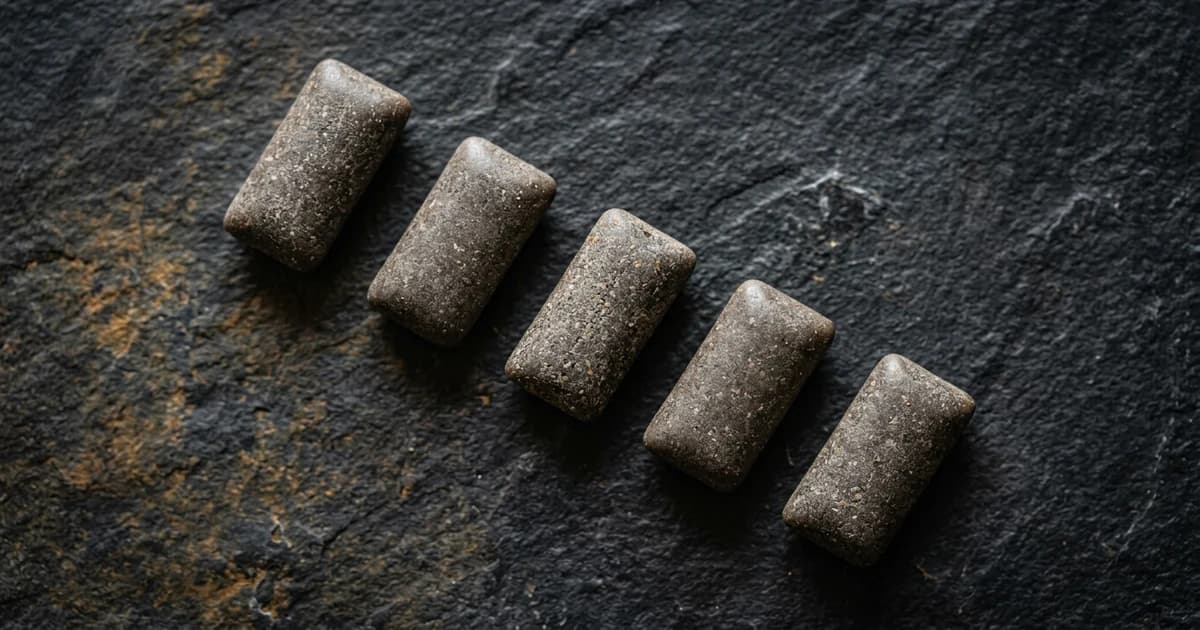
That is the lane Roon is built for. Each sublingual pouch pairs 80 mg caffeine with 60 mg L-theanine, plus 25 mg methylliberine (Dynamine) and 5 mg theacrine (TeaCrine). The caffeine works on the adenosine pathway described above, the L-theanine smooths the edge, and the sublingual format means onset in 5 to 10 minutes rather than waiting on digestion, with a 6 to 8 hour window designed to avoid the jitters and crash.
To be clear about what it is not: Roon does not fuel your mitochondria and it is no replacement for sleep, real food, or blood flow, the things that genuinely keep your brain energy metabolism running. It manages the signal. If you want sharper afternoons without the wired feeling, try Roon as the tool, not the foundation.
Written by Roon Team