40 and Running on Fumes: Why a 40, Year

40 and Running on Fumes: Why a 40-Year-Old Male Feels Tired All the Time (and What Actually Helps)
Same job, same training, but the tank empties by mid-afternoon and the second wind never comes. You're not old. You just feel perpetually stuck at 70 percent. If you're a 40-year-old male tired all the time, the cause is rarely one dramatic failure. It's usually a stack of fixable factors: shallower deep sleep, slower recovery between hard days, a more sedentary calendar, and a caffeine habit that quietly stopped working. Persistent fatigue can also signal a medical issue worth checking, which is why a blood panel belongs in the plan.
This article is informational and not medical advice. If your fatigue is sudden, severe, or lasts more than two weeks, see a clinician.
Key Takeaways
- Most midlife male fatigue is a stack of lifestyle factors, not a single hormone problem.
- Deep sleep declines sharply with age, which blunts physical and mental recovery even when time in bed looks fine.
- Years of daily coffee build caffeine tolerance, so your usual dose now buys less alertness.
- A short list of blood tests rules out the medical causes that matter: low testosterone, thyroid, anemia, vitamin D, and sleep apnea screening.
- Fix sleep, movement, and your caffeine pattern first. Then, if needed, get bloodwork.
Why Am I So Tired in My 40s?
The short answer: in your forties, the body's recovery systems get less efficient at the same time your obligations get heavier, and the two compound. Harvard Medical School's Dr. Suzanne Salamon, a geriatric physician, puts it plainly: men may chalk up fatigue to aging, but there is no reason you should battle ongoing fatigue, and you should never be too fatigued to enjoy an active lifestyle. Endurance naturally dips with age, but feeling drained every afternoon is a signal, not a sentence.
Part of it is cellular. What we call energy is actually a molecule called adenosine triphosphate, or ATP, produced by tiny cellular structures called mitochondria, and as you grow older, your body has fewer mitochondria. Fewer power plants, same workload. The good news is that most of the drivers are behavioral, and behavior is the one thing you control.
The Non-Hormonal Drivers Most Articles Skip
Before you assume your testosterone tanked, look at the four things that explain most midlife fatigue. They are unglamorous and very fixable.
1. Your deep sleep got shallower. This is the big one. A 2000 JAMA study by Van Cauter et al. followed 149 healthy men aged 16 to 83 and found that slow-wave sleep dropped from 18.9 percent of the night in early adulthood (ages 16 to 25) to just 3.4 percent by midlife (ages 36 to 50), a collapse of roughly 80 percent in the most restorative stage of sleep. A 2016 study in Neurobiology of Aging confirmed the pattern, with older adults spending half as much time in deep sleep as younger adults, and the sleep they did get arriving in shorter, more fragmented bursts. You can spend eight hours in bed and still wake under-recovered.
2. Recovery slowed down. The same training block that left you energized at 30 now leaves a hangover. Harvard Health describes overtraining as the point at which you train so hard and for so many hours that recovery does not occur after regular periods of rest, which can lead to post-exercise fatigue. The fix is often counterintuitive: taking time off and spreading out exercise days often can improve fatigue, and it is generally best to limit intense aerobic exercise to no more than three days in a row.
3. Your days got more sedentary. Desk-bound calendars sap energy, and the cure is movement, not rest. Harvard Health reports that as little as 20 minutes of low-to-moderate aerobic activity, three days a week, can help sedentary people feel more energized.
4. Coffee stopped working. More on this below, but if you've been drinking it daily for two decades, tolerance is real and it matters.
When This Is Lifestyle vs When to Get Bloodwork
Use this as a triage map. The left column is what you can address yourself this week. The right column is what a clinician should check if fatigue persists past two weeks or comes with the listed red flags. Never self-treat hormones.
| Driver | Lifestyle-first (address yourself) | Get bloodwork / clinical screen (see a doctor) | Red-flag symptoms to mention |
|---|---|---|---|
| Sleep quality | Consistent sleep and wake times, cool dark room, no alcohol at night | Sleep apnea screening (overnight study) | Loud snoring, gasping, witnessed pauses, morning headaches |
| Activity & recovery | Add 20-min walks, space hard sessions, build rest days | Cardiac evaluation if exertion feels abnormal | Chest pressure, breathlessness on mild effort |
| Caffeine pattern | Reset tolerance, cut off by early afternoon | Not usually a lab issue | Palpitations, anxiety with intake |
| Hormones (testosterone) | Sleep, strength training, body composition | Total/free testosterone panel | Low libido, mood change, loss of morning erections |
| Thyroid | None; this is a lab call | TSH and thyroid panel | Weight gain, feeling cold, dry skin, constipation |
| Anemia / iron | Balanced diet | CBC, ferritin, iron studies | Pallor, breathlessness, fast heart rate |
| Vitamin D / B12 | Sunlight, diet | Vitamin D and B12 levels | Bone aches, numbness, tingling |
Harvard Health is clear on the persistent-fatigue branch: if fatigue appears suddenly or becomes more frequent, it could be related to several common conditions that require medical attention, such as anemia, heart disease, an underactive thyroid, depression, sleep apnea, or medication side effects. Testosterone belongs on the list too. Harvard notes that fatigue is a common symptom of low hormone levels like testosterone in older men. The point is to test, not to guess, and not to self-prescribe.
The Caffeine-Tolerance Angle: Decades of Coffee
If your morning cup no longer delivers the lift it used to, that is neurobiology, not a bad bean. Caffeine works by blocking adenosine, the molecule that builds sleep pressure across the day. With years of daily intake, the brain adapts by adding adenosine receptors, so the same dose now blocks a smaller share of them. The coffee didn't weaken. Your nervous system recalibrated.
The escalation pattern is familiar: two cups become three, three become four, and the afternoon crash gets worse because more built-up adenosine floods back when caffeine clears. Harvard Health's own guidance is to use caffeine judiciously, warning that it can cause insomnia, especially when consumed in large amounts or after 2 p.m. That late cup to fight the slump is often what wrecks the next night's deep sleep, which feeds the fatigue, which sends you back to the cup.
Here is the useful part: tolerance reverses. Research summarized across caffeine-reset literature suggests that adenosine receptor sensitivity begins to normalize within several days of reduced intake, with a fuller perceptual reset commonly cited in the 7-to-14-day range for daily users. You don't have to quit forever. You need to break the escalation, cap your daily dose, and protect the back half of the day so caffeine stops stealing from sleep.
A Realistic Midlife-Man Energy Protocol
You don't have time for a wellness retreat. This is built for a packed schedule, in priority order.
- Anchor your sleep window. Same wake time seven days a week, even weekends. Deviation alone increases daytime fatigue; research shows any meaningful departure from your normal sleep pattern can upset the body's rhythms.
- Move at the dip, don't medicate it. When the 3 p.m. Wall hits, take a 10-to-20-minute walk before reaching for more caffeine. Light and movement beat a fourth cup.
- Cap and front-load caffeine. Keep total daily caffeine under the FDA's commonly cited 400 mg ceiling, and stop intake by early afternoon to protect deep sleep.
- Train for recovery, not just output. No more than three intense days in a row. Schedule true rest days like meetings.
- Eat for stable energy. Favor low-glycemic foods; Harvard notes that low-glycemic choices like whole grains, high-fiber vegetables, and nuts help you avoid the energy lag that follows refined starches.
- Get bloodwork if two weeks of clean living doesn't move the needle. That's your signal to test, not to push harder.
Where a Focus Supplement Fits
This is the point where a cognitive-performance supplement enters the conversation, and it earns a narrow, honest role: replacing the third and fourth coffee, not your sleep. The most studied combination here is caffeine plus L-theanine, an amino acid in tea. A double-blind crossover trial found that a high-dose L-theanine and caffeine combination improved neurobehavioural and neurophysiological measures of selective attention in acutely sleep-deprived young adults. L-theanine takes the edge off caffeine's jitter while preserving the alertness, which is exactly what a tolerant, over-coffeed nervous system needs.
Two newer compounds round out the category. In a 2021 trial in 50 young male gamers, 125 mg caffeine plus 50 mg TeaCrine (theacrine) and 75 mg Dynamine (methylliberine) improved reaction time and inhibitory control compared with pre-dose and raised self-reported alertness versus placebo, without the rise in anxiety that caffeine alone caused. That is 3 times Roon's methylliberine and 10 times its theacrine. Theacrine is notable because an 8-week study did not see the tolerance buildup that regular caffeine use produces. These are tools for focus on the days you've already done the sleep work, not substitutes for it.
When to See a Doctor
See a clinician if your fatigue is severe, sudden, or lasts more than a week or two. Harvard Health's editor in chief, Dr. Howard LeWine, advises that even a week of feeling more tired than usual is not uncommon, but if your fatigue gets worse or lasts longer than a week or two, it is time to see your doctor. Book the visit sooner if you have specific red flags. Harvard lists reasons to go in: if you often wake up exhausted despite sleeping well, do not feel motivated to begin the day, or struggle to do activities that are ordinarily easy, these could be symptoms of a sleep disorder or depression.
Ask for the panel that maps to the table above: a CBC and ferritin for anemia, TSH for thyroid, total and free testosterone, vitamin D and B12, and a sleep apnea screen if you snore or your partner reports breathing pauses. Bloodwork turns a guessing game into a plan. And never start hormone therapy on your own; that's a conversation for a doctor with your labs in hand.
The Bottom Line on Midlife Fatigue
Feeling perpetually at 70 percent in your forties is common, and it is mostly the predictable result of shallower deep sleep, slower recovery, a more sedentary calendar, and a caffeine habit that quietly stopped delivering. None of that is destiny. Protect your sleep window, move when the slump hits instead of caffeinating through it, cap and front-load your caffeine, and respect rest days as part of training. If two clean weeks don't help, get the bloodwork that rules out the medical causes that matter. The fatigue is a signal. Treat it like one, in order, and the second wind tends to come back.
Frequently Asked Questions
Is being tired all the time at 40 a sign of low testosterone?
Not usually on its own. Low testosterone can cause fatigue, and Harvard notes it is a common symptom of low hormone levels in older men. But shallow deep sleep, under-recovery, and caffeine tolerance explain far more midlife fatigue than hormones do. If tiredness comes with low libido, mood changes, or loss of morning erections, ask your doctor for a total and free testosterone panel rather than self-treating.
How much caffeine is too much for a 40-year-old man?
The FDA commonly cites 400 mg per day as a ceiling for healthy adults, roughly four to five cups of coffee. The bigger issue at 40 is timing and tolerance, not just total amount. Harvard warns caffeine can disrupt sleep when consumed in large amounts or after early afternoon. Cap your dose, front-load it before noon, and protect the deep sleep your energy depends on.
How long does it take to reset caffeine tolerance?
Reset literature suggests adenosine receptor sensitivity begins normalizing within a few days of reduced intake, with a fuller perceptual reset commonly cited around 7 to 14 days for daily users. You don't need to quit caffeine forever. Tapering by 25 to 50 mg every few days reduces withdrawal headaches and fatigue while your nervous system recalibrates, so your usual dose starts working again.
Why do I feel tired even after eight hours of sleep?
Time in bed is not the same as restorative sleep. Deep, slow-wave sleep declines roughly 75 percent between ages 20 and 60, and sleep becomes lighter and more fragmented with age. Untreated sleep apnea, late caffeine, and alcohol all fragment it further. If you snore, gasp, or wake unrefreshed despite adequate hours, ask about an overnight sleep study.
Can exercise help if I'm already exhausted?
Yes, in the right dose. Harvard Health reports that as little as 20 minutes of low-to-moderate aerobic activity three days a week can help sedentary people feel more energized. The catch is balance. Too much intensity without rest causes its own fatigue, so cap intense sessions at no more than three days in a row and schedule real recovery days.
When should fatigue make me worried?
See a doctor if fatigue is sudden, severe, or lasts more than two weeks, or if it comes with red flags like breathlessness, chest pressure, unexplained weight change, or loud snoring with breathing pauses. Harvard advises that waking exhausted despite good sleep, low motivation, or struggling with normally easy tasks can point to a sleep disorder or depression worth evaluating.
What blood tests should I ask for if I'm tired all the time?
A reasonable first panel includes a CBC and ferritin for anemia, TSH for thyroid function, total and free testosterone, vitamin D, and vitamin B12. Add a sleep apnea screen if you snore or wake unrefreshed. These tests turn guesswork into a plan and rule out the common medical causes of persistent fatigue before you assume it's just age.
A Cleaner Alternative to the Third and Fourth Coffee
This article's argument is simple: most midlife fatigue is fixable through sleep, movement, recovery, and a smarter caffeine pattern. The hardest piece for busy people is the caffeine part, because the afternoon slump is real and the fourth cup wrecks the sleep that would actually fix it. That's the narrow gap where a focus tool helps.
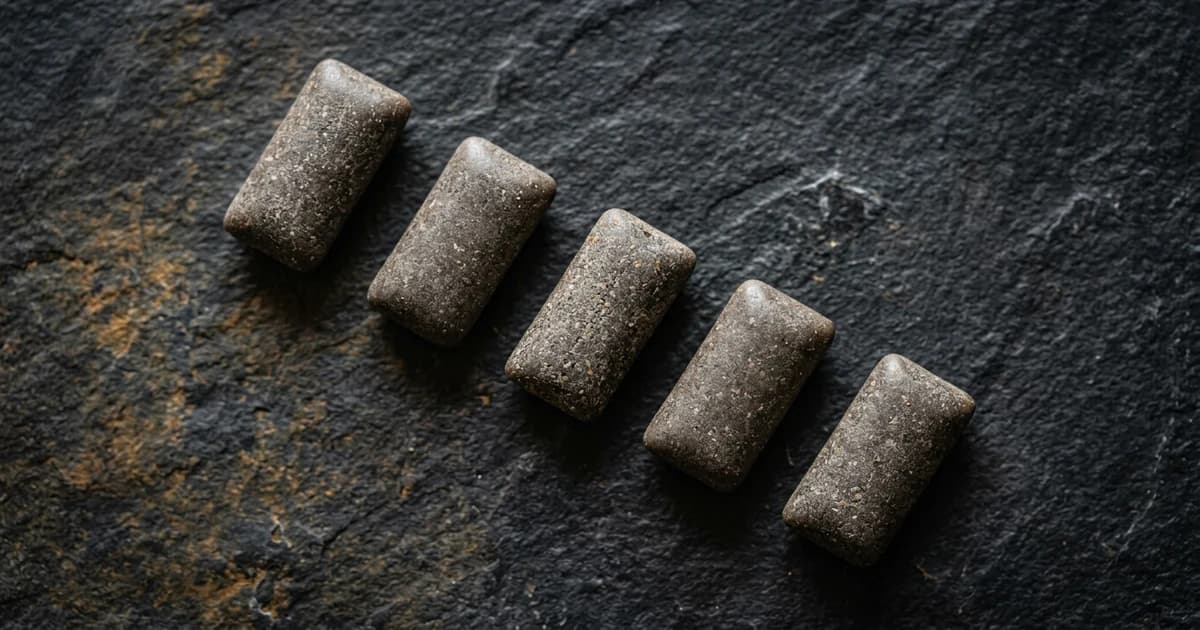
Roon is a zero-nicotine sublingual pouch built for exactly that gap. Each pouch delivers 80 mg caffeine, 60 mg L-theanine, 25 mg methylliberine (Dynamine), and 5 mg theacrine (TeaCrine), the same caffeine-plus-L-theanine pairing studied for focus, with two compounds chosen for a steadier, lower-jitter feel during the focused hours. It's designed to replace the third and fourth coffee, not your bed.
To be clear about what it is and isn't: Roon is a cognitive-performance supplement, not a treatment for fatigue, low testosterone, thyroid issues, or sleep apnea. It will not fix shallow sleep or earn back a skipped rest day. Fix the foundation first, get bloodwork if two clean weeks don't help, and use a focus tool for the hours that demand it. If you want sharper focus without the fourth-cup crash, that's where it fits.
By Roon Team