Winter Blues, Seasonal Depression or Just Tired?
Most people feel something shift when the days get short, a seasonal dip commonly called the winter blues. In a telephone survey of Montgomery County, Maryland, adults, 92% reported noticing seasonal changes in mood and behavior (Kasper et al. 1989). For most, the dip is mild. For roughly 5% of U.S. adults, those changes cross into clinical depression that returns year after year (APA). And for another group, the problem is energy, not mood at all.
Key Takeaways
- Winter blues is the common, mild seasonal dip in mood and energy; it has no clinical diagnosis, and researchers call it subsyndromal seasonal affective disorder.
- SAD is a recurrent major depression with a seasonal pattern, diagnosed after depressive episodes in the same season for at least two consecutive years (NIMH).
- Winter fatigue is an energy-only slump without persistent low mood; morning light and caffeine timing can help.
- If low mood lasts most days for two weeks, or the pattern has appeared two winters running, see a clinician.
Winter Blues vs. Seasonal Depression vs. Winter Fatigue
| Winter blues | Seasonal affective disorder (winter pattern) | Winter fatigue | |
|---|---|---|---|
| What it is | Mild seasonal dip in mood and energy; researchers call it subsyndromal SAD | A type of depression with a recurrent seasonal pattern | Lower energy and afternoon sleepiness without low mood |
| How common | 92% notice seasonal changes; 27% find them a problem (one Montgomery County, MD, survey) | About 5% of US adults (APA); 1.5% to 9% by latitude (Cochrane) | Not measured as a condition |
| Diagnosis | None | Depressive episodes in the same season for at least 2 consecutive years (NIMH) | None |
| How long | Darker months, eases in spring | About 4 to 5 months a year (NIMH); worst in January and February in the US (APA) | Shorter days; clock change makes it worse |
| Daily life | Still functioning | Can interfere with daily functioning (APA) | Still functioning |
| First step | Morning light, routine | See a clinician | Light, sleep, caffeine timing |
Sources: NIMH, American Psychiatric Association, Kasper et al. 1989, Cochrane 2019; checked Oct 2026.
Winter Blues Is a Spectrum, Not a Diagnosis
There is no DSM entry for "winter blues." Researchers call it subsyndromal seasonal affective disorder: seasonal mood shifts that cause discomfort but fall short of major depression. In the Kasper survey, 27% said seasonal changes were a problem, and 4.3% to 10% reached impairment equivalent to SAD patients (Kasper et al. 1989).
Geography matters. Winter SAD and subsyndromal SAD were both more common at more northern latitudes in a four-site U.S. survey (Rosen et al. 1990). Cochrane puts SAD prevalence at 1.5% to 9% depending on latitude (Forneris et al. 2019). Younger people and women are at higher risk (APA).
Winter Blues Symptoms
The mild end: lower mood, less motivation, wanting more sleep, pulling back socially, craving carbohydrates. You still go to work. You do it with less spark.
SAD adds clinical weight. The APA's list includes depressed mood most of the day, loss of interest in activities, worthlessness or guilt, trouble concentrating, and thoughts of death or suicide (APA). The dividing line is function and duration: symptoms most days for two weeks or longer, or the same pattern two winters running, moves past "the blues."
Why Shorter Days Hit Mood
Light is the strongest timekeeper for the circadian clock. When winter trims daylight, internal timing drifts out of sync with the external schedule.
One small study showed this in practice: SAD patients who took a one-hour outdoor walk each morning for one week hit a 50% remission rate (Hamilton scale), versus 25% for a group receiving low-dose artificial light that served mainly as placebo. The walk advanced salivary melatonin timing (Wirz-Justice et al. 1996). It is one small study, but it fits the idea that morning daylight shifts the body clock earlier.
How to Beat the Winter Blues
Morning outdoor light is the simplest intervention with evidence. The Wirz-Justice study showed a one-hour morning walk outperformed sub-therapeutic indoor light in SAD patients over one week (Wirz-Justice et al. 1996). The comparison was sub-therapeutic light, not a true inactive placebo, so interpret accordingly.
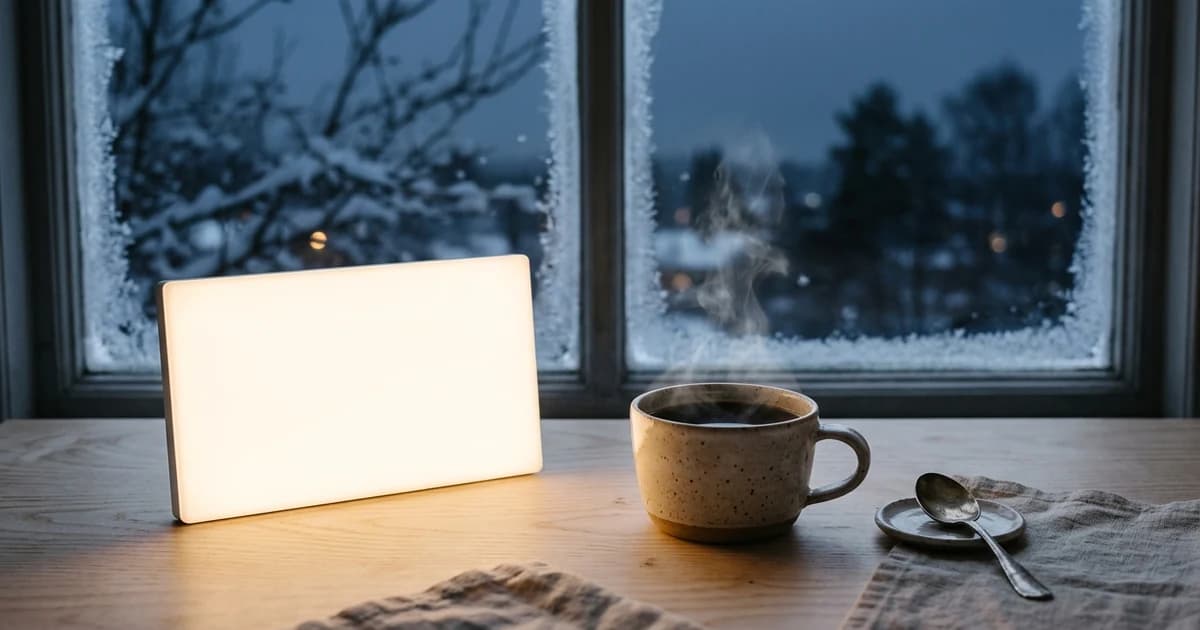
Light boxes are the most-studied tool for SAD. NIMH recommends a 10,000-lux box for about 30 to 45 minutes each morning (NIMH). A meta-analysis of eight RCTs found an effect size of 0.84 (Golden et al. 2005). For the milder, subsyndromal end, one trial (n=48) found both white 10,000-lux and narrow-band blue light lowered depression scores roughly 50% to 55% over 15 days, but with no inactive-light control, placebo cannot be ruled out (Meesters et al. 2016; one author was affiliated with a lighting manufacturer). More on choosing a lamp at do SAD lamps work.
Vitamin D: NIMH states that studies of vitamin D as a SAD treatment have produced mixed results (NIMH). Getting levels checked beats guessing. More at vitamin D, brain fog and focus.
Routine: keep your wake time fixed, exercise during daylight, plan social time rather than waiting to feel like going out.
Is It the Winter Blues or Just Winter Fatigue?
If the problem is energy rather than mood, different tools apply. A 3 p.m. slump that worsens after the clocks change, a heaviness that lifts once you get moving: these point to winter fatigue and the afternoon dip or the daylight saving time energy drop, not a mood disorder.
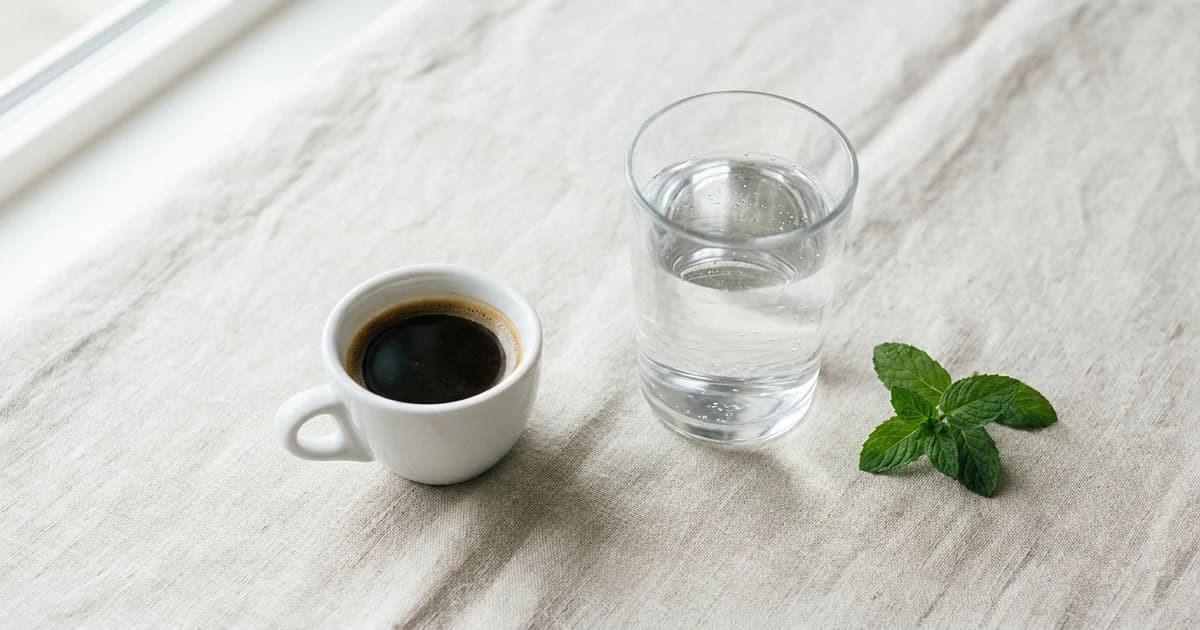
Caffeine sharpens alertness but is not a mood treatment. If sluggishness from the shortened photoperiod is your only complaint, timing caffeine earlier in the day and keeping total intake within 400 mg from all sources (the FDA's daily guideline for healthy adults) makes more practical sense. See how much caffeine is too much.
When to Talk to a Clinician
Seek professional help if you notice:
- Low mood most days for two weeks or longer
- Loss of interest in activities you normally enjoy
- Sleeping or eating far more or far less than usual
- Hopelessness or worthlessness
- The same seasonal pattern two winters in a row
Treatments for diagnosed SAD include light therapy, talk therapy, and antidepressant medication (APA, NIMH).
If you or someone you know is in crisis, call or text 988 (the Suicide and Crisis Lifeline) for free, confidential support.
Light First, Then the Calendar
Winter blues, subsyndromal SAD, and clinical seasonal depression sit on one continuum. The line between discomfort and disorder is drawn by severity, duration, and how much daily life suffers. For most people, morning light and a steady routine carry the darker months. For the smaller group whose symptoms cross into depression, the first step is talking to a clinician.
Related from Roon
- Winter fatigue and the afternoon energy dip
- Do SAD lamps work?
- Daylight saving time and the energy dip
Frequently Asked Questions
Is winter blues the same as SAD?
No. Winter blues is the mild, subclinical seasonal dip most people notice. SAD is a recurrent major depression requiring depressive episodes in the same season for at least two consecutive years (NIMH). About 5% of U.S. adults meet the SAD threshold; the vast majority with seasonal mood changes do not.
When does winter blues start and end?
Symptoms build as daylight shortens in fall and peak in the darkest months. The APA identifies January and February as the hardest in the U.S., with improvement as spring arrives (APA).
Can you have SAD in summer?
Yes, though it is far less common. Kasper et al. found the "feeling worst" pattern showed a winter-to-summer ratio of 4.5 to 1 (Kasper et al. 1989). Summer SAD, unlike winter SAD, was not linked to latitude (Rosen et al. 1990).
Does vitamin D help the winter blues?
The evidence is mixed. NIMH notes studies of vitamin D as a SAD treatment have produced mixed results (NIMH). Getting blood levels checked is a better first step than supplementing blindly.
Does coffee help the winter blues?
Caffeine improves alertness and can counter the sluggishness of shorter days, but it is not a treatment for low mood or depression. If the issue is energy, not persistent sadness, caffeine kept within 400 mg daily from all sources can help afternoons feel more manageable.
For the 4 p.m. Sunset, Not the Low Mood
This article covers mood, and mood belongs to light, routine, and, when needed, a clinician. Roon does not treat seasonal depression or the winter blues.
What Roon addresses is the energy side: the winter afternoon that goes dark around 4:30 and takes your focus with it. Each pouch delivers 80 mg caffeine paired with 60 mg L-theanine, 25 mg methylliberine (Dynamine), and 5 mg theacrine (TeaCrine). Methylliberine slows caffeine clearance: a randomized, double-blind, crossover PK study (n=12) found co-administration extended caffeine's half-life from 7.2 to 15 hours and cut oral clearance from 41.9 to 17.1 L/hr, with no increase in peak concentration (study). That study dosed 100 mg methylliberine with 150 mg caffeine, about 4x and 1.9x the amounts in one pouch, so Roon's felt window of 6 to 8 hours reflects the same mechanism directionally, not the study's exact result. Because the extended clearance means caffeine sticks around, keep your last pouch at least eight hours before you plan to sleep; winter nights are long enough to protect.
Roon starts from $9.16 per tin on a subscription (as little as $0.61 per pouch). If the short days are dragging your energy but not your mood, try Roon.
Sources
- NIMH, "Seasonal Affective Disorder" (NIH Pub. 23-MH-8138, revised 2023)
- American Psychiatric Association, "Seasonal Affective Disorder" (reviewed March 2024)
- Kasper S et al. Arch Gen Psychiatry 1989;46:823-33
- Rosen LN et al. Psychiatry Res 1990;31:131-44
- Forneris CA et al. Cochrane Database Syst Rev 2019
- Wirz-Justice A et al. J Affect Disord 1996;37:109-20
- Golden RN et al. Am J Psychiatry 2005;162:656-62
- Meesters Y et al. BMC Psychiatry 2016;16:27
Written by Roon Team