Why Roon Uses a Caffeine-Forward Ratio of L-Theanine (And When That's Better)
Roon Team
Why Roon Uses a Caffeine-Forward Ratio of L-Theanine (And When That's Better)
Most advice on l-theanine and caffeine tells you to load up on theanine. Take twice as much theanine as caffeine, the internet says, and you'll get smooth focus with none of the edge. It's repeated so often it sounds like settled science.
It isn't. The "2:1 theanine-to-caffeine" rule is a useful starting point, not a law. And for a lot of people, flipping it, running slightly more caffeine than theanine, produces sharper, more usable focus.
Here's the case for a caffeine-forward ratio, what the research actually says, and where the popular advice quietly falls apart.
Key Takeaways
- The famous 2:1 theanine-to-caffeine ratio comes from a small set of studies, not a universal rule.
- A caffeine-forward ratio (more caffeine than theanine) preserves the drive and motivation caffeine provides while still smoothing the jitters.
- The right ratio depends on your goal: deep calm versus alert, energized focus.
- Most products either over-correct toward theanine or skip the supporting compounds that extend the effect.
What the L-Theanine and Caffeine Combination Actually Does
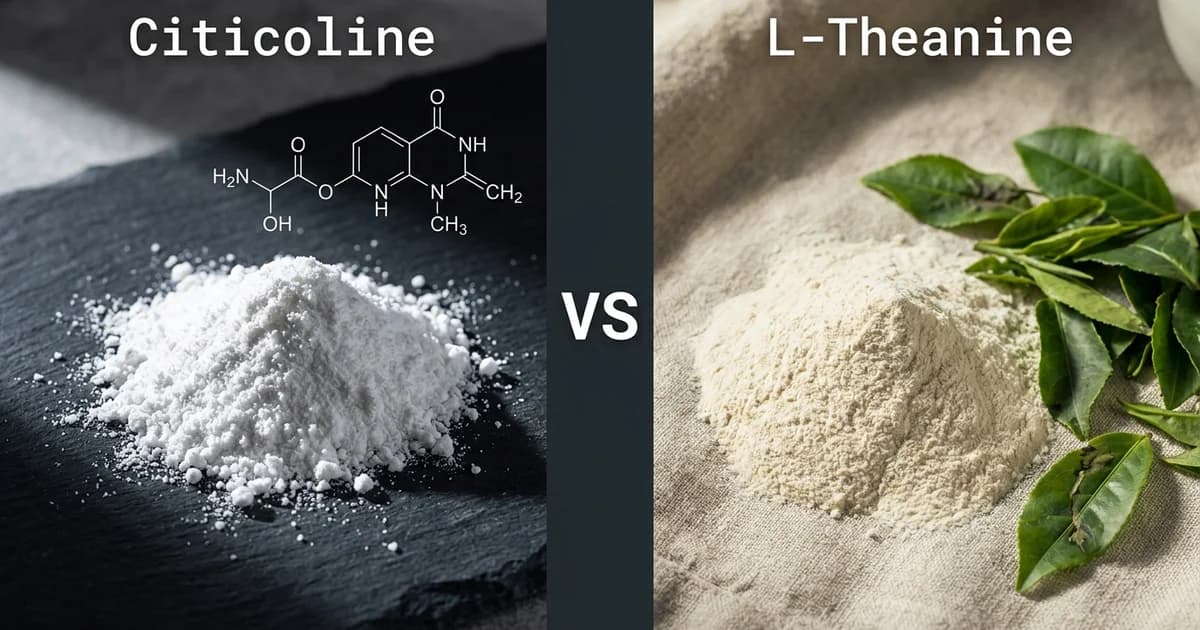
L-theanine is an amino acid found in green tea. Caffeine is a stimulant you already know. Paired together, they do something neither does alone: caffeine raises alertness while theanine takes the rough edges off.
The research on this is solid. A widely cited study found that the combination of L-theanine and caffeine improves cognitive performance and increases subjective alertness, with the biggest gains showing up in attention-switching tasks. A separate double-blind crossover study published in the British Journal of Nutrition found the pairing improved selective attention even in sleep-deprived adults.
The mechanism is the interesting part. Caffeine blocks adenosine, the molecule that makes you feel tired. Theanine raises alpha brain wave activity, the pattern linked to a relaxed but awake state. You stay wired without feeling frayed.
The Origin of the 2:1 Theanine Rule
The "take more theanine than caffeine" advice is real, and it's not wrong. It's just narrow.
Most popular guides converge on the same number. According to Legion Athletics, most studies showing benefits from combining L-theanine with caffeine use a L-theanine-to-caffeine ratio of between 1:1 and 2:1. In other words, if you take 100 mg of caffeine, pair it with 100-to-200 mg of L-theanine. Mind Lab Pro echoes this, pointing to a 2:1 theanine-to-caffeine ratio as the sweet spot most research lands on.
Notice what those numbers describe. They were chosen to maximize calm, to prove that theanine could blunt caffeine's anxiety without killing the alertness. That was the research question. The studies weren't designed to find the ratio that produces the most drive or the most motivation. They were designed to show theanine works.
So the 2:1 number answers one question well: how do I get focus with the least jitter? It says almost nothing about the question most high performers actually have: how do I get the most usable energy?
Why a Caffeine-Forward Ratio Can Work Better
A caffeine-forward ratio keeps the stimulant doing its job while using just enough theanine to file off the spikes. You get the motivation, not just the calm.
Think about what each compound contributes. Caffeine is the engine. It drives alertness, reaction time, and the felt sense of "I want to work." Theanine is the suspension. It smooths the ride. If you pour in so much theanine that it overwhelms the caffeine, you can end up calm and a little flat, relaxed when you wanted to be locked in.
For demanding cognitive work, that flatness is a problem. You don't want to feel mellow during a deadline sprint or a heavy lifting session. You want to feel switched on, with the anxiety dialed down but the drive intact.
This is why a ratio closer to 1:1, or even slightly caffeine-heavy, suits a different goal. The theanine still does its job at 60 to 100mg, which is enough to round off most of caffeine's harshness. You just stop sacrificing the energy you came for.
When theanine-forward still wins
To be fair, the heavier-theanine approach has its place. If your main issue with caffeine is anxiety, a racing heart, or a wired-and-tired feeling, more theanine relative to caffeine helps. People with high caffeine sensitivity, or anyone using the combo late in the day, often do better with the calmer ratio.
The point isn't that one ratio beats the other everywhere. It's that the ratio should match the job.
Matching the Ratio to Your Goal
| Your goal | Better ratio direction | Why |
|---|---|---|
| Deep calm, low anxiety, evening use | Theanine-forward (2:1 theanine:caffeine) | Maximizes the relaxation effect, minimizes stimulation |
| Alert, motivated, deadline focus | Caffeine-forward (roughly 1:1 to 1.3:1 caffeine:theanine) | Keeps drive and reaction time high while still smoothing jitters |
| First-time or caffeine-sensitive user | Theanine-forward, lower total dose | Gentler introduction, less risk of overstimulation |
| Sustained workday focus | Caffeine-forward, paired with longer-acting compounds | Maintains energy without a flat, sedated feeling |
The takeaway is simple. Caffeine + l-theanine is not a single recipe. The "best" caffeine to theanine ratio is the one tuned to what you're trying to do that hour.
How the Popular Products Handle It
Most products built around l-theanine with caffeine make one of two compromises: they either over-correct toward theanine, or they pack in caffeine and skip the smoothing entirely. A few miss the supporting compounds that would extend the effect past the two-hour mark.
Here's an honest look at how some popular options compare, alongside Roon.
| Product | Format | Caffeine | L-Theanine | Other actives | Ratio leaning |
|---|---|---|---|---|---|
| Roon | Sublingual pouch | 80mg | 60mg | Methylliberine (Dynamine) 25mg, Theacrine (TeaCrine) 5mg | Caffeine-forward |
| Magic Mind Original | Liquid shot | ~55mg | Yes (undisclosed dose) | Ashwagandha, turmeric, vitamins C and D | Low-stim, theanine-forward |
| Magic Mind MAXX | Liquid shot | ~165mg | Yes | Higher nootropic blend | Caffeine-heavy, no smoothing focus |
| Generic capsule stack | Capsule | 100mg | 200mg | None | Heavily theanine-forward (2:1) |
| Coffee + theanine DIY | Drink + capsule | ~95mg | 200mg | None | Theanine-forward, imprecise |
Sources: Magic Mind Original lists about 55mg of caffeine (product page), and Magic Mind MAXX lists 165mg of time-release caffeine. Typical DIY and capsule stacks follow the 1:1 to 2:1 ratio guidance repeated across the category.
What's Missing Across These Products
Look at the table and a few gaps show up in almost every option.
Gap 1: The ratio is either too soft or too blunt. The classic 2:1 capsule stack and the low-stim shots lean so far toward theanine, or so low on caffeine, that the drive suffers. The high-caffeine shots swing the other way with little to smooth the spike. Few products sit in the alert-but-calm middle on purpose.
Gap 2: No staying power. Caffeine and theanine both fade within a couple of hours. None of the basic stacks include compounds that extend clean energy across a full work block, which is why the afternoon crash is so common.
Gap 3: Slow, imprecise delivery. Capsules and liquids go through the gut, so onset is slow and doses drift. A DIY coffee-plus-capsule routine is a guess every time.
Gap 4: Filler ingredients you didn't ask for. Some formulas pad the label with turmeric, vitamins, or adaptogens at doses too low to matter, which muddies what's actually doing the work.
The Caffeine-Forward Ratio, Built to Stay Sharp
Roon was designed around the gaps above, not around the 2:1 rule everyone copies.
The ratio is deliberately caffeine-forward: 80mg caffeine and 60mg L-theanine. That's enough theanine to take the edge off, without so much that you go flat. You keep the drive. Then two longer-acting compounds fill the staying-power gap: 25mg methylliberine (Dynamine) and 5mg theacrine (TeaCrine), which extend clean energy past the point where plain caffeine fades.
The format closes the delivery gap. It's a sublingual pouch, so absorption starts in 5 to 10 minutes instead of waiting on digestion. The result is built for a 6 to 8 hour window of focus with no jitters, no crash, and no tolerance buildup from daily use.
Roon is not a substitute for sleep, and it won't fix a broken schedule. No pouch does that. What it does is give you a tuned, caffeine-forward version of the l-theanine and caffeine pairing instead of a generic theanine-heavy guess. If you want a deeper look at the supporting compounds, our breakdowns on what Dynamine actually does and how theacrine resists tolerance go further.
The Bottom Line on Ratio
The 2:1 theanine-to-caffeine rule isn't wrong. It's just an answer to one specific question: how do I stay calm on caffeine? If that's your goal, follow it.
But if your goal is sharp, motivated, sustained focus, a caffeine-forward ratio usually serves you better. You preserve the drive caffeine gives you and use theanine as a smoothing agent, not a sedative. Match the ratio to the task, and the combination does far more than either compound alone.
Frequently Asked Questions
What is the best ratio of L-theanine to caffeine?
There isn't one universal number. Most research lands between a 1:1 and 2:1 theanine-to-caffeine ratio for calm focus. If you want alert, motivated focus instead, a caffeine-forward ratio of roughly 1:1 to 1.3:1 caffeine-to-theanine tends to work better because it keeps caffeine's drive intact while theanine smooths the edges. The right ratio depends on whether you're optimizing for calm or for energy.
Why would more caffeine than theanine ever be better?
Caffeine supplies the alertness, reaction speed, and motivation. Theanine mostly smooths the experience. If you use too much theanine, you can feel calm but flat. A caffeine-forward ratio keeps you switched on for demanding work while still using enough theanine, around 60mg, to round off the jitters. It's about preserving the energy you actually wanted.
Does L-theanine cancel out caffeine?
No. L-theanine doesn't block caffeine or reduce its alertness benefits. It works alongside caffeine, raising alpha brain wave activity linked to relaxed focus. Studies on the combination show improved attention and alertness compared to caffeine alone. Theanine reduces the unwanted side effects like jitters and a racing heart without erasing the stimulant effect you're after.
How much L-theanine should I take with caffeine?
Most studies use 100 to 200mg of L-theanine paired with 50 to 100mg of caffeine. For a caffeine-forward approach aimed at alert focus, something closer to 60mg of theanine per 80mg of caffeine still smooths the edge while keeping the drive. Start on the lower end, especially if you're sensitive to stimulants, and adjust based on how you respond.
Is caffeine + L-theanine safe to take daily?
For most healthy adults, daily use at moderate doses is well tolerated, and theanine helps reduce the side effects caffeine can cause on its own. Total daily caffeine under about 400mg is the common guideline. That said, this isn't medical advice. If you're pregnant, take medication, or have a heart condition, check with a clinician before making it a daily habit.
Why do some products add Dynamine and TeaCrine?
Methylliberine (Dynamine) and theacrine (TeaCrine) are caffeine-adjacent compounds that act on similar pathways but last longer and tend to resist tolerance buildup. Adding them to a caffeine and L-theanine base extends the clean-energy window past the two-hour mark where plain caffeine starts to fade, which helps avoid the mid-afternoon crash without piling on more caffeine.
The Caffeine-Forward Pouch for People Who Want Drive, Not Just Calm
If you've tried the standard 2:1 theanine stack and felt calm but a little checked out, the ratio was working against your goal. That's the exact problem Roon was built to solve.
Roon runs a caffeine-forward ratio on purpose: 80mg caffeine and 60mg L-theanine, enough theanine to kill the jitters without flattening the drive. Then 25mg methylliberine (Dynamine) and 5mg theacrine (TeaCrine) extend the effect, and the sublingual pouch starts working in 5 to 10 minutes instead of waiting on digestion. It's tuned for a 6 to 8 hour focus window with no crash and no tolerance creep.
It won't replace sleep or a real routine. Nothing in a tin can. But if you want the alert, motivated side of l-theanine with caffeine rather than the sedated version, try Roon and feel the difference a ratio makes.
Written by Roon Team