Caffeine + Citicoline vs Caffeine + L-Theanine: Which Focus Pouch Formula Is Right for You?
Roon Team
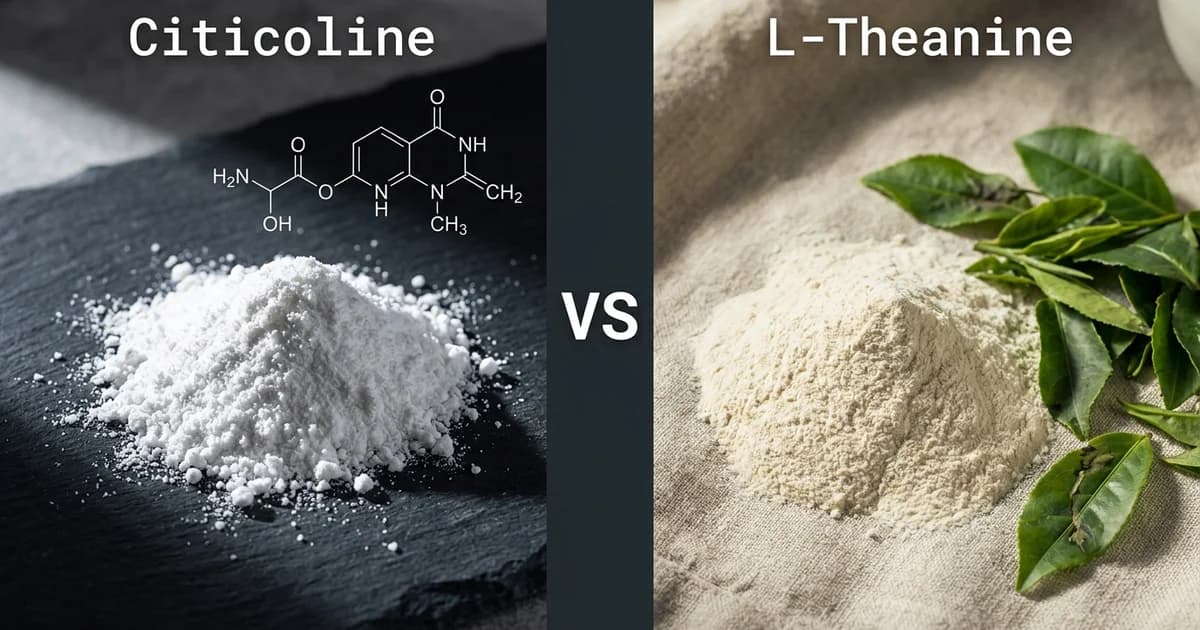
Caffeine + Citicoline vs Caffeine + L-Theanine: Which Focus Pouch Formula Is Right for You?
Two stacks dominate the focus pouch shelf, and they solve different problems. The citicoline vs choline debate is really a question about what kind of cognition you want: raw building blocks for your brain's hardware, or a tuned signal that sharpens attention right now.
Caffeine plus citicoline leans toward long-term brain support. Caffeine plus L-theanine leans toward clean, same-session focus without the jitters. Most buyers pick one without understanding the trade-off they just made.
This guide breaks down both formulas, the science behind each ingredient, what the current pouch brands actually contain, and where every option leaves a gap.
Key Takeaways
- Citicoline is a choline source that doubles as a precursor for acetylcholine and membrane phospholipids. Its strongest evidence is for sustained attention over weeks, not minutes.
- L-theanine + caffeine has the cleaner acute-focus evidence: faster, calmer attention within an hour, with less of the caffeine edge.
- Most focus pouches force a choice: citicoline brands often underdose caffeine, while pure caffeine-theanine products skip the longer-acting compounds that keep you steady past hour three.
- The smartest formula combines a working caffeine dose, L-theanine to smooth it, and slow-clearing alkaloids to extend the window.
What Is Citicoline, and How Is It Different From Choline?
Citicoline is choline with an upgrade. Chemically known as CDP-choline, it delivers choline plus cytidine, which the body converts to uridine, and both feed into building brain cell membranes and the neurotransmitter acetylcholine.
Plain choline (the kind in eggs, or as choline bitartrate in cheap supplements) is just the raw mineral-like nutrient. Your body uses it for the same pathways, but citicoline is the more bioavailable, brain-targeted delivery vehicle. That distinction sits at the center of the citicoline vs choline question.
Here is why it matters for focus. Acetylcholine is the neurotransmitter most tied to attention and learning. Citicoline supports the supply chain for that system, while also helping maintain the integrity of neuronal membranes.
The catch: this is slow-burn support, not a fast switch.
What the citicoline research actually shows
The strongest data comes from trials on Cognizin, the branded citicoline used in most premium pouches. In a 12-week randomized, double-blind, placebo-controlled trial, healthy adults with poor sustained attention showed improvements in sustained attention, mental energy, reaction time, and information processing speed compared to placebo.
A separate 28-day trial in healthy women aged 40 to 60 found that 250 mg and 500 mg daily doses reduced errors on a validated attention test.
Read those timelines again. Twelve weeks. Twenty-eight days. Citicoline is a daily-habit ingredient that pays off with consistency, not a compound you take 20 minutes before a deadline and feel kick in.
There is also a practical gap behind the appeal. Roughly only about 10% of Americans meet the adequate intake for choline, so supplementing fills a real dietary shortfall for a lot of people.
What Is the Caffeine + L-Theanine Stack, and Why Do People Swear By It?
Caffeine plus L-theanine is the most studied focus combination in the nootropic world, and its appeal is speed. You feel it the same session, and the theanine takes the sharp edges off the caffeine.
Caffeine blocks adenosine, the molecule that makes you feel tired, which raises alertness. L-theanine, an amino acid from tea, nudges you toward a calm, alert state and tempers the overstimulation. Together they cover each other's weaknesses.
What the L-theanine and caffeine research shows
The acute evidence is solid. In the well-cited Owen et al. study, 100 mg of L-theanine with 50 mg of caffeine improved subjective alertness, speed and accuracy on an attention-switching task, and reduced susceptibility to distraction, compared to placebo.
More recent work pushed the dose higher. A 2025 double-blind crossover study published in the British Journal of Nutrition found that a high-dose l-theanine and caffeine combination improved selective attention in acutely sleep-deprived young adults.
The trade-off is duration. Caffeine has a half-life of several hours, but the smooth, focused feeling from this stack tends to fade well before the caffeine fully clears, which is why people reach for a second dose and risk an afternoon crash.
Citicoline vs Choline vs L-Theanine: The Side-by-Side
Here is how the two pouch approaches compare on the things that actually decide your purchase. The citicoline vs choline distinction matters here too: when a pouch lists "choline," check whether it is true citicoline or a cheaper bitartrate.
| Factor | Caffeine + Citicoline | Caffeine + L-Theanine |
|---|---|---|
| Primary benefit | Long-term attention and brain cell support | Fast, calm, same-session focus |
| Onset | Builds over days to weeks | Within 30 to 60 minutes |
| Best evidence | 12-week and 28-day attention trials | Acute attention and alertness trials |
| Jitter control | Indirect (depends on caffeine dose) | Direct (theanine smooths caffeine) |
| Crash risk | Tied to caffeine dose | Lower, but fades before caffeine clears |
| Who it suits | Daily users wanting cumulative support | People who need to lock in for one block |
Neither column wins outright. They answer different questions. The mistake is assuming a citicoline pouch will feel like a theanine pouch in the first hour, or that a theanine pouch will keep building your baseline over months.
The Current Focus Pouch Lineup
The pouch market has split along these exact lines. Here is what the main players actually put in the tin.
| Product | Key Actives | Caffeine | Format | Notes |
|---|---|---|---|---|
| Roon | 80 mg caffeine, 60 mg L-theanine, 25 mg Dynamine, 5 mg TeaCrine | 80 mg | Sublingual pouch | 5 to 10 min onset, built for a 6 to 8 hr no-crash window |
| Nectr Focus | 62.5 mg Cognizin citicoline, L-theanine (2:1), B vitamins | 30 mg | Sublingual pouch | Citicoline-led, light on caffeine; about $4.99 per 20-tin |
| Dialed In | Citicoline, N-acetyl L-tyrosine, L-theanine, theobromine, guarana | From guarana | Chewing gum | Broad blend, caffeine from guarana rather than a measured dose |
| NZE Focus | Citicoline, L-theanine, Bacopa monnieri, inulin | None in Focus line | Pouch | No caffeine; memory and gut angle; about $34.99 per 75 |
A few honest notes. Nectr is transparent and affordable, and its citicoline dose is calibrated for sublingual absorption, but 30 mg of caffeine is a light pour for anyone with a real tolerance. Dialed In packs a wide ingredient list into a gum, though guarana-based caffeine makes the actual dose harder to pin down. NZE adds Bacopa and a prebiotic fiber, but its Focus line skips caffeine entirely, so it cannot drive same-session alertness on its own.
What's Missing Across All of These
Run the lineup together and the same gaps repeat.
Gap 1: The caffeine is often too low to feel. Citicoline-led pouches tend to keep caffeine at 30 mg or below, or rely on guarana. That undersells the most reliable acute-focus ingredient in the tin. If you drink coffee, 30 mg barely registers.
Gap 2: Citicoline-only formulas miss the fast onset. Citicoline's evidence is cumulative. A pouch built around it can support your baseline, but it will not give you the in-the-moment lift that the caffeine-theanine data supports.
Gap 3: Theanine-only stacks fade too early. Caffeine plus L-theanine works, but the focused feeling drops off before the caffeine fully clears. That mid-afternoon dip is the gap that sends people back for a second pouch and into a crash.
Gap 4: Nobody extends the window cleanly. Most formulas stop at caffeine and one supporting compound. None of the citicoline or simple theanine pouches add slow-clearing alkaloids that stretch the effect past hour three without piling on more caffeine.
That last gap is the interesting one, because it points at a different design entirely.
The Stack Built to Close the Window, Not Just Open It
The gaps above are not random. They come from picking one mechanism and stopping there. Roon was designed around the opposite idea: combine a caffeine dose you can actually feel, the L-theanine that the strongest acute research pairs it with, and two slow-clearing compounds to hold the focus open.
Each Roon pouch carries 80 mg caffeine, 60 mg L-theanine, 25 mg methylliberine (Dynamine), and 5 mg theacrine (TeaCrine). The caffeine and L-theanine cover the fast, calm focus the research backs. Methylliberine and theacrine are caffeine-adjacent alkaloids that clear slowly, which is how the formula targets a 6 to 8 hour window instead of a 90-minute spike. The sublingual format puts onset in the 5 to 10 minute range.
Roon is not a citicoline product, and that is a deliberate choice. If your goal is cumulative, weeks-long choline support, a dedicated citicoline supplement is the better tool, and stacking the two is reasonable. Roon is built for the acute side of the equation: feel it fast, stay level for hours, skip the crash. You can read more at takeroon.com.
Conclusion
The citicoline versus L-theanine choice is not about which ingredient is better. It is about what you are optimizing for. Citicoline is a slow, daily investment in attention and brain cell health, with its best evidence measured in weeks. Caffeine plus L-theanine is the proven play for fast, calm focus inside a single work block.
The weakness shared across the current pouch market is timing and dose. Citicoline formulas underplay caffeine and skip the quick lift. Simple theanine stacks deliver the lift but let it fade too soon. Match the formula to the job, and if you need both fast onset and a long, level window, look for a stack that was actually engineered to hold focus open rather than just switch it on.
Frequently Asked Questions
Is citicoline better than regular choline?
For brain-focused goals, yes, citicoline is generally the better-absorbed option. It delivers choline plus cytidine, supports acetylcholine production, and helps maintain neuronal membranes. Plain choline sources like choline bitartrate cover the same nutrient need more cheaply but with lower brain bioavailability. If you are choosing the best citicoline supplement for cognitive support specifically, branded forms with published human trials are the safer pick over generic choline.
How long does citicoline take to work?
Citicoline is a cumulative ingredient, not an instant one. The clinical trials showing attention benefits ran 28 days to 12 weeks of daily use. Some people report subtle same-day effects, but the published evidence points to consistent daily intake before the attention and processing-speed benefits show up. Treat it like a long-term habit rather than a pre-deadline tool.
Does L-theanine cancel out caffeine?
No. L-theanine does not block caffeine's alertness; it smooths it. The combination raises focus and subjective alertness while reducing the jittery, overstimulated feeling caffeine can cause on its own. That is why l-theanine and caffeine is the most popular focus pairing. You still get the energy, just with a calmer, more controlled edge.
What is the best ratio of L-theanine to caffeine?
Many products use a 2:1 ratio of L-theanine to caffeine, while a lot of the research used closer to 2:1 or 1:1 at lower doses. There is no single perfect number. What matters more is that the caffeine dose is high enough to feel and the theanine is present in a meaningful amount to balance it. A formula with 60 mg L-theanine to 80 mg caffeine sits in a workable, real-world range.
Can I take citicoline and caffeine plus L-theanine together?
Yes, and they target different goals, so stacking is logical. Citicoline handles the slow, cumulative attention and membrane support, while caffeine plus L-theanine handles the fast, same-session focus. Many people take a daily citicoline supplement and use a caffeine-theanine product when they need to lock in. Keep total daily caffeine within a sensible range and check with a clinician if you have any conditions.
Why do some focus pouches use such low caffeine?
Citicoline-led pouches often keep caffeine at 30 mg or lower to position themselves as gentle nootropics rather than energy products. That works for caffeine-sensitive users, but anyone with a coffee habit may not feel 30 mg at all. If you want the acute focus that the research supports, a working caffeine dose closer to 80 mg paired with L-theanine is more likely to deliver a noticeable effect.
Do focus pouches cause jitters or a crash?
It depends on the formula. High caffeine with nothing to balance it can cause jitters and a later crash. L-theanine reduces the jitters, and slow-clearing compounds like methylliberine and theacrine can soften the drop-off by extending the active window. The crash usually comes from a fast caffeine spike with no support behind it, not from the caffeine itself.
Where a Caffeine-Theanine Stack Wins, and Where It Needs Backup
This whole comparison comes down to timing. Citicoline plays the long game; caffeine plus L-theanine wins the next two hours. The problem in the current market is that the fast option fades before the caffeine clears, and the citicoline option never gives you the quick lift in the first place.
Roon was built for that fast-but-fading gap. Its four ingredients, 80 mg caffeine, 60 mg L-theanine, 25 mg Dynamine, and 5 mg TeaCrine, pair a caffeine dose you can feel with L-theanine to smooth it, then add two slow-clearing alkaloids to hold focus across a 6 to 8 hour window. The sublingual pouch puts onset around 5 to 10 minutes.
To be clear about what it is not: Roon is not a citicoline supplement and not a replacement for sleep, food, or a daily choline habit if cumulative brain support is your goal. It is the acute-focus layer, engineered so the focus does not quit on you at hour three. If that is the gap you keep hitting, try Roon.
Written by Roon Team