Dynamine Supplement
Dynamine Supplement: What the Science Actually Says About Methylliberine
Short answer: Dynamine is the trade name for methylliberine, a purine alkaloid structurally related to caffeine that improves mood, concentration, and motivation in published human trials. It has a half-life of roughly 1 to 1.5 hours, works fastest when stacked with caffeine and theacrine, and showed no effect on heart rate or blood pressure over four weeks of daily use. Roon uses 25mg of methylliberine (Dynamine) alongside 80mg caffeine, 60mg L-theanine, and 5mg theacrine in a zero-nicotine sublingual pouch built around exactly this stacking logic.
Your pre-workout label lists it. Your favorite nootropic stack guide includes it. But what does a dynamine supplement actually do inside your brain, and is the hype backed by real data?
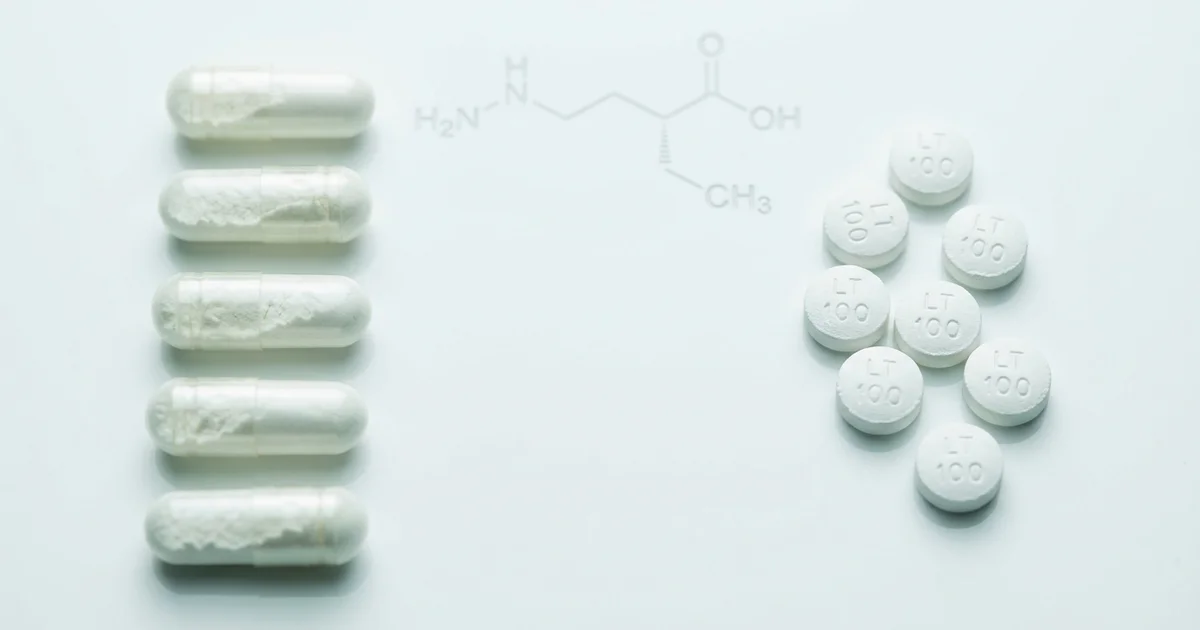
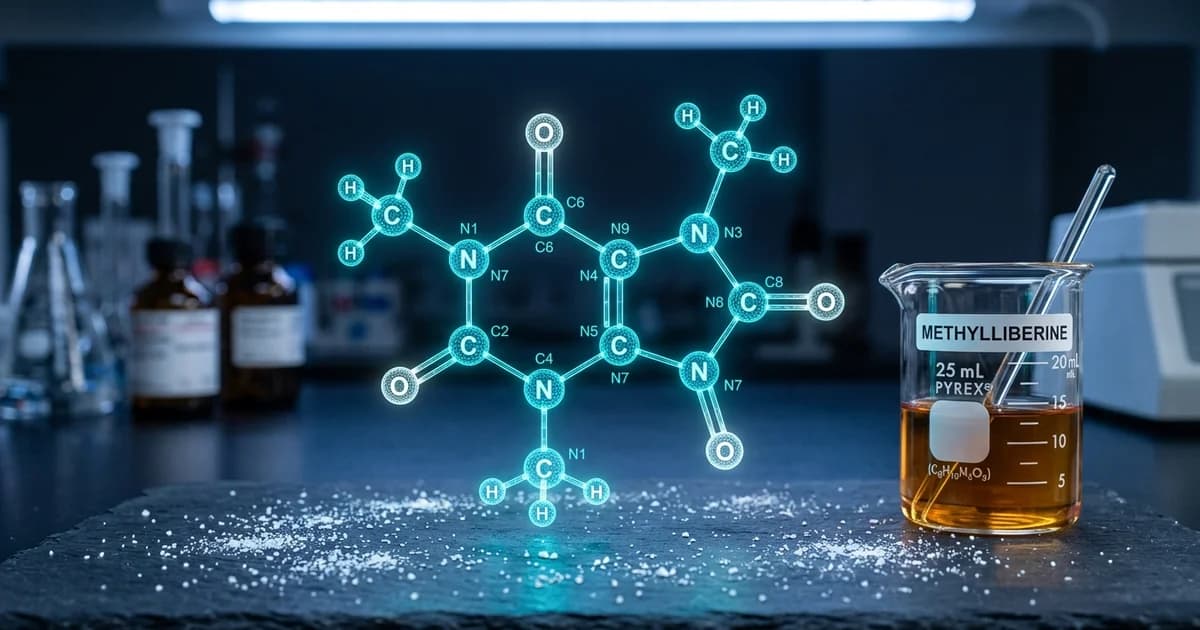
Methylliberine (chemical name: 2-methoxy-1,7,9-tetramethyluric acid) is a purine alkaloid found naturally in kucha tea leaves, certain coffee species, cocoa, and yerba mate. It belongs to the same chemical family as caffeine and theacrine, which means it acts on the same neural pathways. But the similarities only go so far. A dynamine supplement hits faster, clears your system sooner, and extends caffeine's duration in ways that caffeine alone does not.
Here is what the published research tells us, what it does not, and why the dynamine supplement category matters for anyone exploring nootropics for energy and cognitive performance.
Key Takeaways:
- Methylliberine (Dynamine) is a purine alkaloid with a half-life of roughly 1 to 1.5 hours, peaking in plasma within 36 to 54 minutes.
- A 2023 clinical trial found that 100mg of methylliberine improved concentration and mood for up to three hours in 25 healthy adults.
- Co-administering methylliberine with caffeine roughly doubles caffeine's half-life, from about 7 hours to 15 hours, without increasing the dose.
- Four-week safety data in 125 young adults showed no adverse effects on heart rate, blood pressure, or blood biomarkers.
- A toxicological evaluation found no genotoxicity and set no-adverse-effect thresholds well above typical supplement doses.
| Compound | Half-life | Onset to peak | Roon dose per pouch | Role in the stack |
|---|---|---|---|---|
| Methylliberine (Dynamine) | ~1 to 1.5 hr | ~0.6 to 0.9 hr | 25mg | Fast-onset activator |
| Caffeine | ~5 hr (NIH) | ~0.5 to 1 hr | 80mg | Primary stimulant |
| Theacrine (TeaCrine) | ~16 to 20 hr | slow build | 5mg | Long-tail support |
| L-theanine | ~1 to 3 hr | ~0.5 to 1 hr | 60mg | Smooths the caffeine curve |
| Nicotine | n/a | n/a | 0mg | None; Roon is zero-nicotine |
How Does a Dynamine Supplement Work in the Brain?
Methylliberine is believed to act as an adenosine receptor antagonist, the same mechanism caffeine uses to block sleepiness, while also influencing dopamine signaling. The dopamine piece is what dynamine supplement users describe as improved motivation and mood, not just alertness. Its chemical structure (C₁₁H₁₄N₄O₃) is nearly identical to caffeine's, which is why the two compounds share target pathways.
One important caveat: as of the most recent literature reviews, no direct receptor-binding study has confirmed methylliberine's mechanism in humans. The adenosine antagonism hypothesis is based on structural similarity to caffeine and theacrine, plus observed effects in preclinical models. That is a reasonable inference from well-characterized structure-activity relationships in the purine alkaloid family, not a certainty.
Why Does Methylliberine Act So Much Faster Than Caffeine?
A pharmacokinetic study published in the Journal of Exercise and Nutrition measured methylliberine's half-life at 1 to 1.4 hours in humans, with peak plasma concentration reached in about 0.6 to 0.9 hours (36 to 54 minutes). Compare that to caffeine's mean half-life of approximately 5 hours or theacrine's half-life of approximately 16 to 20 hours.
This makes methylliberine the sprinter of the purine alkaloid family. Fast onset, short duration. On its own, that might seem like a disadvantage. But stacked with longer-acting compounds, it fills a specific role: providing the initial kick while caffeine and theacrine sustain the effect over hours.
What Does the Clinical Evidence Show for Dynamine Supplements?
Published clinical trials show that methylliberine reliably improves subjective focus, mood, and motivation, but does not raise raw cognitive test scores on its own. The research is young but consistent across multiple study designs.
Does Dynamine Improve Focus and Mood?
A 2023 double-blind, randomized crossover trial published in Nutrients tested 100mg of methylliberine against placebo in 25 healthy adults. The results:
- Concentration improved at 1 hour and 3 hours post-ingestion
- Mood improved at 1, 2, and 3 hours post-ingestion
- Motivation improved at the 3-hour mark
- Cognitive function (measured by standardized tests) did not show statistically significant improvement
That last point matters. A dynamine supplement improves how you feel while working, specifically your subjective sense of focus, drive, and well-being, without boosting raw cognitive processing speed on its own. Feeling sharper and actually processing information faster are two different things. Methylliberine does the first reliably. For the second, you need a stack.
Is a Dynamine Supplement Safe?
A 2020 study from Kennesaw State University, published in Nutrients, examined four weeks of methylliberine supplementation both alone and combined with theacrine in 125 young adults. The results showed no adverse effects on heart rate, heart rhythm, blood pressure, or blood biomarkers.
This is a meaningful finding. Many stimulant compounds that act on adenosine receptors also raise blood pressure or heart rate. Methylliberine did neither, even over a month of daily use. The study was funded by Compound Solutions (the manufacturer of Dynamine), a detail that deserves transparency, though the research was conducted through Kennesaw State's grants office with no financial ties between the authors and the product.
A separate toxicological evaluation published in the Journal of Toxicology found no genotoxicity in bacterial reverse mutation, chromosomal aberration, or mammalian micronucleus assays, and a 90-day rat study set no-observed-adverse-effect levels well above typical human supplement doses.
Does Methylliberine Make Caffeine Last Longer?
Yes. The Journal of Exercise and Nutrition pharmacokinetic study found that co-administering methylliberine with caffeine roughly doubled caffeine's half-life, from about 7.2 hours to approximately 15 hours, while decreasing caffeine's oral clearance from 41.9 L/hr to 17.1 L/hr. Methylliberine's own pharmacokinetics were unaffected by caffeine.
In practical terms: adding methylliberine to a caffeine-containing formula extends caffeine's duration without increasing the dose. You get a longer ride from the same amount of caffeine. This is likely due to methylliberine inhibiting CYP1A2, the liver enzyme primarily responsible for caffeine metabolism, though the exact mechanism is still being characterized.
What Dose of Dynamine Do the Studies Use?
Most published studies use 100mg of methylliberine as the standalone dose. In combination formulas, the dose drops because the compound works alongside caffeine and theacrine rather than carrying the load alone. The clinical literature spans 25mg to 100mg of methylliberine in multi-ingredient stacks.
| Study | Methylliberine Dose | Caffeine Dose | Theacrine Dose | Key Finding |
|---|---|---|---|---|
| La Monica et al. 2023 (Nutrients) | 100mg | None | None | Improved mood, concentration, motivation in 25 adults |
| Tartar et al. 2021 (Cureus) | 75mg | 125mg | 50mg | Improved cognitive performance and reaction time in 50 male egamers |
| Hartshorn et al. 2022 (J Exerc Nutr) | Included | Included | Included | Methylliberine doubles caffeine half-life |
| Cintineo et al. 2022 (JISSN) | 100mg | 150mg | 50mg | Similar vigilance benefits to double the caffeine dose alone in tactical personnel |
| Wang et al. 2020 (Nutrients) | Up to 100mg | None | Up to 50mg | No adverse cardiovascular or blood biomarker effects over 4 weeks in 125 adults |
The pattern across dynamine supplement studies is clear: methylliberine works best as part of a multi-ingredient formula, not as a solo act. Roon uses 25mg per pouch, at the lower end of the range seen in multi-ingredient research, paired with 80mg caffeine, 60mg L-theanine, and 5mg theacrine.
Who Should Consider a Dynamine Supplement?
Based on the available evidence, a dynamine supplement is best suited for four specific use cases.
You want faster onset from your cognitive support stack. Caffeine alone takes 30 to 60 minutes to peak. Adding methylliberine brings subjective effects forward to roughly 36 to 54 minutes, with users reporting an initial "lift" that carries into caffeine's longer curve.
You are sensitive to high caffeine doses. Because methylliberine extends caffeine's half-life, you can use less caffeine and still get prolonged effects. The Cintineo et al. 2022 tactical personnel study showed that 150mg caffeine combined with 100mg methylliberine and 50mg theacrine matched the vigilance benefits of 300mg caffeine alone, without the same blood pressure increase.
You need sustained mood and motivation, not just raw stimulation. The data consistently shows dynamine's strongest effects on subjective well-being, mood, and concentration rather than pure cognitive speed.
You already use a caffeine-theacrine stack and want the formula optimized. Methylliberine fills the gap between caffeine's moderate onset and theacrine's very slow, very long curve.
What Can a Dynamine Supplement NOT Do?
Honesty matters here. Three things the current data does not support:
It will not replace caffeine. Methylliberine's half-life is too short (roughly 1 to 1.5 hours) to provide sustained energy on its own. It is an enhancer and an accelerator, not a standalone stimulant.
It has not been shown to improve raw cognitive test scores. The 2023 Nutrients study found improvements in subjective measures (mood, concentration, motivation) but not in objective cognitive function tests. This does not mean a dynamine supplement is useless for performance. Feeling focused and motivated has real value. But if someone claims methylliberine will make you "smarter," the data does not support that.
Long-term data is limited. The longest published safety study is four weeks. That is reassuring for short-term use, but it is not the same as years of data. Caffeine has decades of research behind it. The dynamine supplement category has a handful of studies.
Why Does a Dynamine Supplement Work Better in a Stack?
Every published study that found cognitive performance benefits (not just mood benefits) used methylliberine as part of a combination with caffeine and theacrine. This is not a coincidence.
The three compounds occupy different pharmacokinetic windows. A dynamine supplement peaks fast and clears in about 90 minutes. Caffeine peaks in 30 to 60 minutes and lasts roughly 5 hours on average. Theacrine takes longer to build but sustains for 16 to 20 hours. Layer them together, and you get a smooth onset that carries through hours of sustained focus without the sharp peak-and-crash pattern of caffeine alone.
The egamer study demonstrated this directly: the caffeine-Dynamine-TeaCrine combination (125mg + 75mg + 50mg) improved both cognitive performance and reaction time in 50 male egamers without increasing anxiety. Caffeine alone improved some measures but with slightly less favorable mood outcomes.
Adding L-theanine to this stack addresses another problem. A 2025 double-blind crossover trial found that combining L-theanine with caffeine improved selective attention in sleep-deprived adults, confirming the well-established role of L-theanine in smoothing caffeine's stimulant edge while preserving alertness.
This is the logic behind modern nootropic formulation. You do not just pick the "best" single ingredient. You build a time-release curve using compounds with complementary pharmacokinetics, and methylliberine serves as the fast-acting front end of that curve.
The Science Is Real, but Know Its Limits
Methylliberine is a fast-acting purine alkaloid with real, if modest, clinical evidence behind it. It improves mood, concentration, and motivation. It extends caffeine's useful life. And it does all of this without raising heart rate or blood pressure in published trials covering up to four weeks of daily use.
The research also has boundaries. Long-term safety data does not exist yet. The adenosine-receptor mechanism is inferred, not confirmed in human binding studies. And standalone methylliberine does not improve objective cognitive test scores. These are honest limits worth knowing, not dealbreakers.
What the evidence does tell us clearly: methylliberine belongs in a combination formula, not on its own.
Related from Roon
- Methylliberine Benefits, Dosage, and Safety Guide
- Nootropic Stack Guide: All-Day Cognitive Endurance
- Nootropics for Energy: Complete Guide
Frequently Asked Questions
Is Dynamine the same as methylliberine?
Yes. Dynamine is the trademarked, branded form of methylliberine, manufactured by Compound Solutions. Methylliberine itself is a purine alkaloid found naturally in kucha tea leaves, certain coffee species, cocoa, and yerba mate, in the same chemical family as caffeine and theacrine. When a supplement label lists Dynamine, it is listing methylliberine. The two names are interchangeable: one is the ingredient, the other is the brand it is sold under.
Is a Dynamine supplement safe?
In published research, methylliberine showed no adverse effects on heart rate, blood pressure, or blood biomarkers over four weeks of daily use in 125 young adults. A separate toxicological evaluation found no genotoxicity and set no-adverse-effect thresholds well above typical supplement doses. The caveat is duration: human safety data covers weeks, not years, so the honest read is well-tolerated in the short term rather than proven over decades.
How is Dynamine different from caffeine?
Dynamine is believed to act on the same adenosine receptors that caffeine blocks to promote wakefulness, but it moves much faster. Methylliberine peaks in under an hour and clears with a half-life near 1 to 1.5 hours, while caffeine's mean half-life is roughly 5 hours. That speed makes Dynamine a fast-onset front end rather than a replacement for caffeine's longer, steadier curve. Most formulas use the two together for that reason.
Does Dynamine make caffeine last longer?
Yes. In a human pharmacokinetic study, co-administering methylliberine with caffeine roughly doubled caffeine's half-life, from about 7.2 hours to 15 hours, while leaving methylliberine's own kinetics unchanged. The likely reason is that methylliberine slows CYP1A2, the liver enzyme that clears caffeine. In practice, adding Dynamine to a caffeine formula extends the duration without raising the caffeine dose.
What is a typical Dynamine dose?
Standalone studies generally use 100mg of methylliberine. In combination formulas the dose drops because the compound works alongside caffeine and theacrine rather than carrying the load alone: published stacks have used 75 to 100mg of Dynamine with 125 to 150mg of caffeine. Roon uses 25mg of methylliberine per pouch, paired with 80mg caffeine, 60mg L-theanine, and 5mg theacrine, which fits the lower end seen in multi-ingredient research.
Will a Dynamine supplement make me sharper?
It depends what you mean by sharper. In a 2023 randomized crossover trial, 100mg of methylliberine improved subjective concentration, mood, and motivation in 25 adults, but did not raise scores on objective cognitive tests. Dynamine reliably changes how focused and driven you feel, without measurable gains in raw processing speed on its own. For objective performance benefits, the research points to multi-ingredient stacks, not methylliberine alone.
Does Dynamine cause a crash or jitters?
In published trials, methylliberine did not raise heart rate or blood pressure, and its short half-life means it leaves the system quickly rather than producing a long stimulant tail. Most jitters people blame on a pre-workout come from high caffeine doses, not from Dynamine. Pairing it with L-theanine, as Roon does at 60mg per pouch, is a well-studied way to smooth caffeine's edge while keeping the alertness.
How much Dynamine does Roon contain?
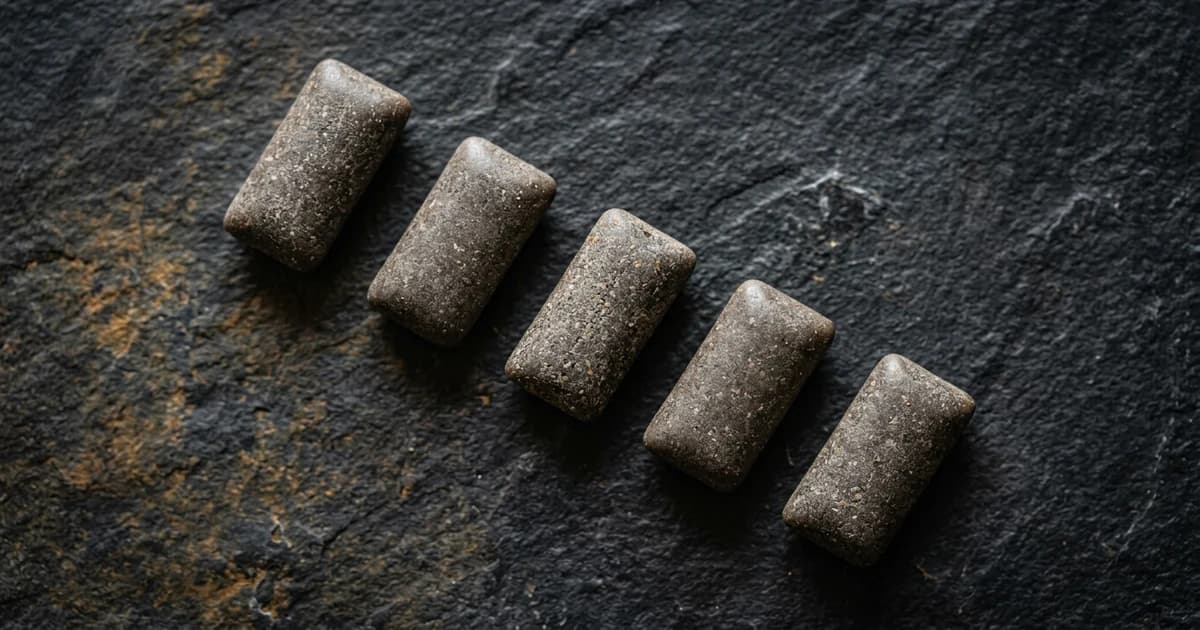
Each Roon pouch contains 25mg of methylliberine (Dynamine), alongside 80mg caffeine, 60mg L-theanine, and 5mg theacrine (TeaCrine). The pouch is sublingual (placed between lip and gum), zero-nicotine, and designed for onset in 5 to 10 minutes with a duration of 6 to 8 hours. A tin contains 15 pouches, starting at $15.00 per tin one-time ($1.00 per pouch) or as low as $9.16 per tin on subscription ($0.61 per pouch).
Why Dynamine Makes 80mg of Caffeine Last Like Twice the Dose
The most interesting thing methylliberine does is not what it adds. It is what it does to the caffeine already in the stack. In a human pharmacokinetic study, co-administering methylliberine with 150mg caffeine reduced caffeine's oral clearance from 41.9 to 17.1 L/hr and extended its half-life from 7.2 to 15 hours, with no increase in peak concentration. Same peak, longer tail.
That is the mechanism behind Roon's 6 to 8 hour felt window. A 15-hour half-life does not mean 15 hours of perceived energy, but it does mean a small-coffee dose of 80mg caffeine stays above a useful threshold far longer than it would alone. L-theanine (60mg) smooths the response. Theacrine (5mg) contributes without building tolerance the way caffeine does. The result is duration, not more stimulation.
The honest trade-off: a longer half-life means you should not take it late in the day. Stop at least 8 hours before bed. And Roon is not the cheapest option on the shelf. It contains no adaptogens, no mushroom extracts, no paraxanthine. It is four compounds, pharmacokinetically matched, in a sublingual pouch that hits in 5 to 10 minutes. 15 pouches per tin, $1.00/pouch one-time or $0.61/pouch subscribed.
Written by Roon Team