Why Do People Get Hangry? What the Studies Show
People get hangry because hunger is an unpleasant, high-alert body state, and the brain tends to read that discomfort as anger at whatever is in front of it. A 21-day field study of 64 adults found that hungrier moments came with more anger and irritability and less pleasure. A separate lab study showed the effect is strongest in negative contexts, and that simply noticing "I'm hungry" weakens it. The fix is real food, not willpower.
Key Takeaways
- "Hangry" describes a real, measurable link between hunger, anger, and irritability, confirmed across thousands of phone check-ins in daily life.
- Hunger alone is not enough. The brain converts hunger into anger mainly when the situation is already negative and you have not labeled the feeling.
- In healthy people, a few hours without eating is not clinical hypoglycemia. The irritability is real, but the mechanism is more about perception than a dangerous blood sugar crash.
- Several famous "hanger" stories (hungry judges, glucose as willpower fuel) do not hold up well under scrutiny.
What the hangry studies actually tested
| Study | Participants | Method | Key finding | What it cannot tell you |
|---|---|---|---|---|
| Swami et al., PLOS ONE, 2022 | 64 adults, Central Europe, mean age 29.9, 81% women | Smartphone prompts 5x/day for 21 days (9,142 total responses) | Hunger linked to more anger, more irritability, less pleasure after controlling for sex, age, BMI, diet, and trait anger | Self-reported hunger; associations, not causes; sample skewed female |
| MacCormack & Lindquist, Emotion, 2019 | More than 400 US adults (Studies 1 and 2); over 200 students (Study 3) | Pictograph ratings after emotional primes (Studies 1 and 2); fasting + surprise computer crash (Study 3) | Hunger shifted perception negatively only in negative contexts; labeling emotions erased the effect | Lab conditions; US university samples |
| Bushman et al., PNAS, 2014 | 107 married couples, 21 days | Evening glucose self-measured; voodoo doll pins + noise-blast task | Lower glucose correlated with more pins and louder blasts toward spouse | Correlational; glucose self-measured; no causal claim possible |
| Danziger et al., PNAS, 2011 | Sequential Israeli parole rulings | Favorable rulings tracked across sessions and food breaks | Favorable rulings dropped from ~65% to near 0% within each session, reset after food | Case order was not random; unrepresented prisoners heard last |
| Hagger et al., Perspect Psychol Sci, 2016 | 2,141 participants, 23 labs | Preregistered replication of ego-depletion (glucose-as-willpower) paradigm | Effect size d = 0.04, 95% CI crossing zero | Does not disprove all self-control effects, only this specific paradigm |
Is "hangry" real? What the field study found
Yes, and there is field data behind the word. Viren Swami and colleagues recruited 64 adults in Central Europe for a 21-day experience-sampling study published in PLOS ONE in July 2022. Participants rated hunger on a 0-to-100 scale five times a day. Across 9,142 responses, hungrier moments came with more anger, more irritability, and less pleasure, after controlling for sex, age, BMI, dietary behavior, and trait anger. Arousal was not linked.
Limits: hunger was self-reported, the sample was 81% women, and association is not causation. But it is the first study to track hanger in daily life. As Swami noted in the Anglia Ruskin press release, labeling an emotion can help regulate it, "such as by recognising that we feel angry simply because we are hungry."
Why hunger turns into anger: the context effect
Hunger alone does not make you snap. Context does. Jennifer MacCormack and Kristen Lindquist showed this across three studies published in Emotion in 2019.
In Studies 1 and 2, more than 400 US adults rated ambiguous Chinese pictographs. After a negative image, hunger made ratings more negative. After neutral or positive images, hunger had no effect. The brain was not generating anger from scratch. It was borrowing the negativity already in the room.
Study 3 put over 200 fasted or fed students through a computer task programmed to crash, then a researcher blamed them for it. Hungry participants judged the researcher more harshly. But those who had first written about their emotions showed no shift. Naming the feeling short-circuited hanger in real time.
What happens in your body when you skip a meal
Most explainers blame hanger on "plummeting blood sugar." The reality is duller. In healthy people, blood glucose stays in a regulated band; the CDC lists a normal fasting level as 99 mg/dL or below. Going a few hours without food does not produce clinical hypoglycemia in most adults.
Ghrelin, cortisol, and adrenaline are commonly cited as drivers as meals are delayed. That framing is plausible but unproven as a direct cause of anger in humans. What the MacCormack data actually show is that body discomfort becomes emotional only when the brain interprets it that way.
Caveat: for people taking insulin, sulfonylureas, or meglitinides, skipping meals can cause real hypoglycemia. The NIDDK lists irritability, confusion, shakiness, and dizziness among the symptoms. That is a medical situation, not garden-variety hanger.
The famous hanger stories, fact-checked
The hungry judges
Danziger et al. (2011) reported that Israeli parole judges granted favorable rulings about 65% of the time at the start of a session, dropping to near zero by the end, then resetting after a food break. But Weinshall-Margel and Shapard (2011) showed case order was not random. Unrepresented prisoners tended to be heard last in each session and won favorable rulings only about 15% of the time versus 35% for prisoners with counsel. Scheduling and representation, not hunger, may explain most of the pattern.
Glucose as willpower fuel
The idea that self-control depends on blood glucose (the "ego depletion" model) was once textbook psychology. Then Hagger et al. (2016) ran a preregistered replication across 23 labs with 2,141 participants. The ego-depletion effect came back at d = 0.04 with a 95% confidence interval of -0.07 to 0.15. Effectively zero. You can still run out of patience before lunch, but "your glucose tank is empty" is not the proven explanation.
The voodoo-doll couples
Bushman et al. (2014) gave 107 married couples voodoo dolls for 21 evenings. Lower self-measured evening glucose correlated with more pins stuck in the doll and louder noise blasts aimed at the spouse. It is a vivid result, but it is correlational. Glucose was self-measured, and the study cannot separate blood sugar from tiredness, stress, or a bad day at work.
Hangry at work: when it costs you
The 11 a.m. meeting after a skipped breakfast. The 4 p.m. performance review after a desk lunch that was really just coffee. MacCormack's finding maps directly here: hunger plus a negative context is the risky combination. The anger feels justified because the brain labels hunger-driven discomfort as a response to the coworker, not the missing lunch.
Three concrete moves:
- Schedule hard conversations after meals. If a feedback session lands at 4 p.m. and you last ate at noon, push it or eat first.
- Keep real food at your desk. Something with protein and fiber, not candy. Here is a list of snacks worth keeping at your desk.
- Name it out loud. "I'm not mad at this email, I'm hungry" sounds silly, but it is the exact mechanism the MacCormack study found to neutralize the effect.
How to stop being hangry
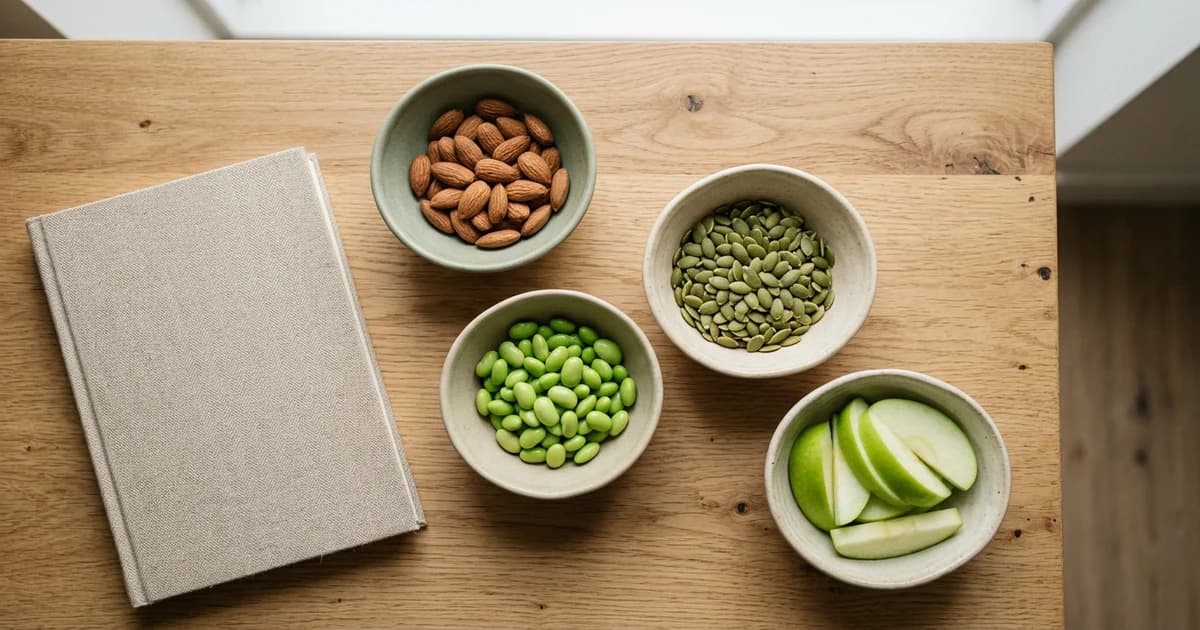
- Eat regular meals with protein and fiber. This is the boring, correct answer. Protein and fiber slow digestion and keep you steadier between meals. No special diet required.
- Label the feeling. MacCormack's lab study supports this directly, and Swami makes the same point. Recognizing "this is hunger, not anger" can weaken the emotional spiral before it reaches your mouth.
- Pause before sending the message. If you wrote a sharp reply at 3:45 p.m. and you have not eaten since noon, save the draft. Re-read it after a meal.
- Check if it is fatigue, not hunger. The two overlap. If you have eaten recently and still feel irritable, you might be tired rather than hungry. See why you crave sugar when you are tired, whether a sugar high is real, and how blood sugar shapes the post-lunch dip.
- If you take glucose-lowering medication and feel shaky, sweaty, or confused, treat it as possible low blood sugar. Follow your care plan. This is not hanger. This is a medical situation.
Why people get hangry, in one paragraph
Hunger generates a broad, unpleasant body signal, and the brain attaches that signal to whatever is in front of it, especially in negative situations. A 21-day field study and a controlled lab experiment converge: the effect is real, context-dependent, and weakened by simply noticing you are hungry. The famous glucose-based explanations have not replicated well. Eat real food on a schedule, label the feeling when it shows up, and do not make important decisions at the tail end of a long gap between meals. For more on what happens after lunch, see the crash after lunch and decision fatigue late in the day.
Frequently Asked Questions
What does hangry mean?
Hangry is a blend of "hungry" and "angry," defined as bad-tempered or irritable as a result of hunger. The Oxford English Dictionary added it in January 2018, noting its earliest known use in 1956 in a psychoanalytic journal. Merriam-Webster followed in September 2018, as one of 840 new words.
Is being hangry a real medical condition?
No. Hanger is a common state, not a diagnosis. Research confirms a measurable link between hunger and irritability, but no medical body classifies it as a condition. If hunger-related irritability is frequent and comes with shakiness or confusion, talk to a clinician. That pattern may point to a blood sugar issue worth investigating.
Why do some people get hangry and others don't?
MacCormack and Lindquist's research suggests two factors: context and emotional awareness. People in negative situations who have not labeled their hunger as the source of discomfort are more likely to experience anger. People who notice they are hungry and name it tend to bypass the effect. These studies did not test personality types.
Is hangry the same as low blood sugar?
Usually not, in healthy adults. The CDC defines normal fasting blood sugar as 99 mg/dL or below. A few hours without food is uncomfortable, but it is not hypoglycemia for most people. For those on insulin or sulfonylureas, missed meals can cause genuine low blood sugar, which the NIDDK lists as a medical concern.
Does coffee make hanger worse?
The hanger studies above did not test caffeine, so there is no good answer. Caffeine is not food, and coffee in place of breakfast does not address the underlying energy deficit. If you are irritable and running on nothing but coffee, the answer is a meal. (Hanger is also distinct from food noise, which is a different thing from hunger.)
How do I deal with a hangry partner?
Offer food before starting a serious conversation. This is not patronizing; it is applying the research. MacCormack's lab study found that emotional awareness neutralizes the hunger-to-anger pathway. Gently naming the pattern ("Hey, we should eat before we talk about this") reframes the situation and buys time for the discomfort to pass. The conversation will go better on a full stomach.
Fed, but Still Foggy at 3 p.m.?
Hanger has one fix: eat. Roon is not food and does nothing for hunger. Eat the meal first.
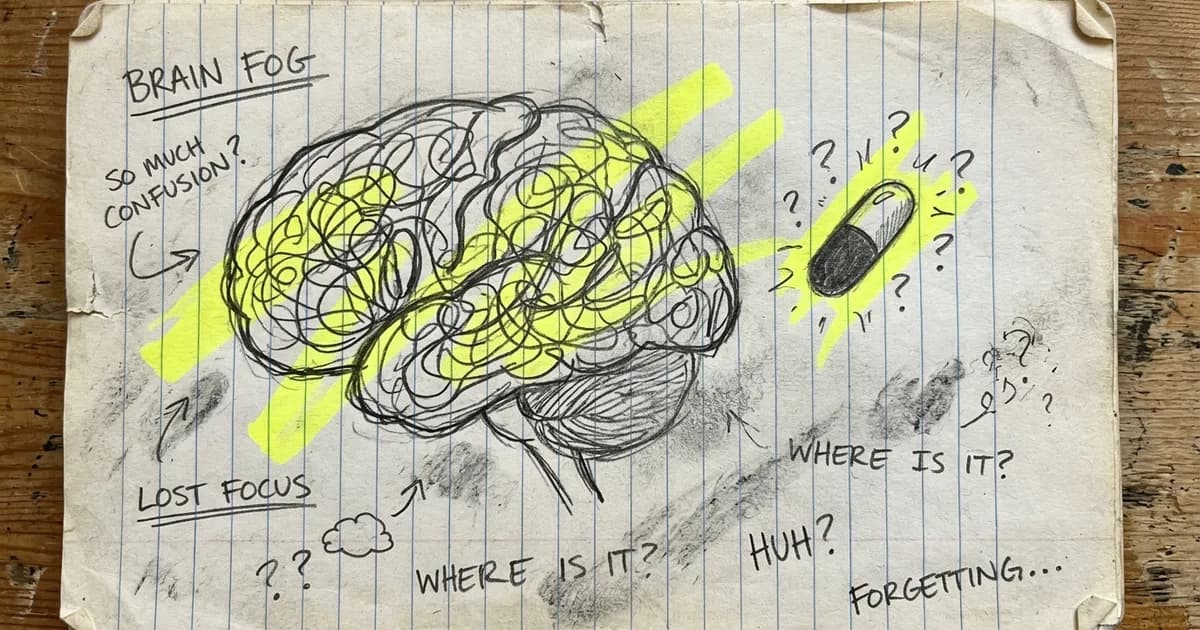
But there is a different problem that kicks in after lunch. You ate. The irritability is gone. And you are still foggy. That is fatigue, not hanger, and it is the gap Roon was built for. Each pouch pairs 80 mg caffeine with 60 mg L-theanine, a combination a 2025 Nutrition Reviews systematic review of 50 RCTs (15 meta-analyzed) linked to improved attention-switching accuracy (SMD 0.33 at hour two, 95% CI 0.13 to 0.54; partly industry-funded). It also contains 25 mg methylliberine (Dynamine), which slowed caffeine clearance in an n=12 crossover study from 41.9 to 17.1 L/hr and extended half-life from 7.2 to 15 hours with no higher peak. That study used 100 mg methylliberine with 150 mg caffeine, about 4x the methylliberine and 1.9x the caffeine in a Roon pouch, so the direction applies but the exact numbers are the study's, not Roon's. The mechanism is behind Roon's 6-to-8-hour felt window. It contains sucralose and is zero sugar, zero calories. Stop at least 8 hours before bed. From $9.16 per tin on subscription.
Feed the hunger. Then, if 3 p.m. still feels like mud, try Roon.
Related from Roon
- Why You Crave Sugar When You Are Tired
- What Is Food Noise?
- Blood Sugar and Brain Function
- The Crash After Lunch
Written by Roon Team