Why Does Coffee Make You Poop? The 4-Minute Answer
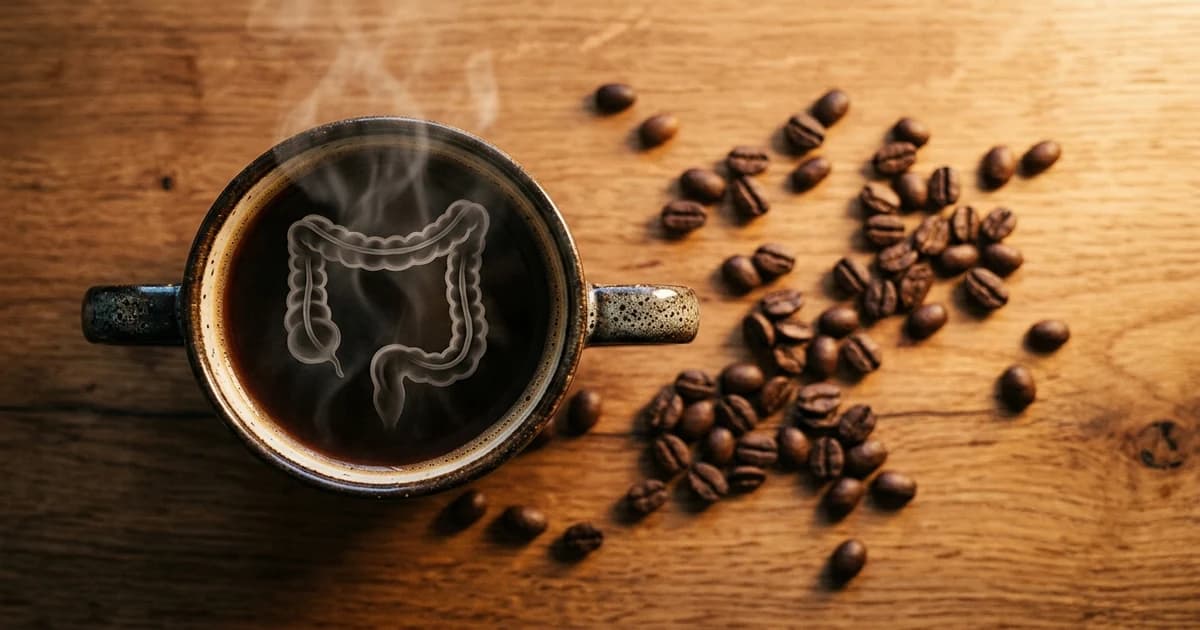
Coffee sends roughly a third of people to the bathroom, often within minutes. The usual suspect is caffeine. It's not. Coffee triggers a burst of two gut hormones, gastrin and cholecystokinin (CCK), that fire up the gastrocolic reflex and tell your colon to clear space. Decaf does most of the same thing. Here is the mechanism in four minutes, plus a simple way to figure out which type of coffee drinker you are.
Key takeaways:
- Both regular and decaf coffee raise gastrin levels well above baseline, proving the effect is not primarily caffeine.
- In responders, colon motility increases within 4 minutes of the first sip and stays elevated for at least 30 minutes.
- Only about 29% of people report the effect strongly. The other 71% are not broken; their colons just don't respond the same way.
- Morning timing matters: your colon is already ramping up when you wake, and coffee lands right on top of that ramp.
How Fast Is "Fast"? The Four-Minute Number
A 1990 study in Gut (Brown, Cann, and Read) measured pressure in the rectosigmoid, the final stretch of colon before the rectum, while subjects drank coffee. In the eight participants who self-identified as responders, rectosigmoid motility rose within four minutes of ingestion and stayed elevated for at least 30 minutes. Both regular and decaf produced the increase. Hot water produced no change in any subject, ruling out the "it's just a warm liquid" theory in one clean result.
Six other participants showed no motility change at all. That split matters, and we will come back to it.
The Hormones That Start It: Gastrin and CCK
Two hormones do most of the work. Gastrin drives stomach contractions and acid release. CCK triggers bile and pancreatic enzyme secretion and is the classic activator of the gastrocolic reflex, the wave of contractions that moves material through the colon when something new arrives in the stomach.
| Stimulus | Gastrin output vs. control | Source |
|---|---|---|
| Regular coffee (100 ml) | 2.3× | Acquaviva et al., 1986 |
| Decaf coffee (100 ml) | 1.7× | Acquaviva et al., 1986 |
| Hot water (control) | 1.0× | Acquaviva et al., 1986 |
In 10 healthy volunteers, serum gastrin peaked at about 10 minutes and returned to baseline within 30 minutes. The authors' conclusion: regular and decaf coffee share a strong gastrin-releasing property, so the gastrin effect is not primarily driven by caffeine. A 1999 review by Boekema et al. confirmed that coffee also induces CCK release and gallbladder contraction, and that caffeine alone cannot account for coffee's gastrointestinal effects.
The Gastrocolic Reflex, in Plain Language
When food or liquid hits your stomach, the colon downstream contracts to clear space. That is the gastrocolic reflex, the same reason a big meal can send you to the bathroom soon after. Harvard Health describes it simply: gastrin and CCK from coffee trigger the reflex, prompting the colon to contract and move waste toward the rectum.
Coffee fires this reflex out of proportion to the small volume in the cup. A mug of water does almost nothing. A mug of coffee, even decaf, sets the whole chain off.
So What Is Caffeine Actually Doing?
Caffeine adds to the effect. It does not carry it.
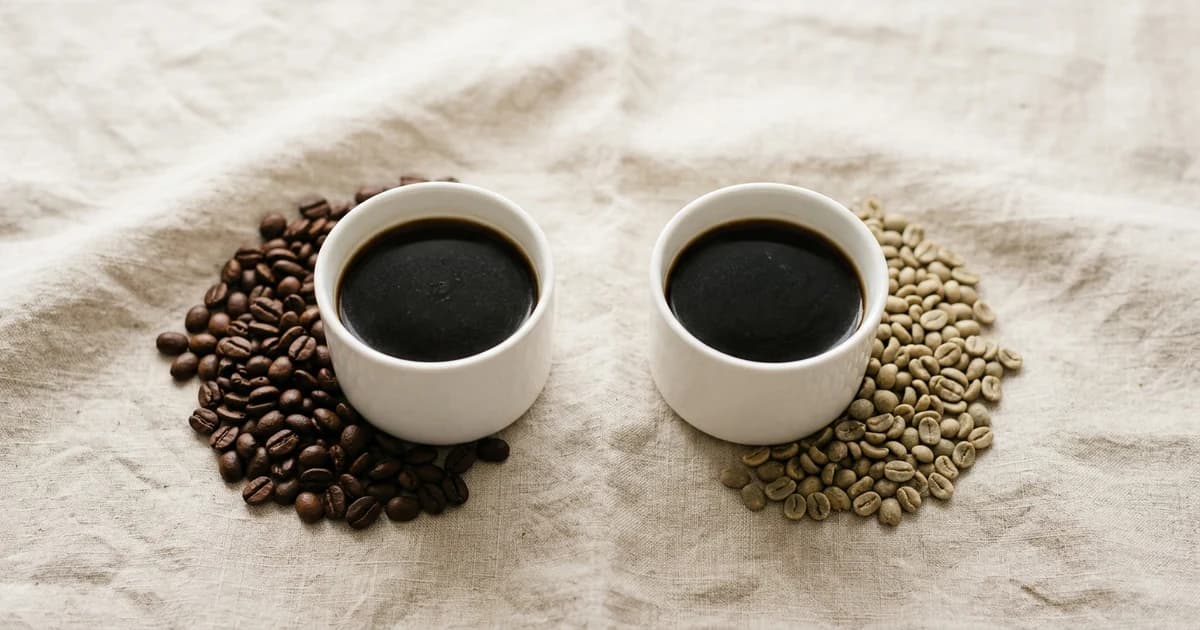
A 1998 study by Rao et al. measured colonic manometry in 12 healthy subjects given four stimuli: black coffee, decaf, water, and a 1,000-calorie meal. Caffeinated coffee stimulated colonic motor activity at a magnitude similar to the meal, 60% stronger than water and 23% stronger than decaf. That 23% gap is real. But decaf still beat water by a wide margin. Caffeine is a booster, not the engine.
A typical 8 oz cup contains roughly 80 to 100 mg of caffeine; a decaf cup carries roughly 2 to 15 mg (USDA FoodData Central). The doses differ tenfold, yet the colonic response differs by only a quarter. That ratio tells you where the action is. You can see how much caffeine varies from cup to cup depending on brew method and bean.
The Decaf Test: Your Own Single-Variable Experiment
Run the experiment yourself. Same cup size, same time of day, same milk or cream, swap to decaf for three mornings. If the urge still shows up on schedule, caffeine was never your main driver. (If you are curious about how much caffeine is actually in that decaf cup, it is not quite zero, but it is close.)
If the urge disappears with decaf, caffeine may be doing more of the work for you than the group averages suggest. Either outcome is useful.
Why Coffee Hits Hardest in the Morning
Colonic motor activity drops overnight and rises after waking. Research has confirmed that colonic motility follows a circadian rhythm: reduced at night, increased right after waking. McGill's Office for Science and Society makes the practical point: a 9 a.m. cup sends you running, but a 3 p.m. cup often does nothing.
Your morning coffee lands on a colon that is already switching on. The gastrocolic reflex stacks on top of the circadian ramp. If the timing is inconvenient, pushing your first cup 30 to 60 minutes after waking can shift the overlap. (First-cup timing also matters for why coffee can cause an afternoon crash, a separate problem worth knowing about.)
The Other Things in the Cup
Coffee is not just caffeine and water. Chlorogenic acids and N-alkanoyl-5-hydroxytryptamides both stimulate stomach acid production. N-methylpyridinium, which forms from trigonelline during roasting, pushes gastric acid in the opposite direction. A 2014 study by Rubach et al. found a dark roast blend stimulated less gastric acid than a medium roast, partly because darker roasts carry more N-methylpyridinium. Your roast choice changes the chemical mix reaching your stomach.
Then there is what you put in the cup. Roughly 65% of the global population has reduced ability to digest lactose after infancy, and most Americans add milk, cream, or a creamer to their coffee. If your bathroom trips correlate with lattes but not black coffee, lactose may be the variable. For readers whose issue is more stomach discomfort than urgency, the problem might be coffee that wrecks your stomach rather than the colonic reflex.
Why Some People Never Get It
In the Brown 1990 questionnaire arm, 29% of 99 healthy young volunteers (aged 17 to 27) reported that coffee induced the urge. Women were over-represented among responders. In the manometry arm, the split was clean: 8 of 14 subjects responded, 6 did not, and only the responders showed any motility increase at all.
Both responses are normal. Persistent changes in bowel habit are worth a conversation with a clinician, but a consistent pattern in either direction is just your pattern.
Does the Effect Fade With Daily Drinking?
The research does not settle this. The studies above are single-session designs. None measured whether the coffee-to-colon response habituates over weeks or months. Plenty of lifelong coffee drinkers report it never fading. Others say it stopped after their first year. Without controlled longitudinal data, both are anecdotes.
What to Change If You Would Rather It Did Not Happen
If the timing or intensity bothers you, the options are behavioral:
- Push your first cup later. Even 30 to 60 minutes after waking lets the circadian ramp pass.
- Eat first. Food in the stomach blunts the gastrocolic reflex.
- Drink less at once. A smaller first cup delivers fewer signaling compounds.
- Drop the dairy. Switch to black or a non-dairy option for a week and see what changes.
- Try decaf. If the decaf test shows caffeine is your amplifier, switching eliminates the 23% boost.
- Split the cup. Half now, half in 20 minutes spreads the hormone spike.
- Change the delivery route. A pouch like Roon sits between lip and gum, most of the caffeine is absorbed there, and there is no mug of hot coffee arriving in your stomach to set the reflex off.
The Colon Does Not Care About Your Schedule
Coffee makes roughly a third of people poop, usually fast, and the cause is a hormone-driven reflex, not caffeine alone. Decaf does most of the same thing. The morning window amplifies it. Whether you are a responder or not appears to be a stable trait. The only real levers are timing, volume, what you add to the cup, and whether you drink coffee at all.
Frequently Asked Questions
Does decaf make you poop too?
Yes. Acquaviva et al. (1986) found decaf raised gastrin to 1.7 times control, compared to 2.3 times for regular coffee. Brown et al. (1990) showed decaf produced the same four-minute motility spike in responders. Caffeine adds roughly 23% on top, but the core reflex fires without it.
Why does coffee make me poop immediately but tea does not?
Tea has caffeine but far fewer of the other compounds that trigger gastrin and CCK release, including chlorogenic acids and N-alkanoyl-5-hydroxytryptamides. The hormone burst is smaller, the gastrocolic reflex is weaker, and for most people it falls below the threshold that produces urgency.
How long after coffee should I expect it?
In the Brown 1990 study, colon motility rose within four minutes of the first sip in responders and lasted at least 30 minutes. Most people who experience it report the urge within 5 to 15 minutes, but the speed varies with personal sensitivity and volume.
Is it bad that coffee makes me poop?
No. It is a normal gastrocolic reflex response. Coffee triggers hormones, those hormones trigger colon contractions, and your body moves waste along. If the pattern is consistent and painless, it is just how your system responds to coffee.
Does coffee on an empty stomach make it worse?
It can. Without food in the stomach, coffee's signaling compounds hit the lining undiluted, and the gastrin and CCK spike may be sharper. Even a small amount of food before your first cup can blunt the response.
Do caffeine pills or pouches do the same thing?
Caffeine pills deliver caffeine without the chlorogenic acids, N-alkanoyl-5-hydroxytryptamides, and other coffee-specific compounds that drive the hormone response. They can still stimulate the colon somewhat, but the full coffee-to-bathroom chain depends on more than caffeine. How long caffeine stays active depends on individual clearance rate; see caffeine half-life and the factors that change it. Oral pouches absorbed through the gum skip the stomach almost entirely, so the liquid-in-stomach trigger is absent.
If you are curious about the parallel question, nicotine and the same reflex is a separate but related story.
Skip the Mug, Keep the Focus
Roon delivers caffeine through the gum, not through your stomach. No liquid, no gastrocolic reflex, no unscheduled bathroom trip. Try Roon →
Same Caffeine, No Gastrocolic Trigger
The gastrocolic reflex that sends you to the bathroom within minutes of your first sip depends on liquid coffee hitting your stomach lining and triggering a cascade of gastrin, cholecystokinin, and colon contractions. Remove the liquid from the equation and you remove the trigger.
Roon delivers 80 mg caffeine, 60 mg L-theanine, 25 mg methylliberine (Dynamine), and 5 mg theacrine (TeaCrine) through the gum lining via a sublingual pouch. Nothing reaches the stomach, so the hormone cascade that drives coffee's laxative effect does not fire. Duration is the other advantage: Dynamine slows caffeine's clearance. A randomized double-blind crossover PK study (n=12) with 150 mg caffeine cut oral clearance from 41.9 to 17.1 L/hr and extended half-life from 7.2 to 15 hours with no increase in peak concentration. That study used roughly 4x the methylliberine and 1.9x the caffeine Roon carries, so the mechanism is directionally the same but the study did not measure Roon. The practical window is 6 to 8 hours. Stop at least 8 hours before bed.
Roon is not a substitute for your morning coffee ritual if you enjoy it, and it is not a digestive aid. Zero sugar, as little as $0.61 per pouch. Try Roon on a day when the bathroom timing matters.
Written by Roon Team