Does Nicotine Make You Poop? The Science Behind Your Gut's Reaction
Roon Team
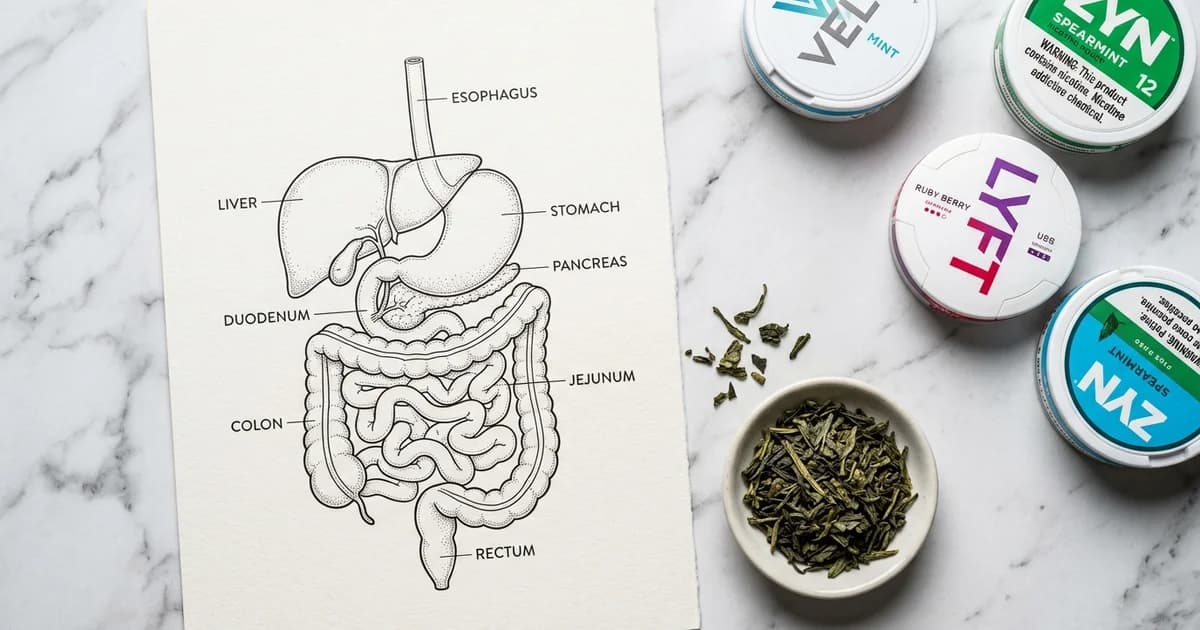
Does Nicotine Make You Poop? The Science Behind Your Gut's Reaction
Does nicotine make you poop? If you've ever popped a nicotine pouch and found yourself scanning the room for the nearest bathroom 10 minutes later, you already suspect the answer. The link between nicotine and bowel movements is one of those things everyone experiences but nobody talks about. So does nicotine make you poop for real, or is it all in your head?
It's not in your head. It's in your colon.
Nicotine is a stimulant, and like all stimulants, it has downstream nicotine digestive effects on your gastrointestinal tract. The science here is surprisingly well-documented, and the mechanism behind why nicotine makes you poop is more complex than most people realize. Let's break it down.
Key Takeaways
- Nicotine activates receptors in your enteric nervous system, accelerating the muscle contractions (peristalsis) that move waste through your colon.
- A study in healthy nonsmokers found that nicotine cut rectosigmoid transit time from 18.6 hours to 7.1 hours.
- Digestive side effects like nausea, cramping, and loose stools are among the most common complaints from nicotine pouch users.
- If you want focus without the GI disruption, there are stimulant alternatives that skip nicotine entirely.
How Nicotine Affects Your Digestive System (And Why Does Nicotine Make You Poop?)
Your gut has its own nervous system. It's called the enteric nervous system (ENS), sometimes referred to as the "second brain," and it contains roughly 500 million neurons that control everything from nutrient absorption to waste movement. Understanding this system is key to understanding why nicotine makes you poop.
Nicotine binds to nicotinic acetylcholine receptors (nAChRs) located throughout the ENS. According to research published in MDPI's International Journal of Environmental Research and Public Health, these receptors are expressed across all gut-brain systems and play a direct role in gut function. The nicotine digestive effects that follow include stronger colonic contractions and increased mucus secretion, which reduces transit time and softens stools.
A cross-sectional study published on ResearchGate confirmed this mechanism: nicotine stimulates nAChRs in the ENS, triggering stronger colonic contractions and reduced transit time. The relationship between nicotine and bowel movements is direct and measurable.
Put simply: nicotine tells your intestines to move faster. That's why the urge hits within minutes, and why so many people ask, "does nicotine make you poop?"
The Transit Time Data
The most striking piece of evidence comes from a study published in PubMed that measured colonic transit time in healthy nonsmoking volunteers who received transdermal nicotine. The results were dramatic. Rectosigmoid transit time dropped from 18.6 hours to 7.1 hours, and total colonic transit time decreased at both nicotine doses tested (17.5 mg/day and 35 mg/day).
That's not a subtle effect. Nicotine more than halved the time it took for waste to pass through the final section of the colon. This data alone answers the question of whether nicotine makes you poop with a resounding yes.
This is also why new nicotine users tend to experience the effect more intensely. As GoodRx notes, the bowel-stimulating side effect is something people commonly experience shortly after starting nicotine use. Regular users may develop some tolerance to the GI effects over time, but the underlying mechanism behind nicotine and bowel movements doesn't go away.
Beyond Peristalsis: Other Nicotine Digestive Effects
The bathroom urgency is just one piece of the puzzle. The question "does nicotine make you poop" only scratches the surface. Nicotine hits your digestive system on multiple fronts.
Increased Gastric Acid
A review published in Gastroenterology found that nicotine potentiates gastric aggressive factors while weakening defensive ones. Specifically, it increases acid and pepsin secretion, increases gastric motility, and promotes duodenogastric reflux of bile salts. For pouch users, these nicotine digestive effects translate to a higher risk of heartburn, nausea, and stomach irritation.
Nausea and Stomach Pain
These aren't rare complaints. According to Foodzilla, nicotine can irritate the stomach lining directly, leading to nausea and sometimes vomiting, particularly in new users or those consuming higher doses. It can also relax the lower esophageal sphincter, letting stomach acid flow upward.
The Swallowing Problem
Here's something specific to nicotine pouches that most people overlook. When you use a sublingual or buccal pouch, you're constantly swallowing saliva mixed with nicotine and other pouch ingredients. As QuitZyn notes, the most common side effects of pouches from brands like ZYN, VELO, and On! are nausea, gastritis, and stomach pain, precisely because you're swallowing alkaline irritants throughout the session. This swallowing compounds the reason nicotine makes you poop.
Does Nicotine Make You Poop More Than Other Stimulants?
Caffeine is the obvious comparison. Both are stimulants. Both can send you to the bathroom. But the mechanisms differ, and the answer to "does nicotine make you poop more than caffeine" is generally yes.
Caffeine stimulates gastric acid secretion and increases colonic motility, but it does so primarily through adenosine receptor antagonism, not through the enteric nervous system's acetylcholine pathways. The result is that caffeine's GI effect tends to be milder and more predictable, especially at moderate doses (under 100 mg).
Nicotine, on the other hand, directly activates the neural circuits that control intestinal muscle contractions. It's a more aggressive push on the system. The connection between nicotine and bowel movements is simply stronger than what caffeine produces. That's why nicotine pouches tend to produce a more sudden, urgent bowel response compared to, say, a cup of coffee.
| Factor | Nicotine | Caffeine |
|---|---|---|
| Primary GI mechanism | Activates nAChRs in the enteric nervous system | Blocks adenosine receptors; stimulates gastric acid |
| Onset of bowel effect | Minutes (fast sublingual absorption) | 20-45 minutes |
| Intensity | Often urgent, can cause cramping | Usually mild at moderate doses |
| Additional GI risks | Nausea, gastritis, acid reflux, esophageal sphincter relaxation | Mild acid increase at high doses |
| Tolerance to GI effect | Partial over time | Partial over time |
Nicotine Pouches Compared: The Digestive Trade-Off
Most people reaching for a nicotine pouch want focus, alertness, or a mild stimulant effect. But since nicotine makes you poop regardless of the brand, here's how the major options stack up.
| Brand | Nicotine per Pouch | Flavors | Typical retailer price per can | Key Ingredients |
|---|---|---|---|---|
| ZYN | 3 mg or 6 mg | 13 flavors | ~$5-6 | Nicotine salt, fillers, pH adjusters, sweeteners |
| VELO | 2 mg or 4 mg | Multiple | ~$5-6 | Nicotine, flavorings, fillers |
| On! | 2, 4, or 8 mg | Multiple | ~$4-5 | Nicotine, flavorings, fillers |
| Lucy | 4 mg, 8 mg, or 12 mg | Multiple | ~$5-6 | Nicotine, flavorings (positioned as "clean") |
| Rogue | 3 mg or 6 mg | Multiple | ~$4-5 | Nicotine, flavorings, fillers |
ZYN's flavor count is from us.zyn.com/all-products. The price column is what retailers charge, not what the brands publish: Lucy sells only 5-packs on lucy.co, at $29.95 for Pouches and $34.95 for Breakers, and Rogue sells only 5-packs, so neither prints a single-can price of its own.
Every single one of these products contains nicotine. And every single one carries the same GI side-effect profile: potential nausea, increased bowel motility, stomach irritation, and acid reflux. The dose varies (Lucy's 12 mg option will hit harder than On!'s 2 mg), but the nicotine digestive effects are identical across the board.
A 2024 cross-sectional study on nicotine pouch users in Saudi Arabia highlighted that gastrointestinal impacts, including gut motility changes and bloating, remain poorly studied despite being commonly reported. The researchers specifically called for more focused investigation into how these products affect the digestive system.
What's Missing From Every Nicotine Pouch
Here's the core problem: every nicotine pouch on the market is, by definition, a nicotine delivery device. The focus, the alertness, the "locked in" feeling that users chase? Nicotine can deliver some of that. But it comes packaged with a set of trade-offs that no flavor or pouch design can engineer away.
The digestive disruption is baked into the molecule. Does nicotine make you poop? Always. Nicotine activates your enteric nervous system. There's no version of nicotine that doesn't do this. Whether it's 3 mg or 12 mg, ZYN or Lucy, your gut is going to respond.
Tolerance builds. Regular nicotine users need more over time to get the same cognitive effect. This means higher doses, which means more GI stress and more pronounced nicotine and bowel movements.
Dependence is the business model. Nicotine is addictive. The reason you keep buying cans isn't because the product is great. It's because your brain has been chemically rewired to need it. No nicotine pouch brand talks about this, but it's the single most relevant fact about their product category.
The cognitive benefit is narrow and short-lived. Nicotine provides a brief attentional boost, but it doesn't support sustained focus over multiple hours. The half-life of nicotine is about two hours, and the crash that follows often leaves users reaching for another pouch.
What's genuinely missing from this product category is a pouch that delivers sustained cognitive performance without the nicotine digestive effects, without the tolerance treadmill, and without the dependency loop.
A Different Approach to the Pouch Format
Roon was designed to fill exactly that gap. It's a sublingual pouch with zero nicotine. Instead of relying on a single addictive alkaloid, it uses a four-ingredient stack: 80 mg of caffeine, L-Theanine, Theacrine, and Methylliberine.
Here's why that combination matters for the specific problems outlined above, especially if you're tired of asking does nicotine make you poop every time you reach for a pouch.
No enteric nervous system activation. None of these four compounds bind to nicotinic acetylcholine receptors in the gut. You get the cognitive lift without the intestinal fast-forward button. No nicotine means no nicotine and bowel movements to worry about.
Sustained duration. A 2021 study published in Cureus found that the combination of caffeine, theacrine (TeaCrine), and methylliberine (Dynamine) improved cognitive performance and reaction time in a randomized crossover trial, without increasing self-reported anxiety or headaches. Theacrine and methylliberine extend and smooth the caffeine curve, which is why Roon users report 6 to 8 hours of focus from a single pouch.
No tolerance buildup. Theacrine, unlike caffeine or nicotine, has shown resistance to habituation in dose-response research. This means you don't need more over time to get the same effect.
L-Theanine calms without sedating. A study from Nutritional Neuroscience found that the L-theanine and caffeine combination improved both speed and accuracy on attention-switching tasks while reducing susceptibility to distraction. It's the ingredient that prevents caffeine jitters and keeps the focus clean.
This isn't about replacing a nicotine habit with another dependency. Roon contains no nicotine, though at 80 mg of caffeine per pouch it is still a stimulant and caffeine does build tolerance. If your goal is cognitive performance in a familiar pouch format, and you'd prefer to skip the bathroom emergency that comes every time nicotine makes you poop, it's worth a look at takeroon.com.