What to Take Before an Exam for Calm, Sharp Focus (Without the Jitters)
Your heart is racing, your hands are cold, and the exam hasn't even started. Most students treat this as a willpower problem. It isn't. It's a chemistry problem, and learning how to calm down before an exam is mostly about managing the inputs you put into your body in the 60 minutes before you sit down.
The wrong inputs make it worse. A triple espresso on an empty stomach spikes your heart rate and feeds the exact anxiety you're trying to suppress. A sugary energy drink gives you 30 good minutes and a crash right when you hit the hard questions.
The right inputs do the opposite. They steady your nervous system, sharpen your recall, and hold that state for the full two or three hours. Here's what actually works.
Key Takeaways
- Test anxiety is common and physiological, not a character flaw. You can manage it with the right pre-exam routine.
- Caffeine helps focus, but alone it can amplify jitters. Pairing it with L-theanine produces calm alertness instead.
- What you eat matters: steady blood sugar from protein and slow carbs beats a sugar spike every time.
- Hydration, sleep, and a 10-minute breathing routine do more for calm than any last-minute cramming.
Why You Panic Before an Exam (The Biology)
Test anxiety is one of the most common stress responses in students, and large reviews put its prevalence in the range of 15% to 40% of students depending on the population studied, according to a 2024 review in Archives of Mental Health. You are not unusually fragile. This is a normal stress circuit doing its job badly.
When you perceive a threat, your body dumps adrenaline and cortisol. Your heart rate climbs, blood moves away from your digestive system, and your prefrontal cortex, the part you need for logic and recall, gets partially hijacked by the more primitive parts of your brain.
That's why you "blank" on answers you knew an hour ago. The information is still there. Your access to it is throttled. So the goal before any test is not to feel pumped up. It's to keep that stress circuit quiet enough that your thinking brain stays online.
How to Calm Down Before an Exam: What Actually Works
The most reliable way to calm down before an exam is to combine a steady stimulant routine, stable blood sugar, controlled breathing, and enough sleep the night before. None of these are dramatic on their own. Stacked together, they keep your nervous system out of fight-or-flight.
Here's the order of operations that works for most students.
1. Sleep, Not Cramming, the Night Before
A single night of poor sleep measurably degrades attention and working memory, which is the worst possible trade the night before a test. Cramming until 3 a.m. costs you more in recall and composure than it adds in coverage.
If you have to choose between one more chapter and one more hour of sleep, choose sleep. Your retrieval speed depends on it.
2. Breathe to Downshift Your Nervous System
Slow breathing is the fastest off-switch you have for acute stress. Try a simple pattern: inhale for four seconds, hold for four, exhale for six. The long exhale activates your parasympathetic nervous system, the "rest and digest" side that counteracts adrenaline.
Do this for ten minutes before you walk in. It's free, it's invisible, and it works in real time.
3. Get Your Stimulant Dose Right
This is where most students go wrong. We'll cover caffeine before a test in detail below, because the dose and the pairing matter more than whether you drink it at all.
Caffeine Before a Test: Helpful or Harmful?
Caffeine before a test helps focus and reaction time at moderate doses, but it backfires when you take too much or take it alone, because the same adrenaline-like effect that sharpens you also feeds anxiety and jitters. The sweet spot for most people is roughly 80 to 100 mg, the amount in a strong cup of coffee, not the 200 to 300 mg in a large energy drink.
The problem with caffeine alone is that it nudges your body toward the exact state you're trying to avoid: faster heart rate, more cortisol, more of that wired feeling. For an anxious student, that's adding fuel to the fire.
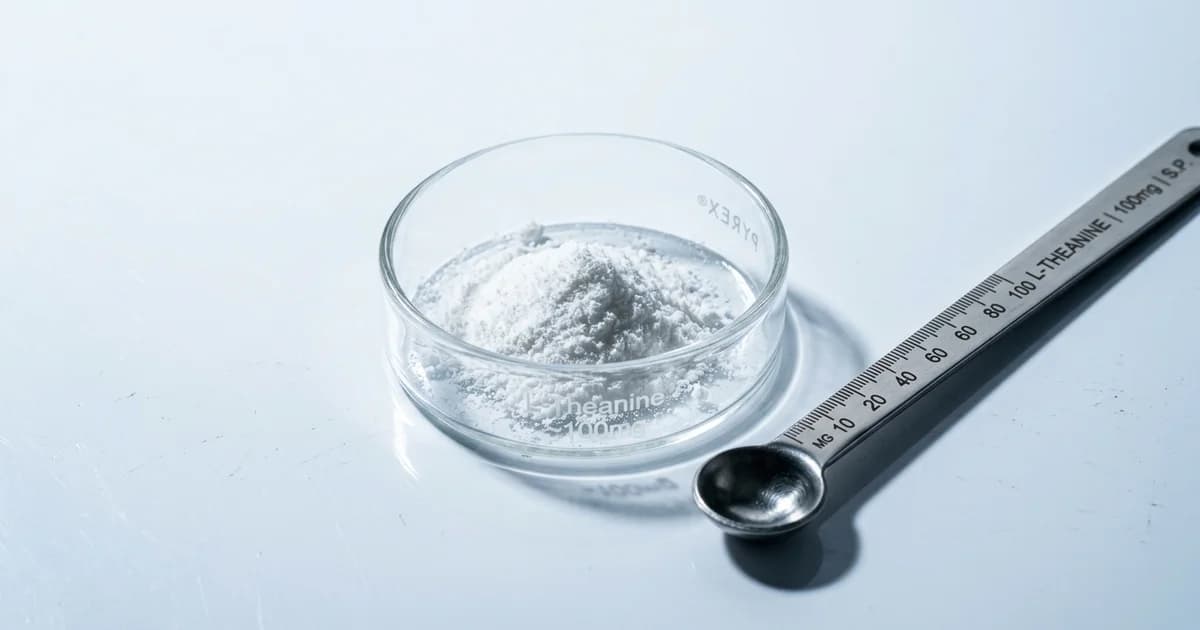
The fix is L-theanine, an amino acid found naturally in tea. On its own it promotes a relaxed, alert state. Paired with caffeine, it smooths out the rough edges.
Why L-Theanine + Caffeine Beats Coffee Alone
The combination of L-theanine and caffeine has been studied repeatedly, and it consistently improves focus while reducing the jittery downside of caffeine. A frequently cited study in Nutritional Neuroscience (via PubMed) found the combination improved cognitive performance and increased subjective alertness compared to placebo.
More recent work has pushed the same direction. A double-blind crossover trial published in the British Journal of Nutrition reported that an L-theanine and caffeine combination improved measures of selective attention even in sleep-deprived young adults, which describes a lot of students on exam day.
L-theanine also has standalone calming effects. A randomized controlled trial in the journal Nutrients (via PMC) found that L-theanine reduced stress-related symptoms and supported cognitive function in healthy adults. That's the profile you want walking into an exam: alert, but not anxious.
What to Eat Before an Exam
The best thing to eat before an exam is a meal that keeps your blood sugar steady: protein, healthy fat, and slow-digesting carbohydrates, eaten 60 to 90 minutes before you sit down. Your brain runs on glucose, but the goal is a stable supply, not a spike.
A sugary breakfast or energy drink gives you a fast rise and an equally fast crash. The crash tends to land mid-exam, right when fatigue and frustration are already building. Slow carbs avoid that whiplash.
Good pre-exam options:
- Oats with berries and nuts for slow-release energy plus fiber
- Eggs and whole-grain toast for protein and steady carbs
- Greek yogurt with fruit for protein and a moderate carb load
- A banana with peanut butter if you need something quick and portable
What to avoid: pastries, sugary cereal, and large energy drinks. Also avoid eating nothing, because an empty stomach plus caffeine is a reliable recipe for jitters.
Hydration matters too. Even mild dehydration drags on concentration, so drink water steadily through the morning rather than chugging right before you walk in.
How to Relax Before an Exam: A Comparison of Options
Different tools work on different timelines. Here's how the common options compare for calm, focused performance, including how a focus pouch fits in.
| Option | Onset | Duration | Jitter Risk | Best For |
|---|---|---|---|---|
| Black coffee | 30–45 min | 3–5 hrs | High (alone) | Quick lift, if you tolerate it |
| Energy drink | 15–30 min | 2–3 hrs | Very high | Not recommended (sugar crash) |
| Green tea | 30–45 min | 3–4 hrs | Low | Mild, sustained calm focus |
| Breathing + sleep | Immediate | Hours | None | The foundation, always |
| Roon focus pouch | 5–10 min | 6–8 hrs | Low | Long exams and study blocks |
The point isn't to pick one. The foundation is sleep, food, water, and breathing. A measured caffeine-plus-theanine dose sits on top of that foundation, not in place of it.
For more on building a study routine that holds, see our related guides on the best nootropics for studying and how to focus for long study sessions.
Frequently Asked Questions
How long before an exam should I take caffeine?
Take caffeine about 30 to 45 minutes before your exam if you're drinking coffee, since that's roughly how long it takes to peak in your bloodstream. Faster-onset formats like sublingual pouches act in 5 to 10 minutes, so you can take them closer to start time. Avoid dosing too early, or the peak passes before you need it.
Is it bad to drink coffee before a test?
Coffee before a test isn't bad in moderate amounts, around 80 to 100 mg of caffeine. Problems come from high doses or drinking it on an empty stomach, which can trigger a racing heart and anxiety. If coffee makes you jittery, pairing caffeine with L-theanine, or eating first, usually fixes it.
What should I eat the morning of an exam?
Eat a balanced meal with protein, slow carbs, and some healthy fat about 60 to 90 minutes before. Think eggs and whole-grain toast, oats with nuts, or Greek yogurt with fruit. Skip sugary cereals and pastries, which spike then crash your blood sugar mid-exam.
How do I stop my mind from going blank during a test?
Mental blanking is usually acute stress throttling your recall, not lost knowledge. Slow your breathing with a long exhale to calm your nervous system, then start with the easiest question to rebuild confidence. Steady blood sugar and sleep the night before reduce how often it happens.
Does L-theanine actually help with exam stress?
L-theanine promotes a calm, alert state and, in research, has reduced stress-related symptoms in healthy adults. Paired with caffeine, it preserves the focus benefit while smoothing out the jitters. It's not a sedative, so it won't make you drowsy during the exam.
What's the fastest way to calm down right before walking in?
The fastest reliable method is controlled breathing: inhale four seconds, hold four, exhale six, for several minutes. The extended exhale activates your parasympathetic nervous system and lowers your heart rate within minutes. Combine it with steady caffeine and a real breakfast, not a sugar rush.
Calm, Sharp, and Steady for the Full Exam
Calming down before an exam comes down to managing your biology, not gritting your teeth. Sleep protects your recall. A long exhale quiets the stress circuit that makes you blank. A balanced breakfast keeps your blood sugar level so you don't crash on question 30. And a moderate caffeine dose, ideally paired with L-theanine, gives you alert focus without the racing heart.
Stack those four, and you walk in steady instead of frantic. That state, calm but sharp, is where your best thinking lives.
Steady Focus for a Three-Hour Exam, Not a 30-Minute Spike
If your problem is the caffeine paradox, needing the focus but dreading the jitters, that's the gap Roon was built to close. Each sublingual pouch pairs 80 mg of caffeine with 60 mg of L-theanine, plus 25 mg of methylliberine (Dynamine) and 5 mg of theacrine (TeaCrine), the same caffeine-and-theanine pairing the research above points to, in a format you can take quietly at your desk.
It works in 5 to 10 minutes and holds for 6 to 8 hours, with no nicotine, no sugar, and no crash mid-exam. That timeline is built for long tests and back-to-back study blocks, not a quick lift that fades before you finish.
Roon is not a replacement for sleep, a real breakfast, or actually knowing the material. It's the focus layer that sits on top of a solid routine. If jitters and crashes have been sabotaging your exams, try Roon before your next study session and see how the calm-alert state feels.
Written by Roon Team