Vitamin B6 for the Brain: How It Builds Your Neurotransmitters (and Where the Toxicity Line Sits)
Vitamin B6 is the spark plug behind almost every neurotransmitter your brain makes. Dopamine, serotonin, GABA, norepinephrine: none of them get built at full speed without it. That makes the vitamin B6 brain connection one of the most direct in all of nutrition, and also one of the most misunderstood.
Here is the twist that catches people off guard. B6 is the rare vitamin where more is not better, and where the supplement aisle can quietly walk you into nerve damage. The same molecule that fuels your mind has a hard ceiling, and crossing it has a name: pyridoxine neuropathy.
This is a story about a cofactor doing precise, beautiful chemistry, and about why the dose you pick matters more than the bottle implies.
Key Takeaways
- Vitamin B6 is a required cofactor for the enzymes that synthesize dopamine, serotonin, and GABA. Low B6 throttles all three.
- The active form, pyridoxal 5'-phosphate (PLP), powers more than 140 enzyme reactions in the body and over 100 in the brain.
- The adult RDA is roughly 1.3 mg per day, and most people already get enough from food.
- Too much B6 causes peripheral neuropathy, a sensory nerve disorder. The US upper limit is 100 mg/day; the EU revised its limit down to 12 mg/day in 2023.
- For cognition, the goal is sufficiency, not megadosing. Precision beats more.
How Vitamin B6 Powers Your Brain Chemistry
Vitamin B6 works as the coenzyme that lets your brain convert amino acids into neurotransmitters. Without it, the assembly line stalls.
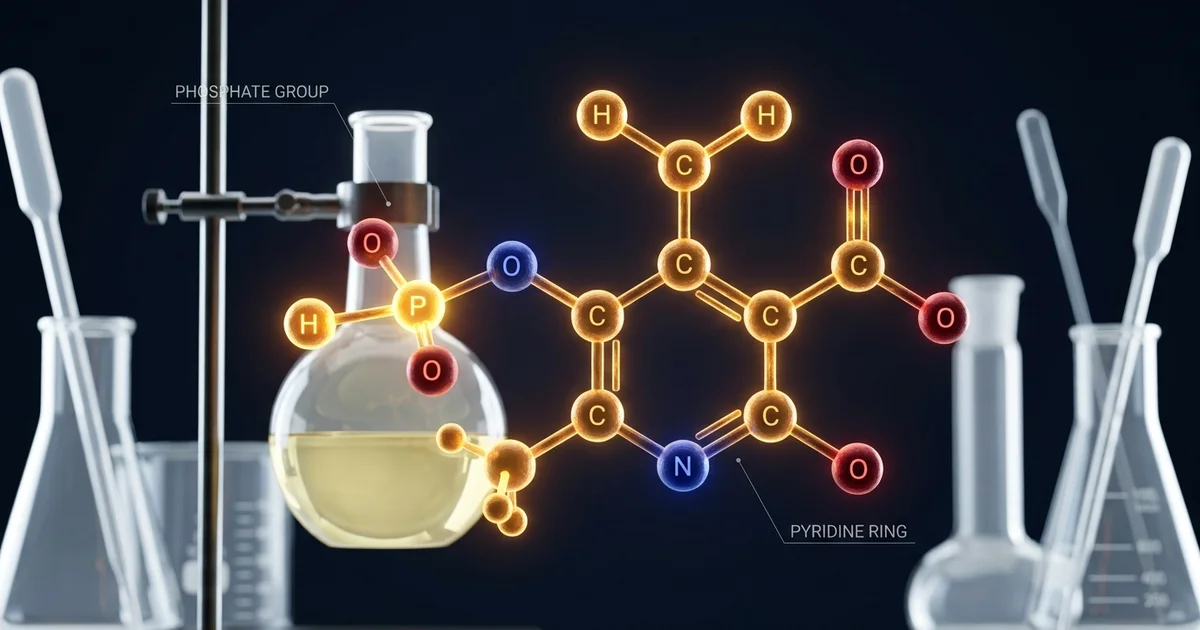
The form that does the work is not pyridoxine itself but its phosphorylated version, PLP. According to the Linus Pauling Institute at Oregon State University, the PLP-dependent enzyme aromatic L-amino acid decarboxylase builds two major neurotransmitters: serotonin from tryptophan, and dopamine from L-DOPA. Same enzyme, same cofactor, two of your most important brain chemicals.
PLP is one of the most versatile cofactors in human biology. Research summarized by ScienceDirect notes that PLP acts as a coenzyme for more than 100 enzymatic reactions in the brain alone, and over 140 across the body. It handles amino acid metabolism, heme synthesis, and the conversion of stored glycogen into usable fuel for neurons.
B6 and the Dopamine, GABA, Serotonin Triangle
B6 sits at the center of the dopamine, GABA, and serotonin pathways at the same time. This is what makes it unusual among brain nutrients.
Take GABA, your brain's main calming signal. The enzyme glutamic acid decarboxylase (GAD) converts excitatory glutamate into inhibitory GABA, and ScienceDirect confirms GAD depends on PLP to do it. Run low on B6 and you tilt the balance toward glutamate, which is part of why deficiency can show up as irritability and poor sleep.
The dopamine and serotonin side runs through the same decarboxylase logic. The Nutrition Flexbook from SUNY describes how DOPA decarboxylase uses PLP to convert L-DOPA into dopamine, the chemistry behind motivation, focus, and reward. The b6 dopamine gaba relationship is not a marketing slogan. It is one enzyme family, one cofactor, three outputs.
This is also why pyridoxine cognition research keeps circling back to deficiency. When PLP runs short, GAD and AADC activity both drop, and the brain makes less GABA and fewer monoamines at once.
What Happens When B6 Runs Low
Even mild B6 deficiency down-regulates the synthesis of GABA and serotonin. The brain notices before the blood test does.
Reporting from Nootropics Expert describes how mild deficiency reduces GABA and serotonin production, with downstream effects on sleep, mood, and behavior. The mechanism is simple: fewer cofactors, slower enzymes, less product.
The extreme end of this is medical. A 2025 review in PMC on vitamin B6-responsive epilepsies explains that PLP deficiency, whether from diet or genetics, impairs both GAD and AADC, cutting GABA and monoamine synthesis. In newborns with certain genetic defects, this can drive seizures that respond to B6 and little else.
Most adults are nowhere near that edge. The richest food sources, per the NIH Office of Dietary Supplements, include fish, beef liver and other organ meats, starchy vegetables like potatoes, and non-citrus fruit. If you eat a varied diet, you are probably covered.
The Toxicity Line: Where B6 Turns on You
Vitamin B6 is the one B vitamin that is genuinely toxic in excess, and the damage hits your nerves. This is the part most supplement labels do not advertise.
High-dose B6 causes peripheral sensory neuropathy: tingling, numbness, and loss of coordination in the hands and feet. The strange irony is that the nutrient required to build a healthy nervous system damages that same system when it floods the body. The classic description of pyridoxine overdose neuropathy dates back to work by Dalton and Dalton in the late 1980s, and the pattern has been confirmed many times since.
Here is where the numbers get interesting, because two major regulators disagree on the safe ceiling.
The Dosage Numbers You Actually Need
| Reference point | Amount | Source |
|---|---|---|
| Adult RDA (daily need) | ~1.3 mg/day | NIH ODS |
| US Tolerable Upper Limit | 100 mg/day | NIH ODS |
| EU Tolerable Upper Limit (2023) | 12 mg/day | EFSA |
| Doses linked to neuropathy in studies | as low as below 500 mg/day | NIH ODS |
The NIH Office of Dietary Supplements sets the US upper limit at 100 mg/day for adults. It reached that figure cautiously: several reports show sensory neuropathy at doses under 500 mg/day, while patients taking around 200 mg/day for up to five years showed no clear effect. The board then halved that long-term dose to build in a safety margin.
Europe went much further. In 2023, the European Food Safety Authority cut its adult upper limit from 25 mg/day all the way down to 12 mg/day, citing stronger evidence linking excess intake to nerve symptoms. As Nutrition Insight reported, the revision was contested by some scientists, but the direction of travel is clear: regulators are tightening, not loosening.
The practical takeaway on safe vitamin B6 dosage is this. Your body needs a little over one milligram a day. Many B-complex and energy supplements pack in 50 mg, 100 mg, or more per serving, dozens of times the requirement. Stack a few products and you can drift toward trouble without ever feeling "overdosed" in the moment, because b6 neuropathy builds slowly and quietly.
Why the B6 Story Is Really a Lesson in Dosing
The most useful thing B6 teaches is that biology rewards precision, not maximum dose. A cofactor only helps up to the point where its enzymes are saturated. Past that, you are not buying more brain chemistry. You are buying risk.
This is the megadosing trap in miniature. The logic of "if a little helps, more must help more" is intuitive and almost always wrong for water-soluble vitamins, where the body excretes the excess until the excess starts causing harm. B6 is the cleanest example because it has a visible, named failure mode.
If you want a deeper look at how the wider B-complex supports energy and cognition, our guide to B vitamins and brain function walks through where each one actually earns its place.
Conclusion
Vitamin B6 is foundational to the way your brain builds dopamine, serotonin, and GABA, and the science behind that is settled and elegant. The catch is that this benefit lives inside a narrow window. Sufficiency does the work; excess does damage.
For nearly everyone, food plus a sensible amount covers the need with room to spare. The real risk is not deficiency but unintentional megadosing from stacked supplements, where doses dozens of times the daily requirement quietly raise the odds of nerve symptoms. B6 is proof that with nutrients tied to the nervous system, the smart move is the disciplined dose, not the biggest one.
Frequently Asked Questions
Does vitamin B6 increase dopamine?
B6 does not flood your brain with dopamine, but it is required to make it. The active form, PLP, is the cofactor for the enzyme that converts L-DOPA into dopamine. If you are deficient, restoring B6 supports normal dopamine synthesis. If you already have enough, adding more will not push production higher, because the relevant enzymes are already saturated with cofactor.
How much vitamin B6 is safe per day?
The adult RDA is about 1.3 mg per day. The US upper limit for total intake is 100 mg/day, while the European Food Safety Authority lowered its adult upper limit to 12 mg/day in 2023. For most people, food alone meets the requirement, and high-dose supplements offer no cognitive bonus while carrying real risk.
What are the symptoms of too much vitamin B6?
The main sign is peripheral sensory neuropathy: tingling, numbness, burning, or loss of coordination in the hands and feet. Symptoms usually develop gradually with sustained high intake and often improve after stopping supplementation. Because it builds slowly, many people do not connect the symptoms to their supplements until a clinician asks about dosage.
Can vitamin B6 help with anxiety or sleep?
B6 supports the synthesis of GABA and serotonin, both tied to calm and sleep regulation, so deficiency can worsen mood and rest. That is different from a treatment claim. Correcting a shortfall helps; loading up beyond your needs does not produce extra calm and is not a substitute for medical care if you have a diagnosed condition.
Is P5P better than regular vitamin B6?
P5P, or pyridoxal 5'-phosphate, is the already-active form of B6, so it skips the conversion step the liver performs on pyridoxine. Some people prefer it for that reason. For most healthy adults the difference is modest, and the same dosing caution applies. Active form or not, more than your body can use does not buy more brain chemistry.
Why did Europe lower its B6 safety limit?
In 2023, the European Food Safety Authority reviewed the evidence linking excess B6 to peripheral neuropathy and concluded the previous ceiling was too generous. It cut the adult upper limit from 25 mg/day to 12 mg/day. Some researchers questioned the strength of the underlying data, but the revision reflects growing caution about chronic high-dose intake.
The Case for the Clinically Reasoned Dose
B6 makes a point that runs through everything we believe about cognitive performance: the right amount, chosen for a reason, beats the biggest amount you can find. The vitamin that builds your neurotransmitters also damages your nerves past its ceiling, and that ceiling is far lower than the supplement industry's habit of megadosing would suggest.
That dose discipline is the philosophy behind Roon. Each pouch is built on four ingredients at deliberate, clinically reasoned amounts: 80 mg caffeine, 60 mg L-theanine, 25 mg methylliberine (Dynamine), and 5 mg theacrine (TeaCrine). The sublingual format is designed for a 5 to 10 minute onset and 6 to 8 hours of steady focus, with no jitters, no crash, and no tolerance creep.
Roon is not a vitamin and not a fix for a poor diet or a real deficiency. It is a focus tool built on the same principle this article makes: precise, evidence-based dosing wins. If you want to feel that difference, try Roon.
Written by Roon Team