Phosphatidylcholine: The Brain's Master Membrane Phospholipid
Roon Team
Phosphatidylcholine: The Brain's Master Membrane Phospholipid
Every thought you have travels across a fatty barrier. Your neurons are wrapped in a membrane built largely from phosphatidylcholine, and the phosphatidylcholine in your brain does double duty: it forms the structural shell of your cells and feeds the supply chain for a neurotransmitter tied to memory and learning.
Most people have never heard of it. They have heard of choline, and they have heard of lecithin, and the truth is those three things are tangled together in ways that get explained badly online.
This is the clean version. What phosphatidylcholine actually does in the brain, how it differs from plain choline, and whether a PC supplement is worth your money.
Key Takeaways
- Phosphatidylcholine (PC) is the single most common phospholipid in your cell membranes and a structural backbone of neuronal walls.
- It serves as a slow-release reservoir of choline, the raw material your body converts into the memory-linked neurotransmitter acetylcholine.
- Lecithin is the food source; phosphatidylcholine is the active component inside it.
- Higher dietary PC and choline track with better cognitive scores in older adults, though supplement trials are still mixed.
- Most Americans fall short of the recommended choline intake, which makes dietary PC genuinely relevant.
What Phosphatidylcholine Is and Why the Brain Depends on It
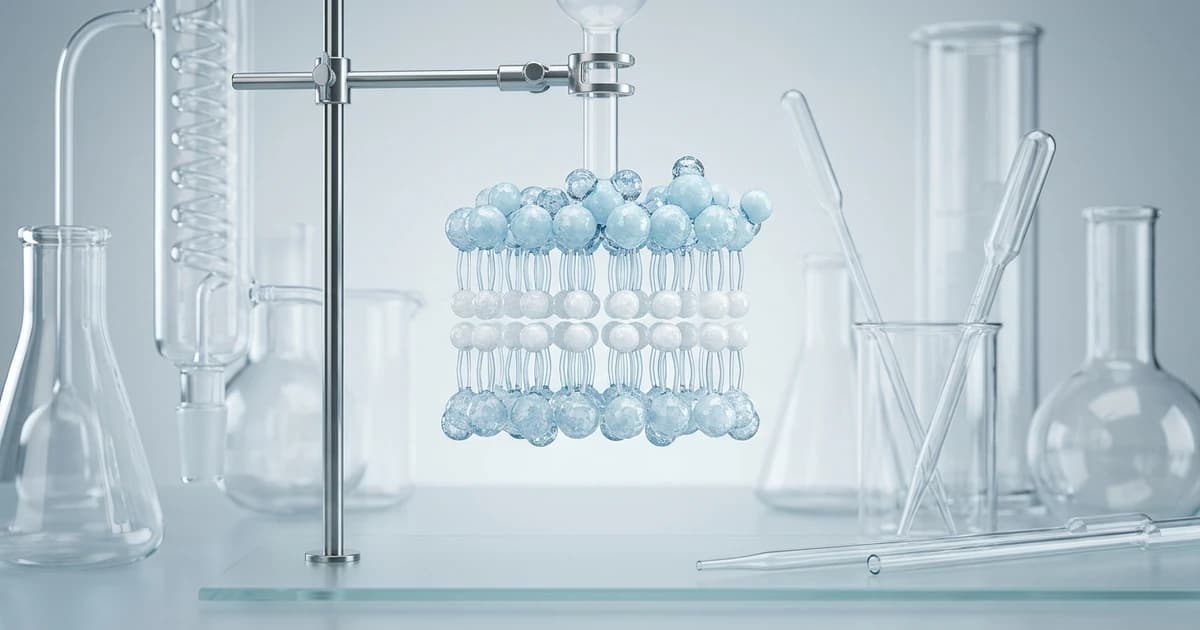
Phosphatidylcholine is the most abundant phospholipid in your body's membranes, and it is foundational to how neurons hold their shape. Phosphatidylcholine is the most abundant phospholipid in mammalian plasma and intracellular membranes, and it is synthesized from choline through the CDP-choline or Kennedy pathway. That is not a minor structural role. It represents the main phospholipid of the outer layer of the cellular and intracellular membranes of mammalian cells, and it accounts for 32.8% of the total glycerophospholipid content of the human brain.
Think of a single neuron as a water balloon made of fat. The membrane has to be fluid enough to let signals pass and stable enough to hold its contents. Phosphatidylcholine is the dominant material in that wall.
When a membrane is damaged through aging, oxidative stress, or injury, the body needs raw lipids to patch it, and phosphatidylcholine is one of the primary building blocks for that repair.
Phosphatidylcholine vs Choline: The Distinction That Matters
Phosphatidylcholine and choline are related, but they are not the same thing, and confusing them costs people money on the wrong supplement. Choline is a small, water-soluble nutrient. Phosphatidylcholine is a large fat molecule that carries choline as part of its structure.
Here is the practical chain. Your body breaks phosphatidylcholine down to release choline, and that choline becomes the precursor for acetylcholine, a signaling molecule central to memory and attention. Phosphatidylcholine acts as a source of the essential nutrient choline, which is important for the production of a brain chemical involved in learning and memory, called acetylcholine.
So phosphatidylcholine is essentially a slow-release delivery vehicle for choline, packaged inside a molecule the brain also uses for construction. Plain choline salts give you the nutrient faster but without the membrane-building lipid attached.
| Compound | What it is | Primary role | Found in |
|---|---|---|---|
| Choline | Small water-soluble nutrient | Direct precursor to acetylcholine | Eggs, liver, supplements |
| Phosphatidylcholine (PC) | Phospholipid containing choline | Membrane structure + slow choline supply | Egg yolk, soy, sunflower lecithin |
| Lecithin | Fatty mixture rich in PC | Dietary and food-industry source of PC | Soybeans, eggs, sunflower |
| Alpha-GPC / CDP-choline | Concentrated choline donors | Fast, high-bioavailability choline delivery | Supplements |
Lecithin and the Brain: Where PC Actually Comes From
Lecithin is the food; phosphatidylcholine is the part of it that does the work. The two terms get swapped constantly, but lecithin is a broad mixture of fatty substances, and PC is its headline ingredient. Phosphatidylcholine is a primary lipid component of cell membranes found at high levels in egg yolks, and the major component of lecithin.
If you have ever seen "soy lecithin" or "sunflower lecithin" on a label, that is a PC-rich extract. Supplement makers often sell lecithin precisely because it is a cheaper, food-derived way to deliver phosphatidylcholine.
The catch is concentration. A scoop of generic lecithin contains far less PC than a standardized phosphatidylcholine capsule, so the lecithin-brain connection depends heavily on how purified the product is.
Phosphatidylcholine Benefits: What the Research Actually Shows
The strongest evidence for phosphatidylcholine benefits comes from population data linking higher intake to sharper thinking in older adults. Researchers at the University of Illinois found a real association in healthy aging brains. A study of older adults finds an association between higher blood levels of phosphatidylcholine, a source of the dietary nutrient choline, and greater cognitive flexibility, the ability to regulate attention to manage competing tasks.
That study went further than a simple correlation. It traced the effect to a specific brain region, suggesting phosphatidylcholine's link to cognition runs through measurable structure, not vague "brain support."
Diet-level intake also shows up in dementia research. According to the Alzheimer's Drug Discovery Foundation, higher phosphatidylcholine intake has been associated with better cognitive function and a lower risk of dementia compared with the lowest-intake groups.
Now the honest part. Eating more PC and swallowing a PC pill are not the same experiment, and the supplement trials are weaker than the dietary data. Supplementation is safe, but trials have not shown clear cognitive benefits to date. Harvard's nutrition researchers reach a similar verdict: observational studies tie higher choline to better memory, but clinical trials have not confirmed it.
The reasonable read: phosphatidylcholine is a genuine nutritional input for brain health, especially if your diet is low in it, but it is not a fast-acting cognitive enhancer you take before a meeting.
Are You Actually Getting Enough?
Most people are not hitting their choline target, which is the real argument for paying attention to phosphatidylcholine. The recommended Adequate Intake is well-defined. The recommended adequate intake of choline for adults is 425 milligrams per day for women and 550 milligrams per day for men.
National data shows a clear gap. According to the NHANES 2015 to 2018 survey, mean dietary intakes of choline were 284 mg/day for women and 390 mg/day for men, and only 6% of women and 11% of men had intakes greater than the AI. In plain terms, the overwhelming majority of adults eat less choline than recommended.
Egg yolks, liver, and soybeans are the densest sources, and they happen to be exactly where phosphatidylcholine concentrates. If you avoid those foods, your membrane phospholipid raw material is probably running low.
This is the layer phosphatidylcholine addresses. It is a foundational supply nutrient, the kind of thing that matters over months and years rather than in the next 30 minutes.
How PC Fits Into the Bigger Picture of Focus
Phosphatidylcholine supports the raw-material layer of cognition, not the acute-alertness layer. These are two different systems, and people constantly mix them up.
The raw-material layer is about supply: enough choline to build acetylcholine, enough phospholipid to maintain healthy membranes. This is slow, structural, and dietary. PC, lecithin, and choline donors live here.
The acute-alertness layer is about right now: blocking the adenosine that makes you feel tired, nudging dopamine, getting wakeful within minutes. That is a different toolkit, and it is the difference between feeding your brain and switching it on. If you care about same-day focus, you can read more in our guide to how caffeine and L-theanine work together. A complete approach respects both layers.
Conclusion
Phosphatidylcholine earns its title as the brain's master membrane phospholipid for two reasons. It is the dominant structural lipid in your neurons, and it is a steady reservoir of the choline your body turns into acetylcholine.
The science is strongest at the dietary level. Higher intake tracks with better cognitive flexibility and lower dementia risk, while isolated supplement trials remain mixed. Given that most adults fall short of recommended choline, getting more PC from egg yolks, soy, and quality lecithin is a defensible, low-risk move.
Just keep the categories straight. Phosphatidylcholine builds and supplies. It does not flip the switch on alertness, and treating it like a pre-task stimulant will only disappoint you.
Frequently Asked Questions
Is phosphatidylcholine the same as choline?
No. Choline is a small, water-soluble nutrient, while phosphatidylcholine is a large fat molecule that contains choline within its structure. Your body breaks down phosphatidylcholine to release choline, which then becomes a precursor for acetylcholine. Think of phosphatidylcholine as the packaged, slow-release form and choline as the active nutrient inside it. Both feed the same downstream system, but they behave differently in the body.
Is lecithin a good source of phosphatidylcholine?
Yes, lecithin is the main dietary source of phosphatidylcholine, since PC is its headline component. Soy and sunflower lecithin are common supplement forms. The important variable is concentration. Generic lecithin contains far less PC than a standardized phosphatidylcholine product, so check the label for the actual PC percentage rather than assuming all lecithin is equal.
Does phosphatidylcholine improve memory?
The evidence is encouraging at the dietary level but not conclusive for supplements. Population studies link higher phosphatidylcholine and choline intake to better cognitive scores in older adults. However, controlled supplement trials have not consistently confirmed a memory benefit. It is best viewed as a foundational nutrient for brain health rather than a reliable short-term memory booster.
How much choline do I need per day?
For adults, the recommended Adequate Intake is 425 mg per day for women and 550 mg per day for men. National survey data shows most people fall well short of these numbers. Since phosphatidylcholine is a major dietary source of choline, foods rich in PC such as egg yolks, liver, and soybeans are practical ways to close that gap.
Is a PC supplement safe?
Phosphatidylcholine supplementation is generally considered safe, and no toxic threshold has been established from typical intake. That said, supplements are not a replacement for medical advice, and anyone with a health condition or taking medication should check with a clinician first. The bigger limitation is efficacy, not safety, since supplement trials have produced mixed cognitive results.
Does phosphatidylcholine give you energy or focus right away?
No. Phosphatidylcholine works on the structural and supply side of brain function, building membranes and feeding acetylcholine production over time. It does not act on the wakefulness systems that produce same-day alertness. For acute focus, compounds that affect adenosine and dopamine, like caffeine, are the relevant tools, and they work on a completely different timescale.
The Supply Layer and the Switch: Two Different Jobs
This article drew a line between two systems. Phosphatidylcholine feeds the raw-material layer, the slow supply of choline and membrane lipids your brain builds with. That work happens over weeks and months, and a good diet or a quality PC source covers it.
Roon operates on the other layer: acute alertness, right now. Each sublingual pouch delivers 80 mg caffeine, 60 mg L-theanine, 25 mg methylliberine (Dynamine), and 5 mg theacrine (TeaCrine), a combination built to act on the adenosine and dopamine systems with a 5 to 10 minute onset and a 6 to 8 hour window of focus without the jitters, crash, or tolerance creep of stronger stimulants.
To be clear, Roon is not a phosphatidylcholine product and not a substitute for dietary choline. The two are complementary. Keep your supply chain stocked with PC-rich foods, and use Roon when you need the switch flipped for a specific block of work. Try Roon when same-day focus is the job, and let phosphatidylcholine handle the long game.
Written by Roon Team