On vs Zyn: What Actually Separates the Two Biggest Nicotine Pouch Brands
Roon Team
On vs Zyn: What Actually Separates the Two Biggest Nicotine Pouch Brands
If you're comparing On! and ZYN, you're looking at the two biggest names in a U.S. nicotine pouch market that was estimated at roughly $4.09 billion in 2024. Both are tobacco leaf-free. Both are spit-free. Both deliver nicotine without combustion, smoke, or vapor.
But they are not the same product. The on vs zyn differences in pouch size, nicotine strength, flavor duration, and overall feel are real, and they matter depending on what you're actually looking for.
Here's how on pouches vs zyn stack up across every category that counts.
Key Takeaways
- ZYN offers two standard strengths (3mg and 6mg), plus the newer ZYN Ultra line (9mg, with 11mg rolling out), in a softer, slightly larger pouch with longer-lasting flavor.
- On! gives you more strength options (2mg, 4mg, and 8mg in standard; 6mg and 9mg in On! Plus) in a smaller, drier format.
- ZYN was the first nicotine pouch to receive FDA marketing authorization in January 2025. On! Plus received authorization for six varieties in December 2025.
- If you want the oral ritual without nicotine at all, there's a third option worth knowing about.
Who Makes These On vs Zyn Pouches?
ZYN is manufactured by Swedish Match, a subsidiary of Philip Morris International. The brand has roots in Scandinavian snus culture and has been the dominant player in the U.S. nicotine pouch category for years.
On! is made by Helix Innovations, a subsidiary of Altria, the tobacco giant behind Marlboro. On! entered the market as a direct competitor to ZYN, and the FDA authorized six On! Plus varieties in December 2025, making it only the second brand to earn that approval.
Both brands are backed by major tobacco companies, which matters when thinking about how these products are positioned and marketed in the on vs zyn debate.
On vs Zyn: Nicotine Strengths
This is where the two brands diverge most clearly.
| Feature | ZYN | On! (Standard) | On! Plus |
|---|---|---|---|
| Strengths available | 3mg, 6mg | 2mg, 4mg, 8mg | 6mg, 9mg |
| Pouches per can | 15 | 20 | 14 |
| Nicotine type | Synthetic | Tobacco-derived | Tobacco-derived |
ZYN keeps it simple with two options. If you're a lighter user, you grab the 3mg. If you want more, you go 6mg. That's it.
On! gives you a wider range. The standard On! line comes in 2mg, 4mg, and 8mg, while the newer On! Plus line offers 6mg and 9mg with a different pouch material. If strength range is the main variable you care about, On! gives you more steps across the lineup.
One detail that often gets overlooked: ZYN uses synthetic nicotine, while On! uses tobacco-derived nicotine. For most users, the practical difference in feel is minimal. But it's a distinction that matters for regulatory classification and, for some, personal preference.
On vs Zyn: Pouch Size and Comfort
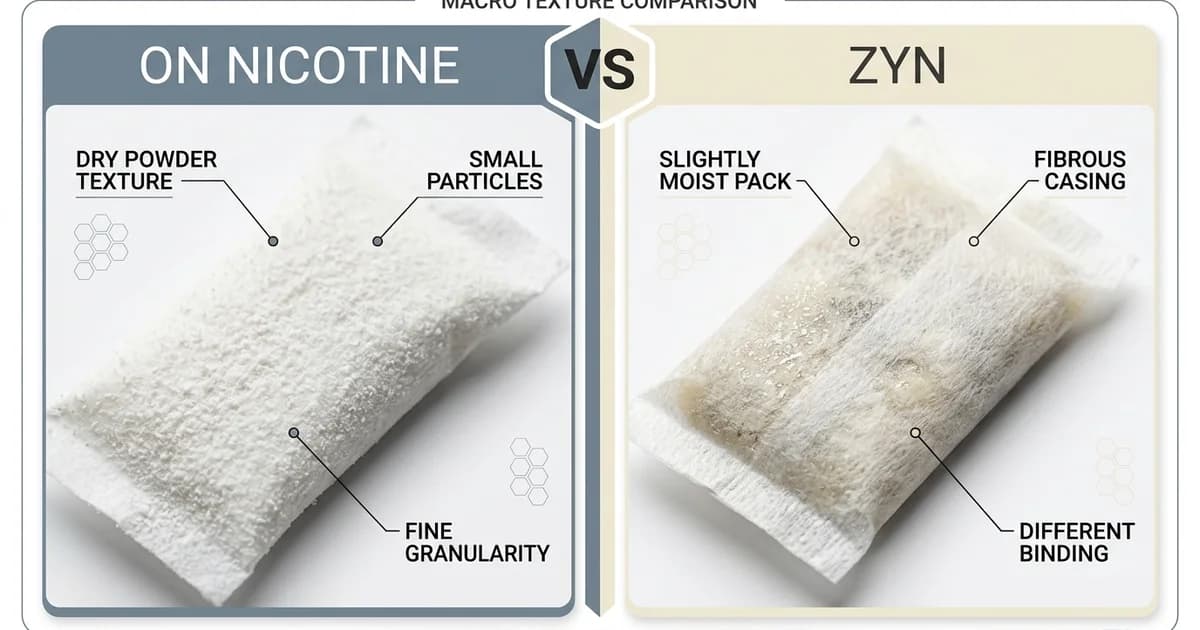
On! pouches are noticeably smaller. The standard On! mini is about 30% smaller than ZYN's standard pouch, which makes it more discreet if you're using it in a meeting, on a call, or anywhere you'd rather nobody notice.
ZYN pouches are slightly larger and have a softer, more moist feel. Many users report that ZYN's size is comfortable for prolonged use and that the moisture helps with flavor release. On!'s drier format means a faster initial hit but can feel a bit papery if you keep it in for a long time.
The newer On! Plus line tries to close this gap with what Altria calls "NICOSILK mesh technology," a softer, more flexible pouch that adapts to your gum line. It's a clear response to the comfort advantage ZYN has held.
Bottom line on fit: Comparing on pouches vs zyn for comfort, On! tends to emphasize size and discretion, while ZYN often gets described as more comfortable for longer use.
On vs Zyn: Flavor Lineup
Both brands cover the basics, but the experience is different.
ZYN flavors (10 varieties): Wintergreen, Cool Mint, Spearmint, Peppermint, Menthol, Citrus, Coffee, Cinnamon, Smooth, and Chill. ZYN's flavor profile leans clean and consistent. Users describe it as more restrained, with flavor lasting 30 to 45 minutes per pouch.
On! flavors (7 standard varieties): Mint, Wintergreen, Citrus, Cinnamon, Berry, Coffee, and Original. On! tends to hit harder upfront with bolder, sharper notes, but the flavor experience runs closer to 20 to 30 minutes.
If you like variety, ZYN has more options. If you prefer a stronger initial flavor punch, On! delivers that. Neither brand is doing anything wild here. In practice, the flavor difference is less about wild variety and more about how each brand handles familiar profiles like mint, wintergreen, citrus, and coffee. Reddit users describe the same duration gap: "On!'s seem to lose their umph after 15 minutes, where as with Zyn I feel like I can keep them in for an hour before I gotta toss it. On! Is like the Zebra gum of nic pouches" (r/NicotinePouch).
Price and Value: On Pouches vs Zyn
Pricing fluctuates by retailer and region, but the general picture looks like this:
- On! typically runs around $3.50 to $4.60 per can with 20 pouches (standard) or 14 pouches (Plus).
- ZYN typically falls in the $4.00 to $5.50 range per can with 15 pouches.
On! often comes out lower on a per-pouch basis, especially in the standard 20-count cans. You're getting 20 pouches per can versus ZYN's 15, and the sticker price is often a bit lower. For daily users going through a can every day or two, that on vs zyn cost difference adds up over a month.
ZYN does offer a loyalty program (ZYN Rewards) that can offset some cost through points and perks, a factor that comes up often in nicotine pouch user opinions across forums. On! doesn't have an equivalent program at the time of writing. The value case shows up in how people actually shop: "As far as quality.....I have to give it to Zyn BUT.....I buy On! more often. Better price and I actually like the smaller pouches. Also, On! Coffee is my favorite flavor out of any flavor from either brand" (r/NicotinePouch).
The Elephant in the Room: Nicotine Dependency
Both On! and ZYN deliver nicotine. That's the whole point. But it's also the whole problem for a growing number of users who picked up pouches as a "safer" alternative and now find themselves locked into a daily habit.
Nicotine is one of the most addictive substances on the planet. Tolerance builds quickly. What feels strong early on often feels less noticeable over time, which is exactly how nicotine tolerance works, and suddenly you're reaching for the 6mg or 8mg. There is no safe form of nicotine consumption, and the aggressive marketing of nicotine pouches and similar products risks pulling new users into dependence. This cycle is by design, not by accident.
The U.S. nicotine pouch market is projected to grow at nearly 30% annually through 2030. That growth isn't driven by people trying pouches once. It's driven by repeat purchases from dependent users.
If you're comparing on vs zyn because you're already using one and thinking about switching, the honest question is whether the brand matters, or whether the nicotine itself is the thing worth reconsidering. And if you do decide to step away from it, knowing what to expect when you switch off nicotine makes that decision easier to plan around.
The Bigger Limitation Both Brands Share
If what you actually want from a pouch is the focus, the alertness, and the oral ritual, but without the nicotine dependency, that's exactly what Roon was built for.
Roon's zero-nicotine cognitive pouches deliver a stack of caffeine (80mg), L-Theanine, Theacrine, and Methylliberine. It's designed to deliver 6 to 8 hours of sustained cognitive performance without jitters, crashes, or tolerance buildup. No nicotine. No dependency cycle. Just clean focus in a familiar format.
It's not a nicotine replacement product. It's a different category entirely: cognitive performance instead of nicotine delivery. So whether you've settled the on vs zyn question or not, Roon offers something neither brand can.
The more useful takeaway is this: changing pouch brands does not solve the core issue if nicotine dependence is the real thing driving the habit. For anyone in that position, it is worth looking at nicotine-free alternatives worth trying rather than swapping one nicotine brand for another.
What Separates Them From a Completely Different Category
The on vs zyn debate assumes nicotine delivery is the goal. But not everyone shopping in this space is after nicotine. Some want the focus. Some want the oral routine. Some want something to do with their hands and mouth during a long work session or a drive.
For those users, both brands miss the mark entirely, because the thing driving their pouch use is not the nicotine itself, it's the alertness and the ritual.
That's a meaningfully different product need, and it calls for a different kind of comparison.
On vs Zyn vs Roon: What Each Brand Actually Delivers
This table compares the three brands across the dimensions that matter most to someone weighing the on vs zyn question and wondering what else exists.
| Feature | ZYN | On! (Standard) | Roon |
|---|---|---|---|
| Active compounds | Nicotine only (synthetic, 3mg or 6mg) | Nicotine only (tobacco-derived, 2/4/8mg) | Caffeine 80mg, L-Theanine 60mg, Dynamine 25mg, TeaCrine 5mg |
| Nicotine-free | No | No | Yes |
| Onset | 5-10 min | 5-10 min | 5-10 min |
| Duration | 30-45 min flavor; dependency ongoing | 20-30 min flavor; dependency ongoing | 6-8 hr sustained focus window |
| Tolerance buildup | Yes | Yes | No |
| Price per pouch | ~$0.27-0.37 | ~$0.18-0.23 | ~$0.87 |
| Ingredient transparency | Nicotine mg listed | Nicotine mg listed | Full label: exact mg per compound |
| FDA marketing authorization | Yes (Jan 2025) | Yes for On! Plus (Dec 2025) | N/A (dietary supplement) |
Roon is not a nicotine replacement. It's a different product category: cognitive performance through a stack of nootropic compounds rather than nicotine delivery. The caffeine and L-theanine combination has been shown in peer-reviewed research to improve performance on cognitively demanding tasks and attention-switching accuracy, which is exactly the kind of output many pouch users are after when they reach for their can mid-afternoon. That same stack is what Roon's focus pouch is built around.
On vs Zyn: What the Choice Actually Comes Down To
There's no universal winner in the on vs zyn matchup. It depends on what you prioritize.
Choose ZYN if you want:
- A softer, more comfortable pouch for longer sessions
- More flavor variety (10 options)
- Longer-lasting flavor (30-45 minutes)
- The first brand to receive FDA marketing authorization
Choose On! if you want:
- A smaller, more discreet pouch
- More nicotine strength options (five across both lines)
- More pouches per can (20 in the standard line)
- A lower price per pouch
Both are established products in the same category, but both also carry the same underlying nicotine-dependence problem. Both on vs zyn pouches deliver nicotine, with all the dependency that comes with it.
The Difference That Actually Matters Most
The real separation between On! and ZYN is narrower than the marketing suggests. Pouch size, flavor duration, and nicotine source are genuine differences, but neither brand solves the dependency that comes with daily nicotine use. Choosing between them is a preference question. Choosing whether nicotine is the right vehicle for your goals at all is a different question entirely.
Frequently Asked Questions
What is the main difference between On! and ZYN?
The clearest difference is pouch size and strength range. On! comes in a smaller, drier format with more strength options (2mg, 4mg, 8mg standard; 6mg, 9mg Plus). ZYN is slightly larger and softer with two strengths (3mg and 6mg) and longer flavor duration. On! uses tobacco-derived nicotine; ZYN uses synthetic nicotine. Both deliver the same dependency risk regardless of format.
Which nicotine pouch is stronger: On! or ZYN?
They are now even at the top end. On! Plus offers 6mg and 9mg, and ZYN's standard 3mg and 6mg are now joined by the ZYN Ultra line at 9mg (with an 11mg version rolling out), so both brands reach 9mg where ZYN used to cap at 6mg. If you're coming from a heavy nicotine habit, both have headroom. That said, higher strength accelerates tolerance buildup, not just immediate effect.
Does synthetic nicotine (ZYN) feel different from tobacco-derived nicotine (On!)?
For most users, the subjective feel is similar. Synthetic nicotine is chemically identical to tobacco-derived nicotine; it's just produced without tobacco leaf processing. The practical difference matters more at the regulatory and labeling level than it does for the user experience itself.
Why does ZYN cost more per can than On!?
ZYN's higher per-can price reflects fewer pouches per can (15 vs. 20 for standard On!) and a general premium positioning. On a per-pouch basis, the gap narrows. ZYN's loyalty rewards program can offset cost for heavy users, while On! offers no equivalent program at this time.
Are nicotine pouches safer than cigarettes?
Nicotine pouches are tobacco leaf-free, which removes combustion and tar exposure. But they still deliver nicotine, which is highly addictive and carries cardiovascular effects. There is no safe form of nicotine consumption, and newer nicotine products still risk creating new waves of dependent users. "Safer than cigarettes" does not mean safe.
Is there a nicotine-free alternative to On! and ZYN that still provides focus?
Yes. Roon is a zero-nicotine cognitive pouch built on a nootropic stack: 80mg caffeine, 60mg L-theanine, 25mg Dynamine, and 5mg TeaCrine. It uses the same oral pouch format without nicotine or dependency. It's designed for users who want the focus and ritual without the tolerance cycle that comes with nicotine products.
If the Goal Is Focus, Not Nicotine
Most people who reach for a pouch during a long workday or a grueling study session are not chasing nicotine for its own sake. They're chasing what nicotine briefly provides: alertness, a narrowed attention window, something to help them push through.
The problem is that nicotine is a delivery mechanism that creates its own demand. Once tolerance builds, you're not getting a cognitive edge. You're just managing withdrawal.
Roon was built to separate those two things: the oral format and the cognitive performance from the nicotine dependency. Its stack of 80mg caffeine, 60mg L-theanine, 25mg Dynamine (methylliberine), and 5mg TeaCrine (theacrine) is designed to deliver 6 to 8 hours of clean, sustained focus with no jitters, no crash, and no tolerance buildup. Research on the caffeine and L-theanine combination shows it improves accuracy on attention-switching tasks, the same kind of cognitive work that drives people to pouches in the first place.
It's not a nicotine replacement. It's a different category for a different goal. If what you're actually after is cognitive output rather than nicotine delivery, Roon is built for that.
By Roon Team