Zone vs Zyn: Is the Budget Pouch Actually Worth It?
Zone vs Zyn: Is the Budget Pouch Actually Worth It?
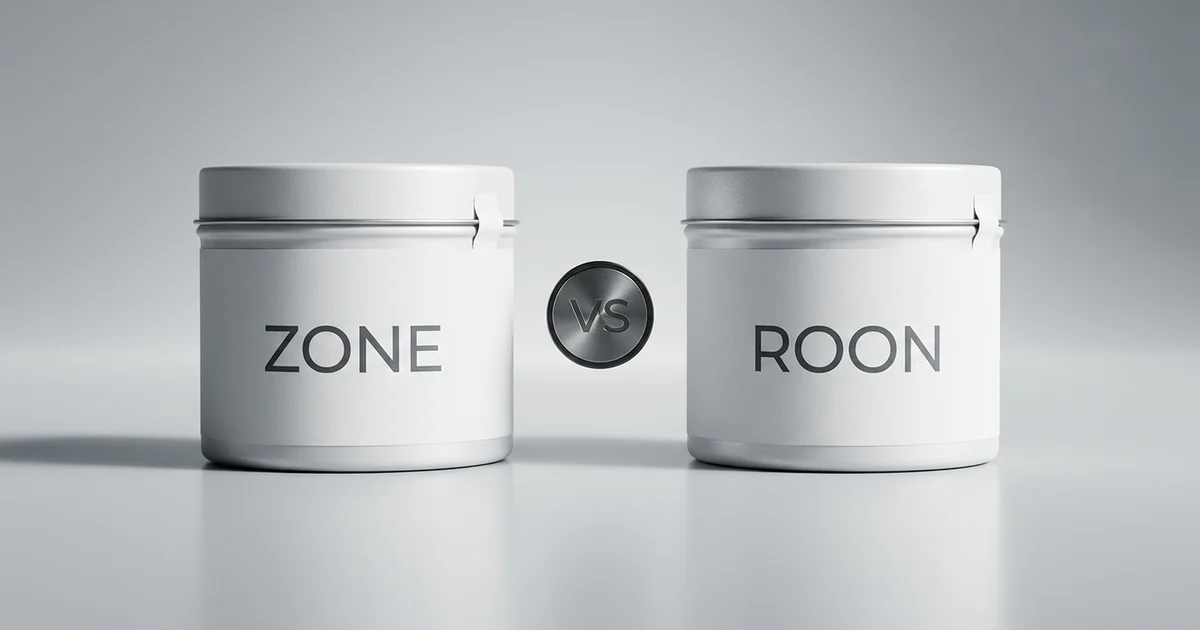
In the zone vs Zyn debate, the honest answer is that Zone is the cheaper can but not always the better deal. Zone is generally priced under Zyn in slim format, though zonepouches.com publishes no price, no strength ladder, and no pouch count, so every Zone number in circulation comes from a retailer listing rather than the brand. Zyn does publish its ladder: 1.5mg, 3mg, 6mg, and 8mg in the standard line, and 9mg and 11mg in ZYN Ultra. Zyn also wins on flavor range, consistency, and a longer track record. If you are buying nicotine at all, cost per milligram matters more than the sticker price, and Zone does not publish the numbers to work it out.
This article is for informational purposes only and is not medical advice. If you have health concerns, are pregnant or breastfeeding, or are trying to cut down on caffeine or quit nicotine, talk to a healthcare provider.
Key Takeaways
- Zone is usually cheaper per can than Zyn in slim format and was launched in the US in 2024 by ITG Brands.
- Zyn's standard line now caps at 8mg, and ZYN Ultra reaches 9mg and 11mg, so the old "Zyn tops out at 6mg" shorthand no longer holds.
- Zone publishes no strengths, prices, or pouch counts on zonepouches.com, so a cost-per-milligram figure for Zone cannot be sourced to the brand.
- Neither is risk-free. Both deliver addictive nicotine.
- The only "pouch" with a zero-nicotine cost per milligram is the one without nicotine at all. Roon is the zero-nicotine reframe in the table below.
The Quick Verdict: Zone Is Cheaper, Zyn Is More Consistent
Zone is the value pick and Zyn is the reliability pick. Zone entered the US market in 2024, produced by TJP Labs in Canada to ITG Brands' specifications, in a slim-only format. That late entry is exactly why it competes on price. Zyn, owned by Swedish Match under Philip Morris International, has years of head start on flavor development, distribution, and batch-to-batch consistency.
So the trade is straightforward. You save money with Zone and you accept fewer flavors and a younger quality record. You pay more for Zyn and you get the broader, steadier lineup. Neither product is "safe." Both are addictive nicotine delivery systems, and the U.S. FDA's authorization of certain Zyn products was a marketing decision about relative population harm, not a finding that the pouches are healthy.
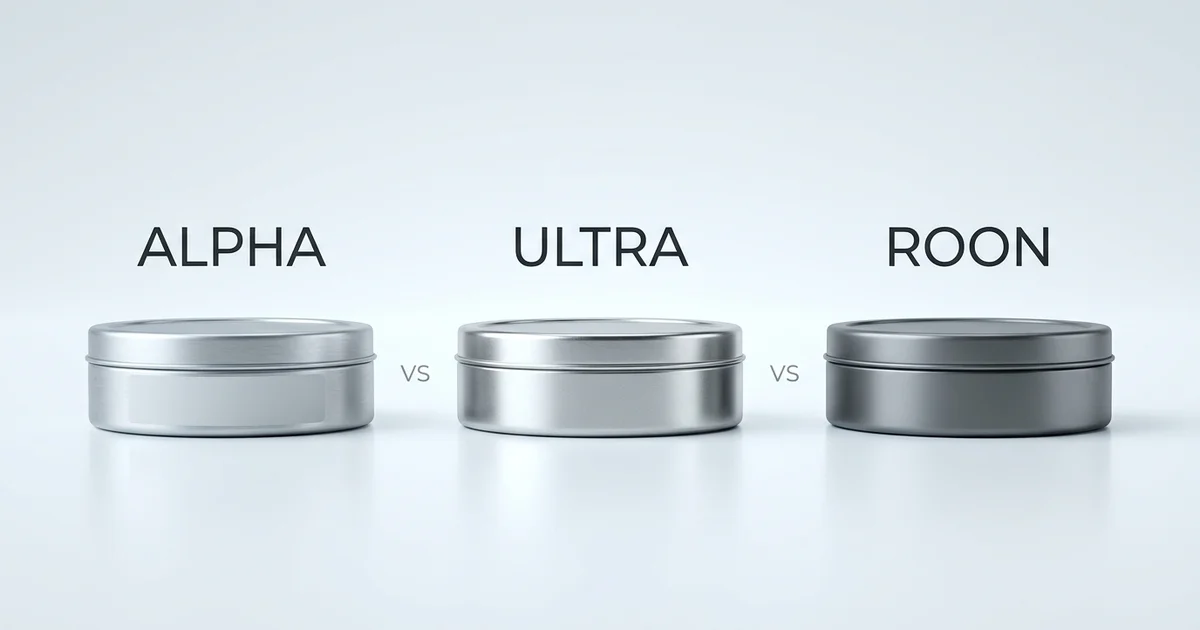
Zone vs Zyn: The Full Comparison Table
The table below includes a cost-per-milligram-of-nicotine column, plus a zero-nicotine row for context. Zone does not publish the numbers that column needs, and its cells say so. Per-can pricing varies by retailer and state tax, so treat the dollar figures as typical street prices, not fixed quotes.
| Brand | Nicotine strengths (mg) | Cost per pouch | Cost per mg nicotine | Flavors | Format | Tobacco-free? | Zero-nicotine option? |
|---|---|---|---|---|---|---|---|
| Zone | Not published by the brand | Not published by the brand | Cannot be calculated | Mints and fruit flavors, count not published | Slim only | Not stated on zonepouches.com | No |
| Zyn | 3, 6 standard; 9, 11 (ZYN Ultra) | ~$0.30 ($4.49 / 15) | ~$0.050 at 6mg | ~10+ (Cool Mint, Wintergreen, Citrus, Coffee, others) | Mini and Slim | Yes | No |
| Roon | 0 (zero nicotine) | varies | $0 (no nicotine) | Cool Mint | Slim sublingual | Yes | Yes (entire product) |
A few things jump out. The Zone row is mostly blank on purpose. Zone publishes no strength ladder, no price, and no pouch count, so there is no cost per milligram to set next to Zyn's. Zone is the cheaper can on most shelves, but "cheaper per milligram" is a claim nobody can currently check. The zero-nicotine row exists to make a different point: the cheapest possible "cost per milligram of nicotine" is the one you stop paying entirely. Roon is included here honestly. It is not a nicotine pouch and does not belong in a nicotine-strength race. It is a caffeine and L-theanine sublingual pouch built for focus.
What "Cheaper" Actually Means: Cost Per Milligram
Cost per milligram of nicotine is the only fair way to compare two pouches at different strengths. A $4.49 can of 15 Zyn pouches at 6mg works out to about 5 cents per milligram. The same sum for Zone pouches cannot be done honestly, because Zone publishes neither a strength nor a price nor a pouch count on its own site. Zone looks like the budget winner on the shelf, but the size of the margin is guesswork.
The catch is that milligrams are not interchangeable with satisfaction. Nicotine delivery from a pouch depends on pH, moisture, and how long you keep it in, not just the labeled dose. Research on oral nicotine pouch pharmacokinetics shows that plasma nicotine rise and peak vary meaningfully across products and strengths, which is why two pouches with the same number on the tin can feel different. If a stronger pouch gives you more than you want, the savings stop being savings.
Flavor, Format, and Consistency: Where Zyn Earns Its Premium
Zyn justifies its higher price through range and reliability, not chemistry. Zyn offers both Mini and Slim formats and a deeper flavor catalog, including Cool Mint, Wintergreen, Citrus, and Coffee, with consistent moisture and release across batches. Zone counters with a slate of mints and fruit flavors, though it publishes no catalog to count, in a single slim format and with a shorter production history.
If you rotate flavors or want a discreet mini pouch, Zyn is the easier daily driver. If you have one flavor you like and you want it cheap, Zone covers that. This is a preference call, not a quality gap wide enough to override the price difference for most users.
The Honest Pros and Cons
Zone pros: lower cost per can, soft moist pouch feel, faster perceived release for some users.
Zone cons: slim format only, fewer years of consistency data, narrower availability, no mini option.
Zyn pros: broader flavor lineup, Mini and Slim formats, established batch consistency, wider retail and online distribution.
Zyn cons: more expensive per can, and the standard line stops at 8mg, which is why heavier users get pushed to ZYN Ultra at 9mg and 11mg.
What neither brand can claim is safety. The Cleveland Clinic notes that nicotine pouches are not a safe product, that nicotine is highly addictive, and that the nicotine dose in some pouches can be higher than in cigarettes. Truth Initiative similarly documents that oral nicotine pouches like Zyn are marketed heavily to young adults and deliver high doses of an addictive substance. Cheaper nicotine is still nicotine.
The Hidden Cost Both Pouches Share
The recurring spend is the real expense, and it compounds in two directions. A 10-pouches-a-day habit on Zyn runs close to $1,000 a year before tax. Zone lands under that, though the brand publishes no price of its own to pin it down. That is the dollar cost. The other cost is tolerance: nicotine's reinforcing pharmacology tends to push regular users toward more pouches or higher strengths over time, which is exactly why Zyn now sells ZYN Ultra at 9mg and 11mg alongside its 1.5mg to 8mg standard line.
This is where the budget question gets sharper. Saving a little per can on a product you are using more of every month is not saving money. It is slowing the rate at which a growing line item grows.
The Verdict on Value: Shelf Price Says Zone, Habit Says Reconsider
Zone is the budget winner on the shelf, but the cost-per-milligram column cannot prove it, because Zone publishes none of the inputs. If your only variable is dollars per milligram of nicotine, you are working from retailer listings rather than from anything either brand stands behind. Zyn earns its premium through flavor depth, format options, and consistency, which matter to people who value the experience over the receipt.
The deeper point is that the cheapest pouch is the one you no longer need to rebuy. Nicotine pouches, budget or premium, are a recurring purchase by design. The most cost-effective long-term move is not switching brands. It is questioning whether the nicotine line item belongs on your budget at all.
Frequently Asked Questions
Is Zone actually cheaper than Zyn?
Usually, on the shelf. Zone is priced under Zyn in slim format at most retailers. A cost-per-milligram comparison is not possible, because Zone publishes no price, no pouch count, and no strength ladder on zonepouches.com, and retailer pricing plus state tobacco taxes shift the math in either direction anyway.
Is Zone stronger than Zyn?
Not on anything either brand publishes. Zyn's US ladder is 1.5mg, 3mg, 6mg, and 8mg in the standard line and 9mg and 11mg in ZYN Ultra. Zone publishes no strengths at all on its own site, so the widely repeated "Zone goes higher" line has nothing behind it. Felt strength also depends on pouch moisture, pH, and how long you keep it under your lip, so labeled milligrams are a guide, not a guarantee of identical experience.
Are Zone and Zyn tobacco-free?
Zyn is tobacco-free and says so. Zone is sold as a tobacco-free pouch at retail, but zonepouches.com publishes no statement about its nicotine source, so whether it is synthetic is undisclosed. Tobacco-free does not mean nicotine-free or risk-free. Both deliver addictive nicotine, and the Cleveland Clinic and Truth Initiative both note that nicotine pouches carry real health and addiction risks despite the absence of tobacco leaf.
Which has better flavors, Zone or Zyn?
Zyn generally has the edge on range and consistency, with a deeper flavor catalog and both Mini and Slim formats. Zone offers mints and fruit flavors, only in slim format, and publishes no catalog to count. Flavor preference is personal, so the practical advice is to test a single can of each before committing to a brand for cost reasons alone.
Is there a pouch with no nicotine at all?
Yes. Zero-nicotine pouches exist for people who want the oral ritual without the addictive compound. Roon is one example, a sublingual pouch built around caffeine and L-theanine for focus rather than nicotine. It is not a nicotine product and not a quit-smoking medication, so it is a different category, not a stronger or weaker version of Zone or Zyn.
Does cheaper nicotine save money long term?
Not necessarily. Nicotine is reinforcing, and regular use tends to push people toward more pouches or higher strengths over time. Saving a little per can on a product you consume more of each month can still mean rising total spend. The only way to remove the line item entirely is to stop buying nicotine, not to switch to a cheaper brand of it.
If the Real Cost Is the Refill, Look Past the Nicotine Aisle
This article is about which pouch costs less, and the answer keeps circling back to the same uncomfortable place: the cheapest pouch is the one you stop rebuying. If you reach for a pouch for the focus and the ritual rather than the nicotine itself, there is a category that skips the recurring nicotine spend entirely.
Roon is a zero-nicotine sublingual pouch built for cognitive performance. Each Cool Mint pouch delivers 80mg caffeine, 60mg L-theanine, 25mg methylliberine (Dynamine), and 5mg theacrine (TeaCrine), designed to support 6 to 8 hours of steady focus without the jitters or crash. To be clear about what it is and is not: Roon is not a nicotine pouch, not a quit-smoking aid, and not a substitute for medical advice on nicotine dependence. It does not belong in a nicotine-strength comparison, and we have not pretended otherwise.
If your pouch habit is really about staying sharp, that is a problem Roon was actually built to address. Try it for focus, and let the nicotine math take care of itself.
By Roon Team