Octopamine: A Trace-Amine "Fat Burner" With Almost No Human Evidence
Roon Team
Octopamine: A Trace-Amine "Fat Burner" With Almost No Human Evidence
Octopamine shows up on fat-burner labels with a confident promise: torch fat by mimicking your body's own adrenaline-like chemistry. The pitch sounds plausible. The evidence behind it is thin to the point of empty.
Here is the short version. Octopamine is a real molecule with a real biology, mostly in insects and mollusks, and a tiny supporting role in mammals. Ask for controlled human trials showing fat loss in living people, and there is almost nothing to cite. That gap matters more than any clever mechanism on a marketing page.
Key Takeaways
- Octopamine is a trace amine found naturally in humans in very small amounts, chemically related to norepinephrine.
- Human fat-loss evidence is essentially absent. The animal data is modest and does not translate to a proven supplement effect.
- It is banned in competition by the World Anti-Doping Agency under the S6 stimulants category.
- If you want focus and energy backed by actual human studies, look at compounds with a real clinical record, not speculative thermogenic amines.
What Is Octopamine?
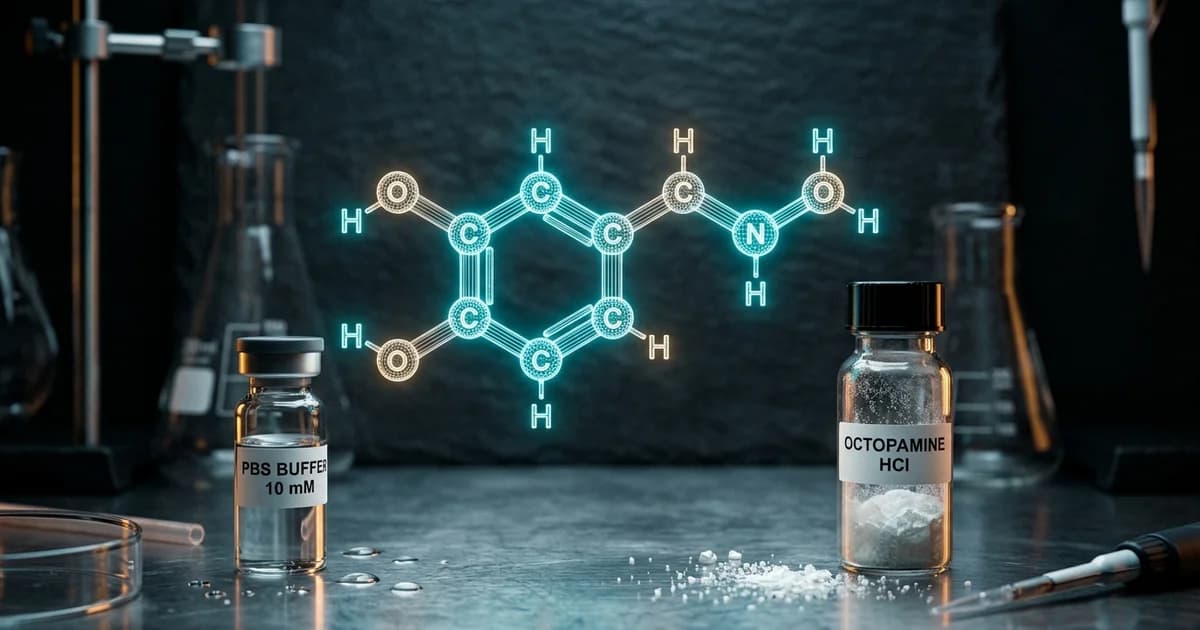
Octopamine is a biogenic amine, structurally close to the human stress hormone norepinephrine. In invertebrates like insects and mollusks, octopamine is a well-established neurotransmitter and neuromodulator involved in various physiological processes, which prompted investigation into its presence and effects within human biology.
In your body, the picture is smaller. In mammals, including humans, octopamine is a trace amine, meaning it is naturally present in very small quantities, produced in the brain and nerve tissues from the trace amine tyramine and broken down by monoamine oxidase enzymes. It exists. It just does not do much that anyone has clearly measured.
That is the core problem with the octopamine supplement story. The precise natural function of octopamine in human neurophysiology is not fully understood. A molecule we barely understand in humans is being sold as a tool to reshape human metabolism.
The "Fat Burner" Theory, and Where It Breaks
The thermogenic argument leans on receptor pharmacology. The claim is that octopamine taps the same adrenergic pathways that release stored fat. Reality is more limited.
Octopamine has limited interaction with mammalian adrenergic receptors, except for a modest affinity for the β-3 adrenergic receptor. The β-3 receptor does sit on fat cells and plays a role in fat breakdown, so the mechanism is not invented from nothing. A weak signal at one receptor is a long way from clinical fat loss, though.
Animal work is where most of the optimism comes from. One study reported a moderate weight-lowering effect of octopamine in obese Zucker rats. Rats are not people, and "moderate" in a rodent model is not a green light for a human octopamine fat burner.
The honest summary from researchers is blunt. Octopamine's effects on athletic performance or weight management in humans have not been well studied, necessitating further research. That sentence should appear on every label that uses the ingredient. It does not.
Octopamine vs Synephrine and Bitter Orange
This is where most confusion starts, so let's separate the molecules.
Octopamine bitter orange is a real association. Octopamine occurs in Citrus aurantium, the same plant that gives us synephrine, the headline compound in many bitter orange extracts. Because they travel together, octopamine often rides along in bitter orange fat-burner blends.
The octopamine vs synephrine comparison usually favors the better-studied amine. In a study of human fat cells, researchers found that isopropylnorsynephrine was a stronger lipolytic agent in human adipocytes than synephrine and other amines present in Citrus aurantium. Octopamine sits in that "other amines" group, the weaker end of the bench.
Synephrine itself has at least a handful of human clinical studies behind it. Octopamine has close to none. If a bitter orange product is hyping octopamine as the active driver, the marketing is ahead of the science.
Quick comparison
| Compound | Human evidence | Mechanism strength | Competition status |
|---|---|---|---|
| Octopamine | Almost none; mostly animal data | Modest β-3 affinity only | Banned (WADA S6) |
| Synephrine (p-synephrine) | Several human clinical studies | Mild adrenergic activity | Permitted, but scrutinized |
| Caffeine | Extensive human evidence | Well-mapped adenosine antagonism | Permitted |
The pattern is clear. The less we know about a compound, the louder the label tends to be.
Octopamine Safety and Legal Status
Lead with the headline: octopamine safety data in humans is limited, and the compound is banned in tested sport. Octopamine is banned in competitive sports by the World Anti-Doping Agency, listed under the S6 Stimulants category on its Prohibited List, meaning athletes are forbidden from using it during competition.
That ban is not a footnote. It reflects concerns that octopamine could offer an unfair performance advantage or pose a health risk, and regulatory bodies like the U.S. Food and Drug Administration have also scrutinized its use in dietary supplements.
The side effect profile reads like other stimulants. Its stimulant properties raise safety concerns, with potential side effects including increased blood pressure, heart palpitations, and an irregular heart rhythm. If you take anything that affects blood pressure, that overlap is worth a conversation with your doctor.
There is also a history here. Octopamine has been sold under trade names such as Epirenor, Norden, and Norfen for use as a sympathomimetic drug, yet very little information exists concerning its clinical usefulness or safety. A compound that struggled to build a clinical case as a prescription drug is now repackaged as a wellness ingredient. The evidence did not improve. The category changed.
Should You Take an Octopamine Supplement?
Based on what's published, the case is weak. You would be taking a banned-in-sport stimulant with a thin human safety record, a modest mechanism, and effectively zero controlled human fat-loss trials. The upside is hypothetical. The tradeoffs are not.
If your goal is steady energy and sharper focus, you do not need a speculative amine to get there. Better-studied tools exist, and they come with the human data octopamine lacks.
The Bottom Line on Octopamine
Octopamine is a fascinating molecule in insect neuroscience and a mostly silent trace amine in people. As a fat burner, it rests on rodent studies, receptor theory, and the borrowed reputation of bitter orange. The human evidence that would justify the marketing simply has not been produced.
When an ingredient's strongest selling point is a plausible mechanism rather than a published result, treat the claim with caution. Plausible is not proven. In supplements, that distinction is the whole game.
Frequently Asked Questions
Is octopamine a stimulant?
Yes. Octopamine is a biogenic amine related to norepinephrine, and it acts on the sympathetic nervous system. Because of those stimulant properties, it is banned in competition by the World Anti-Doping Agency under the S6 stimulants category. Reported concerns include raised blood pressure and changes in heart rhythm, which is why regulators have flagged its use in supplements.
Does octopamine actually burn fat in humans?
There is almost no human evidence that octopamine burns fat. Most of the optimism comes from animal studies, such as a modest weight-lowering result in obese rats, plus its weak affinity for the β-3 adrenergic receptor on fat cells. Researchers themselves note that octopamine's effects on weight management in humans have not been well studied. Mechanism is not the same as a measured result.
What is the difference between octopamine and synephrine?
Both occur in bitter orange (Citrus aurantium), but synephrine has more human research behind it. In a study of human fat cells, octopamine fell into the weaker "other amines" group, while a synephrine relative was the stronger fat-mobilizing agent. If a bitter orange product hypes octopamine as the active ingredient, the science does not support that framing.
Is octopamine in bitter orange supplements?
Often, yes. Octopamine occurs naturally in bitter orange alongside synephrine, so it can appear in bitter orange fat-burner blends without being listed prominently. The amount is usually small, and the human data on that small dose doing anything useful for fat loss is missing. Check labels carefully if you compete in tested sport.
Is octopamine safe to take?
Human safety data is limited. The known concerns mirror other stimulants: raised blood pressure, palpitations, and irregular heart rhythm. It was once sold as a prescription sympathomimetic, yet little reliable information exists on its safety, and the FDA has scrutinized its supplement use. People taking blood-pressure medication face a theoretical interaction risk and should talk to a doctor first.
Why is octopamine banned in sports?
The World Anti-Doping Agency lists octopamine under S6 stimulants on its Prohibited List, so athletes cannot use it in competition. The ban reflects concern that it could provide an unfair performance edge or create a health risk. Importantly, octopamine can show up in doping-control samples, so even trace exposure from a contaminated supplement can cause a problem for tested athletes.
Why Roon Skips Speculative Fat-Burner Amines
The lesson from octopamine is simple. A compound can have a tidy mechanism and a confident label while carrying almost no human evidence. That is exactly the kind of ingredient Roon leaves out.
Roon is a sublingual cognitive performance pouch built around four compounds with a genuine human track record: 80 mg caffeine, 60 mg L-theanine, 25 mg methylliberine (Dynamine), and 5 mg theacrine (TeaCrine). It is designed for clean focus that starts in 5 to 10 minutes and holds for 6 to 8 hours, with no jitters, no crash, and no tolerance buildup. It is not a fat burner, and it does not pretend to be one.
If you want energy and concentration backed by studied ingredients instead of borrowed bitter-orange hype, try Roon and see how steady focus feels when the formula is built on evidence, not theory.
Written by Roon Team