Nootropics for Anxiety: The Complete Guide
Roon Team
Nootropics for Anxiety: The Complete Guide
Your brain is not broken. But if you've spent any time Googling "how to stop feeling anxious," you've probably been told it is. The supplement industry loves to pathologize normal stress responses and then sell you a fix. The truth about nootropics for anxiety is more nuanced, more interesting, and backed by better science than most people realize.
An estimated 19.1% of U.S. adults had an anxiety disorder in the past year, according to the National Institute of Mental Health. That's roughly one in five people. And that number only counts diagnosable disorders. It doesn't include the millions more who deal with chronic low-grade stress, racing thoughts before a presentation, or the 3 a.m. mental spiral about something they said six years ago.
So what actually works? Let's separate the compounds with real clinical evidence from the ones coasting on marketing budgets.
Key Takeaways
- L-Theanine has the strongest evidence for reducing stress-related symptoms without sedation.
- Ashwagandha shows consistent anxiolytic effects across multiple meta-analyses, but quality and dosing matter.
- Magnesium helps most when you're already deficient, which a large percentage of adults are.
- Not all nootropics for anxiety reduce symptoms. Some, like high-dose caffeine alone, make anxiety worse. The combination matters.
What "Nootropics for Anxiety" Actually Means
The word "nootropic" was coined in 1972 by Romanian psychologist Corneliu Giurgea. His original definition required that a compound enhance cognition and protect the brain, with minimal side effects. Most of what gets called a nootropic today wouldn't meet that bar.
When people search for nootropics for anxiety, they're usually looking for one of two things: compounds that directly lower anxiety symptoms, or cognitive enhancers that don't cause anxiety as a side effect. Both are valid goals, and they require different approaches.
A 2022 review published in Nutrients categorized nootropics into natural compounds (like amino acids and herbal extracts) and synthetic ones (like racetams and modafinil). The natural category is where most anxiety-relevant research on nootropics for anxiety lives.
Nootropics for Anxiety With Real Evidence
L-Theanine: The Calm Focus Amino Acid
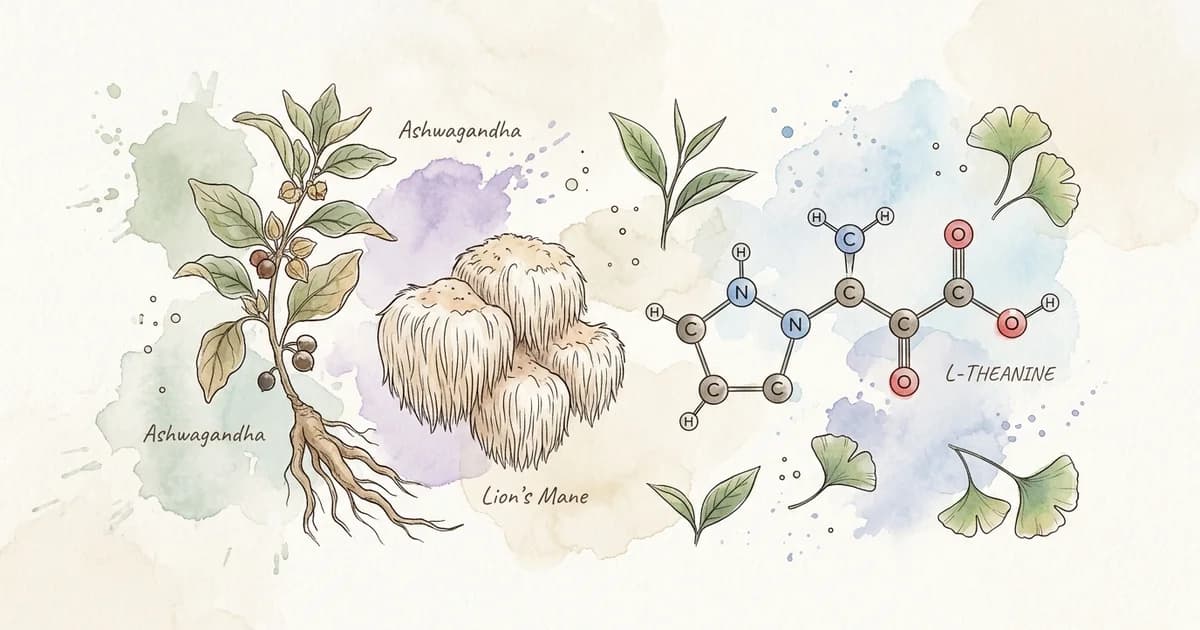
L-Theanine is an amino acid found naturally in green tea. L-Theanine crosses the blood-brain barrier and influences several neurotransmitter systems, including GABA, serotonin, and dopamine. What makes this nootropic for anxiety unusual is that it promotes relaxation without drowsiness.
A randomized, placebo-controlled, double-blind trial gave healthy adults 200 mg of L-Theanine daily for four weeks. The results: scores on the State-Trait Anxiety Inventory decreased (p = 0.006), sleep quality improved (p = 0.013), and depression scores dropped (p = 0.019), all compared to placebo.
That's a single study with 30 participants, so let's not overstate it. But it's not alone. A 2021 review in Food Science and Human Wellness examined L-Theanine's mechanisms for buffering stress and anxiety, pointing to its effects on alpha brain wave activity as a likely driver of its calming properties.
The practical takeaway: a 200 mg L-Theanine dose is the most commonly studied amount for stress reduction, and it pairs well with low-dose caffeine. The combination gives you alertness without the jittery edge.
Ashwagandha: The Adaptogen With Teeth
Ashwagandha (Withania somnifera) is the most studied adaptogen among nootropics for anxiety. And unlike many herbal supplements, the data is actually pretty good.
A 2022 systematic review and dose-response meta-analysis found that ashwagandha supplementation reduced anxiety (SMD: -1.55, 95% CI: -2.37 to -0.74; p = .005) and stress levels (SMD: -1.75; p = .005) compared to placebo. The effective dose range for stress was 300 to 600 mg per day.
A more recent 2024 meta-analysis analyzing 9 studies with 558 patients confirmed these findings. Ashwagandha reduced perceived stress, anxiety scores, and serum cortisol levels compared to placebo.
The mechanism appears to involve modulation of the HPA (hypothalamic-pituitary-adrenal) axis, the body's central stress response system. Ashwagandha seems to lower cortisol output, which is the hormonal signature of chronic stress.
One caveat: not all ashwagandha extracts are equal. Most positive studies used standardized root extracts (like KSM-66 or Sensoril). If the label just says "ashwagandha powder," you're rolling the dice on potency.
Magnesium: The Deficiency You Probably Have
Magnesium is involved in over 300 enzymatic reactions in the body, including several that regulate neurotransmitter function and the stress response. Magnesium deficiency is also one of the most common nutritional gaps in Western diets.
A 2017 systematic review in Nutrients examined the evidence for magnesium supplementation and anxiety. The conclusion: existing evidence is "suggestive of a beneficial effect of Mg on subjective anxiety in anxiety vulnerable samples." Translation: if you're prone to anxiety and your magnesium levels are low, supplementation is likely to help.
A 2024 study published in Cureus further examined supplemental magnesium's effects on self-reported anxiety and sleep, adding to the growing body of evidence that correcting a magnesium deficit can meaningfully reduce anxiety symptoms.
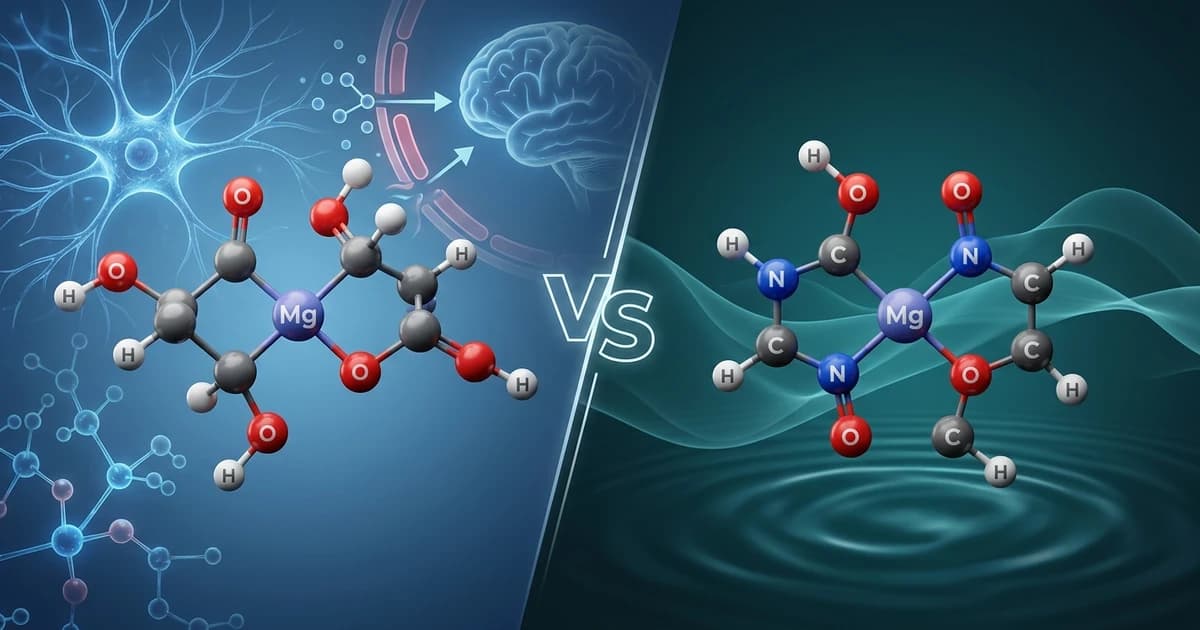
The forms matter here. Magnesium glycinate and magnesium L-threonate are better absorbed and more likely to reach the brain than cheaper forms like magnesium oxide.
GABA: Complicated Biology
GABA (gamma-aminobutyric acid) is your brain's primary inhibitory neurotransmitter. GABA is literally the molecule that tells neurons to calm down. So supplementing with GABA should reduce anxiety, right?
It's not that simple. The long-standing debate is whether supplemental GABA crosses the blood-brain barrier in meaningful amounts. Some researchers say it does, some say it doesn't.
A 2025 study published in Nature found that long-term GABA supplementation mitigated anxiety by modulating complement and neuroinflammatory pathways, suggesting the mechanism may be more complex than direct GABAergic activity. A 2020 review in Frontiers in Neuroscience also noted that oral GABA showed effects on stress and sleep in several trials, though the quality of evidence varied.
GABA supplements might work for some people. But the science is still catching up to the marketing.
Nootropics for Anxiety: What to Combine and What to Avoid
The Stacking Principle
Single compounds rarely perform as well as smart combinations. This is why the concept of "stacking" exists among nootropics for anxiety. The goal is to pair compounds that complement each other's mechanisms.
The most well-studied anxiolytic stack in nootropic science is simple:
| Compound | Dose | Role |
|---|---|---|
| L-Theanine | 100-200 mg | Promotes alpha waves, reduces physiological stress |
| Caffeine | 40-100 mg | Maintains alertness and focus |
| Ashwagandha | 300-600 mg | Lowers cortisol, supports HPA axis regulation |
| Magnesium Glycinate | 200-400 mg | Supports GABAergic function, corrects common deficiency |
The L-Theanine and caffeine pairing deserves special attention, though the ashwagandha and L-Theanine pairing is worth exploring for chronic stress as well. Caffeine alone can increase anxiety, especially at doses above 200 mg. But L-Theanine smooths out caffeine's stimulatory effects, preserving the focus while reducing the physical tension. This pairing is one of the most replicated findings in nootropics for anxiety research.
What to Avoid
High-dose caffeine (300 mg+) without a calming counterpart is the fastest way to turn a productive morning into a panicky one. Most energy drinks and pre-workout supplements fall into this category.
Racetams (piracetam, aniracetam, etc.) are sometimes marketed as nootropics for anxiety, but the evidence is thin and inconsistent. Aniracetam has some anxiolytic data in animal models, but human trials are scarce.
Phenibut is a synthetic GABA analog that does reduce anxiety, powerfully. Phenibut also builds tolerance rapidly, causes withdrawal symptoms, and is banned or restricted in several countries. Avoid it.
The Delivery Problem Nobody Talks About
Here's something the nootropics industry doesn't love to discuss: how you take a compound matters as much as what you take.
Most nootropics for anxiety come in capsule form. Capsules have to survive your stomach acid, get absorbed through your intestinal lining, pass through first-pass liver metabolism, and then make it to your bloodstream. By the time the active ingredients reach your brain, you've lost a meaningful percentage of the original dose.
Sublingual delivery (absorption under the tongue) bypasses the digestive system entirely. The mucous membranes under your tongue are thin and rich with blood vessels, allowing compounds to enter your bloodstream directly. This means faster onset and better bioavailability.
It's the same reason nitroglycerin for chest pain is placed under the tongue, not swallowed as a pill.
Building a Practical Nootropics for Anxiety Protocol
Forget the 47-supplement stack you saw on Reddit. A practical approach looks more like this:
- Fix the basics first. Sleep, exercise, and magnesium status. If any of these are off, no nootropic will compensate.
- Start with L-Theanine. L-Theanine has the best risk-to-reward ratio of any anxiolytic nootropic. 200 mg is a solid starting point.
- Add ashwagandha if stress is chronic. Choose a standardized extract (KSM-66 or Sensoril) at 300-600 mg daily.
- Manage your caffeine. Don't eliminate it. Pair it with L-Theanine and keep the dose moderate (40-100 mg per serving).
- Track what you feel. Subjective journaling for two weeks will tell you more than any blog post.
A Simpler Way to Get There
If building a custom stack sounds like a project you don't have time for, that's fair. Roon was designed for exactly this problem. Roon's zero-nicotine sublingual pouches combine caffeine (80 mg), L-Theanine, Theacrine, and Methylliberine into a single, fast-absorbing format. No pills, no mixing, no waiting 45 minutes for a capsule to kick in.
The result is 6 to 8 hours of clean, sustained focus without the jitters or the crash. If you've been looking for nootropics for anxiety that support calm performance without the complexity, give Roon a try.