The Best Nootropics for Anxiety in 2026: What Actually Works
The Best Nootropics for Anxiety in 2026: What Actually Works
The best nootropics for anxiety are L-theanine, ashwagandha, rhodiola rosea, magnesium (L-threonate or glycinate), and the theacrine/methylliberine pairing. Each targets a different piece of the anxiety puzzle, from acute GABA modulation to long-term cortisol regulation, without the sedation or cognitive blunting of traditional anxiolytics. A 2024 systematic review found that L-theanine reduced anxiety symptoms more effectively than placebo across multiple trials, while a 2025 meta-analysis in BJPsych Open confirmed that ashwagandha produces statistically significant reductions in both cortisol and HAM-A anxiety scores.
Important caveat: Nootropics are dietary supplements, not medications. They do not treat, cure, or prevent anxiety disorders. If you experience persistent or severe anxiety, consult a licensed clinician before starting any supplement regimen.
Key Takeaways:
- L-Theanine has the strongest acute evidence for reducing stress and anxiety without sedation, with effects in 30 to 60 minutes at 100 to 200 mg.
- Ashwagandha is associated with reduced cortisol and lower HAM-A anxiety scores over 60+ day supplementation periods.
- Rhodiola Rosea targets stress-related burnout and fatigue-driven anxiety at 200 to 400 mg daily.
- Magnesium is underrated: roughly 48% of Americans fall below the Estimated Average Requirement for magnesium, and deficiency is linked to heightened stress reactivity.
- Stacking matters. Single-ingredient approaches miss the point of how the best nootropics for anxiety actually work in the brain.
Quick Comparison: Best Nootropics for Anxiety at a Glance
| Compound | Typical Dose | Onset | Primary Mechanism | Best For | Key Evidence |
|---|---|---|---|---|---|
| L-Theanine | 100-200 mg/day | 30-60 min | GABA modulation, alpha wave promotion | Acute stress, work focus | 2024 RCT: safe and effective over 28 days in stressed adults |
| Ashwagandha | 300-600 mg/day | 4-8 weeks | HPA axis, cortisol reduction | Chronic stress, elevated cortisol | 2025 meta-analysis: significant cortisol, PSS, and HAM-A reductions |
| Rhodiola Rosea | 200-400 mg/day | 1-2 weeks | Monoamine modulation, stress adaptation | Burnout, fatigue-driven anxiety | 80-person student trial: reduced anxiety, stress, anger in 14 days |
| Magnesium (Threonate/Glycinate) | 200-400 mg elemental/day | 1-4 weeks | NMDA antagonism, GABA support | Baseline anxiety, sleep tension | 2024 systematic review: benefits for mild anxiety and sleep |
| Theacrine + Methylliberine | 100-200 mg / 50-100 mg | 15-30 min | Dopamine, adenosine receptor modulation | Focus without caffeine's anxiogenic edge | 8-week safety study: up to 300 mg/day non-habituating in 60 participants |
How the Best Nootropics for Anxiety Work (Without Sedation)
Most anti-anxiety compounds work by slowing you down. Benzodiazepines, alcohol, even antihistamines. They reduce anxiety by reducing everything.
The best nootropics for anxiety take a different approach. These compounds modulate specific neurotransmitter systems, particularly GABA, serotonin, and the HPA (hypothalamic-pituitary-adrenal) stress axis, without blunting cognition. The goal isn't calm at the cost of performance. It's calm with performance.
That distinction matters if you're trying to do actual work, not just take the edge off before bed.
The Best Nootropics for Anxiety: A Ranked Breakdown
1. L-Theanine
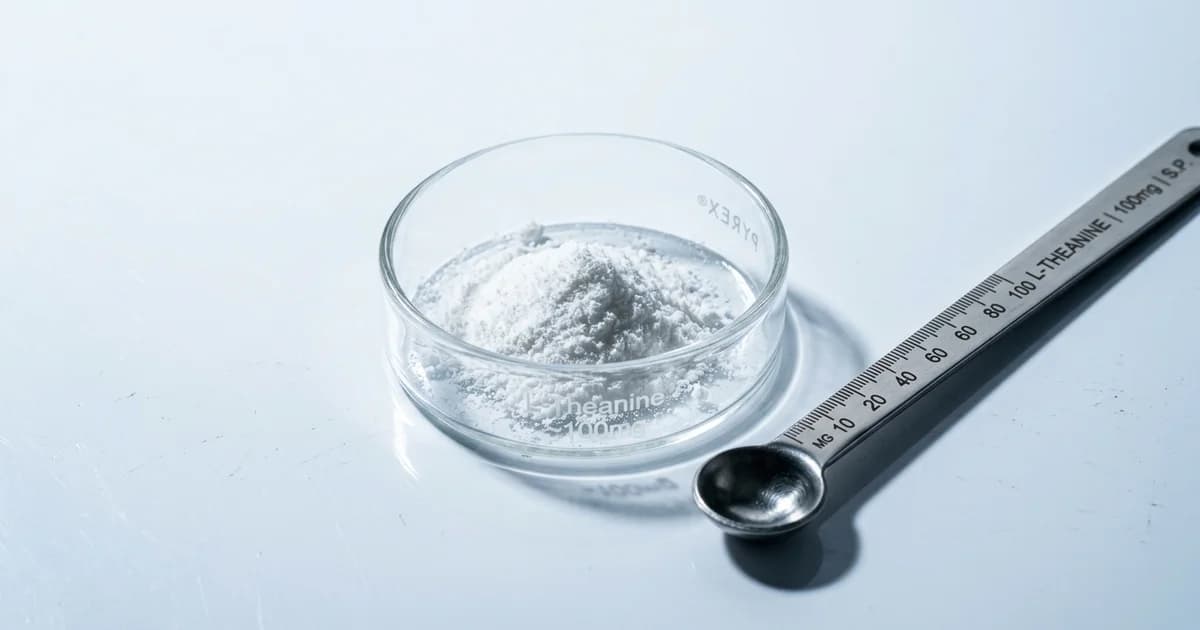
L-Theanine is an amino acid found naturally in tea leaves, and it consistently ranks among the best nootropics for anxiety and acute stress reduction in clinical research.
A randomized, double-blind, placebo-controlled trial published in Neurology and Therapy found that L-theanine supplementation was safe and effective during acute stress challenges in 50 healthy adults with moderate stress over a 28-day period. Participants receiving 200 mg daily showed improved stress response compared to placebo.
Separately, a 2019 randomized controlled trial examined four weeks of L-theanine administration (200 mg/day) in 30 healthy adults and found reductions in stress-related symptoms including anxiety, depression, and sleep disturbance scores. And a 2024 systematic review concluded that L-theanine supplementation reduced psychiatric symptoms more effectively than control conditions in individuals with anxiety disorders.
How it works: the L-theanine alpha wave research shows it promotes alpha brain wave activity, the same pattern associated with relaxed alertness. It also modulates glutamate and GABA activity without acting as a direct sedative. This mechanism is what makes L-theanine one of the best nootropics for anxiety relief during work hours.
Typical dose: 100-200 mg, once or twice daily.
Best for: Acute stress, work-related tension, pairing with caffeine to smooth out the jittery edge.
| Pros | Cons |
|---|---|
| Fast-acting (30-60 minutes) | Effects are subtle, not dramatic |
| No sedation or drowsiness | Less effective for severe, clinical anxiety |
| Pairs well with caffeine | Requires consistent dosing for best results |
2. Ashwagandha (Withania somnifera)
Ashwagandha is an adaptogen, meaning it may help your body regulate its stress response over time. It's not a quick fix. It's a slow build. For anyone researching the best nootropics for anxiety, ashwagandha deserves serious consideration.
A 60-day randomized, double-blind, placebo-controlled study of 58 participants found that ashwagandha supplementation (300 mg twice daily) was associated with a statistically significant reduction in HAM-A anxiety scores compared to placebo. Serum cortisol dropped measurably in the ashwagandha group.
A 2025 systematic review and meta-analysis published in BJPsych Open confirmed these findings at scale, reporting statistically significant reductions in cortisol levels, PSS (Perceived Stress Scale) scores, and HAM-A scores across multiple trials. A separate 2025 meta-analysis found a mean cortisol reduction of 1.16 µg/dL (95% CI: -1.64 to -0.69, P < 0.001) across pooled studies.
The NIH Office of Dietary Supplements notes that across studies using doses from 240 to 1,250 mg/day, ashwagandha reduced stress and anxiety measures. The NIH also flags that most trials are short (8 weeks or less) and that long-term safety data remain limited.
Typical dose: 300-600 mg of root extract daily, standardized for withanolides.
Best for: Chronic stress, elevated cortisol, people who feel "wired but tired."
| Pros | Cons |
|---|---|
| Strong evidence for cortisol reduction | Takes 4-8 weeks to feel full effects |
| Improves stress resilience over time | Some reports of GI discomfort |
| Well-studied across multiple trials | Quality varies between brands; check for withanolide standardization |
3. Rhodiola Rosea
Rhodiola earns its place among the best nootropics for anxiety because it targets a specific profile: people whose anxiety comes packaged with exhaustion. It addresses stress-related fatigue and burnout, which makes it different from L-theanine or ashwagandha.
A study of 80 healthy students found that a 14-day regimen of 400 mg Rhodiola rosea root extract produced significant reductions in self-reported anxiety, stress, anger, and confusion while improving overall mood. A pilot study on generalized anxiety disorder (10 participants, 10 weeks, 340 mg/day) found significant improvement in GAD symptoms, with reductions in Hamilton Anxiety Rating Scale scores.
According to a 2022 review in PMC, clinical studies across Russia, Scandinavia, Germany, and the U.S. have confirmed Rhodiola rosea's role as an effective adaptogen for stress-related depression, anxiety, and fatigue. A 2024 clinical evidence review further supported its use for stress adaptation and mental work capacity.
Typical dose: 200-400 mg daily, standardized for rosavins (3%) and salidroside (1%).
Best for: Burnout-related anxiety, fatigue, people who need energy and calm.
| Pros | Cons |
|---|---|
| Targets fatigue and anxiety together | Smaller trial sizes than ashwagandha |
| Fast onset (1-2 weeks) | May cause restlessness at high doses |
| Long history of clinical use | Standardization varies between products |
4. Magnesium (L-Threonate or Glycinate)
Magnesium isn't glamorous. Nobody's posting about it on social media. But it belongs on any honest list of the best nootropics for anxiety because roughly 48% of Americans consume less than the Estimated Average Requirement for magnesium, according to NIH data. Deficiency is directly linked to increased anxiety, poor sleep, and heightened stress reactivity.
The mechanism is straightforward: magnesium acts as a natural NMDA receptor antagonist and supports healthy GABA function. When levels are low, your nervous system runs hotter than it should.
A 2024 systematic review in Cureus examined 15 studies and found that supplemental magnesium may benefit people with mild anxiety and insomnia. Seven of those studies reported anxiety-related outcomes, with most showing improvement at doses ranging from 200 to 500 mg daily.
Not all forms are equal. Magnesium oxide (the cheap stuff in most supplements) has poor bioavailability. Magnesium L-Threonate crosses the blood-brain barrier more effectively, making it the preferred form for cognitive and anxiety-related benefits. Magnesium Glycinate is another strong option, particularly for evening use, since glycine itself has calming properties.
Typical dose: 200-400 mg elemental magnesium daily.
Best for: Baseline anxiety, sleep-related tension, anyone who hasn't optimized their magnesium intake.
| Pros | Cons |
|---|---|
| Addresses a common nutritional gap | Effects depend on baseline deficiency |
| Supports sleep and GABA function | Magnesium oxide (most common form) is poorly absorbed |
| Very safe at recommended doses | Takes 2-4 weeks for noticeable change |
5. Theacrine and Methylliberine
These two compounds are structurally related to caffeine but behave differently in the body. Theacrine (often sold as TeaCrine) and methylliberine (often sold as Dynamine) activate dopamine and adenosine receptors in ways that promote alertness and mood without the tolerance buildup or anxiogenic effects that caffeine can produce at higher doses.
An 8-week safety study of 60 healthy participants found that up to 300 mg/day of theacrine was safe and non-habituating, meaning no tolerance developed over the study period. This is a major advantage over caffeine for daily users who are sensitive to its anxiety-amplifying effects.
Where caffeine can amplify anxiety, particularly in sensitive individuals, theacrine and methylliberine provide smoother, more sustained energy. For people exploring the best nootropics for anxiety who still need daily focus and drive, these two compounds fill an important gap.
Typical dose: Theacrine: 100-200 mg; Methylliberine: 50-100 mg.
Best for: People who want focus and energy without caffeine's anxiety-amplifying side effects.
What About GABA Supplements?
You'll see GABA (gamma-aminobutyric acid) on a lot of nootropic lists. The logic seems sound: GABA is your brain's primary inhibitory neurotransmitter, low GABA activity is linked to anxiety, so supplementing GABA should help. Right?
The problem is bioavailability. Oral GABA has a difficult time crossing the blood-brain barrier. Whether enough of it reaches the brain to produce meaningful effects is still debated. Some users report subjective benefits, and a few small studies show modest effects on stress markers, but the evidence is far weaker than what exists for the best nootropics for anxiety like L-theanine or ashwagandha.
If you want to support GABA activity, you're better off using compounds that modulate GABA indirectly, like L-theanine and magnesium, rather than supplementing GABA itself.
Stacking: Why Single Ingredients Fall Short
Anxiety isn't a single-pathway problem. It involves cortisol dysregulation, GABA imbalances, dopamine fluctuations, and chronic HPA axis activation, often all at once. That's why the best nootropics for anxiety are rarely used alone.
The most effective nootropic protocols combine multiple compounds that target different mechanisms:
- L-Theanine for acute GABA modulation and alpha wave promotion
- Caffeine (low dose, 40-80 mg) for dopamine and alertness, balanced by L-theanine
- Theacrine + Methylliberine for sustained energy without tolerance or jitters
- Ashwagandha or Rhodiola for long-term HPA axis regulation
- Magnesium for baseline nervous system support
The challenge with DIY stacking is getting the ratios right. Too much caffeine relative to L-theanine, and you're back to jitters. Wrong form of magnesium, and you're wasting money. Inconsistent dosing, and you lose the compounding benefits. Finding the best nootropics for anxiety is only half the equation; combining them correctly is the other half.
Choosing the Right Nootropic for Your Type of Anxiety
Not all anxiety is the same, and the best nootropic for you depends on what you're actually experiencing.
If your anxiety is acute and situational (presentations, deadlines, social events), L-theanine is your best starting point. It works within 30 to 60 minutes, pairs well with low-dose caffeine, and won't sedate you.
If your anxiety is chronic and stress-driven (you feel tense most days, cortisol feels permanently elevated), ashwagandha or rhodiola are better fits. Ashwagandha has the stronger cortisol data; rhodiola is the better choice if fatigue is a major component.
If your anxiety worsens with caffeine but you still need daily focus, consider replacing some or all of your caffeine intake with theacrine and methylliberine. They provide alertness through different receptor pathways with less anxiogenic potential.
If you suspect a nutritional gap, get your magnesium levels checked. A simple deficiency correction can reduce anxiety symptoms that no nootropic stack will fix on its own.
Talk to your doctor or a licensed clinician before combining any of these compounds with prescription medications, especially SSRIs, benzodiazepines, or thyroid medications.
The Best Nootropics for Anxiety Are Not a Replacement for Professional Care
This list is built on real clinical evidence, and every compound here has a legitimate mechanism of action. But nootropics are supplements. They may support your stress response and promote calmer focus. They do not replace therapy, medication, or professional diagnosis.
If your anxiety is interfering with daily life, relationships, or work performance in a way that feels unmanageable, a supplement stack is not the answer. A clinician is. Use these compounds as one layer of a broader approach that includes sleep, exercise, and professional guidance where needed.
Related from Roon
- L-Theanine and Anxiety: The Science
- Drinks That Give You Energy Without Caffeine
- What Are Nootropic Pouches?
Frequently Asked Questions
What is the best nootropic for anxiety?
L-theanine has the strongest acute evidence. A 2024 systematic review found it reduced anxiety symptoms more effectively than placebo across multiple trials. For chronic, cortisol-driven anxiety, ashwagandha has stronger long-term data. The "best" choice depends on whether your anxiety is situational or persistent. Consult a clinician if symptoms are severe.
Are nootropics safe for anxiety?
Most well-studied nootropics, including L-theanine, ashwagandha, rhodiola, and magnesium, have good safety profiles at recommended doses. However, some can interact with medications, particularly SSRIs, benzodiazepines, and blood thinners. The NIH ODS notes that long-term safety data for ashwagandha remain limited. Always consult your doctor before starting a new supplement.
Can nootropics replace anti-anxiety medication?
No. Nootropics are dietary supplements that may support stress management, but they are not FDA-approved treatments for anxiety disorders. They do not replace SSRIs, benzodiazepines, or therapy prescribed by a licensed clinician. If you are currently on medication, do not discontinue it in favor of supplements without medical guidance.
How long do nootropics take to work for anxiety?
It depends on the compound. L-theanine works within 30 to 60 minutes for acute stress. Ashwagandha typically requires 4 to 8 weeks of daily use before full effects are noticeable. Rhodiola rosea showed measurable improvements in a 14-day student trial. Magnesium may take 2 to 4 weeks depending on your baseline levels.
Does L-theanine help with social anxiety?
L-theanine promotes alpha brain wave activity associated with relaxed alertness, which may help reduce the physiological stress response in social situations. A 2019 RCT found reductions in stress-related symptoms at 200 mg/day. It is not a proven treatment for social anxiety disorder, but it may take the edge off situational social stress when used acutely.
Can you take ashwagandha and L-theanine together?
Yes. These two compounds target different mechanisms (L-theanine modulates GABA acutely; ashwagandha regulates the HPA axis over weeks), so they complement rather than duplicate each other. No major interactions have been reported in clinical literature. That said, discuss any multi-supplement regimen with your healthcare provider, especially if you take prescription medications.
Is magnesium good for anxiety?
A 2024 systematic review in Cureus found that supplemental magnesium may benefit people with mild anxiety and insomnia. The effect is strongest in people who are deficient, and roughly 48% of Americans fall below the Estimated Average Requirement. Magnesium glycinate and L-threonate are the preferred forms for anxiety and cognitive support.
Do nootropics for anxiety cause drowsiness?
The compounds on this list were selected specifically because they reduce anxiety without sedation. L-theanine promotes calm alertness rather than sleepiness. Rhodiola rosea actually combats fatigue. Magnesium glycinate may promote relaxation in the evening but is not a sedative at standard doses. If drowsiness is a concern, avoid taking magnesium close to demanding tasks and use L-theanine during the day.
Calm Focus Without the Caffeine Anxiety Spiral
If caffeine makes your anxiety worse but you still need to perform, that's the exact gap this article keeps circling back to: you need alertness and calm from the same stack, not one at the expense of the other.
Roon is a zero-nicotine sublingual pouch built around that problem. Each pouch delivers 80 mg caffeine, 60 mg L-theanine, 25 mg methylliberine (Dynamine), and 5 mg theacrine (TeaCrine) in a Cool Mint format that absorbs in minutes. The L-theanine promotes alpha-wave activity for calm, focused alertness alongside caffeine. The theacrine and methylliberine extend the focus window to 6 to 8 hours without tolerance buildup.
Roon is not a replacement for clinical treatment, and it won't fix chronic anxiety on its own. But if you're looking for a pre-built nootropic stack that delivers sustained focus without jitters or crash, try Roon and see if the combination works for you.
Written by Roon Team