Magnesium L-Threonate vs Glycinate for the Brain
Roon Team
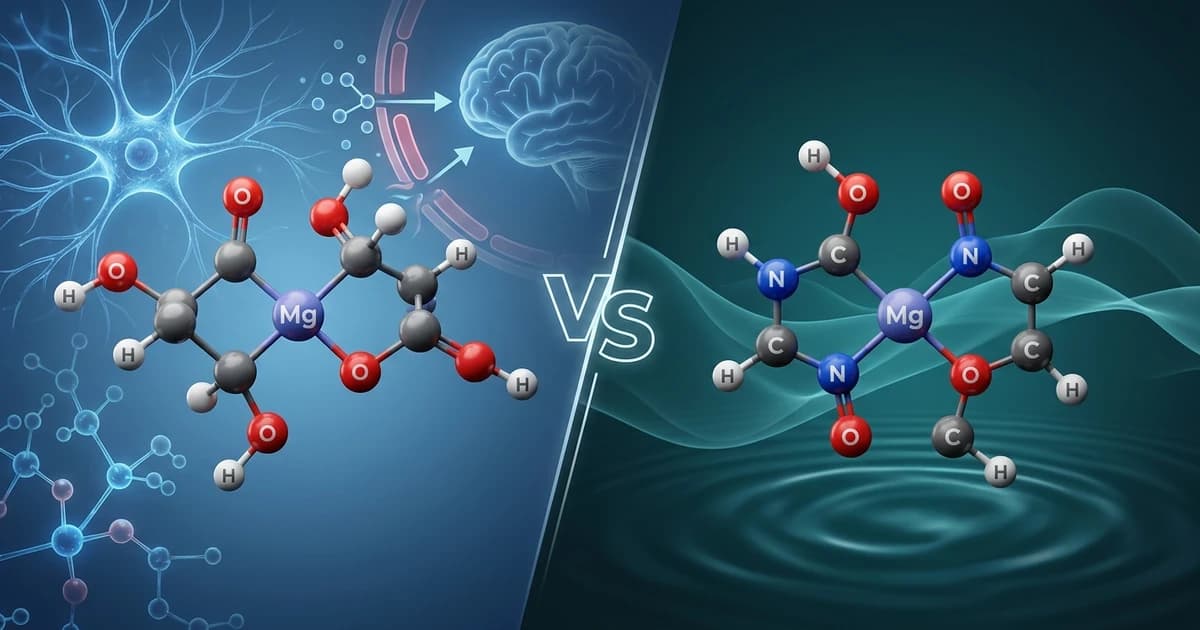
Magnesium L-Threonate vs Glycinate for the Brain: Which Crosses Into Gray Matter?
Most magnesium supplements raise the magnesium in your blood. Very few raise the magnesium inside your brain. That gap is the entire reason the magnesium l-threonate vs glycinate for the brain debate exists, and it's the question that actually matters if you're chasing sharper memory and fewer foggy afternoons.
Here's the short version. Magnesium L-threonate was engineered to push magnesium across the blood-brain barrier and into neural tissue. Magnesium glycinate is a calm, well-tolerated form built to correct a body-wide deficiency and support sleep. They're not competitors so much as different tools.
Pick the wrong one and you'll feel almost nothing for your cognition. Pick the right one and the mechanism actually makes sense.
Key Takeaways
- Magnesium L-threonate (Magtein) is the only common form specifically designed to raise magnesium levels inside the brain, with research tying it to synaptic density and learning.
- Magnesium glycinate is one of the best-absorbed, gentlest forms for fixing overall deficiency, calming the nervous system, and supporting sleep.
- For targeted magtein cognition goals, threonate has the mechanistic edge. For sleep, stress, and stomach-friendly daily correction, glycinate wins.
- Most adults fall short on magnesium regardless of which form they choose, so the "best magnesium for memory" still starts with fixing a real deficiency.
Why Magnesium Even Matters for the Brain
Magnesium sits at the controls of the NMDA receptor, a switch central to learning and memory. It blocks that receptor at rest and steps aside when a real signal arrives, which keeps neural communication clean instead of noisy.
When brain magnesium runs low, that filtering breaks down. You get more background chatter and weaker signal, the cellular version of trying to read in a loud room.
This is why people connect low magnesium with magnesium for brain fog. The link is plausible at the level of mechanism, and it's worth knowing that magnesium shortfall is common rather than rare. A 2025 review in the International Journal for Vitamin and Nutrition Research examined the global scale of dietary magnesium deficiency and its health consequences, framing it as a widespread, under-recognized problem.
So before you compare exotic forms, accept the baseline truth. A lot of people are simply not getting enough.
The Blood-Brain Barrier Problem
The blood-brain barrier is picky on purpose. It's a tight wall of cells that keeps most circulating compounds out, which protects neurons but also blocks a lot of would-be brain nutrients.
Ordinary magnesium salts raise serum magnesium reasonably well. Getting that magnesium past the barrier and actually raising brain concentration is the hard part. This magnesium blood brain barrier bottleneck is exactly what magnesium L-threonate was created to solve.
The threonate carrier appears to help magnesium reach neural tissue more effectively than common salts. Coverage from the trade publication NutraIngredients reports that magnesium L-threonate (sold as Magtein) is associated with cognitive performance and sleep benefits, which tracks with why the form was developed in the first place.
Magnesium L-Threonate: The Brain-Targeted Form
If your single goal is brain magnesium, L-threonate is the form with the most direct case. It was designed to cross into gray matter, not just to top off your blood.
The foundational work came out of academic neuroscience. A study indexed through Mayo Clinic's research portal, titled "Enhancement of Learning and Memory by Raising Brain Magnesium," showed that raising brain magnesium could improve learning and memory measures. That's the origin story of the entire threonate category.
The mechanism got more specific later. Research published on ScienceDirect described how L-threonate modulates magnesium inside neurons and influences both structural and functional synapse density. More working synapses is a reasonable proxy for a brain that learns and recalls better.
Human evidence is catching up. A randomized, double-blind, placebo-controlled trial published in Frontiers in Nutrition tested Magtein on cognitive performance and sleep quality in adults, the kind of rigorous design that moves a supplement claim from "promising in rats" toward "useful in people."
The tradeoff is dosing and cost. Threonate delivers a relatively small amount of elemental magnesium per gram, so you take more material, and it tends to cost more than basic forms.
Magnesium Glycinate: The Calm, Well-Absorbed Workhorse
Magnesium glycinate is the form to reach for when your priority is sleep, stress, and fixing a body-wide deficiency without wrecking your gut. It pairs magnesium with the amino acid glycine, which is itself a calming neurotransmitter.
That pairing does two useful things. The chelated structure is absorbed well and rarely causes the laxative effect that cheaper forms like magnesium oxide are known for. And glycine adds its own relaxing signal, which is why glycinate has a reputation for supporting deeper sleep.
For magnesium glycinate cognition, the benefit is mostly indirect but real. Better sleep and lower stress protect attention, memory consolidation, and clear thinking the next day. You don't need glycinate to cross deep into gray matter to feel sharper if it's helping you actually sleep.
What glycinate is not is a precision brain-magnesium delivery system. It corrects the foundation. Threonate targets the penthouse.
Magnesium L-Threonate vs Glycinate for the Brain: Side by Side
Here's the direct comparison most people actually want.
| Factor | Magnesium L-Threonate (Magtein) | Magnesium Glycinate |
|---|---|---|
| Primary goal | Raising brain magnesium, memory, learning | Sleep, stress, deficiency correction |
| Blood-brain barrier | Designed to cross efficiently | Crosses poorly compared to threonate |
| Best evidence | Synaptic density, learning, human RCTs on cognition and sleep | Strong absorption, tolerability, sleep support |
| Absorption profile | Good, brain-targeted | High, gentle on the stomach |
| Elemental magnesium per gram | Low (you take more) | Moderate |
| Gut tolerance | Generally well tolerated | Excellent, low laxative effect |
| Cost | Higher | Lower |
| Best for | Memory, focus, healthy brain aging | Sleep quality, daily magnesium baseline |
If you want one line: choose threonate when the brain is the target and glycinate when sleep, calm, and basic repletion are the target. Plenty of people use glycinate at night and threonate during the day for exactly that reason.
So What's the Best Magnesium for Memory?
For memory specifically, magnesium L-threonate has the stronger mechanistic and clinical case. It's the form built to raise magnesium inside the brain, and the synaptic-density research is the clearest story for why that would matter to recall.
But "best for memory" has a hidden prerequisite. If you're broadly deficient, fixing that deficiency with a well-absorbed form like glycinate may do more for your day-to-day thinking than a boutique form layered on top of an empty tank.
The smart move is sequencing, not loyalty to one molecule. Fix the baseline, then target the brain.
Frequently Asked Questions
Is magnesium L-threonate actually better than glycinate for the brain?
For brain-specific goals like memory and learning, magnesium L-threonate has the stronger case because it was designed to cross the blood-brain barrier and raise magnesium inside neural tissue. Research links it to synaptic density and cognitive performance. Glycinate is excellent for absorption, tolerability, and sleep, but it isn't engineered to target brain magnesium the way threonate is.
Can magnesium help with brain fog?
It can help when brain fog is tied to low magnesium or poor sleep. Magnesium supports the NMDA receptor activity central to clear neural signaling, and correcting a deficiency may sharpen thinking. Glycinate often helps by improving sleep, while threonate targets brain magnesium directly. Magnesium is a supplement, not a treatment, so persistent fog deserves a real medical workup.
Does magnesium glycinate cross the blood-brain barrier?
Glycinate raises body and blood magnesium well, but it crosses into the brain far less efficiently than magnesium L-threonate. The threonate form was specifically developed to solve that blood-brain barrier bottleneck. If your goal is raising brain magnesium rather than overall levels, threonate is the more targeted choice.
Can I take magnesium L-threonate and glycinate together?
Yes, and many people do. A common pattern is threonate during the day for cognitive support and glycinate in the evening for sleep and stress. Just track your total elemental magnesium across both so you stay within sensible limits, and check with a clinician if you have kidney issues or take medications.
How long until magnesium affects cognition?
Deficiency correction can take several weeks of consistent intake because you're rebuilding stores, not flipping a switch. The human trials on magtein cognition ran over weeks rather than days. Sleep benefits from glycinate sometimes show up faster. Treat magnesium as a slow, foundational input, not an instant focus tool.
What about magnesium oxide or citrate for the brain?
Magnesium oxide is poorly absorbed and mostly known for its laxative effect, so it's a weak pick for cognition. Citrate absorbs better and helps deficiency but isn't brain-targeted. For brain magnesium specifically, threonate leads; for gentle daily repletion and sleep, glycinate leads.
The Bottom Line on Form and Goal
Magnesium isn't one thing. The form decides where the mineral goes and what it can do once it gets there.
Magnesium L-threonate is the brain specialist, built to cross into gray matter and support memory and learning. Magnesium glycinate is the foundation builder, gentle and well-absorbed, ideal for sleep, stress, and fixing the deficiency most people quietly carry. Match the form to the goal and you stop wasting money on the wrong tool.
Right Form, Right Goal: Where Roon Fits
This whole comparison comes down to one principle: match the ingredient to the outcome you actually want. That's how we think at Roon too, which is why we'll be straight with you. Roon does not contain magnesium, and it's not a replacement for fixing a magnesium deficiency or improving your sleep.
What Roon does is the daytime job magnesium was never built for: fast, clean, sustained focus. Each sublingual pouch pairs 80 mg caffeine, 60 mg L-theanine, 25 mg methylliberine (Dynamine), and 5 mg theacrine (TeaCrine), with a 5 to 10 minute onset and a 6 to 8 hour window without the jitters, crash, or tolerance creep of stacking more coffee.
Think of it as a layered approach. Use the right magnesium to support your brain's foundation and your sleep, then read how Roon's ingredients work in the brain when you want on-demand focus during the day. Different tools, same logic. Try Roon when focus is the goal you're solving for.
Written by Roon Team