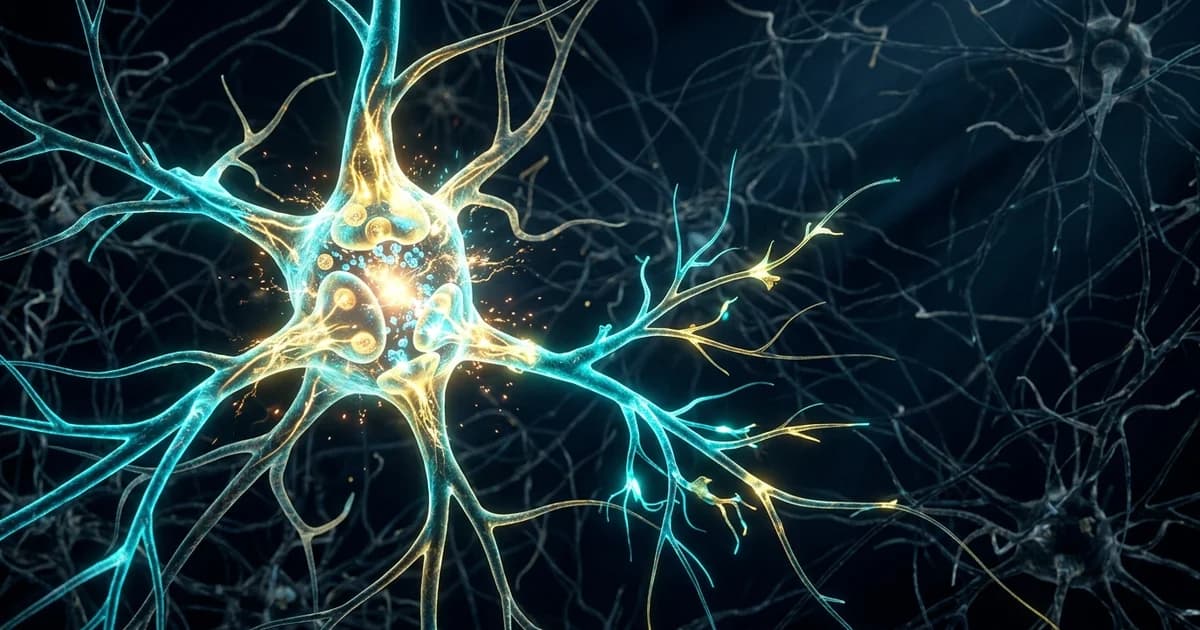
NGF and Neuroplasticity: How Nerve Growth Factor Rebuilds the Brain
Your brain runs on a maintenance crew you never think about. One of its lead foremen is a small protein called nerve growth factor, and its job in the nerve growth factor brain system is to decide which neurons survive, which connections strengthen, and which circuits get rebuilt after damage.
NGF was the first member of a protein family we now call neurotrophins. It does something deceptively simple. It tells nerve cells to keep living, keep growing, and keep wiring themselves into useful networks.
That single instruction, repeated billions of times, is a large part of why your brain can still learn at 40 the way it did at 14.
Key Takeaways
- NGF is a neurotrophin, a survival signal that keeps specific neurons alive and drives neuroplasticity, the brain's ability to rewire itself.
- It works on a slow biological timescale of days to weeks, not minutes.
- BDNF and NGF are cousins, not twins. They target different neurons and serve overlapping but distinct roles.
- The strongest evidence-based ways to support neurotrophins are exercise, sleep, and learning, not a single supplement.
- Fast-acting cognitive tools work through a completely different mechanism than NGF, and understanding that difference sets honest expectations.
What Nerve Growth Factor Actually Does
Nerve growth factor is a protein that keeps neurons alive and guides them as they form new connections. Without it, certain nerve cells trigger their own death program.
The story starts in the 1950s. At the beginning of the 1950s, the Nobel Laureate Rita Levi-Montalcini discovered and characterized the Nerve Growth Factor (NGF) as a key player in target-mediated regulation of peripheral innervations. Her work with Stanley Cohen later earned them the 1986 Nobel Prize, and it opened an entire field.
What made the discovery matter was the concept underneath it. The pioneer studies performed by her and Victor Hamburger first showed that the nervous system requires an adequate supply of trophic factors (neurotrophins) from the environment for survival and development. Neurons are not guaranteed survival. They earn it by receiving the right chemical signals.
NGF carries a few core instructions. According to NativePath's overview of the protein, NGF acts as a "survival signal" for neurons, sending a molecular message that instructs these cells not to undergo apoptosis (cellular death). It also supports repair, helping regrow damaged nerve cells after injury.
NGF Neuroplasticity: Why This Protein Rebuilds Circuits
NGF supports neuroplasticity by keeping neurons alive long enough to form, strengthen, and reorganize their connections. That is the link between a molecule and a measurable change in how you think.
Neuroplasticity is the brain's capacity to physically reshape itself in response to experience. As NativePath notes, NGF plays a role in the brain's ability to reorganize itself and adapt to new experiences, which is an important factor for learning and memory.
Here is how that plays out at the cellular level. When you practice a skill, neurons fire together repeatedly. Neurotrophins like NGF help cement those firing patterns into durable synaptic plasticity, the strengthening of connections between cells.
The role expanded over decades of research. The body of evidence on the role of NGF has been strengthened and expanded from a trophic factor playing a role in brain growth and differentiation to a much more complex messenger involved in psychoneuroendocrine plasticity.
The Receptor Switch: TrkA Versus p75
NGF does not act alone. It binds two different receptors, and the balance between them decides a neuron's fate.
Research on NGF signaling describes how these receptors interact closely. p75 and TrkA interact through their cytoplasmic and transmembrane domains and form complexes even prior to NGF stimulation. One receptor pushes toward survival, the other can push toward death.
The competition matters. Work published in the Journal of Neuroscience found that TrkA-mediated rescue involves not only activation of survival signals but also simultaneous suppression of a death signal by p75. NGF, in other words, tips a constant internal vote toward keeping the cell alive.
Neurotrophins: NGF, BDNF, and the Rest of the Family
There are four neurotrophins, and NGF is just one of them. The others are BDNF, neurotrophin-3, and neurotrophin-4.
A review of neurotrophic factors lays out the family clearly. There are four neurotrophins: nerve growth factor (NGF), neurotrophin-3 (NT-3), neurotrophin-4 (NT-4) and BDNF, and these proteins regulate neural function, growth and survival, and neuroplasticity through various signaling pathways.
BDNF arrived later in the science and changed the field. Years of research led in 1982 to the discovery of brain-derived neurotrophic factor in mammals (BDNF), which revolutionized the field, and came with the discovery of its receptor, tyrosine protein kinase B (TrkB).
BDNF vs NGF: How They Differ
The simplest way to hold the difference in your head: NGF and BDNF are cousins that work in different neighborhoods of the brain.
| Feature | NGF | BDNF |
|---|---|---|
| Discovered | Early 1950s | 1982 |
| Main receptor | TrkA (plus p75) | TrkB (plus p75) |
| Primary neuron targets | Basal forebrain cholinergic neurons, sensory and sympathetic neurons | Hippocampal and cortical neurons |
| Best-known role | Neuron survival and repair | Learning, memory, synaptic plasticity |
| Easiest to support via | Learning and novel experience | Aerobic exercise |
NGF has a special relationship with one population of cells. NGF is a fundamental neurotrophin essential for the development, maintenance, and function of specific neuronal populations, particularly peripheral sensory and sympathetic neurons and basal forebrain cholinergic neurons. Those cholinergic neurons sit at the heart of memory and attention circuits.
That connection is why NGF shows up in aging research. As ScienceDirect explains, faulty NGF signaling is tied to neurodegenerative diseases such as Alzheimer's. None of this means a supplement treats disease. It means the protein is central to keeping memory hardware intact.
Neurogenesis and the Slow Work of Growing New Neurons
Neurogenesis is the creation of brand new neurons from stem cells, and it continues in the adult brain. It sits right alongside neuroplasticity rather than apart from it.
Research on post-stroke plasticity connects the two directly. Neuroplasticity is closely related to neurogenesis, wherein fully functioning neuronal cells are generated from the differentiation of neuronal stem cells present in the adult, fully formed brain.
The same research describes how the brain rebuilds itself after injury, strengthening existing nerve pathways and then establishing new connections, so that defective function can be restored as other cortical or subcortical structures take over the role of the damaged area.
The thread running through all of it is time. Growing neurons, sprouting new branches, and rewiring circuits happen over days and weeks. This is the part most people get wrong about brain optimization.
How to Increase NGF and Support Neurotrophins
You cannot swallow NGF as a pill and expect it to reach your brain. The protein does not cross the blood-brain barrier well, which is why most reliable approaches work indirectly by encouraging your body to make and use its own neurotrophins.
The strongest levers are behavioral, not pharmacological:
- Aerobic exercise. A review of neurotrophic effects notes that BDNF is a main protagonist in neuroplasticity that can be increased through exercise. Movement is the most consistently supported way to raise neurotrophin activity.
- Learning hard things. Novelty and difficulty drive the firing patterns that neurotrophins reinforce. Routine does not.
- Sleep. Most synaptic consolidation happens overnight. Skimp on sleep and you cut the window where rewiring occurs.
- Certain compounds under study. Some research points to plant and mushroom compounds that may support NGF synthesis, though human evidence is still developing. Treat these as experimental, not proven.
Notice what these have in common. They are slow. They compound over months. They reshape the physical brain, and that is exactly why they work and exactly why they take patience.
The Bottom Line on Building a More Adaptable Brain
Nerve growth factor is one of the brain's core survival and repair signals, the first neurotrophin ever found, and a quiet engine behind neuroplasticity, neurogenesis, and synaptic plasticity.
The honest takeaway is about timescale. NGF and its cousin BDNF rebuild your brain on the order of weeks and months, through exercise, sleep, learning, and consistency. There is no version of this that happens by lunchtime.
That distinction matters when you think about cognitive tools. The slow machinery of neurotrophins is real, valuable, and worth investing in. It is simply a different category from anything that sharpens your focus this afternoon.
Frequently Asked Questions
What is nerve growth factor in the brain?
Nerve growth factor is a protein in the neurotrophin family that keeps specific neurons alive and helps them grow and repair. In the brain it supports basal forebrain cholinergic neurons, which are central to memory and attention. It works as a survival signal, telling neurons not to trigger their own death and helping the brain reorganize connections, a process called neuroplasticity.
What is the difference between BDNF and NGF?
Both are neurotrophins, but they target different neurons and use different receptors. NGF binds mainly TrkA and supports cholinergic, sensory, and sympathetic neurons. BDNF binds TrkB and is most associated with hippocampal and cortical neurons, learning, and synaptic plasticity. NGF was discovered in the early 1950s, while BDNF was identified in 1982. Think of them as cousins working in different regions of the nervous system.
Can you increase NGF naturally?
You cannot effectively take NGF as a pill, because the protein does not cross the blood-brain barrier well. Instead, you support your body's own neurotrophin activity indirectly. Aerobic exercise has the strongest evidence, alongside quality sleep and learning genuinely difficult new skills. Some plant and mushroom compounds are under study for supporting NGF synthesis, but the human evidence is still early, so treat them as experimental.
How long does it take to change neuroplasticity?
Neuroplasticity operates on a biological timescale of days to weeks, and durable rewiring builds over months. Growing new neural branches, strengthening synapses, and generating new neurons through neurogenesis are slow processes. This is why consistent habits beat one-off efforts. Any tool promising structural brain change within minutes is describing something else entirely, like a temporary shift in alertness rather than physical rewiring.
Is NGF the same as neurogenesis?
No. NGF is a signaling protein, while neurogenesis is the process of creating new neurons from stem cells in the adult brain. They are closely linked, because neurotrophins help new and existing neurons survive and integrate into circuits. Neuroplasticity, neurogenesis, and synaptic plasticity all describe overlapping ways the brain adapts, and neurotrophins like NGF and BDNF are common threads running through all of them.
Does NGF relate to Alzheimer's disease?
Research has linked disrupted NGF signaling to neurodegenerative disease, because the cholinergic neurons NGF supports are heavily involved in memory. Studies describe NGF dysregulation as a contributor to conditions like Alzheimer's. This is an active area of scientific investigation, not a claim that any supplement treats, prevents, or cures disease. NGF research informs how we understand brain aging; it does not turn any product into a medicine.
Fast Chemistry Versus Slow Biology: Knowing Which One You Need
Here is the practical line this article draws. Neurotrophins like NGF and BDNF do the slow, structural work of rebuilding your brain over weeks. Nothing speeds that up to the scale of an afternoon, and any honest brand will tell you so.
That is exactly why a tool like Roon is built for the other half of the equation. Roon does not claim to grow neurons or raise NGF. It works on acute neurochemistry, the fast layer of focus and alertness you feel in minutes, not months. Its sublingual pouch pairs 80 mg caffeine, 60 mg L-theanine, 25 mg methylliberine (Dynamine), and 5 mg theacrine (TeaCrine) for a 5 to 10 minute onset and a 6 to 8 hour window of focus with no jitters, no crash, and no tolerance buildup.
Think of it as two clocks. Use exercise, sleep, and deliberate learning to support your brain's long-term wiring, and use something like Roon when you need clean focus today. Try Roon for the afternoons you cannot afford to lose, and keep doing the slow work for the brain you want in a decade.
Written by Roon Team