The Lunch That Won't Make You Sleepy: 5 One-Bowl Plates and the Rules Behind Them
The Lunch That Won't Make You Sleepy: 5 One-Bowl Plates and the Rules Behind Them
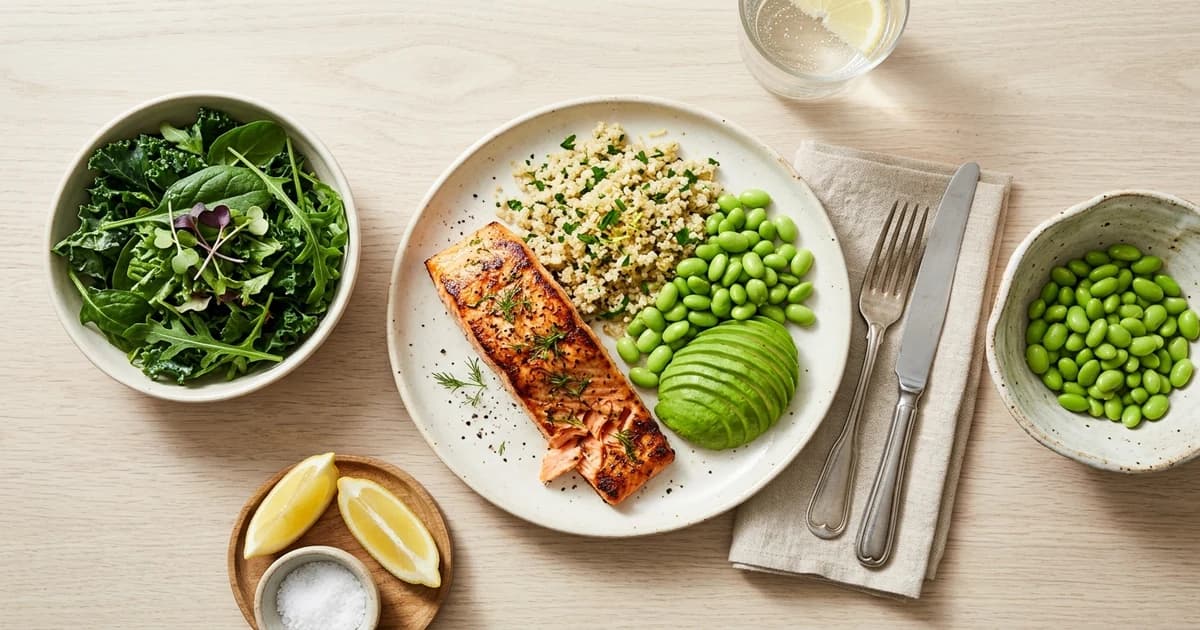
You do not need a different recipe. You need a smaller bowl, a better night of sleep, and your caffeine before the dip instead of after it. A lunch that won't make you sleepy follows one template: half the bowl non-starchy vegetables, a palm of protein, a fist of starch. Eat the vegetables and protein first, starch last. Walk outside for ten minutes after.
The two levers with the strongest trial evidence are how much you ate and how much you slept the night before. What was on the plate, the thing everyone argues about, ranks third. This page gives you five buildable plates, then ranks the levers by evidence so you can build your own.
Key Takeaways
- Meal size predicts the afternoon slump better than composition (Orr 1997, Reyner 2012).
- The 2 p.m. dip shows up even when a person skips lunch entirely (Monk 2005).
- Eating vegetables or protein before starch flattened the glucose rise in a 2025 review of 6 healthy-adult studies.
- A meta-analysis of 31 studies found no sugar rush at any time point, but increased fatigue within 30 minutes and lower alertness within 60.
The Rule, Ranked by Evidence
| Rank | Lever | Evidence | What the trials found |
|---|---|---|---|
| 1 | How much you ate | Strong (controlled feeding, polysomnography, simulator) | A meal about three times the size produced more sleepiness; composition did not differ |
| 2 | How much you slept | Strong (circadian, sleep restriction) | The dip exists with no lunch at all; five hours of prior sleep makes it worse |
| 3 | What order you ate it in | Moderate (6 studies, 107 healthy adults) | Vegetables or protein before starch flattened the glucose rise |
| 4 | What it was made of | Weak, counterintuitive | Fat was the sleepier meal; carbs were not the villain |
Most advice starts at rank 4. That is backwards. Understanding why you crash after lunch starts with accepting that the portion and the sleep matter more than the menu.
5 One-Bowl Lunch Ideas That Won't Make You Tired
Every plate uses the same shape: half non-starchy vegetables, a palm of protein, a fist of starch. One bowl. No seconds.
1. The Deli Counter
Roast turkey or chicken, open-face on one slice of bread, big side salad, oil and vinegar. Protein and greens first. Bread last.
2. The Salad Bar
Greens base, two scoops of vegetables, one scoop of protein (chicken, eggs, chickpeas), one small scoop of grain or beans, dressing on the side. Start with the greens and protein.
3. Last Night's Leftovers
Whatever the dinner protein was, reheated. Twice as many vegetables as you would normally include, half the rice or pasta. You already cooked it. You are just changing the ratio.
4. The Convenience Store Run
A rotisserie chicken portion or hard-boiled egg pack, a bagged salad or cut vegetables, a small roll, water. Eggs and vegetables first.
5. The Desk Drawer
Tinned fish, a pouch of pre-cooked grain, baby carrots or cherry tomatoes, an olive oil packet. Everything shelf-stable. Keep a rotation so the "I have nothing" excuse dies.
All five work because the bowl caps the portion, the vegetables fill space, and eating protein first slows the glucose rise from whatever starch follows.
Why How Much Beats What
Orr et al. (1997) fed 10 men test meals and measured sleepiness with polysomnographic nap latencies. High-fat, high-carbohydrate, and mixed meals did not differ. Meal size predicted sleepiness independent of macronutrient composition.
Reyner et al. (2012) tested 12 young men on a monotonous driving simulator after a modest lunch versus a meal about three times the size, with prior sleep restricted to five hours. The larger meal produced more sleepiness markers, but there was no difference in the first 30 minutes. The gap opened after. The authors' conclusion: the dip is "largely unrelated to lunch, and worsened by a disturbed prior night's sleep."
The meal amplifies the dip. It does not create it.
Last Night's Sleep Is the Second Lever
The 2 p.m. dip shows up with no lunch at all. Lunch decides how deep it goes.
Monk (2005) reviewed the evidence: the post-lunch dip occurs even when a person has eaten nothing and is unaware of the time of day. Monk et al. (1996) showed it is endogenous, individually determined, and tied to the 12-hour harmonic of the circadian system. The circadian dip exists with or without lunch, and short sleep makes it deeper.
If you slept five hours, your one-bowl plate will still hit harder than it would after seven or eight. No recipe fixes a sleep debt.
The Order You Eat It In
This one is free, so it is worth doing even though the studies are small.
A 2025 systematic review in Clinical Nutrition Research pooled 6 studies with 107 healthy participants aged 20 to 37. Eating vegetables, fruit, or protein before carbohydrate lowered post-meal glucose, with protein-first showing the largest reductions in normal-weight adults. Continuous glucose monitoring data shows glucose peaks about 50 to 60 minutes after eating and returns to baseline within 2 to 3 hours.
Limitations: small studies, short-term, mostly young Asian participants, no meta-analysis possible. But the intervention costs nothing. Eat the vegetables and protein first.
Foods That Don't Make You Sleepy: The Composition Question
The evidence does not support "carbs cause the crash." Wells et al. (1997) tested 18 healthy volunteers and found fatigue was greater three hours after the high-fat meal than after the high-carbohydrate one. Where composition mattered at all, fat was the sleepier option.
The turkey-tryptophan story is a myth. Turkey contains no more tryptophan than chicken, and tryptophan competes with other large neutral amino acids for the same brain transporter (Scientific American, Columbia Mailman School of Public Health). The real culprit at Thanksgiving is overeating and alcohol. Protein at lunch is not the villain. The portion is. More on tiredness after eating generally.
The Sugar Question
A sugary pick-me-up is the one move the trial data actively argues against. Mantantzis et al. (2019) ran a meta-analysis across 31 studies, 1,259 participants, and 176 effect sizes. No positive effect of carbohydrate on any mood measure at any time point. What did show up: increased fatigue within 30 minutes and lower alertness within 60 minutes compared to placebo.
That does not mean all carbohydrates cause the crash. The one-bowl plates include a fist of starch, and that is fine. The problem is the sweet snack you reach for at 2:30.
Ten Minutes Outside Is the Cheapest Fix
The Cleveland Clinic recommends a 10 to 15 minute walk after eating. A small study of 17 undergraduates found that blue-enriched bright light at 1,000 lux in the early afternoon relieved sleepiness, negative mood, and working-memory decline. Small sample, so take it as directional.
The key word is daylight. Office fluorescents run 300 to 500 lux. Outdoor shade on a cloudy day hits 1,000+. You do not need a run. You need actual sunlight for ten minutes. For most people, this does more than a second cup. More on working through the afternoon.
When the Caffeine Goes
Timing, not quantity. Smith et al. (1990) gave caffeine before and after lunch and measured sustained attention. At a meaningful dose, in lab studies, caffeine removed the post-lunch impairment. A low dose of about 60 mg did not reach significance.
A 2023 meta-analysis of 24 studies (Gardiner et al., Sleep Medicine Reviews) found caffeine reduced total sleep time by 45 minutes and sleep efficiency by 7%. The cutoff: caffeine should go in at least 8.8 hours before bedtime. A 10 p.m. bedtime means your last caffeine lands around 1 p.m., right before the dip. Not a coincidence.
Take your bedtime, subtract nine hours, and that is the latest hour caffeine can go in. After that, the walk and daylight are your tools.
One note: if you regularly feel shaky, sweaty, or confused after meals, that is a conversation for your clinician, not a lunch fix.
What to Eat to Stay Awake: Putting It Together
The best lunch for energy at work is not a specific recipe. It is a set of constraints: one bowl, half vegetables, protein before starch, and ideally a decent night of sleep behind it. The plates are templates. Swap the protein, swap the grain. The shape stays the same.
The afternoon dip is biological. You will not eliminate it. But you can stop making it worse with oversized portions, sugary snacks, and caffeine timed too late or too early.
Frequently Asked Questions
Why do I get sleepy after lunch even when I eat well?
The 2 p.m. dip is a circadian event, not just a food event. Monk (2005) showed it occurs even when people skip lunch and do not know the time. A big meal or a short night of sleep makes it deeper, but eating "well" does not prevent the underlying biology.
Does skipping lunch stop the crash?
Not entirely. The dip is endogenous. Skipping lunch removes the meal-size amplifier, but you still have the circadian trough, plus the distraction of hunger. A smaller, structured meal beats no meal.
How long does a food coma last?
Post-meal glucose peaks about 50 to 60 minutes after eating and returns to baseline within 2 to 3 hours (continuous glucose monitoring data). Subjective sleepiness follows a similar arc. A one-bowl meal should leave you functional within about an hour.
Does protein make you sleepy?
Not by the mechanism people cite. The tryptophan story is a myth: turkey has no more tryptophan than chicken, and tryptophan competes with other amino acids for brain transport (Scientific American). In the Wells (1997) study, fat was the sleepier macronutrient, not protein.
Is a walk better than coffee after lunch?
Different tools, different timing. A 10 to 15 minute walk in daylight gives you bright-light exposure (1,000+ lux) and movement with no caffeine cost to tonight's sleep. If your bedtime math still allows caffeine, you can do both. If not, the walk wins.
What is the latest I can have caffeine after lunch?
Subtract nine hours from your bedtime. A meta-analysis of 24 studies recommends at least 8.8 hours before bed. For a 10 p.m. bedtime, that is about 1 p.m. For 11 p.m., about 2 p.m. After that cutoff, use the walk and bright-light exposure.
The Afternoon Caffeine That Isn't a Second Coffee
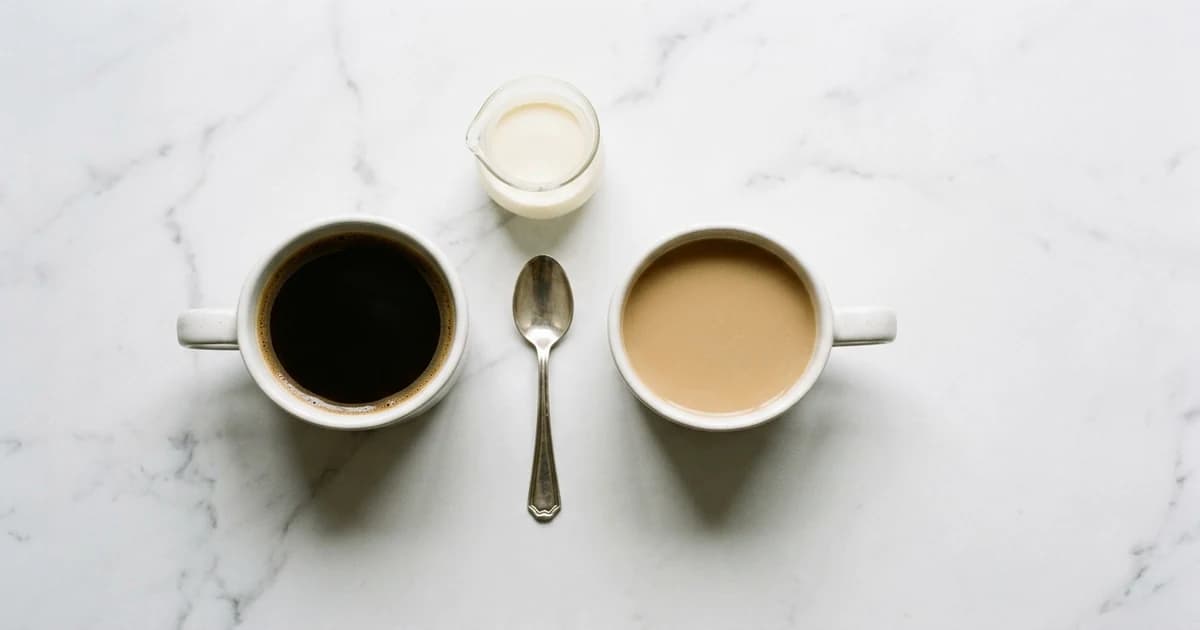
The timing section above puts caffeine in a narrow window: after lunch, before 1 or 2 p.m. For a lot of people, that window is the problem. Brewing another cup means a trip to the kitchen, a fifteen-minute conversation, and often sugar on top of the caffeine.
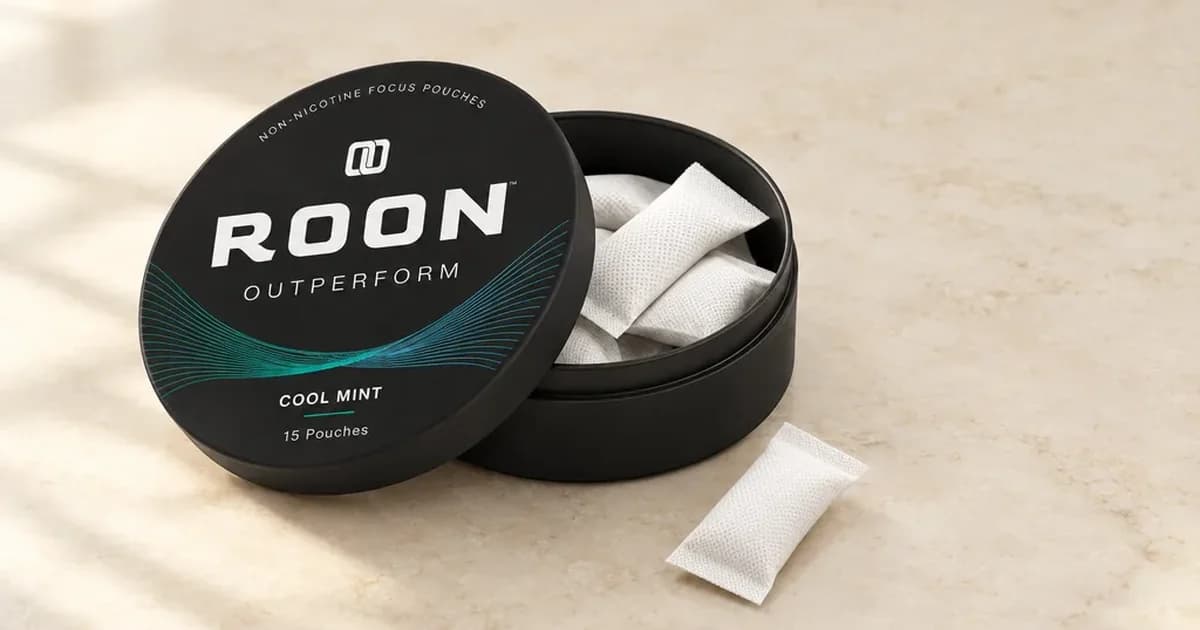
Roon is a zero-nicotine oral pouch built for that slot. Each pouch delivers 80 mg caffeine, 60 mg L-theanine, 25 mg methylliberine (Dynamine), and 5 mg theacrine (TeaCrine), absorbing at the gum line in 5 to 10 minutes. The felt duration is 6 to 8 hours, zero sugar. A human PK study found methylliberine co-administered with caffeine cut caffeine's oral clearance from 41.9 to 17.1 L/hr and extended its half-life from 7.2 to 15 hours, with no increase in peak concentration. That study used 100 mg methylliberine and 150 mg caffeine (roughly 4x the methylliberine and 1.9x the caffeine in a Roon pouch), so the mechanism is directionally the same at Roon's dose, not identical. Same cutoff applies: stop at least 8 hours before bed.
Roon is not a meal replacement, not a recipe, and not a fix for bad sleep. It is caffeine, timed and formatted for the 1 p.m. slot, starting from $9.16 per tin. Follow the usage guidance on the tin. The plates above are the foundation. The pouch is the last layer, not the first.
Related from Roon
- Why You Crash After Lunch and How to Stay Sharp
- Why You Crash at 2 p.m.
- How to Stop Feeling Tired After Eating
- Afternoon Coffee: What's the Latest Time?
Written by Roon Team