L-Theanine Tablets: The Complete Guide to Dosing, Benefits
Roon Team
L-Theanine Tablets: The Complete Guide to Dosing, Benefits, and What Actually Works
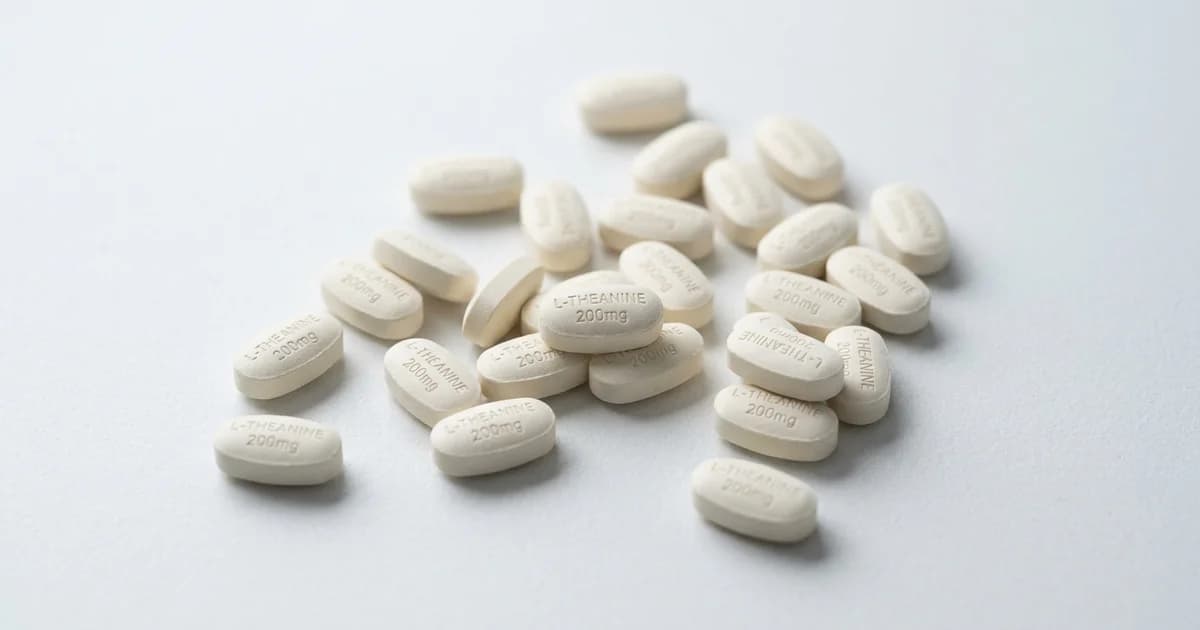
Most people discover l theanine tablets after hitting a wall with caffeine. The jitters, the 2 p.m. crash, the lying-awake-at-midnight problem. They search for something that takes the edge off without dulling the blade. L-theanine is usually the first answer they find, and for good reason.
But the supplement aisle (and the internet) is a mess. Tablets, capsules, powders, gummies, softgels. Doses ranging from 50 mg to 400 mg. Brands claiming everything from "instant zen" to "superhuman focus." This guide cuts through that noise with actual pharmacology, clinical data, and practical advice on choosing the right l theanine tablets for your goals.
Key Takeaways:
- L-theanine is an amino acid found naturally in tea leaves that promotes calm focus without sedation.
- Clinical doses range from 100 to 400 mg per day, with 200 mg being the most studied single dose.
- L theanine tablets reach peak blood concentration in about 50 minutes when taken orally.
- The FDA considers L-theanine GRAS (Generally Recognized as Safe) at doses up to 250 mg per serving.
- Pairing l theanine tablets with low-dose caffeine produces stronger cognitive effects than either compound alone.
What L-Theanine in Tablets Actually Is (and Isn't)
L-theanine (technically L-glutamic acid gamma-monoethylamide) is a non-protein amino acid found almost exclusively in Camellia sinensis, the tea plant. A typical cup of green tea contains a relatively modest amount, usually between 20 and 50 mg. That's enough for a subtle calming effect, but well below the doses used in clinical research.
L-theanine crosses the blood-brain barrier. That's the detail that matters most. Once there, it influences several neurotransmitter systems, including GABA, serotonin, and dopamine. But its most well-documented effect is on brainwave activity.
A study published in Asia Pacific Journal of Clinical Nutrition found that a 200 mg oral dose of L-theanine generated alpha brain waves in the occipital and parietal regions of the brain. Alpha waves are the electrical signature of relaxed alertness: the state you're in during focused meditation, a flow state, or the moments just before a great idea clicks into place.
A 2021 randomized, triple-blind, placebo-controlled trial confirmed this, showing that a single dose of AlphaWave L-Theanine increased frontal region alpha power compared to placebo during an acute stress challenge. Translation: l theanine tablets don't sedate you. They shift your brain into a calmer, more focused gear.
This is not the same as what you get from a glass of wine or a benzodiazepine. There's no drowsiness, no cognitive impairment, no next-day fog. A 2025 review published in Nutrition Research noted that L-theanine "increases alpha brain waves in the brain, which is associated with relaxation and selective attention," though the authors also called for more research to fully understand the mechanisms.
L-Theanine Tablets: Dosing That Actually Matches the Science
Here's where most supplement brands get sloppy. They'll sell you a 100 mg tablet and tell you to take one daily. That might help a little. But the clinical literature tells a more specific story.
According to Examine.com's analysis of the research, clinical studies typically use L-theanine at 100 to 400 mg per day. WebMD reports that doses of 200 to 400 mg daily have been used most often in adult studies lasting 4 to 8 weeks.
Here's a practical breakdown by goal:
| Goal | Dose | Timing |
|---|---|---|
| General calm and focus | 100-200 mg | Morning or as needed |
| Stress reduction | 200-400 mg | Split into 1-2 doses |
| Sleep support | 200-400 mg | 30-60 minutes before bed |
| Paired with caffeine | 100-200 mg L-theanine per 40-100 mg caffeine | Together, before work or study |
A randomized, placebo-controlled trial with 30 healthy adults used 200 mg per day over four weeks and found measurable improvements in stress-related symptoms and cognitive function. That 200 mg number keeps showing up across the literature. It's the sweet spot for most people taking l theanine tablets.
How Fast Do L-Theanine Tablets Work?
Faster than most people expect. A pharmacokinetic study published in the Journal of Functional Foods found that after oral ingestion, L-theanine has a lag time of about 10 minutes, with peak plasma concentrations reached around 50 minutes. The elimination half-life sits between 58 and 74 minutes.
A separate study published in the Journal of Nutrition found that the maximum plasma concentration of L-theanine occurred approximately 0.8 hours (about 48 minutes) after intake of 100 mg via capsules. Interestingly, the kinetics were comparable whether the L-theanine came from capsules or green tea.
So if you take l theanine tablets, expect to feel something within 30 to 50 minutes. The effects typically last 2 to 4 hours, depending on the dose and your individual metabolism.
L-Theanine Tablets vs. Capsules vs. Powder vs. Sublingual
Not all delivery methods are equal, even if the active ingredient is the same.
| Format | Pros | Cons |
|---|---|---|
| Tablets | Pre-dosed, portable, stable shelf life | Slower absorption due to binders and fillers |
| Capsules | Clean ingredient profiles, easy to swallow | Still requires full digestive processing |
| Powder | Cheapest per serving, flexible dosing | Messy, requires measuring, taste can be off-putting |
| Softgels | Good for fat-soluble stacks | L-theanine is water-soluble, so less advantage here |
| Sublingual | Fastest absorption, bypasses digestive tract | Fewer standalone products available |
The sublingual route deserves special attention. Sublingual delivery bypasses the hepatic first-pass effect, meaning the compound enters systemic circulation without first being partially broken down by the liver. For water-soluble compounds like L-theanine, this can mean faster onset, sometimes in as little as 5 to 10 minutes.
Standard l theanine tablets work fine. But if speed of onset matters to you (say, before a meeting or a high-pressure presentation), sublingual formats have a real pharmacological advantage.
What to Look for in L-Theanine Tablets
Quality varies wildly in the supplement market. Here are the non-negotiable criteria:
1. The L-Isomer, Not a Racemic Mix
L-theanine exists as two mirror-image forms: L-theanine and D-theanine. Your body uses the L-form. Some cheaper l theanine tablets contain a racemic (50/50) mix, which means you're getting half the active dose you think you are. Look for labels that specify "L-theanine" or use a patented form.
2. Patented Ingredients (Suntheanine)
Suntheanine is the most well-known branded form. It's produced via a patented enzymatic process that yields 100% pure L-isomer theanine. According to the manufacturer, it's backed by over 40 clinical studies and has received FDA GRAS status. If a product lists Suntheanine on the label, you know you're getting a clinically validated form.
That said, Suntheanine isn't the only option. Other manufacturers produce high-purity L-theanine (98%+) at competitive prices. The key is third-party testing and a Certificate of Analysis (COA).
3. Third-Party Testing
Any reputable brand should be able to provide a COA showing purity, heavy metal testing, and microbial analysis. If they can't or won't, move on.
4. Minimal Fillers
L theanine tablets require binders and flow agents to hold their shape. That's normal. But watch out for unnecessary additives like artificial colors, titanium dioxide, or excessive magnesium stearate. Capsules generally have cleaner profiles than pressed tablets.
The L-Theanine Tablets + Caffeine Stack: Why It Works
This is where l theanine tablets go from "nice supplement" to "daily essential" for a lot of people.
A study published in Nutritional Neuroscience gave subjects 50 mg of caffeine with and without 100 mg of L-theanine. The combination improved both speed and accuracy on an attention-switching task at 60 minutes, and reduced susceptibility to distracting information in a memory task at both 60 and 90 minutes.
Another study using 97 mg L-theanine and 40 mg caffeine found that the combination improved cognitive performance and increased subjective alertness compared to placebo. That's a low caffeine dose, roughly equivalent to half a cup of coffee.
A systematic review published in Cureus analyzed the body of evidence and found that the caffeine-L-theanine combination was associated with decreased distractibility and improved concentration, with reduced activity in brain regions linked to mind-wandering.
The mechanism is straightforward. Caffeine increases alertness and reaction speed but can also increase anxiety and jitteriness. L-theanine smooths out those rough edges without canceling the stimulant effect. You get the focus without the frantic energy.
Safety Profile and Side Effects of L-Theanine Tablets
L-theanine has one of the cleanest safety records in the supplement world.
According to Drugs.com, L-theanine has been granted FDA GRAS status at doses up to 250 mg per serving. WebMD notes that doses of up to 900 mg daily have been used safely for 8 weeks in studies.
The Cleveland Clinic states that L-theanine side effects are "relatively uncommon and tend to be mild." Potential side effects, when they occur, include mild headache or sleepiness.
A few practical cautions:
- Drug interactions: WebMD advises that l theanine tablets may interact with sedatives, stimulants, and blood pressure medications. If you take any of these, talk to your doctor first.
- Pregnancy and breastfeeding: Not enough data exists to confirm safety. Most sources recommend avoiding supplementation during these periods.
- Long-term use: Most clinical trials have lasted 4 to 8 weeks. HealthyCell reports that L-theanine is generally considered safe for long-term use, but always stick to recommended dosages.
A Simpler Way to Get Your L-Theanine
L theanine tablets work. The science is solid, the safety profile is strong, and the cognitive benefits are real, especially when paired with low-dose caffeine.
But there's a practical problem with l theanine tablets: you swallow them, wait 30 to 50 minutes for absorption, and hope the dose hits right. If you want the L-theanine-caffeine combination, you're now juggling two supplements or hunting for a product that combines them at the right ratio.
Roon takes a different approach. Roon's nootropic pouches are a zero-nicotine sublingual format that delivers L-theanine alongside caffeine (80 mg), theacrine, and methylliberine directly through the tissue under your lip. No swallowing, no waiting for digestive processing, no pill organizer. The sublingual format means faster absorption, and the ingredient stack is built around the same caffeine-L-theanine principle that the research keeps validating.
If you already know l theanine tablets work for you, this is a cleaner, faster way to get the same compound into your system. Check it out at takeroon.com.